What to Consider with Animal Mural Wallpaper
Plan animal artwork around scale, focal position, room use, sightlines and the balance between detail and calm.
Article focus: installation and removal
What the installer needs to know
The right installation method depends on the chosen material and wall condition, so prepare the wall before ordering and follow the material-specific instructions.
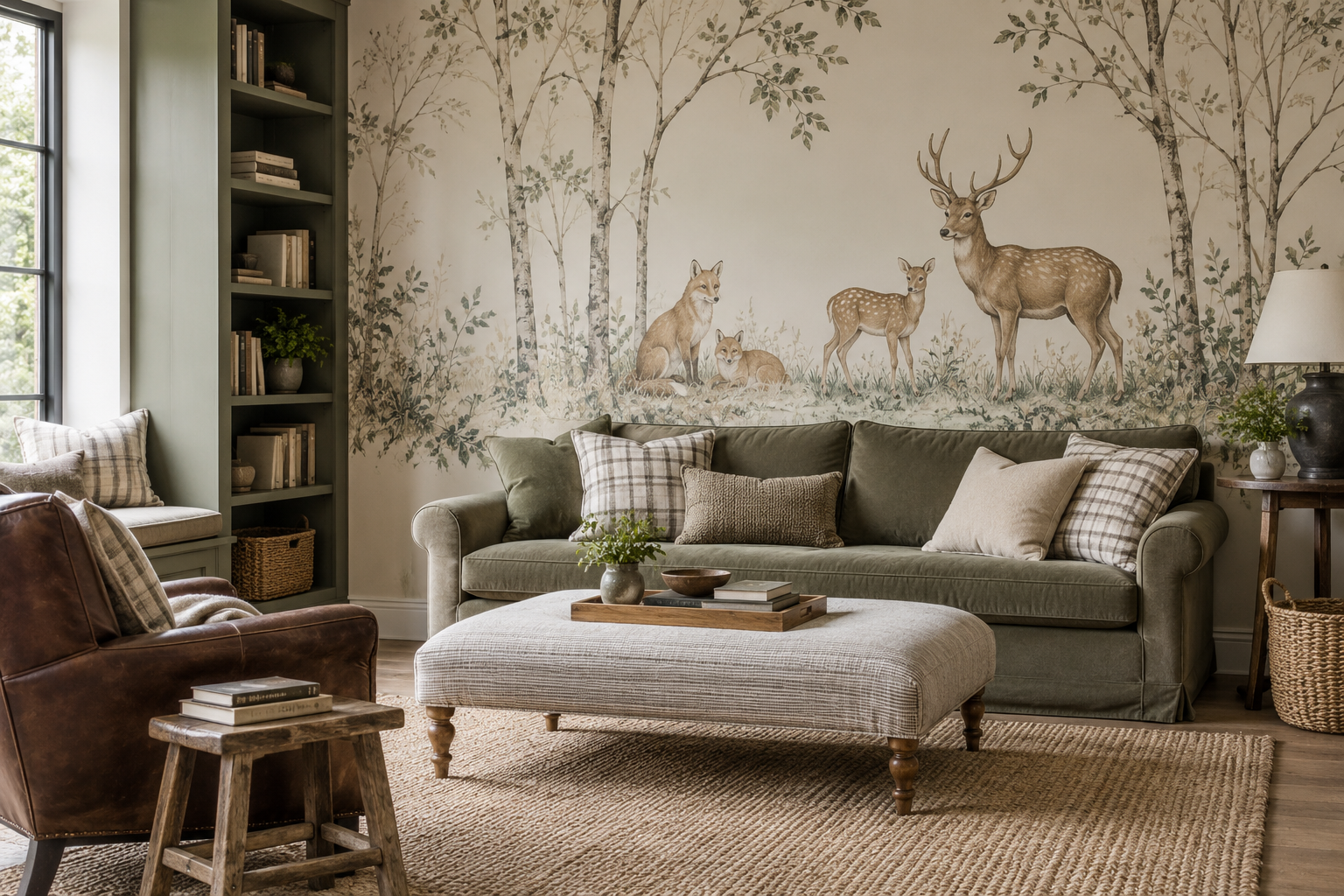
Example application: Living room · installation and removal
An animal mural can be playful, dramatic or quietly observational. The deciding factors are which animals appear, how they are drawn, their scale on the wall and the story the room already tells. A small group of woodland deer above a reading sofa feels different from a wall-sized tiger or a repeated pattern of tiny birds. Choose the image for the people who will use the room and the view they will see every day, not merely because its product category says “animals”.
Start with subject and setting
Identify the animals actually visible in the artwork. Are they woodland species among trees, sea creatures in water, birds on branches or a single large animal against open ground? Their setting matters. A deer in a lightly drawn grove can feel atmospheric in a family room; the same deer isolated on a white background may feel more graphic. A tropical scene with several brightly coloured species will introduce a stronger narrative than a line-drawn bird study.
If realism matters to you, inspect the illustration closely. Some murals are intentionally stylised and should be described as such. Do not rely on a vague title to establish species, habitat or geographic origin. A decorative image can be excellent without making a scientific claim. If a child is especially interested in a particular animal, an accurate image may be more rewarding than one that only loosely resembles it.
Consider emotional tone. A quiet sleeping fox and a running herd create different energy. An oversized face looking straight into the room can feel intense at close range, while animals integrated into a wider landscape may be easier to live with. There is no universal right mood for a nursery or family room; use the actual room and its users as the test.
Ask what the animals are doing as well as what they are. A solitary bird perched high in a tree creates one small point of attention; several animals facing the viewer create a much more direct encounter. A group sharing a clearing can read as one scene, whereas isolated character portraits become separate focal points. Decide whether the wall should offer a story to explore or a quieter backdrop for conversation. Species alone cannot answer that question.
The woodland scene in the feature image demonstrates a restrained narrative. A deer and foxes appear among lightly drawn trees above the sofa, with much of the ground left pale. The animals are recognisable from the room, yet the scene does not require every cushion and accessory to repeat a woodland motif. When reviewing a candidate, imagine the room without themed bedding or toys: would the mural still feel coherent with the furniture? That is a useful test of whether the artwork can stand on its own.
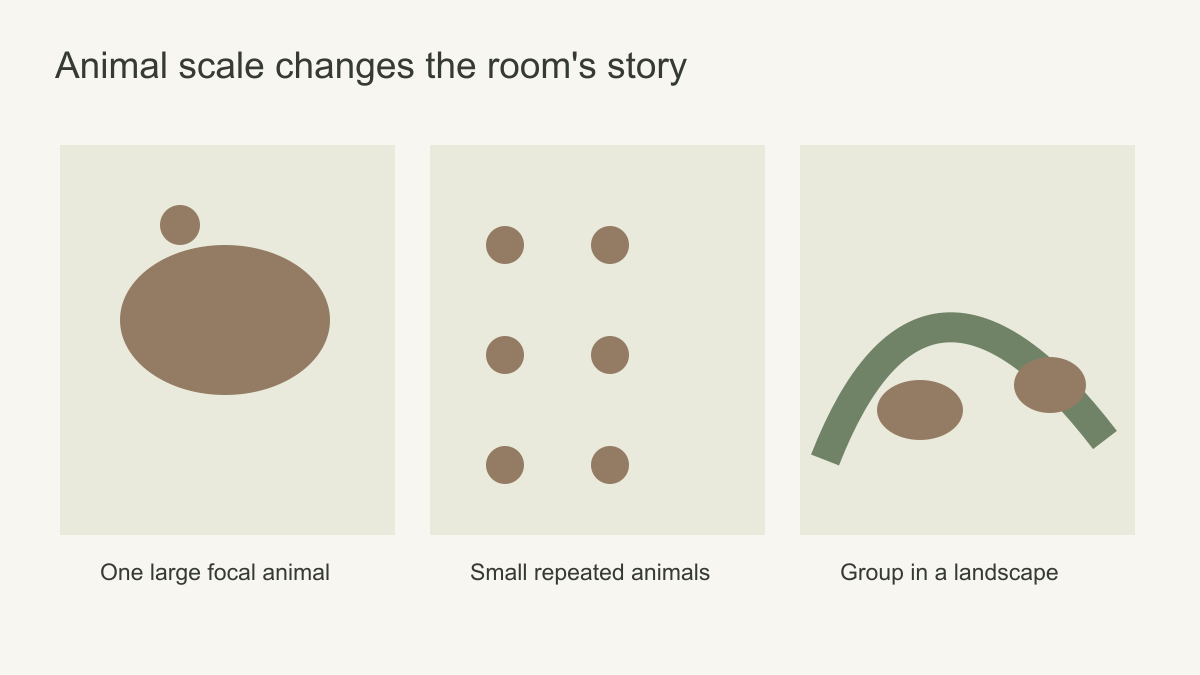 Animal scale and setting change the entire character of the wall.
Check scale from the room, not the product thumbnail
On a screen, a fox may look like a small detail. At full wall size it might be larger than a chair. That can work as a feature, but only if the room has enough viewing distance. In a narrow space, a large animal may be seen in fragments. In a broad room, a pattern of tiny animals can dissolve into general texture. Ask for the intended printed size or use a full-wall crop preview.
Furniture will hide the lower part of many murals. If the animals are placed along the bottom edge, a bed or sofa may cover them completely. A scene can be repositioned or cropped only within the limits of the artwork. Draw the major furniture silhouette over the preview and make sure the primary animal remains visible. If the mural is a repeat, check whether a panel seam cuts through a face or another important detail.
Leave space around the animals. A group of five subjects, several trees and a dense patterned rug may make a room feel crowded. A mural with open sky or pale ground can let the animals register individually. Conversely, a very simple room can carry a more detailed scene. The artwork's density should relate to what is already present.
Put a chair outline beside the principal animal in a wall-size preview. This reveals whether the figure will read as a modest discovery, a life-sized presence or an intentionally oversized focal point. Then look from the room's normal seat. Small birds may become a texture; a large tiger may dominate the entire wall. These can both work, but they create very different relationships between viewer and image.
Notice where each animal looks or moves. A fox directed towards the centre can bring the eye back into the composition, while one near the edge may appear to leave it. A still portrait concentrates attention; a line of moving figures carries it across a long wall. Allow visual space in front of a face or along a path of movement when cropping. Cutting that space away can make the animal feel cramped even if its body remains visible.
Decide whether the mural should grow with the room
Animal murals are often bought for children's rooms, but not every child wants a cartoon and not every animal mural is for a child. A subtle woodland illustration can suit a reading room or hallway. A bold graphic bird composition can belong in a dining room. If the room's use may change, ask whether the mural's drawing and palette would still be welcome with different furniture later.
For a nursery, think about sightlines from the cot, chair and doorway. The main scene may be better on a wall visible from the seating area rather than hidden behind tall storage. In a playroom, a repeat can tolerate changing furniture and activity zones. In a family lounge, an animal group set within a landscape may feel integrated with adult furniture better than a collection of isolated characters.
Imagine one realistic furniture change. A cot may become a bed, or low storage may become taller shelves. If a single animal supplies the scene's meaning, keep it visible in both arrangements; if the layout will change often, a distributed repeat may be more forgiving. In a shared room, ask the people who use it how they read the animals' expressions. A face that seems charming to one viewer can feel watchful to another. That response matters more than a nursery or adult-room category.
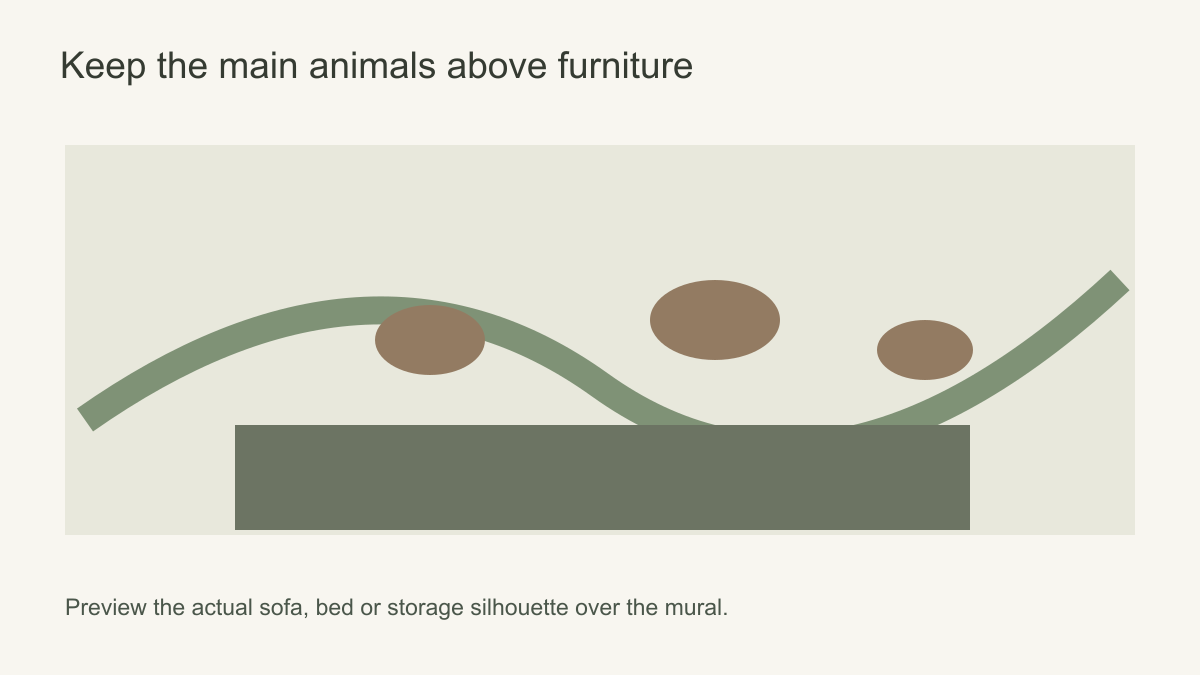 Check that furniture does not remove the principal animals from view.
Choose drawing style and colour together
Watercolour softens the outlines of animals and landscape. Engraved linework can give a scene more formal detail. Flat graphic shapes can create a bolder, more playful effect. A photographic image needs enough resolution to remain clear when enlarged. Style is not only a mood word; it affects which details survive at normal viewing distance.
A muted palette can let the animal forms lead without making the entire room brightly coloured. Cream, olive and brown may sit comfortably with timber and linen. A saturated mural can be excellent in a sparse room, provided furniture remains legible against it. Compare printed samples with the floor, upholstery and light at the intended wall. Screen colour alone cannot establish the final effect.
Do not infer material performance from the image. Whether a wallcovering suits a busy playroom depends on its actual material and care instructions, not whether it depicts durable-looking woodland or water.
Distance changes the way the animals are encountered. Delicate watercolour outlines may leave a soft landscape first, with the fox or bird discovered only on approach. Strong graphic silhouettes remain obvious from the doorway. An engraved-style drawing may reward a closer reading while appearing mostly tonal at a distance. Compare the full-wall view and a printed detail so you know whether the animal is meant to be recognised immediately or gradually.
What about cultural or wildlife references?
If a mural evokes a particular place, check whether the depicted animals belong there before describing it as a specific habitat. A fanciful combination can be fine as decorative art; it should not be presented as a faithful wildlife scene without evidence. Similarly, avoid turning animals into a generic “safari” label when the artwork's subject is more specific or entirely invented.
For an educational room, an accurate species label and a simple image may be more useful than a busy panorama. For a decorative room, composition and atmosphere may take priority. Be clear about the mural's purpose so you can assess it fairly.
Keep the relationship between animals intact
In the featured woodland, two foxes sit to the left and a deer with a smaller deer stands to the right. Pale space between them lets the viewer read an encounter rather than one crowded cluster. A narrow crop that removes the deer changes the scene's balance, while a cabinet over the foxes removes its other half. Mark the principal figures and the open interval on the wall preview, then test them against the actual sofa and storage. If the mural will serve an educational purpose, verify any species identification independently; for decoration, it is the visible relationship among the animals that matters most.