Is Mural Wallpaper Suitable for Bathrooms?
Explain splash zones, ventilation, condensation, material ratings and why a bathroom mural needs more planning than a bedroom wall.
Article focus: pricing and measurement
Budgeting this wall with confidence
Start with accurate wall measurements; the final custom mural price depends on area, material and any finishing options.
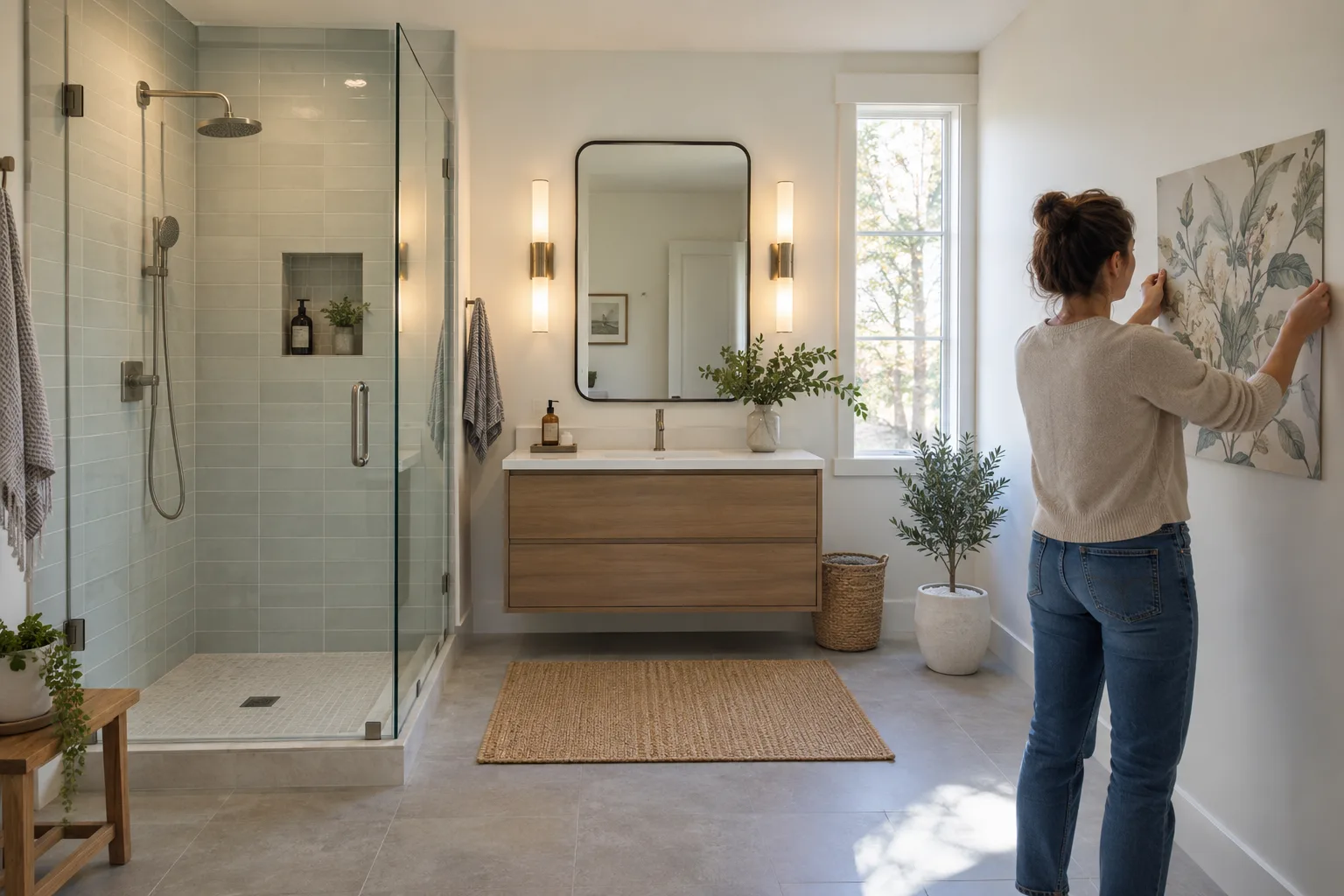
Example application: Bedroom · pricing and measurement
A bathroom mural is most plausible on a wall that remains dry during normal use, away from shower spray and repeated basin splashes. That wall can still collect condensation, so observe it after bathing and check ventilation before choosing artwork. Ask whether the exact print, adhesive and substrate preparation are approved for that exposure. “Vinyl” is not a complete waterproofing system, and a styled photograph of a bathroom cannot approve the wall inside your shower enclosure.
Divide the room into exposure zones
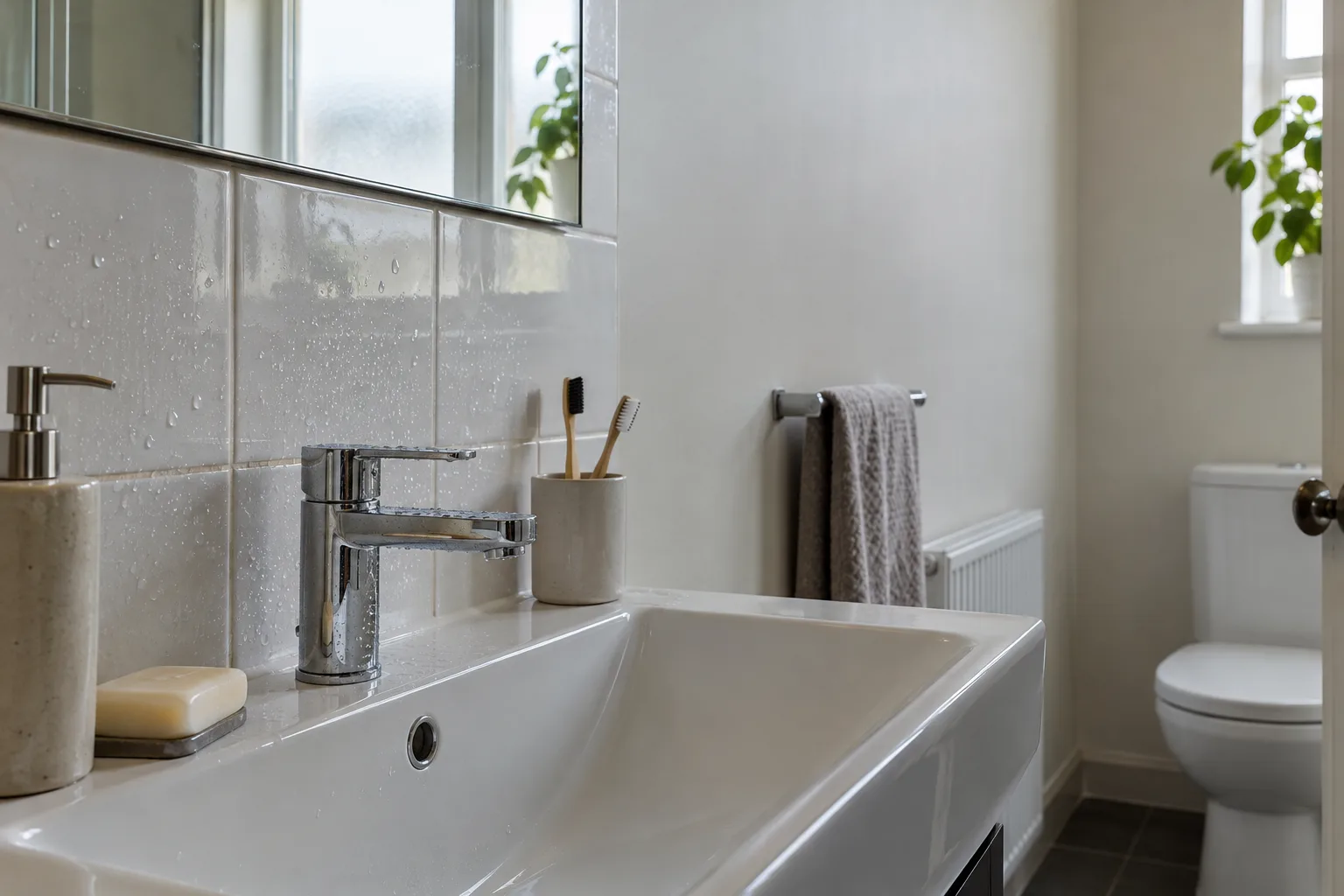
Map where water actually lands during normal use. The shower enclosure, bath surround and wall behind a basin tap can receive repeated splashes or runoff. A wall behind a toilet or across the room may stay mostly dry but still experience steam. These are different exposures. Graham & Brown's bathroom-wallpaper guidance similarly recommends keeping wallpaper away from direct splash zones. That advice is useful for planning, but the final decision still depends on the exact product you buy.
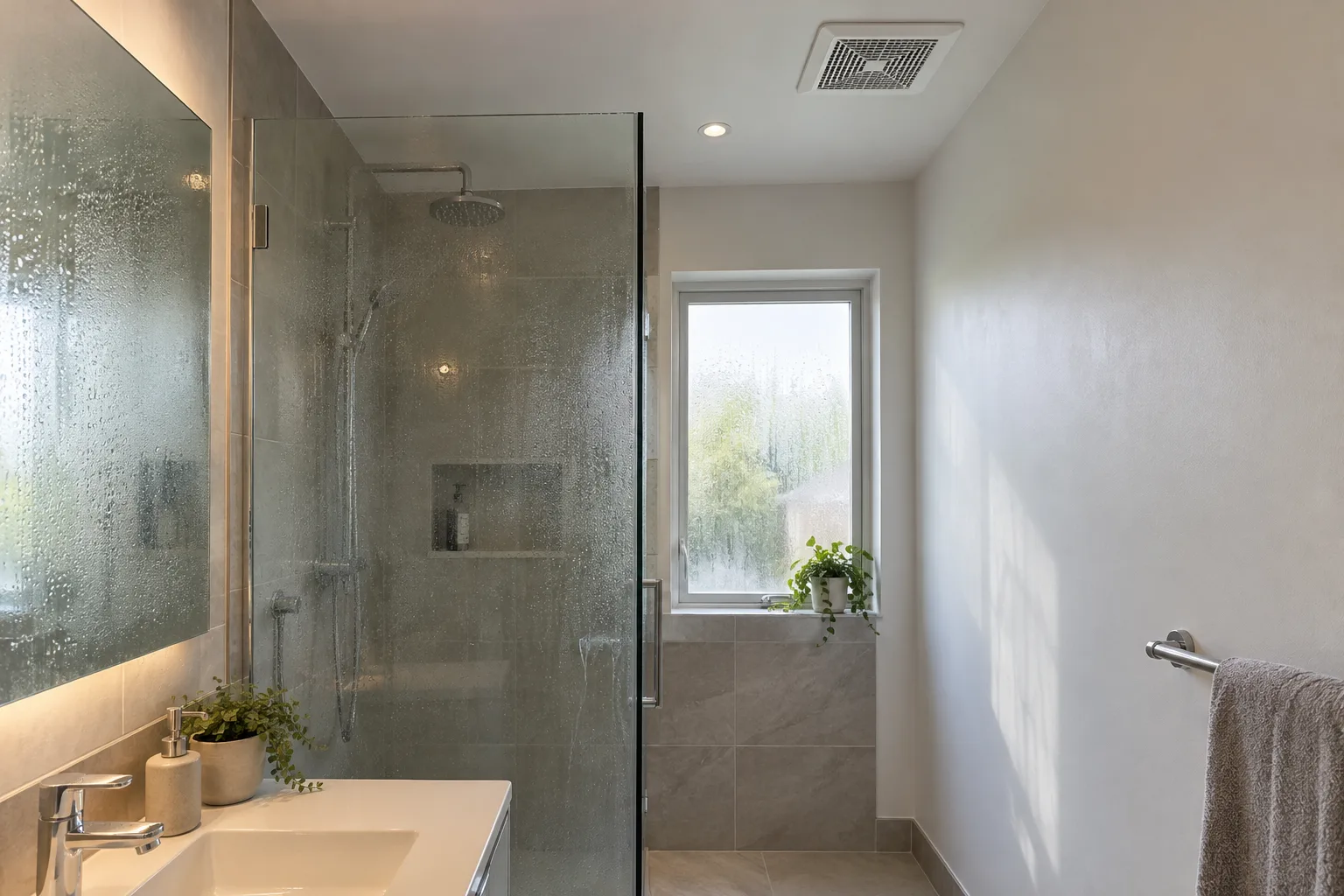
Look for signs of condensation: misted mirrors that stay wet, droplets on walls or paint that peels near the ceiling. A poorly ventilated room can keep wallpaper damp long after a shower. If moisture is already causing mould or peeling paint, address the source and ventilation before adding a mural. Covering the symptoms can hide deterioration without solving it.
What the material description does and does not prove
A vinyl face may tolerate more gentle wiping than some paper-like finishes, but it does not by itself establish a waterproof installation. Water can enter at seams, edges, cut-outs and the wall behind the print. A peel-and-stick adhesive may react differently to humidity than a paste system. Even a printed surface that resists a splash could fail if the substrate remains damp. Read the whole specification, including adhesive, edge treatment and approved use, not just the name of the face material.
Non-woven and heavier wallcoverings also vary. Some sellers may recommend them for a dry powder room but not for a full bathroom with frequent hot showers. Do not transfer a recommendation from one manufacturer’s product to another. If the supplier has no guidance for the intended zone, treat that uncertainty as a reason to choose a different surface treatment.
Where direct water exposure is unavoidable, a purpose-designed wet-area system may be required rather than ordinary mural wallpaper. That can involve a different substrate, protective finish and installation method. Do not improvise by applying an unapproved sealant over a standard print; it can change appearance or trap moisture at seams. Obtain a complete manufacturer-approved specification before committing to a wet wall.
Prepare the wall for a humid room
The surface should be clean, dry, stable and suitable for the chosen adhesive. Check for old leaks, soft plaster, stained grout, flaking paint and previous mould. Repair the cause and let the wall dry fully. A mural should not be used to conceal active dampness. The wall’s paint or primer must also be compatible with the wallcovering; follow both the paint and product curing guidance.
Plan ventilation as an ongoing condition, not a one-time installation step. A fan that makes noise but does not exhaust moisture effectively may leave surfaces wet after use. The US EPA advises checking that a bathroom fan actually exhausts sufficient air outdoors. If mirrors and walls stay wet or the fan is ineffective, address that issue first. Ventilation does not turn ordinary wallcovering into a waterproof wet-area lining.
Measure the wall only after repairs, tiling or trim work is complete. Mark the sink, mirror, towel rail, switches and any fixtures that will interrupt the mural. A crop preview can keep important artwork away from a large mirror or cabinet. These practical decisions matter because much of a bathroom wall may be hidden by fixed fittings.
Cleaning and long-term observation
Ask what cleaning method is approved for the exact print. A soft dry or lightly damp cloth may be allowed for one finish, while another permits only dry dusting. Avoid abrasive sponges and strong cleaners unless specified. At a sink, repeated wiping of one edge can be harder on a mural than occasional room humidity. The care sheet should match the way the bathroom is actually used.
After installation, watch for lifting edges, bubbling, persistent moisture or discolouration. These signs may indicate water intrusion or wall problems, not merely a cosmetic flaw. Do not glue down a wet edge and ignore the underlying issue. Ask the supplier or an installer for guidance, and investigate any leak or ventilation problem first.
Bathroom lighting can make a screen preview misleading. Cool overhead lights, mirrors and pale tiles change how colours are perceived. If coordination matters, examine a material sample beside the intended tile and paint in the real room. Use the site's crop preview to judge placement, then compare its visible area with a sketch of the mirror and fixed fittings; the preview is not a simulation of the room's lighting.
Test the proposed wall through a normal bathroom day
The sample held against the far wall in the illustrative feature image suggests where artwork might be considered; the tiled shower remains a separate wet zone. A dry-looking visualisation cannot reveal what happens after several showers. Observe the actual wall immediately after bathing and again when the fan has run for its usual period. Note droplets, persistent cool dampness, wet towel contact and splashes from the basin, then repeat the observation when the bathroom is used at its busiest. A single quiet morning is weaker evidence than ordinary daily use.
If the candidate wall remains dry, send the supplier its exact position, the observations, fixture layout and cleaning needs. Ask for written guidance on the selected print, adhesive, substrate preparation and care for that exposure. If water repeatedly reaches it, do not solve the problem with an improvised clear coat; choose a complete system expressly specified for wet contact or put the mural elsewhere. This distinction matters in a family bathroom more than in a rarely used cloakroom, but neither room label alone guarantees suitability.