What Type of Wallpaper Is Best for a Mural?
Compare non-woven, vinyl, peel-and-stick and heavier mural substrates by installation, durability, appearance and room use.
Article focus: pricing and measurement
The cost and measurement decision
Start with accurate wall measurements; the final custom mural price depends on area, material and any finishing options.
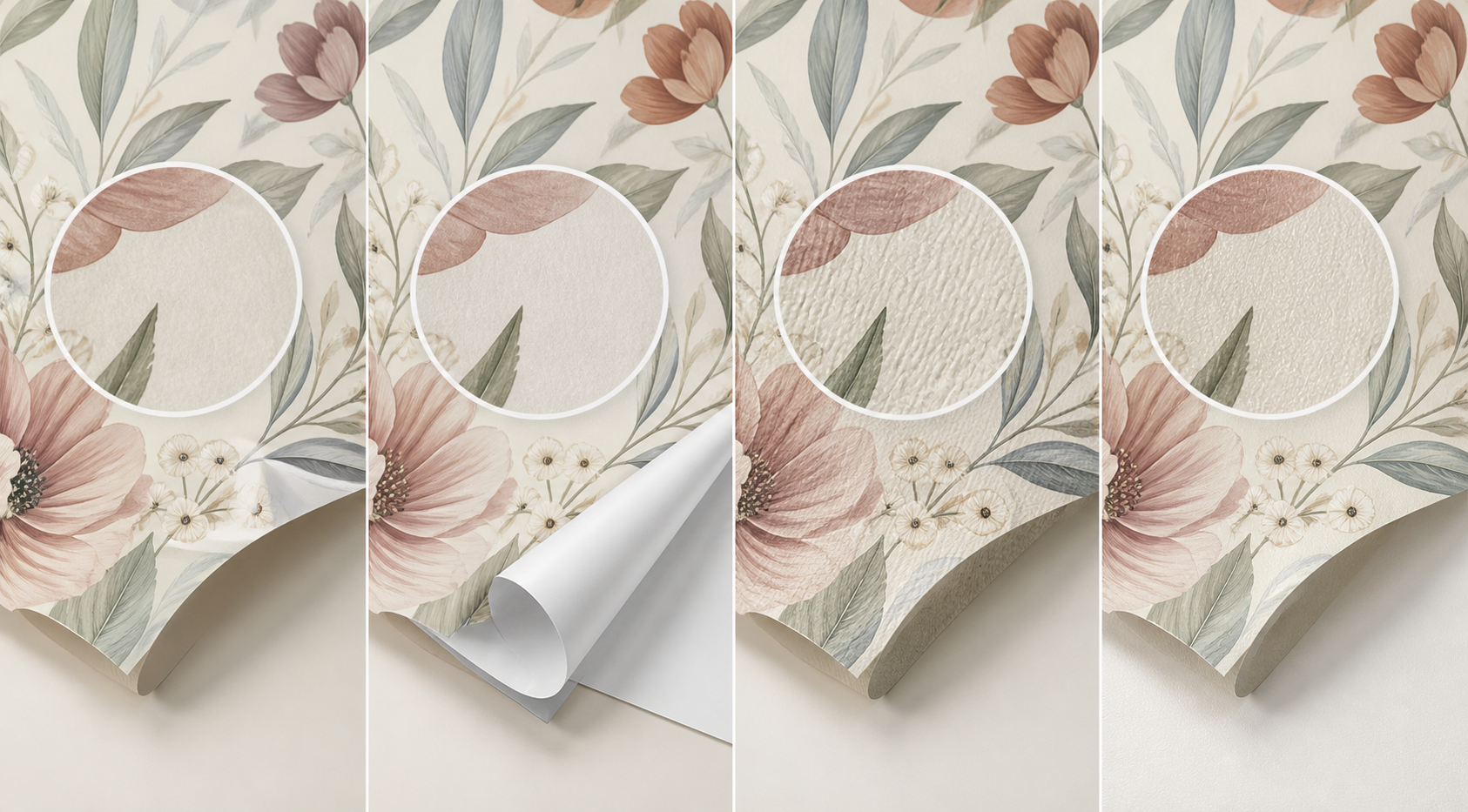
Example application: Bedroom · pricing and measurement
There is no universally best mural wallpaper type. Solowalls offers Non-Woven, Vinyl, Heavy and Peel and Stick, and each answers a different installation or surface preference. Begin by ruling out an unsuitable wall: loose paint, deep texture or active dampness cannot be cured by choosing a heavier name. Then compare the actual fitting instructions, sample appearance, care limits and panel width for the finishes that remain. A calm bedroom, busy corridor and rental call for different evidence.
Define the job before choosing a substrate
Write down five things: wall condition, moisture exposure, amount of contact, desired lifespan and installation plan. A clean, smooth, dry wall offers more options than textured plaster with old paint. A bedroom wall behind a bed sees less daily contact than a hallway near coats and bags. A tenant may value a reversible installation more than a homeowner planning to keep the mural for years. If the wall is damp or the paint is loose, the correct first step is repair, not a supposedly stronger wallpaper.
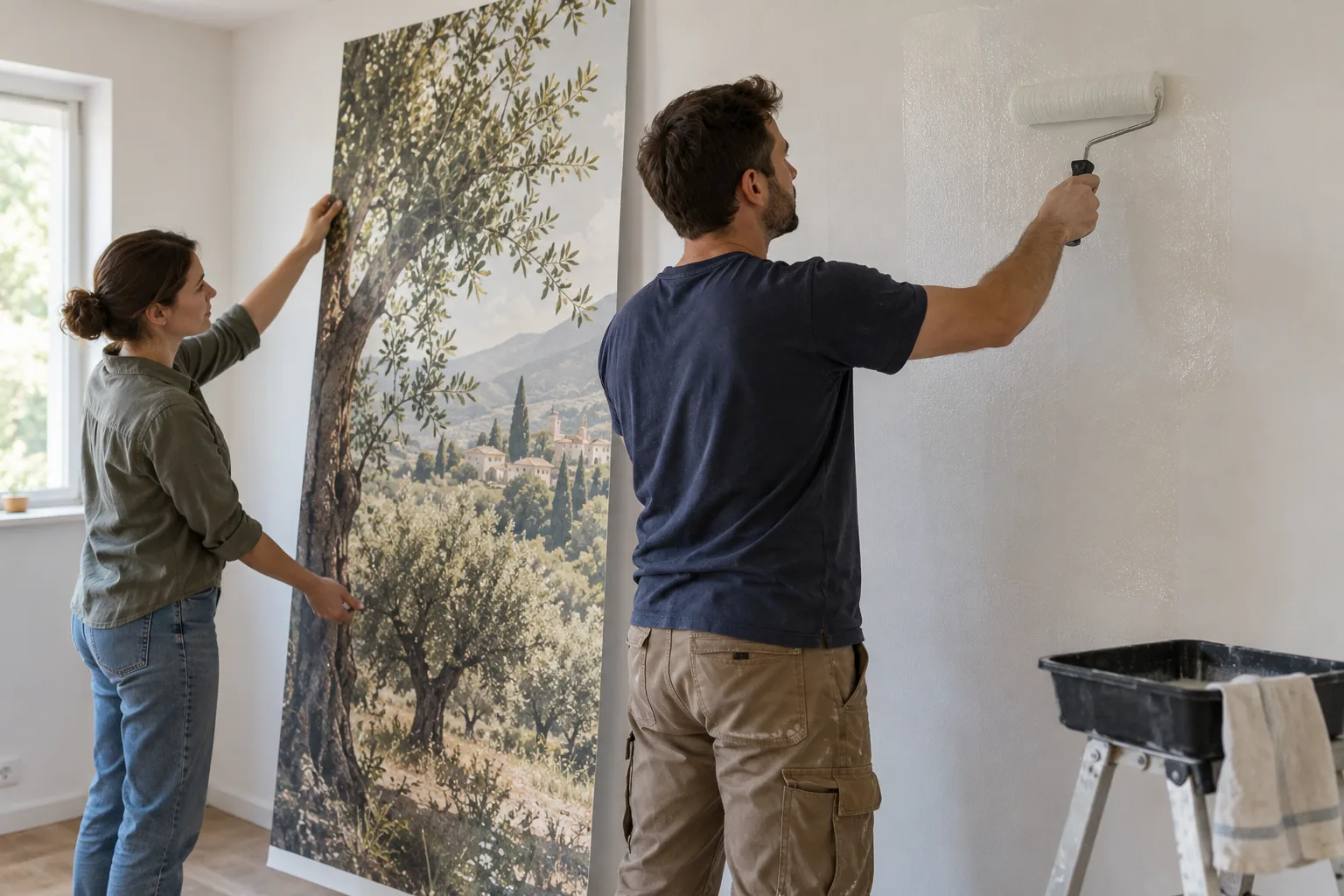
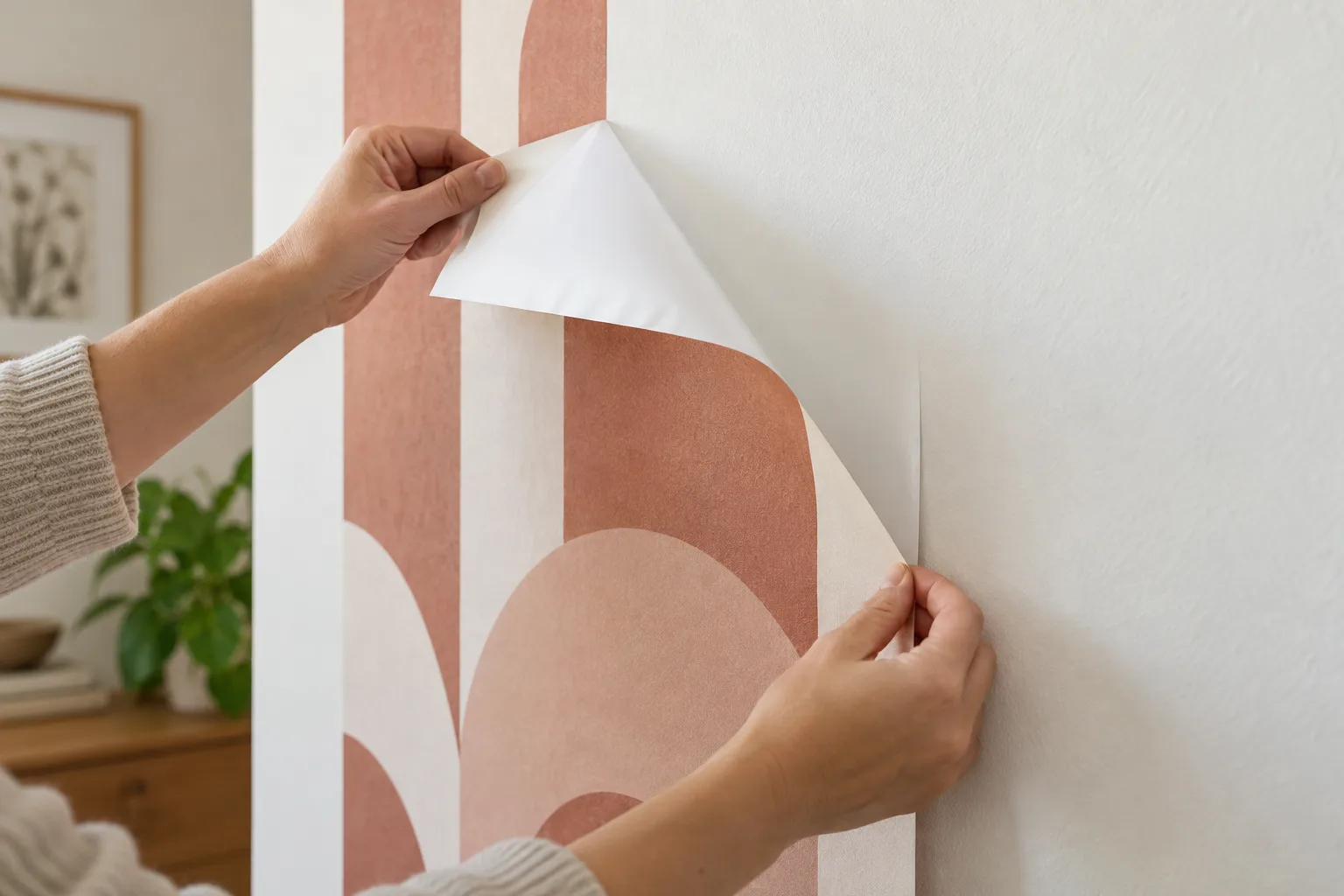
Consider who will fit it. Some people prefer the workflow of self-adhesive panels because there is no separate paste, while an experienced paperhanger may prefer a paste-the-wall method for a tall drop. Panel size, seam method and the artwork matter too: a geometric image with straight lines demands precise alignment whatever the material. Check the installation guide for the selected finish, and ask your installer what they have worked with before ordering.
Set a realistic maintenance expectation. If children or pets will brush the wall, ask about the exact finish’s cleaning instructions. A product described as vinyl may be more wipeable than some paper-like substrates, but that is not a universal rating. Read the supplier’s care information and do not infer waterproofing, scratch resistance or fire performance from a category name.
Four projects that produce different shortlists
A quiet bedroom: If the prepared wall is smooth and stays dry, there may be no performance reason to favour a more substantial-sounding option. Compare the same artwork on Non-Woven, Vinyl and Heavy samples in the room's light. Look for the finish that preserves the detail you like, then confirm that its fitting method suits the installer. Peel and Stick may also be considered if its adhesive is approved for that paint. Here, appearance and an achievable installation can matter more than a general claim about toughness.
A busy entrance: Coats, bags and hands can repeatedly touch a narrow section. First ask how marks may be cleaned from each specific finish; do not choose from the word Vinyl alone. Also locate switches and hooks before approving the crop, since these can put seams and cut-outs exactly where people touch the wall. If the expected cleaning exceeds the maker's care instructions, protecting that area or moving the mural is more realistic than buying a material with an impressive name.
A rental feature wall: Written permission and paint condition come before the material shortlist. Peel and Stick may avoid separate paste, yet an adhesive can still pull away weak paint. Ask for the removal procedure and test a small piece on the actual prepared surface if the seller recommends it. If the tenancy rules forbid wallpaper or the wall already flakes, none of the four options becomes suitable merely by being described as removable.
A large or awkward wall: A stairwell, tall drop or precise geometric image makes panel handling and seam placement central. Ask the installer to compare the supplied panel widths, alignment method and application instructions for the available finishes. A Heavy sample may feel substantial in the hand, but that does not automatically make it easier to hang at height; a self-adhesive strip is not automatically easier to position across a long drop. The best type here is the one the installer can fit accurately on a properly prepared wall.
Check the exception that could reverse the choice
Before ordering the bedroom favourite, look at the wall by lamplight. A pronounced ridge or a repaired patch may show through the chosen print, changing the preparation plan. Before ordering for the entrance, check whether bags actually rub the wall daily or whether a console table protects it. Before choosing a rental-friendly format, check whether the paint was applied recently and what the lease permits. Before committing to a tall stairwell, confirm safe access and the installer’s experience with that exact fitting method.
Bathrooms and kitchens add a separate exception: the candidate wall may be dry, or it may face direct water, cooking heat or frequent degreasing. No category name approves all locations within either room. Move a standard decorative mural out of the demanding zone unless the exact product and installation system are specified for it. The exception check prevents a plausible choice on paper from becoming an unsuitable choice on the real wall.
Compare samples with a specific question in mind
Put each sample against the actual wall under daylight and evening light. Check surface texture, colour, opacity over the existing paint and the way printed detail appears. Solowalls currently offers an A4 sample option on product pages; request the finish you intend to order. A small sample will not show the full mural composition or predict every installation outcome. If adhesion is the concern, follow the seller’s sample-test instructions and leave it for the recommended period. If cleaning matters, ask which method is approved for that finish rather than experimenting on the mural.
Price comparison should include more than the printed square metre. Consider required paste, wall preparation, installation labour, delivery and possible removal costs. A cheaper material can be the wrong economy if it is unsuitable for the room or difficult to fit on your wall. Equally, the most expensive option is not automatically necessary for a calm bedroom wall.
Make a final choice when two finishes both qualify
If two finishes both meet the written wall, cleaning and installation requirements, compare them on the exact artwork rather than on generic material names. Put the samples side by side in the intended room and look at the smallest important detail, such as fine leaves, a painted horizon or a straight architectural line. Ask the installer whether either panel format changes the joins near a doorway, mirror or focal point. Then compare the complete fitted cost, including any different wall preparation, paste and labour, rather than only the displayed material surcharge.
Keep a note of why the selected finish won: “the print reads better in evening light”, “the approved cleaning method covers ordinary marks” or “the installer can align this panel plan around the door”. That record is more useful than an unsupported claim that one type is always best. If neither finish passes the real wall's requirements, the answer is to change the wall or the project specification—not to force a winner.