Can Wallpaper Murals Be Used in Bathrooms or Kitchens?
A practical guide to using mural wallpaper in kitchens and bathrooms, covering humidity, direct splash, ventilation, material choice, and maintenance.
Article focus: pricing and measurement
The cost and measurement decision
Start with accurate wall measurements; the final custom mural price depends on area, material and any finishing options.
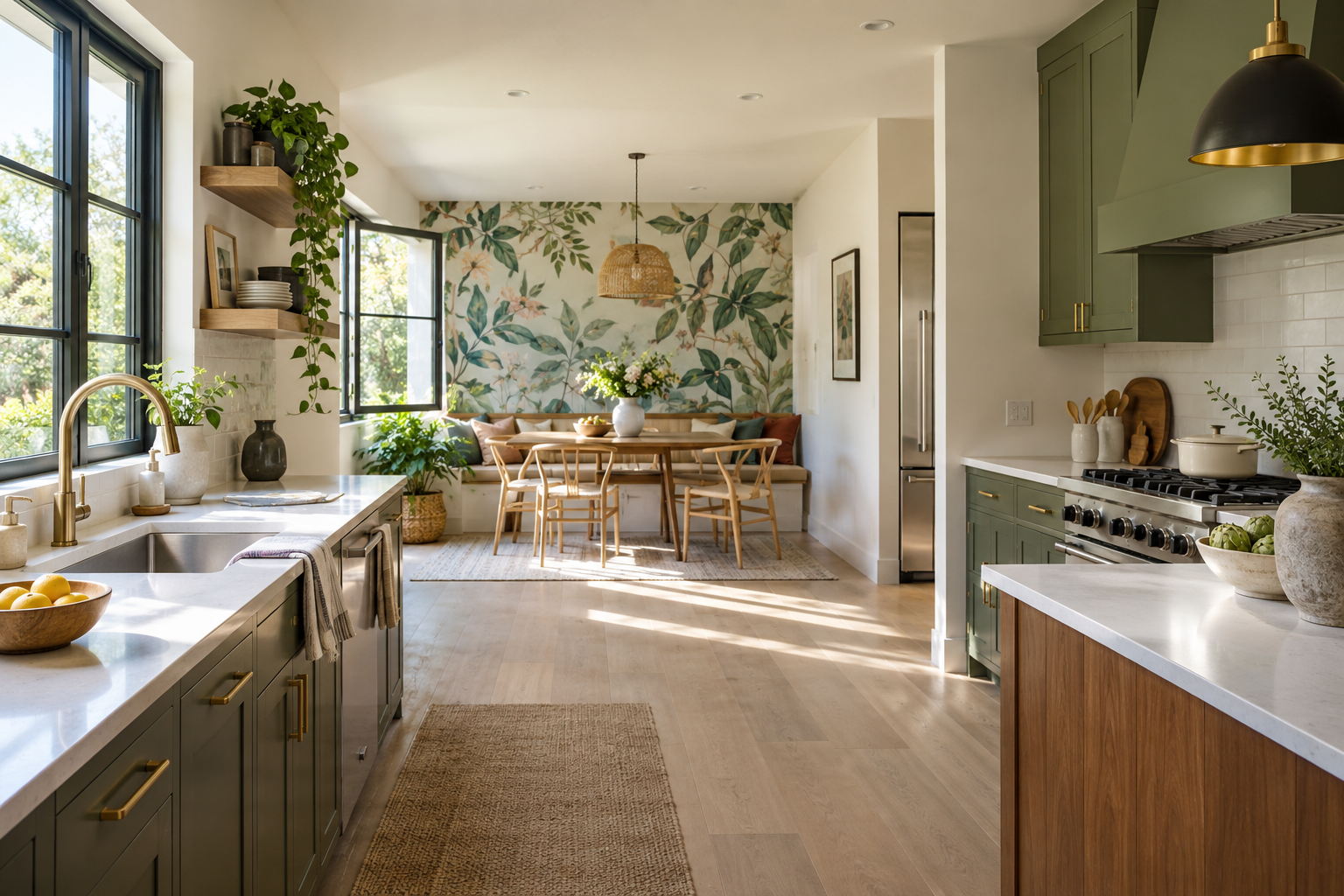
Example application: Bathroom or powder room · pricing and measurement
Yes, a mural may suit a normally dry wall in a bathroom or kitchen, but approval belongs to the exact material, adhesive and location—not to the room name. A shower enclosure, working splashback and wall beside cooking heat are different exposures from a dry feature wall. Observe whether the proposed surface receives liquid water, lingering condensation, grease or frequent cleaning, then check finish-specific instructions. “Vinyl” alone is not a waterproof or heat-resistance claim.
Map the room by exposure, not by label
Draw a quick plan of the room and mark where liquid water, steam, grease and routine wiping actually occur. In a bathroom, the inside of a shower or the wall immediately beside a bath is a different environment from a dry wall by the door. In a kitchen, the space behind a sink or cooker is different from a dining alcove. The more often the wall gets wet or greasy, the more specific the product evidence you need.
For wet splash zones, a purpose-designed, approved surface such as tile or another suitable protective system is generally the clearer choice. Do not assume that putting a decorative mural behind a sheet of glass solves every problem: edges, joints, fixings and trapped moisture still require a properly designed system. A standard printed wallcovering should not be sold to yourself as a waterproof lining.
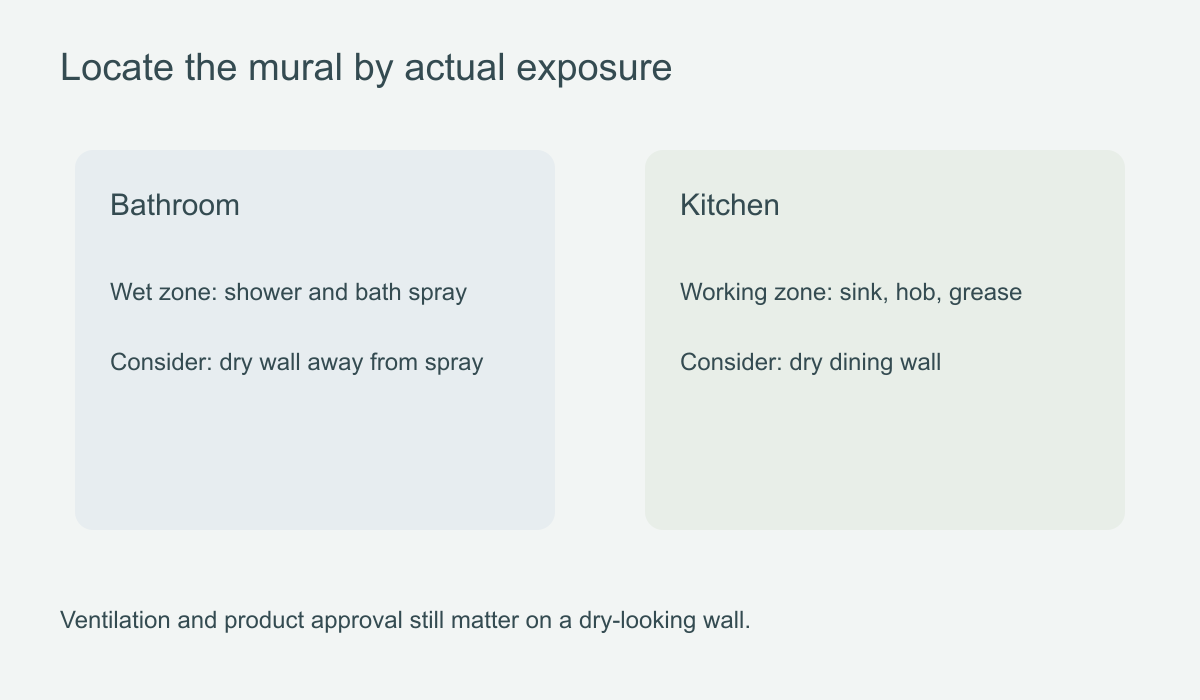 Decide on the exact wall location before selecting the mural finish.
Understand humidity separately from splashing
A wall can avoid direct splashes yet still face repeated condensation. Steam from bathing or cooking may settle on a cold outside wall, especially when ventilation is weak. If the wall already develops water droplets, staining or a musty smell, diagnose that condition before covering it. A mural can hide early evidence of a moisture problem and make later repair harder.
Ventilation is part of the room design, not a licence to ignore material limits. Check that an extractor and window are functioning and that air can circulate behind furniture. If the space is persistently damp, ask a qualified professional about the cause. The Wallcoverings Association notes that mould-related wallcovering discoloration or wall deterioration points to a moisture problem; a decorative print does not remove its source.
Material descriptions need precise reading
Some wallcoverings are classified as washable or scrubbable, and certain coated materials may be more suitable for a kitchen or bath than plain paper. Those are product-specific characteristics. The Wallcoverings Association's definitions distinguish “washable”, “scrubbable” and stain-resistant; none means that any mural with a familiar material name can sit in continuous water.
Ask the seller for the care and installation instructions for the exact material option you plan to buy. Check whether the product is approved for the proposed wall, what adhesive and primer are required, and how seams should be protected, if applicable. If the documents do not answer direct water exposure or repeated steam, do not infer approval from a lifestyle photograph.
On Solowalls, a design can be ordered in different listed material options. Choosing Vinyl instead of another option should not be read as an automatic promise of waterproofing, fire rating or a particular cleaning procedure. Evaluate the stated properties of the selected finish, not an imagined property of all vinyl products.
Compare two candidate walls, not two room names
Imagine a bathroom wall opposite the shower and a kitchen wall beyond the dining table. Both avoid obvious direct splashes. The bathroom wall may still collect droplets after every hot shower; the kitchen wall may still collect airborne grease if it is close to cooking. Observe each wall during ordinary use and after the room has cooled. Does it become visibly wet, stay clammy, gather residue, or need repeated wiping? A photograph taken in a clean, empty room will not answer those questions.
Now compare two less promising locations: the wall beside a bath and the strip directly behind a hob. The first may need a finish specified for frequent water contact; the second may be subject to appliance clearance, heat and grease-cleaning requirements. A decorative mural designed for a dry interior should not be treated as a substitute for either system. Moving the artwork a few metres within the same room can change the suitability question more than changing its colour or pattern.
Wall condition can overturn an otherwise sensible location. A damp outside corner, paint lifting near plumbing, or a greasy painted surface must be assessed and corrected before any wallcovering is specified. Do not order a made-to-measure print while repairs, cabinets, tiling or ventilation work may still change the finished wall. After that work, measure the actual surface and preview the crop with fixtures and furniture marked.
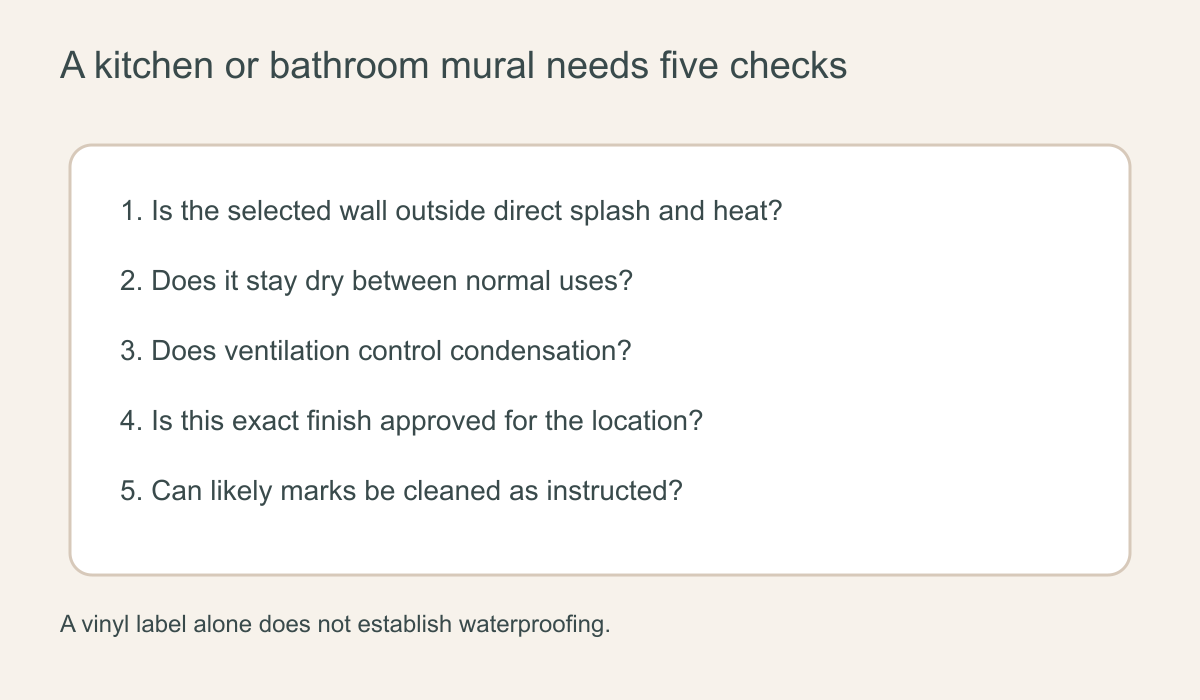 Room suitability is a chain of checks; a single material label is not enough.
Send a wall-specific brief rather than asking “Is it safe?”
Give the supplier a photograph with the proposed wall outlined. State the nearby shower, bath, sink, hob or worktop, whether droplets or grease normally reach the wall, how the room is ventilated and how often the surface will need cleaning. Name the exact material option you intend to purchase. Ask whether that complete material-and-installation system is approved for that location, which primer or adhesive it needs, and whether seams or cut edges require a specified treatment. A broad “bathroom friendly” or “kitchen suitable” answer may cover a different zone from yours.
Also ask for the finish-specific cleaning instructions. Toothpaste, cooking oil, fingerprints and condensation create different maintenance demands. The Wallcoverings Association directs readers to manufacturer-specific care guidance because finishes vary. If the approved method cannot cope with the routine marks on this wall, move the mural rather than planning to use a stronger cleaner later. A print sample can show colour and texture but cannot certify a wet-wall or heat-adjacent installation.
Choose the outcome that fits this wall
If the wall stays dry during normal use and the supplier approves the complete finish and installation system for that exposure, proceed to a measured crop and material-specific fitting plan. If condensation, grease or cleaning demands remain uncertain, pause the custom order until the cause and approved care method are clear. If the location takes direct spray, regular splashes or appliance heat without explicit approval, choose a suitable protective surface there and move the mural to a genuinely decorative wall. The separate bathroom guide examines post-shower condensation, while the kitchen guide looks more closely at sink, hob and cleaning zones.