How to Choose the Right Mural Wallpaper Material
Choose mural wallpaper material by room conditions, installation method, durability, removability, cleaning needs, and the finish you want to see.
Article focus: pricing and measurement
The cost and measurement decision
Start with accurate wall measurements; the final custom mural price depends on area, material and any finishing options.
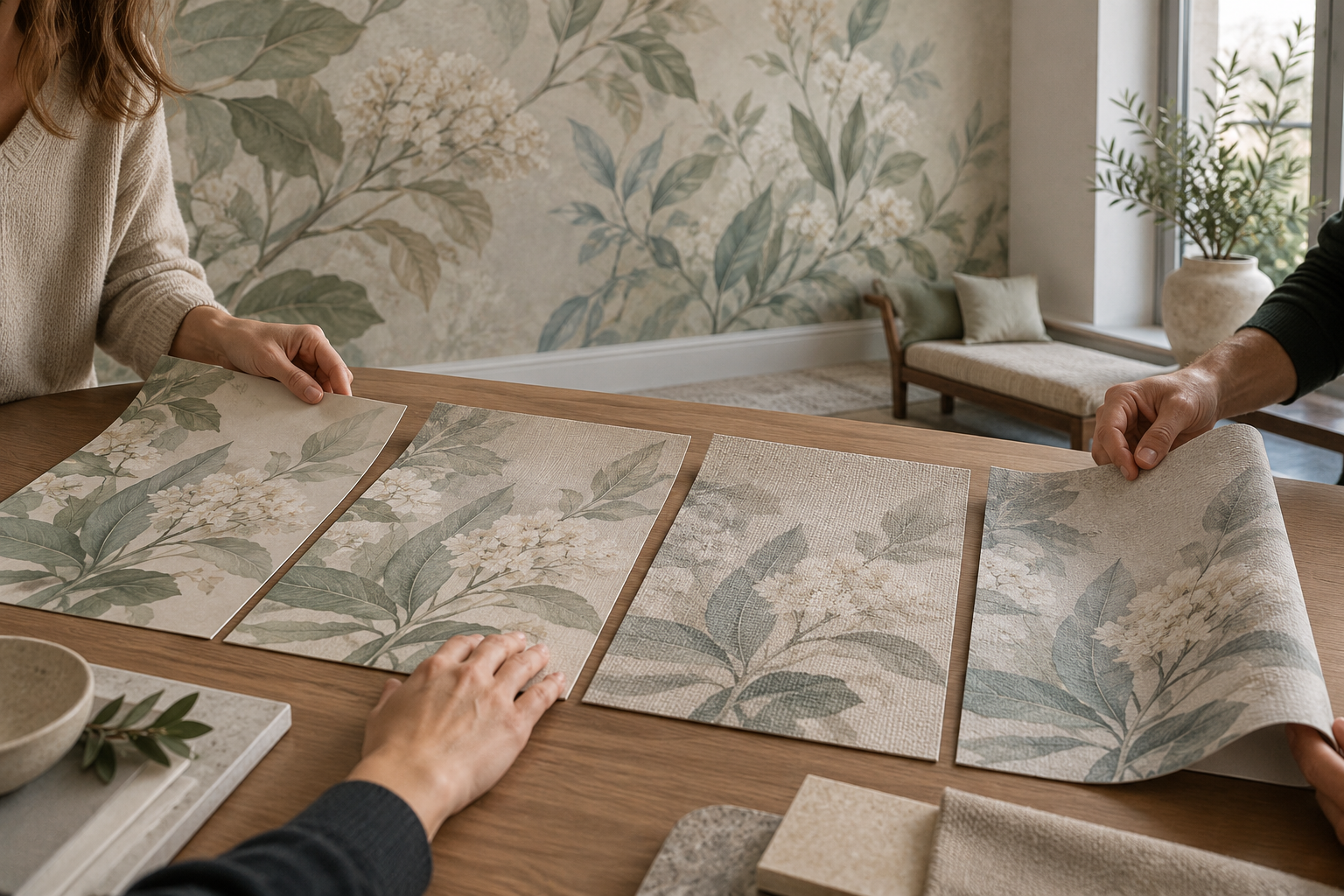
Example application: Bedroom · pricing and measurement
Solowalls lists Non-Woven, Vinyl, Heavy and Peel and Stick, but those four names are not a ranking from least to most durable. Begin with the actual wall, its exposure and the handling you or an installer can manage. Eliminate a finish only when its documented preparation, care or location limits conflict with that brief; then compare the remaining samples and live prices. Neither a higher price nor a heavier-sounding name establishes waterproofing, scrub resistance, a fire rating or damage-free removal.
Write a short room brief first
Describe the wall as it really is: smooth painted plasterboard, recently repainted plaster, a repaired older wall or something more difficult. Note direct sun, condensation, likely hand contact, furniture rubbing and how often the surface may need cleaning. A bedroom feature wall and a commercial corridor need different evidence from a product, even if you love the same landscape design in both.
Then decide how the mural will be hung. Will you install it yourself or use a professional? Are you comfortable applying paste where the chosen material requires it? Do you need the ability to correct panel alignment while hanging? Is removal later a priority? The material choice should serve that workflow rather than being selected from a photograph of the finished room.
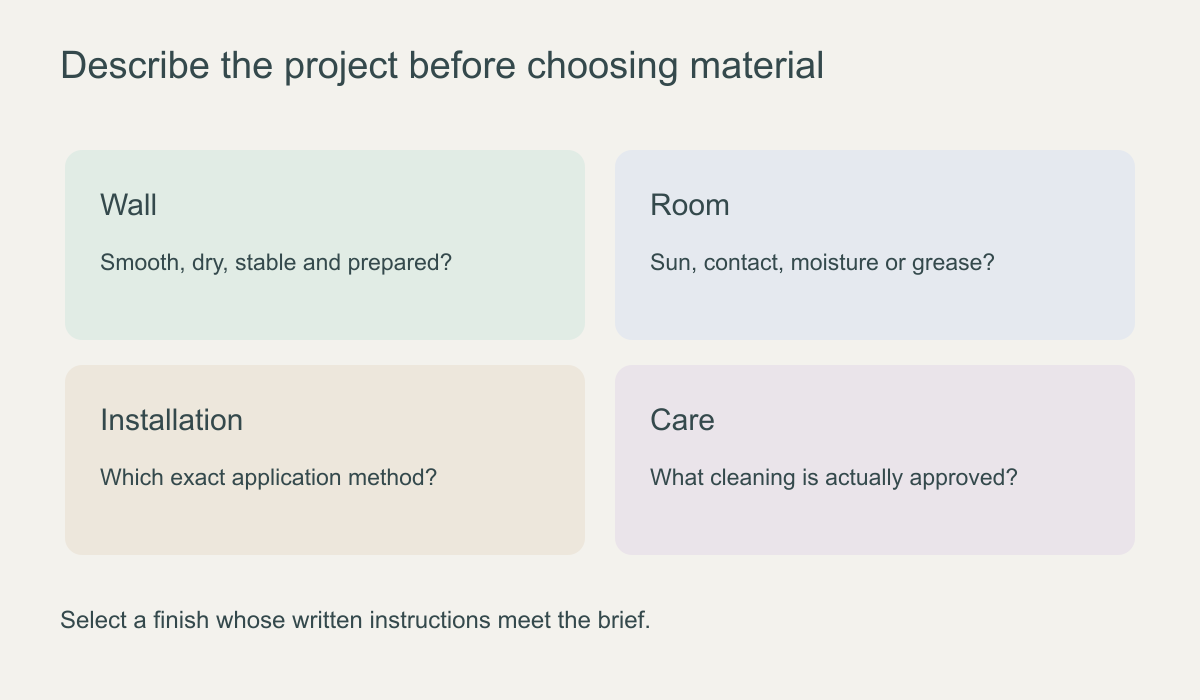 Define the project requirements before comparing material names.
Understand what the option names do and do not say
“Non-Woven” refers to a category of substrate, not a universal paste or cleaning method. Some products use a paste-the-wall system, while others specify a different process. The particular mural's instructions decide where adhesive is applied; the Wallcoverings Association's description of unpasted wallcoverings explicitly leaves application to the product and manufacturer's directions.
“Vinyl” describes the use of a synthetic material in a wallcovering, but vinyl products can have different backings and surface constructions. The name alone does not tell you whether a particular print can be scrubbed, installed near a sink or removed easily. Ask for the actual finish's care classification and room limitations. The Wallcoverings Association lists several different vinyl-containing constructions, which is why a broad label is insufficient.
“Heavy” is especially easy to over-interpret because it is a seller's option name, not a standardised performance class. Do not infer its measured weight, thickness, durability, ability to hide damaged plaster or technical rating without a specification. Compare a labelled sample under your room's light and ask how that exact finish is installed, cleaned and removed.
“Peel and Stick” primarily describes its self-adhesive application. It can remove the need for separate paste, yet it still requires a compatible smooth, dry and sound surface. Removable is not the same as reusable or guaranteed paint-safe. Check the maker's wall preparation, paint-cure and removal instructions, especially for a rental.
Match the material to the weakest part of the wall
A small damp patch or strip of loose paint can dictate the preparation for an otherwise sound feature wall. Inspect under side light and repair defects before comparing swatches. If the wall is textured, some finishes may show more relief than others, but none should be assumed to bridge deep texture or unstable paint. A sample on the actual prepared surface can help assess adhesion and show-through.
The Wallcoverings Association's preparation guidance calls for a clean, dry, structurally sound wall and correction of irregularities. These principles are common to the decision. The finish-specific instruction may add a particular primer, adhesive or waiting period. If the current wall cannot meet the stated requirements, selecting a different material name is not necessarily a solution.
Decide how much cleaning the room really requires
In a low-contact bedroom, dry dusting may cover most care. In a family dining area, fingerprints and occasional food marks matter more. Near a kitchen worktop, frequent wiping may be unavoidable. Ask whether the exact product is rated washable or scrubbable and what cleaning solution, if any, is approved. The Wallcoverings Association defines those terms separately; they are not interchangeable promises.
Do not choose a mural as a substitute for a wet-zone splashback based solely on the word Vinyl. Likewise, a matte look does not tell you how much moisture the print tolerates. If a location requires regular soaking, abrasive cleaning or high heat, move the mural to a drier feature wall or use a surface designed for that duty.
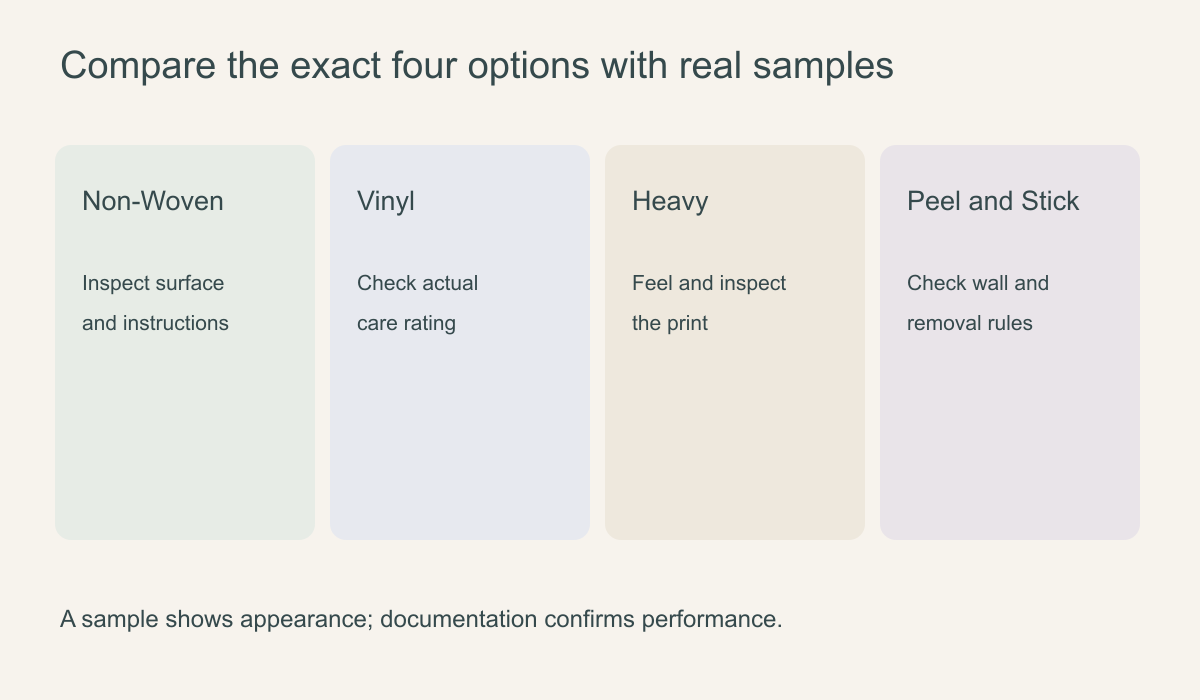 Illustrative swatches show a comparison method; request labelled samples of the exact finishes.
Use samples for appearance, not imaginary lab results
Order physical samples where available and look at them against the wall in daylight and evening light. Feel the surface, inspect sheen from an angle and place a sample beside flooring, curtains and furniture. A sample can reveal that a slightly textured finish makes a watercolour look softer, or that a smooth finish shows more contrast. It cannot by itself prove a claimed lifespan, fire rating, fade resistance or future removability.
If colour accuracy is critical, compare a sample containing the actual artwork rather than an unrelated pattern when possible. Print colour, substrate and room lighting interact. A computer preview is useful for crop and scale, but it is not a physical material test. Keep the chosen swatch or photograph its label so the ordered option matches what you evaluated.
Ask the supplier five concrete questions
For the selected finish, request: its compatible wall surfaces; required primer and application method; stated cleaning limits; any room or moisture restrictions; and the recommended removal process. If you need a particular performance rating, ask for the supporting product information rather than a general assurance. Also ask whether the option changes the live price shown for your dimensions.
Use the answers to eliminate unsuitable choices rather than forcing every option into a fixed ranking. If the wall is freshly painted, confirm the cure and adhesion requirements before comparing appearance. If frequent wiping is unavoidable, rule out any finish whose care sheet does not permit it. Only after those checks should texture, sheen and installation preference decide between the remaining options.
“Custom size” and “material” are separate decisions. A mural can fit your wall dimensions perfectly yet be a poor choice for the wall condition or cleaning needs. Measure the finished wall, preview the design crop, then choose a finish whose documented handling suits the location. Keep the instructions with the order so the installer and future owner know what was used.
Record the choice you actually made
Once a finish meets the wall's preparation, fitting and care requirements, record its exact option name, approved primer or adhesive, cleaning instructions and configured price with the order. This prevents a later installer or cleaner from treating a general material label as a specification for the product on your wall. If two finishes both qualify and the remaining question is how they serve a bedroom, busy entrance, rental or tall wall, compare those room-specific trade-offs in the project examples guide.