Can You Install a Wall Mural Yourself?
A DIY decision guide covering wall size, corners, confidence, tools, time and when professional help is safer.
Article focus: pricing and measurement
What to settle before pricing
Start with accurate wall measurements; the final custom mural price depends on area, material and any finishing options.
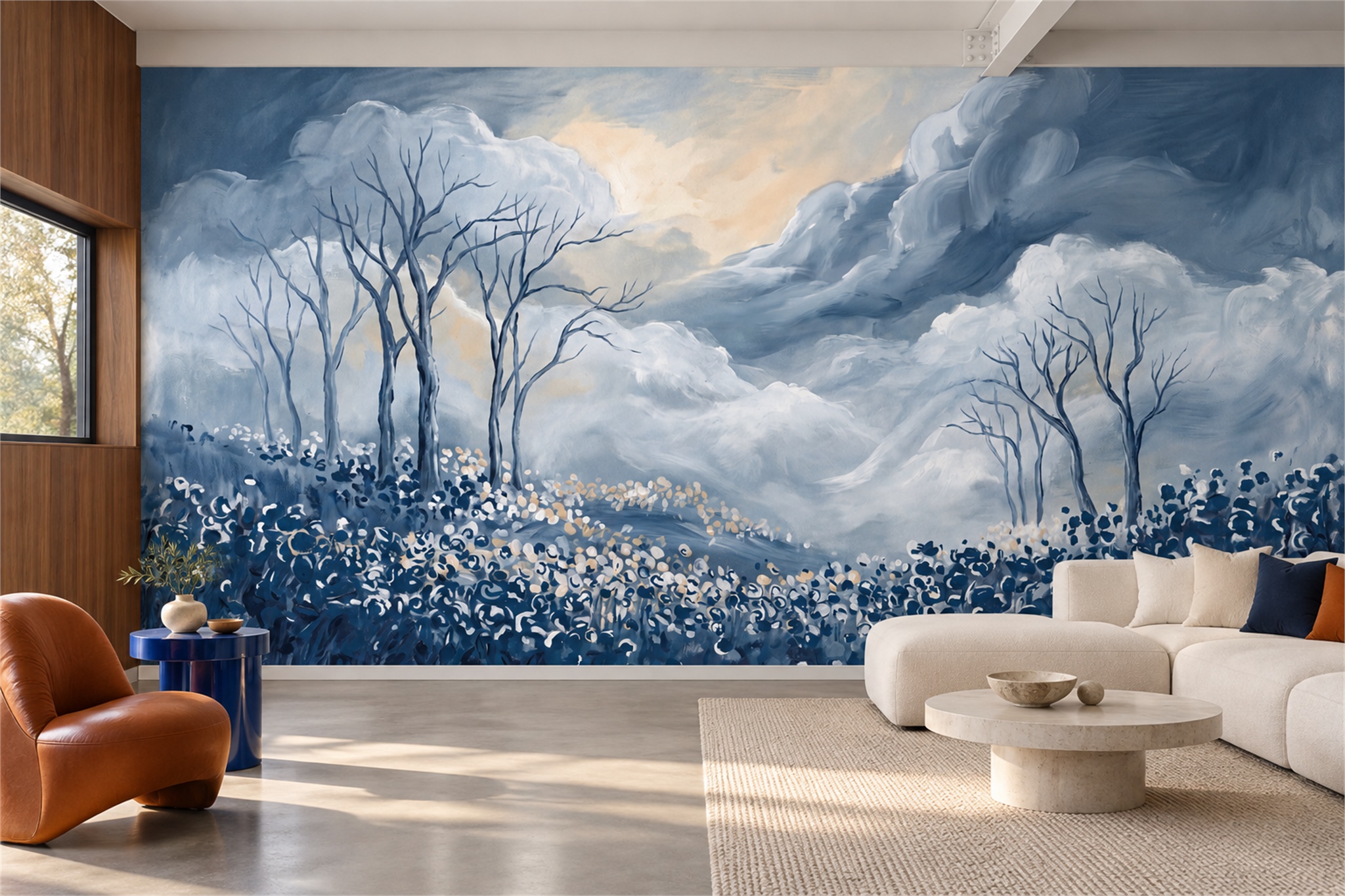
Example application: Bedroom · pricing and measurement
Can you install a wall mural yourself? A yes or no based on wallpaper type alone tells you very little. Imagine three orders: a simple bedroom wall, a stairwell wall and a small wall broken by doors. The first may be a reasonable two-person home project; the second is primarily an access problem; the third can be deceptively intricate even though it uses less print. Use these examples to identify which part of your own project requires skill, time or specialist equipment before you place an order.
Case one: a clear bedroom wall
Suppose the mural is for a single, reachable wall behind a bed. There are no windows or fitted cabinets within the print area, and the furniture can be moved far enough away to lay the panels out. If the painted surface is clean, dry, smooth and sound, the main challenge is establishing a true vertical start and matching adjacent image edges. A patient pair of adults with the appropriate tools can reasonably consider doing the fitting themselves.
Do not take the bedroom label as proof the surface is ready. Check repaired patches, flaking paint and old adhesive before committing to a finish. The Wallcoverings Association's preparation guidance emphasises a clean, dry and structurally sound substrate. Follow the mural maker's specific priming instructions as well. If a repair is still damp or the paint lifts when tested, pause the wallpaper project until that issue is resolved.
Make the decision in two parts. First, can you prepare or commission preparation of this wall? Second, can you safely hold, align and smooth the full-height panel without rushing? A simple rectangular wall may be DIY-friendly, but it does not excuse skipping the printed instructions. A helper should know where panel one begins and how the material is meant to join. If you have only ever applied small decals, a broad pasted panel is a different task.
Case two: a stairwell with changing height
Now imagine the same artwork on a staircase. The upper edge rises above ordinary working height while the floor beneath the installer changes level. The difficulty is not simply that the mural is larger. One person may be holding the top of a flexible panel while the other stands several steps below, unable to see whether a seam is drifting. A ladder placed on a stair is not a substitute for a safe working platform.
In this case, arrange an assessment of access and wall condition before finalising the mural dimensions. The installer may need a particular panel width or a different starting point to handle the slope. Ask what access equipment is required and who provides it. Do not order a crop based on a quick measurement at the lowest point; measure the full intended printed area and identify the highest and lowest edges. The installer should see the approved composition before production if their method affects panel placement.
DIY may still be possible for someone with relevant experience and safe equipment, but prior success on a low bedroom wall does not transfer automatically. The cost of professional fitting here is buying controlled access and panel handling, not merely paying someone else to smooth wallpaper. If no safe access plan exists, change the wall choice or postpone the project. A mural is not worth an improvised climb.
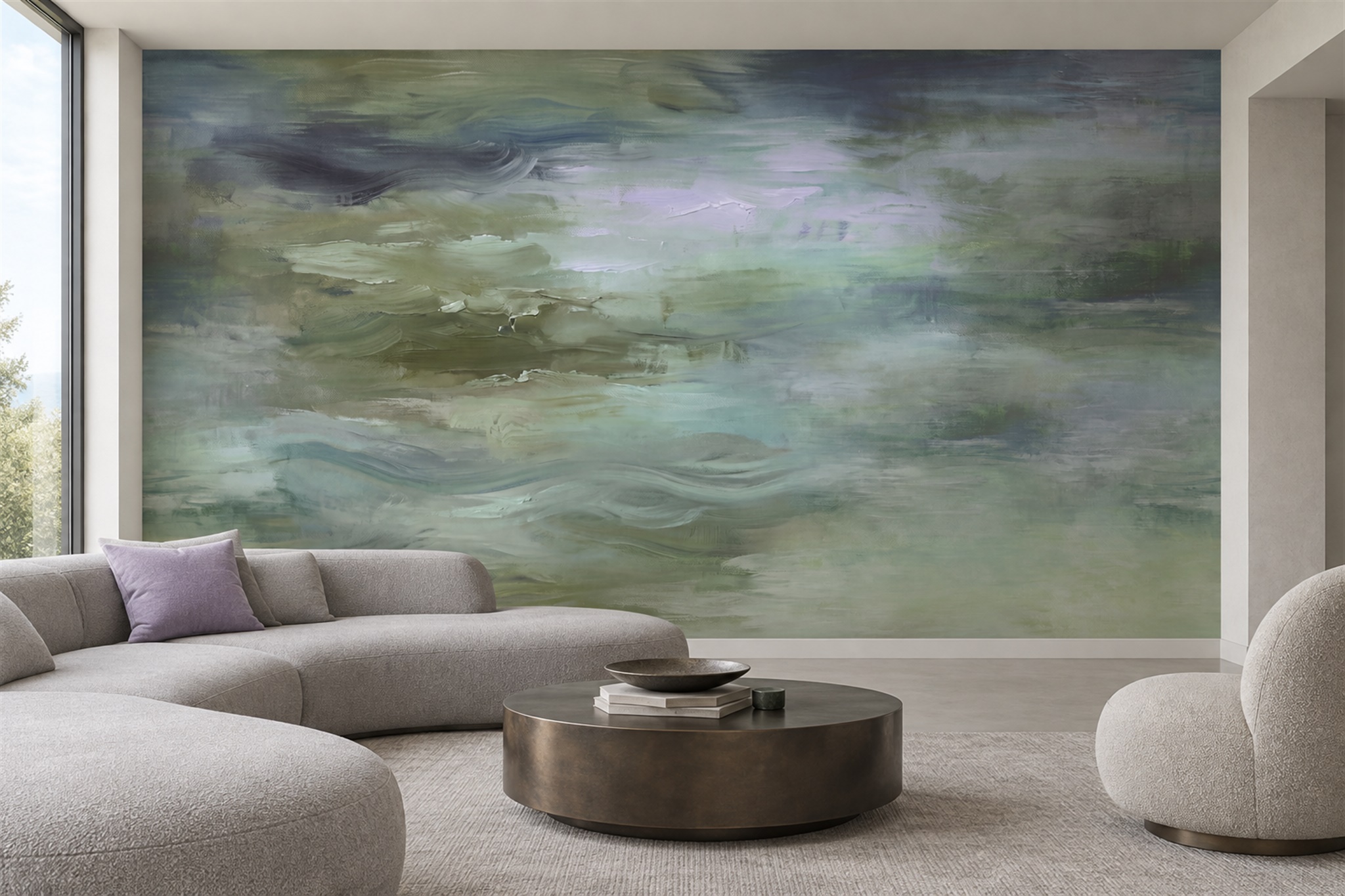
Case three: a short wall with several interruptions
A wall can be small and still difficult. Picture a narrow hall with two doors, a switch and a mural of architectural arches. The print area is modest, but each opening forces a decision about where a seam and an arch should fall. If the crop hides an important motif behind a doorframe, careful fitting will not bring it back. If a straight line crosses a seam, even a small alignment error may be obvious at eye level.
Before choosing DIY, draw the actual wall to scale, including trim and openings, and compare it with the crop preview. Ask the supplier how the numbered panels and seam method will work around the interruptions. The Wallcoverings Association's plumb-line guidance explains why a true vertical reference matters even when room corners are not square. On this wall, you may need to preserve that reference while working past openings rather than treating each section as an independent rectangle.
Material matters differently here than in the stairwell. A self-adhesive sheet can grab an edge before its pattern is aligned; a pasted finish has its own adhesive and working-time requirements. Neither can be declared easier without the manufacturer's instructions and the wall layout. If multiple precise cuts must be made close to electrical fittings, isolate power where appropriate and use qualified help for electrical work. Do not cut around live components.
Compare the whole job, not just the fitting fee
For the bedroom example, the DIY budget may chiefly be preparation materials, tools, adhesive if required, a helper's time and an uninterrupted day. For the stairwell, include safe access equipment and the skill to use it; if that cannot be provided, a low DIY price is misleading. For the interrupted hall, include the time spent verifying the crop and the replacement risk if a precise motif is cut incorrectly. These are distinct costs even when all three murals have a similar printed area.
Ask an installer to separate measurement, preparation, fitting and trimming in the quote. You may decide to clear furniture and prepare a sound wall yourself while commissioning the complex fitting. Conversely, an installer may measure and assess the wall before you order, then tell you that the installation itself is straightforward enough to undertake. Make sure the installer knows the exact product, panel order and joining method rather than assuming experience with repeat wallpaper covers every custom mural.
Compare the final cost against the consequences of an error. A custom image may not be replaceable panel by panel; confirm the supplier's policy rather than assuming it is. The value of professional help is higher when an image's defining feature crosses several seams or when the mural cannot be fitted without specialised access. It is lower when the wall is simple, the material instructions are clear and your team has the time to check each stage.
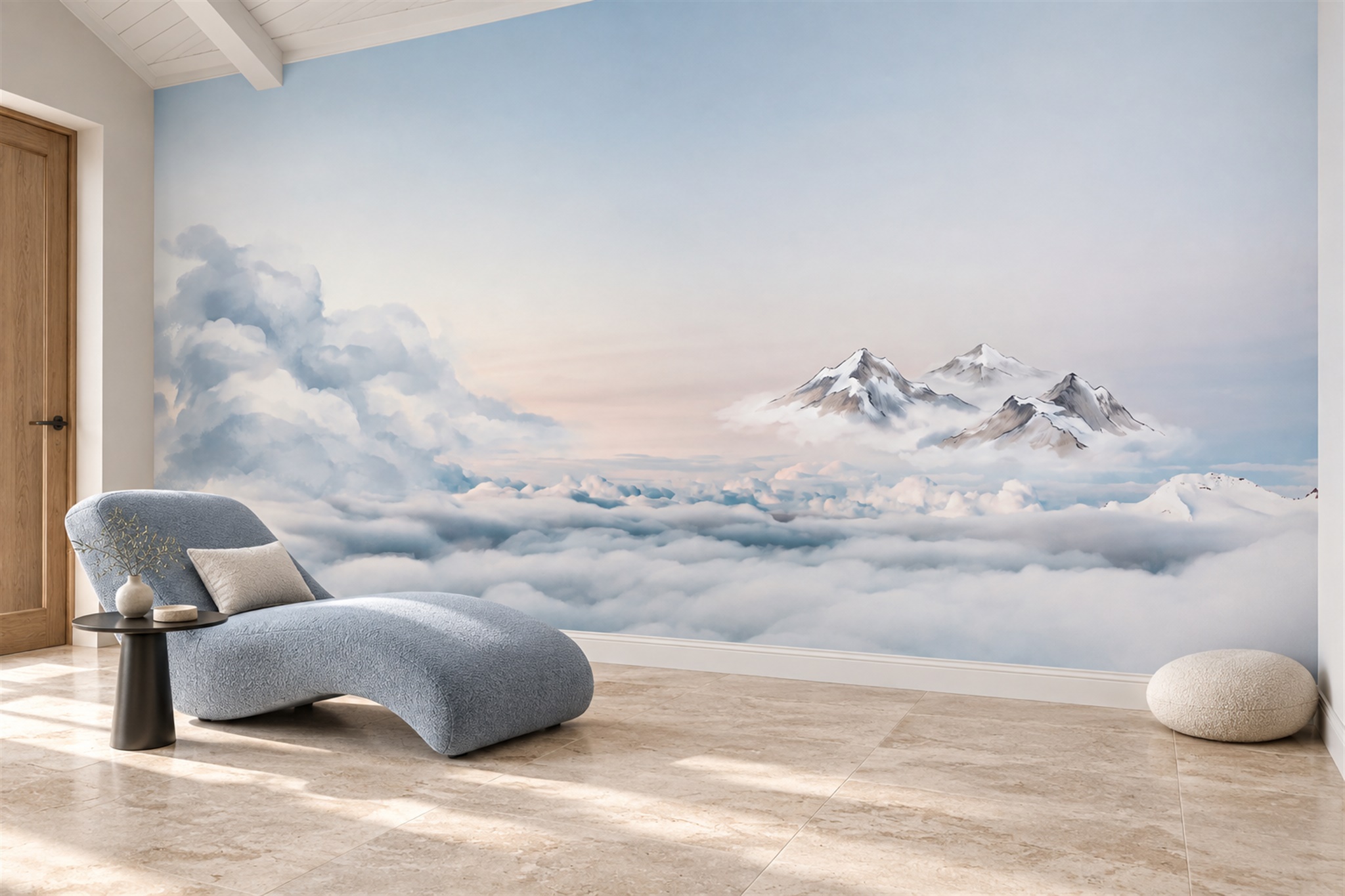
Decide who will handle the hardest stage
Make the DIY decision by the hardest stage, not the wall's area. On a clear low wall, the challenge is keeping a long drop supported and plumb. On a stairwell, it is safe access. Around doors and switches, it is preserving the image while making precise cuts. Assign each difficulty to a named person or trade before ordering; a quote can cover only the stage you cannot safely manage. Before either a DIY or professional installation begins, compare the numbered panels with the approved image. If they disagree, stop before cutting or applying adhesive and ask the supplier to resolve it.