Can You Install a Wallpaper Mural Yourself? DIY Decision Guide
Use this DIY decision guide to assess your wall, product, tools, confidence, and the situations where professional mural wallpaper installation is safer.
Article focus: pricing and measurement
Budgeting this wall with confidence
Start with accurate wall measurements; the final custom mural price depends on area, material and any finishing options.
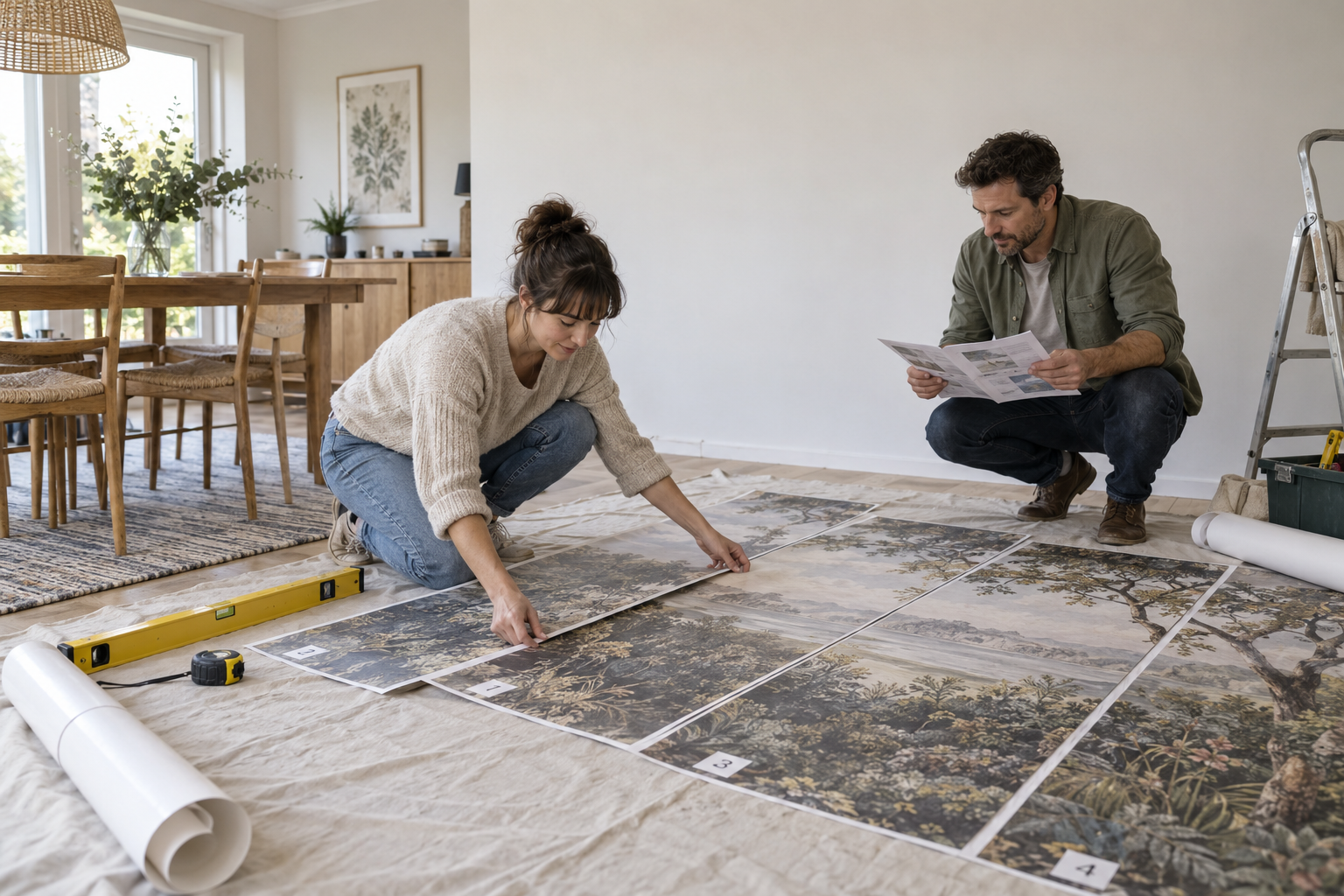
Example application: Any room with a suitable, prepared wall · pricing and measurement
You can install a wallpaper mural yourself if the wall is sound and accessible, you can follow the instructions for the material you bought, and you have enough time to position the numbered panels without rushing. The real question is not whether DIY is theoretically possible. It is whether this wall, this print and this household leave room to correct a small mistake. Use the checks below before you pay for tools or schedule an installation day.
Run a five-minute go-or-no-go test
Stand in front of the intended wall. Can you safely reach its full height? Is it a simple rectangle rather than a staircase or an alcove? Does the surface feel smooth, dry and firmly painted? Is there enough clear floor space to inspect and arrange the panels? Finally, can you ask another adult to support a long panel while you align it? A “no” does not automatically make DIY impossible, but each one adds a separate task or risk.
This is a first screen, not a wall inspection certificate. A newly painted wall may look dry while the coating has not fully cured; a stain may point to moisture below the surface. Check the paint and mural makers' preparation instructions, allow the specified curing time and investigate any recurring dampness before setting an installation date. If the wall is sound and access is simple, proceed to the panel-layout check. If the wall needs repair, postpone either DIY or professional hanging until that work is complete. If the wall is ready but height, openings or seam-critical artwork exceed your comfort, obtain an installer quote.
If the wall is still damp, has peeling paint, or has obvious texture, do not treat a different adhesive as a shortcut. Fix the underlying condition first. The Wallcoverings Association's preparation guidance stresses a clean, dry and sound surface and recommends appropriate preparation for painted, new or previously papered walls. No amount of careful seam matching makes a failing surface reliable.
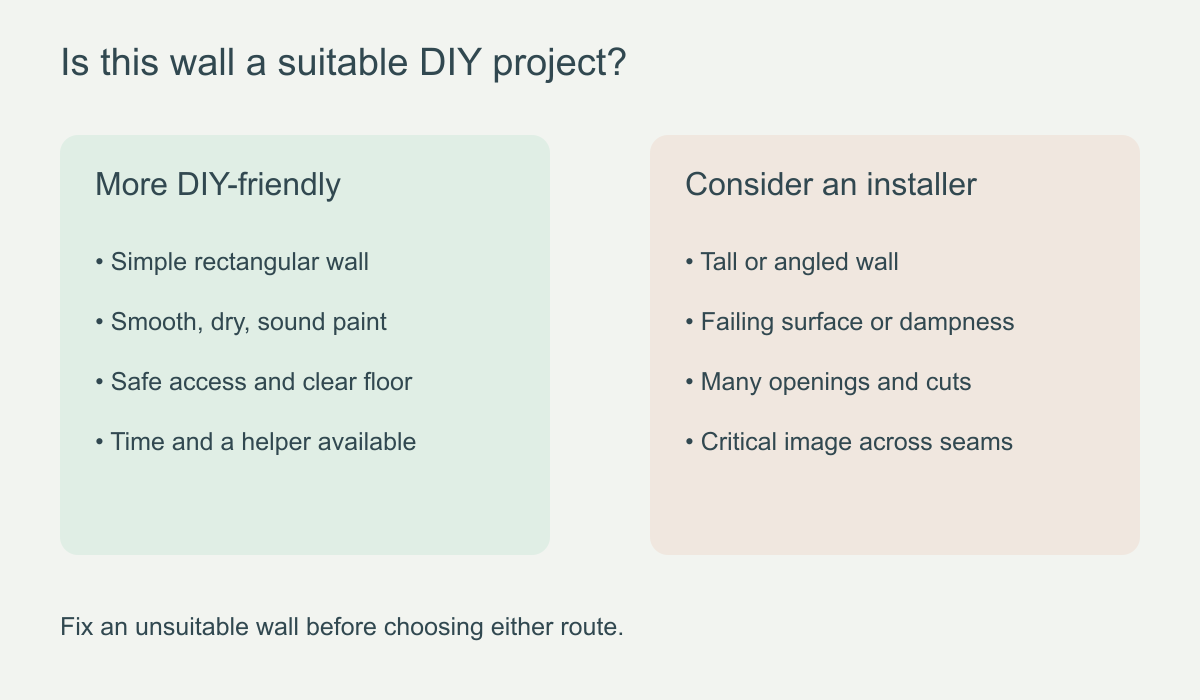 Accessibility, wall condition and image complexity matter more than DIY enthusiasm alone.
Count the decisions, not just the panels
Two murals with the same number of panels can have different difficulty. A misty abstract scene may tolerate tiny visual differences; a face or a horizon spanning several seams will not. A wall with one uninterrupted run lets you establish a straight starting line and follow the numbered order. A wall interrupted by windows, sockets, fitted cabinets or a sloping ceiling requires more cutting and more chances to lose your reference point.
Check the exact joining method before beginning. Some products have panels that butt edge to edge; others require an overlap and a specific trim. Peel-and-stick and pasted finishes also differ in how long they can be adjusted once placed. Follow the instructions supplied with your selected finish rather than a video using another material. The Wallcoverings Association's adhesive overview specifically notes that application methods depend on the wallcovering.
A mural is a continuous image, so the first panel matters disproportionately. If it leans a little, each later panel is compared to a bad reference. A level or laser line is more reliable than the room corner. If you have never hung wallpaper, practise only with a separate sample or offcut on a similarly prepared surface where the manufacturer permits it. Do not cut a numbered mural panel into a test piece; that panel forms part of the finished image.
Plan the day around interruption points
Choose a day when the room can stay clear and lighting is good. Lay the panels out before using adhesive or removing backing. Check numbers, image continuity, colour and visible damage. If something appears wrong, photograph it and contact the supplier before altering the print. The Wallcoverings Association's installation sequence begins with inspecting the goods and advises stopping when a discrepancy appears.
Prepare the tools specified for your material: typically a reliable level, tape, pencil, clean smoother, straightedge, sharp spare blades and floor protection. A pasted system will require the correct adhesive and application tools. A self-adhesive system needs careful management of the release liner. Disconnect electrical power before removing switch or outlet covers, and seek qualified help if you cannot do that safely.
Allow time for wall preparation, panel inspection, establishing the start line, hanging, checking seams and trimming. The hanging itself is only one part of the job. Trying to squeeze everything into an hour before guests arrive is a poor test of your decorating ability; it is a schedule problem.
What can one person realistically manage?
One experienced installer may be able to handle a narrow panel on a low wall. Large, full-height panels are more awkward. While one person aligns an upper edge, the loose lower section can fold onto itself, collect dust or pull the sheet off line. A helper can support the free section, read panel numbers and step back to inspect the image. If no reliable helper is available and the panels are long, factor that into the DIY decision.
A helper is not a substitute for preparation. Agree who controls the top, who manages the bottom and when to pause. Do not press a whole panel down while the other person is still trying to correct its seam. For pasted paper, work within the product's stated open time; for peel-and-stick, expose backing in manageable sections. Both methods reward calm coordination.
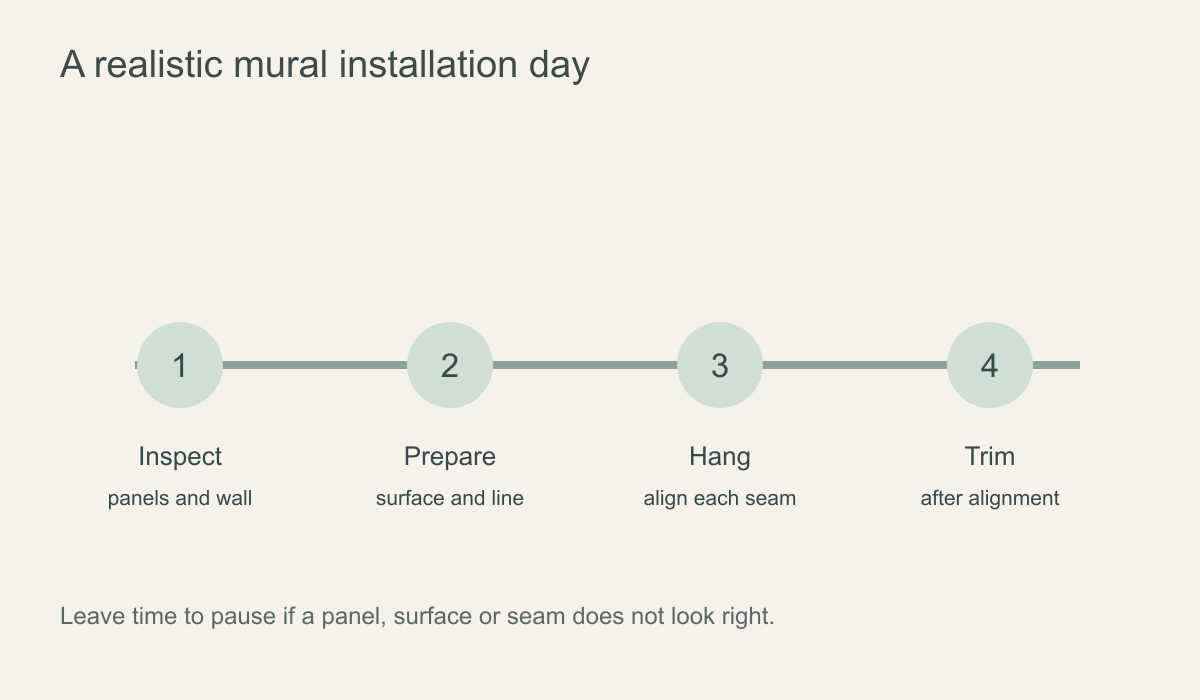 Reserve time for inspection and alignment; trimming is the last stage, not the first.
When is hiring an installer worth it?
Professional help makes particular sense for high walls, stairwells, several adjoining walls, costly custom artwork or complex subjects crossing many seams. It is also sensible where wall repairs, electrical fittings or access equipment are involved. Ask an installer whether they have worked with sequential murals in the precise material you chose. Experience with repeat wallpaper alone does not guarantee familiarity with a single large scene.
Get a written scope: wall preparation, adhesive supply if required, furniture moving, outlet handling, trimming and responsibility for any discovered wall defects. Give the installer the product instructions, chosen crop screenshot, order dimensions and a marked wall photograph. If a separate panel plan exists, include it, but do not assume that every online order provides one. A professional should not have to infer the intended placement from a catalogue thumbnail.
The cost comparison is not merely “installer fee versus free DIY”. Include tools, primer, possible wall repairs, your time and the risk of replacing a damaged panel or custom print. If you can do the work safely and patiently, DIY may be economical. If one error would require remaking the entire mural, professional time may be a rational part of the project budget.
Make the DIY decision before ordering tools
For a plausible DIY job, rehearse with the first two numbered panels still dry and protected. Mark the true starting line, have one person support the loose length and let the other sight the image join. If a door, height or panel size prevents either person from controlling the sheet without stretching it, ask an installer to assess the layout. A dry rehearsal cannot predict every bubble, but it exposes handling and access limits before a custom panel is difficult to reposition or replace.