Can You Choose the Crop and Position of a Custom Mural?
Explain how image positioning protects important subjects and creates a better composition around furniture and architecture.
Article focus: pricing and measurement
The cost and measurement decision
Start with accurate wall measurements; the final custom mural price depends on area, material and any finishing options.
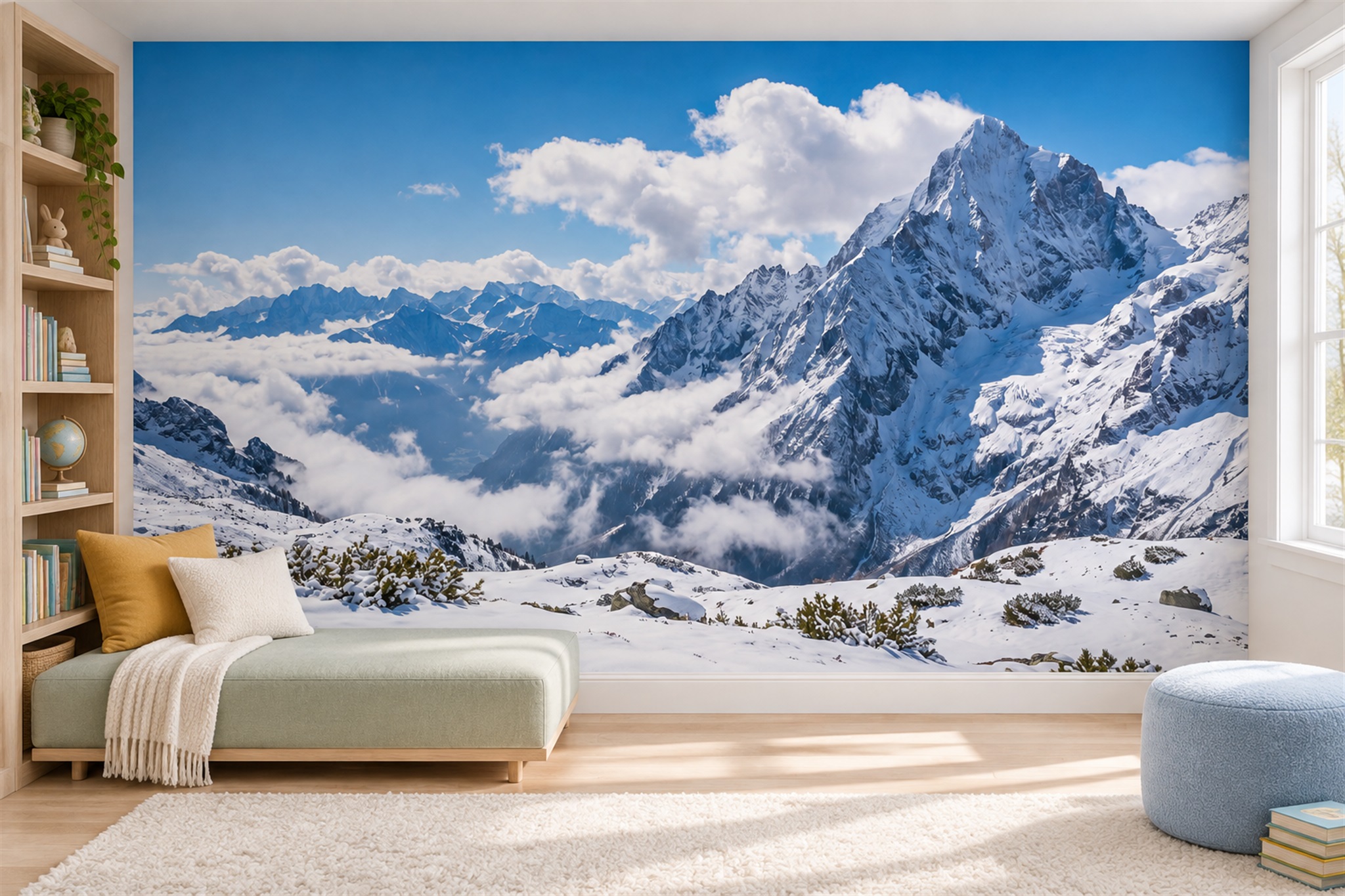
Example application: Dining room · pricing and measurement
Yes: Solowalls' standard mural preview lets you position artwork within the entered print rectangle. Moving a mountain peak away from a doorway preserves its scale but may lose scenery at the opposite edge. The standard catalogue tool does not offer a general motif-size control; the separate upload-your-own-image process does offer zoom. Compare saved positions at the same dimensions against a wall sketch with openings and furniture, rather than a catalogue room image.
Match the requested change to the control available
Start with a specific instruction: “move the mountain peak away from the door”, “make the peak larger”, or “show more sky”. The first is a position change that the standard catalogue preview can help you test. The second asks for a different motif scale, which that preview does not generally control. The third asks whether the source artwork has more sky available at the selected wall proportions. Treat them as three separate requests when contacting the supplier; a drag that solves one may worsen another.
On an uploaded personal image, the separate zoom control can change how much of the source appears inside the print frame. Save the original file before testing a tighter zoom, and take any source-quality warning seriously. The catalogue and upload routes should not be assumed to offer identical editing controls or production checks. If the desired change is unavailable on the chosen product page, ask whether a separately prepared proof is possible before placing the order. Do not describe a new scale as approved merely because a room mock-up looks larger on screen.
Record one comparison at unchanged print dimensions for each option you can actually select. Note the artwork's position, the subject you are protecting and what is lost at the opposite edge. If no selectable position retains both important subjects, stop adjusting in tiny increments: the request may need a different source layout or a different mural. For the underlying aspect-ratio maths and what the preview frame can and cannot represent, use the separate crop-preview guide. Here the decision is which change to request and which version to approve.
Choose the point from which the wall will be read
Stand in the doorway and identify what you see first. Then stand or sit where you will spend the most time: on the sofa, at the desk or by the bed. The strongest part of the mural may not need to be mathematically centred on the wall. It may need to be centred in the view left open by a wardrobe, or shifted above a headboard so it is not hidden. Decide which viewpoint matters most before moving artwork around a digital preview.
For a dining room, a horizon aligned with the view across the table can make a landscape feel spacious. In a nursery, a small animal near the floor may be charming until a cot hides it. In a narrow hallway, an oversized single motif near the entrance can feel abrupt while a more gradual scene leads the eye along the wall. These are examples of placement decisions, not fixed rules. The right answer depends on the mural’s actual composition and the room’s sightlines.
Make a simple elevation of the wall with fixed doors, windows and large furniture. Mark the desired focal point with an X and note its approximate distance from a corner or height above the floor. That map helps you judge the online crop. If the supplier offers a separate design review, “keep the peak visible above the sofa, about one metre from the right corner” gives a usable target; “centre it nicely” does not.
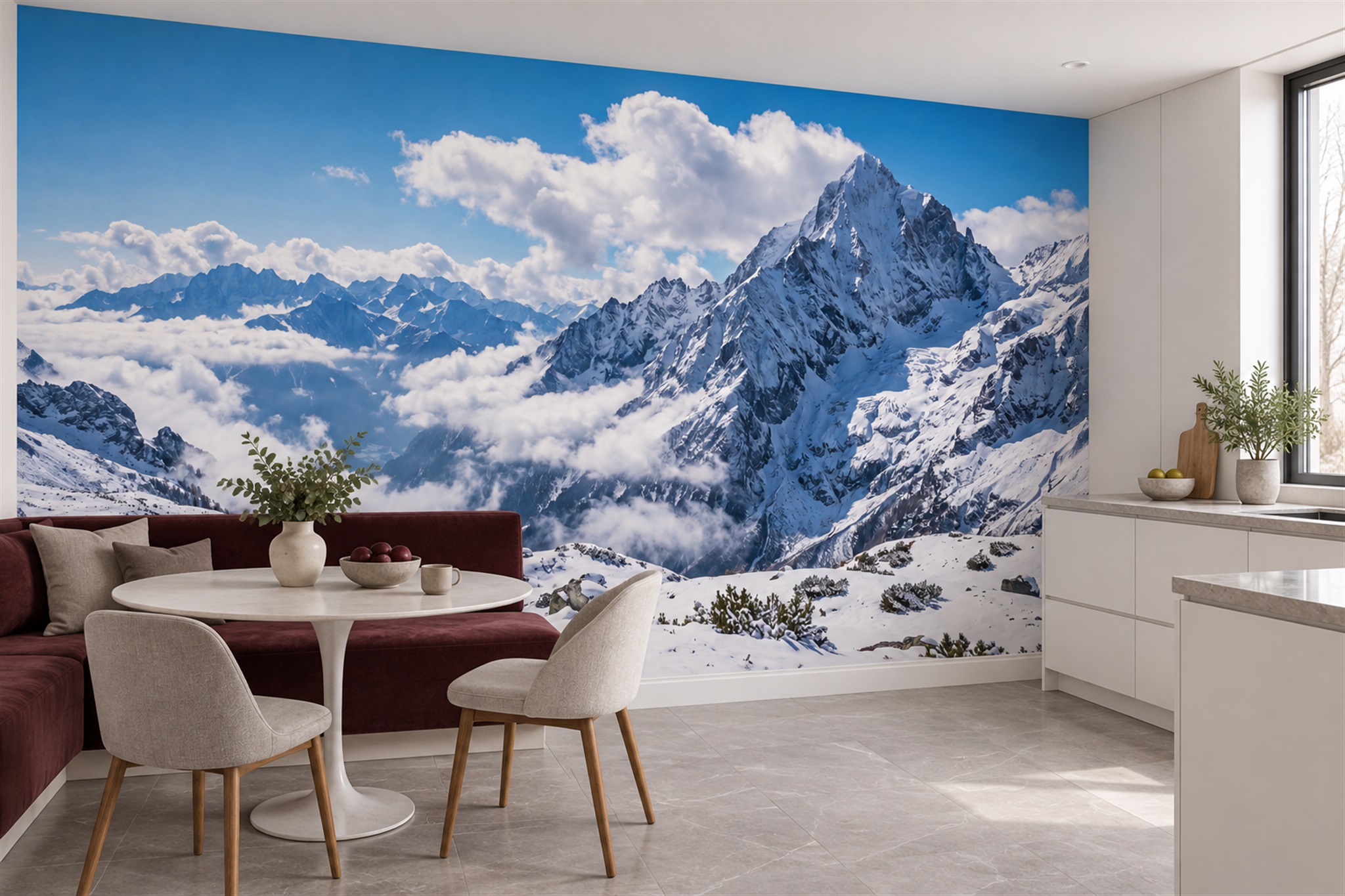
Check all four edges after each change
A crop can improve one side and damage the other. Moving a mountain peak away from a doorway may cut off a second peak at the far corner. Raising a floral spray above a headboard may remove the foliage that grounded it near the skirting. After every meaningful adjustment, inspect the full-wall preview—not just the area you asked to change. Confirm that key subjects remain intact, that the composition still feels balanced and that the outer areas can tolerate trimming.
Look at the horizon or any architectural line. A small shift in height can change how the scene relates to a window sill, wall panelling or furniture. In a geometric mural, a deliberate central axis may matter more than in an irregular watercolour. Protect text, faces and symmetrical motifs from trim zones where possible. The online crop may not show production panel boundaries; ask whether a separate layout can identify them when a join near a critical detail matters.
At Solowalls, enter the measured wall width and height after adding about 10 cm (4 inches) to each total dimension for installation trim; the site asks you to add this margin rather than assuming it is automatic. The final visible wall is smaller than that print rectangle, so keep a face, mountain summit or other irreplaceable detail away from the outer trim area. Recheck the preview after changing either dimension: a different aspect ratio can shift what stays inside the selected crop. For an unusually shaped wall, compare the rectangle with a separate drawing of the true outline.
Use the crop tool, then check with a real person when needed
Open Customize & Buy with the print dimensions, including the added trim, and try a few purposeful positions. Keep screenshots and compare them side by side instead of making dozens of tiny adjustments without a goal. On the snowy mountain example, moving the catalogue image left changes whether the high peak remains securely in view; it does not make that peak larger. If you want a different motif scale, ask whether an alternative artwork version can be reviewed separately. Check the whole composition before worrying about fine detail.
Complex rooms deserve a fuller brief. A window close to the centre, a sloping ceiling, a staircase or a mural wrapping a corner can exceed what a rectangular online tool explains. Send the seller a photograph and labelled drawing. Ask whether a designer can prepare a proof that overlays the actual architecture. The seller may offer changes, a fixed crop, or no manual proof at all; learn which service is included before you assume you can revise it indefinitely.
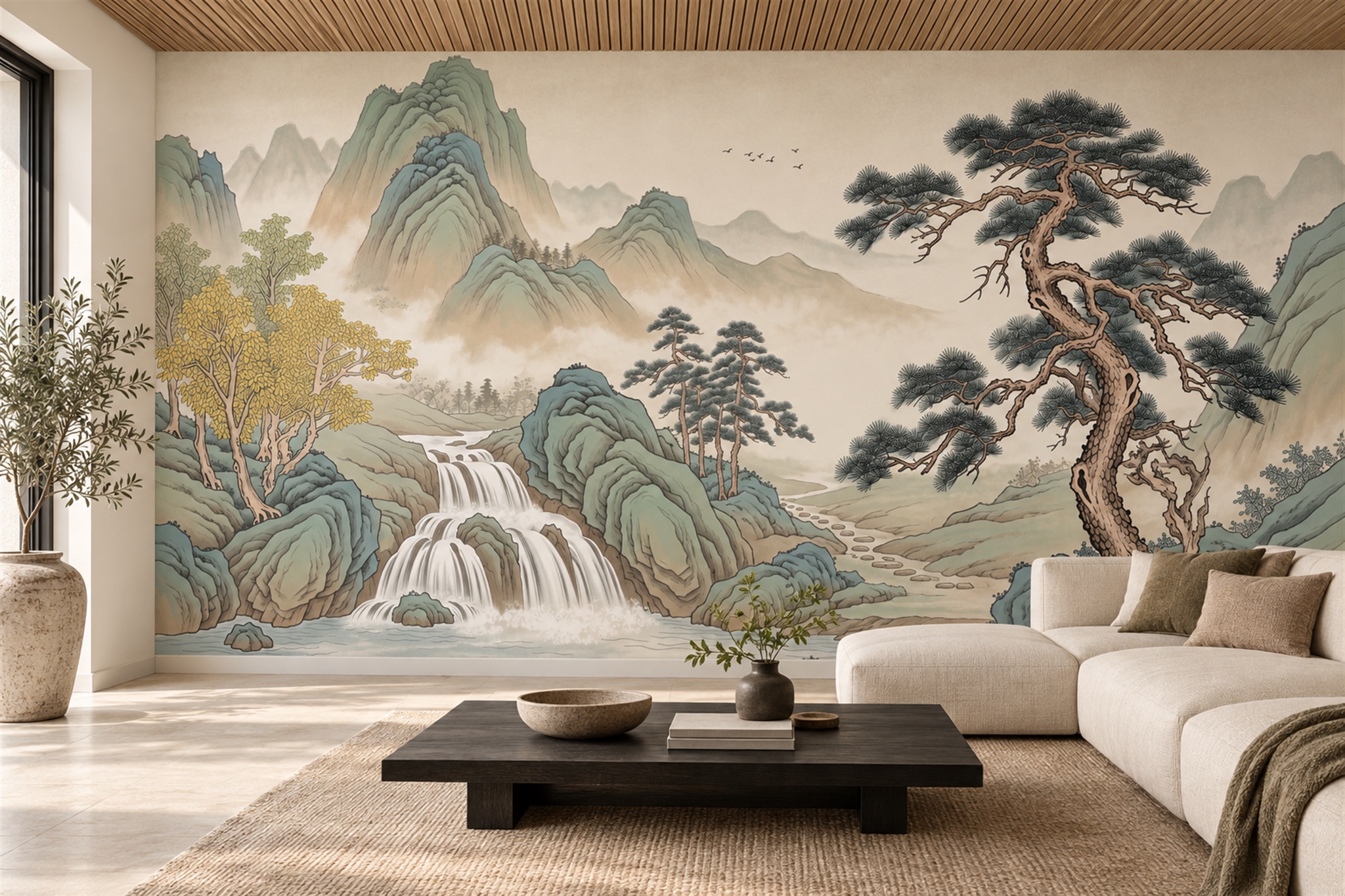
Approve position without confusing it with scale
In the waterfall-and-pine scene above, the falling water sits to the left while the large pine occupies the right side of the wall. A narrower crop pushed too far right could keep the pine but remove much of the waterfall; pushed too far left, it could leave only a fragment of the pine canopy. Compare both saved positions at the same order dimensions, then draw the sofa and any fixed doorway over each view. Moving the scene trades one edge for the other; it does not enlarge either subject. If both must remain visible but the wall ratio makes that impossible, ask about another artwork layout or choose a different design.
Save the final preview with its dimensions, units and trim allowance, and compare any supplier proof against that exact arrangement before production. An attractive catalogue room image cannot record which of your own openings will hide the subject. The practical choice is the composition that survives the fixed architecture and the furniture you actually intend to keep.