How to Use a Coastal Landscape Mural Indoors
Choose a shoreline, water or sky composition that supports the room’s light, furniture and intended sense of openness.
Article focus: pricing and measurement
The cost and measurement decision
Start with accurate wall measurements; the final custom mural price depends on area, material and any finishing options.
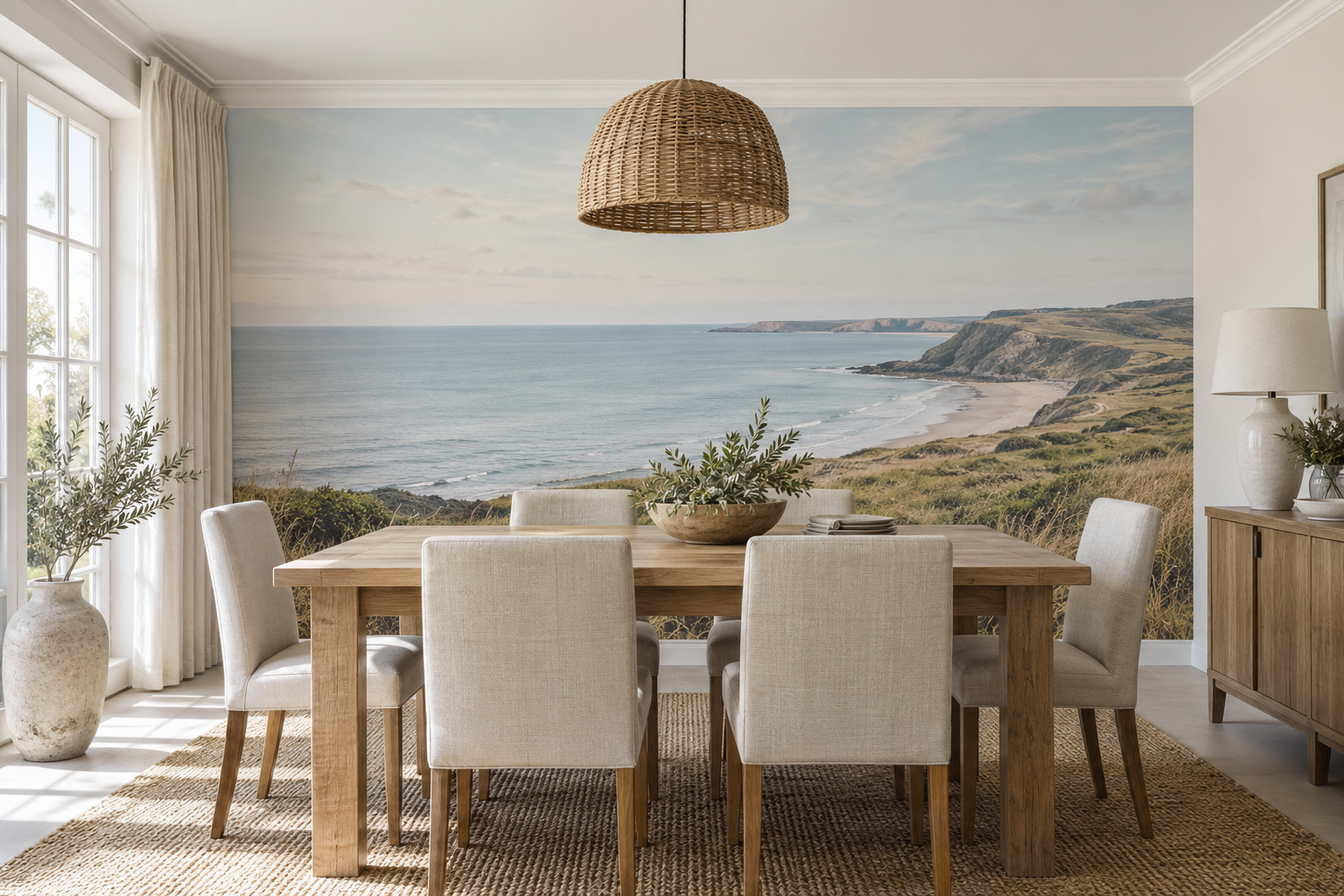
Example application: Bedroom · pricing and measurement
A coastal landscape mural can give an inland room a long view, but the result depends on more than putting blue sea on a wall. The horizon's height, the amount of open sky and the shape of the shoreline determine how the scene relates to furniture. A beach with a strong foreground may feel close and active; a pale distant headland may make the same wall feel quieter. Choose the composition for the room's proportions and daily use, not for nautical associations alone.
To choose well, decide what you want to see from your usual position. Is the appeal an uninterrupted band of water, a curve of sand that leads into the distance, or a dramatic cliff near the viewer? Those are different images even if they share a blue-and-beige palette. The mural should give the room a clear view, not merely advertise that its theme is “coastal”.
Decide what kind of coast you want to see
Coastal murals include open water, cliffs, dunes, harbours and abstracted shorelines. These subjects create different spatial effects. A broad sea and sky can offer visual calm behind a dining table. A dramatic cliff can become a strong focal point in a living room. Dunes and grasses can connect more naturally to warm timber and linen. A harbour scene brings architecture and activity as well as water. Identify what is actually pictured before choosing a colour palette.
The level of detail also matters. A photographic landscape may show specific rocks, waves and clouds that need adequate image resolution at full wall size. A watercolour scene may use broad washes and softer edges, so its atmosphere matters more than tiny detail. A line-drawn coast can behave more like pattern. None is automatically more “coastal”; the artwork should suit the furniture and viewing distance.
Avoid assuming that coastal means stripes, anchors or rope accessories. A convincing landscape can be enough. If the room already has woven texture, oak and pale upholstery, extra themed objects may turn a considered view into a set.
The feature image illustrates a more restrained direction. A pale sky and wide sea occupy much of the wall; a headland and shore on the right give the scene a destination. The timber table, woven pendant and neutral chairs relate to the sand and grasses without imitating a seaside souvenir display. If the same room had a much closer cliff filling most of the wall, the mural would become the dominant object instead of a long view. Choose how much visual space you want the coast to take.
In a room already filled with shelves and artwork, open sea can act as visual rest; a sparse room may have room for the activity of a harbour. Count the separate visual events in the print rather than assuming every coastal image is calm. A pale sky, one shoreline and a distant headland ask less of the eye than boats, buildings and close waves at the same scale.
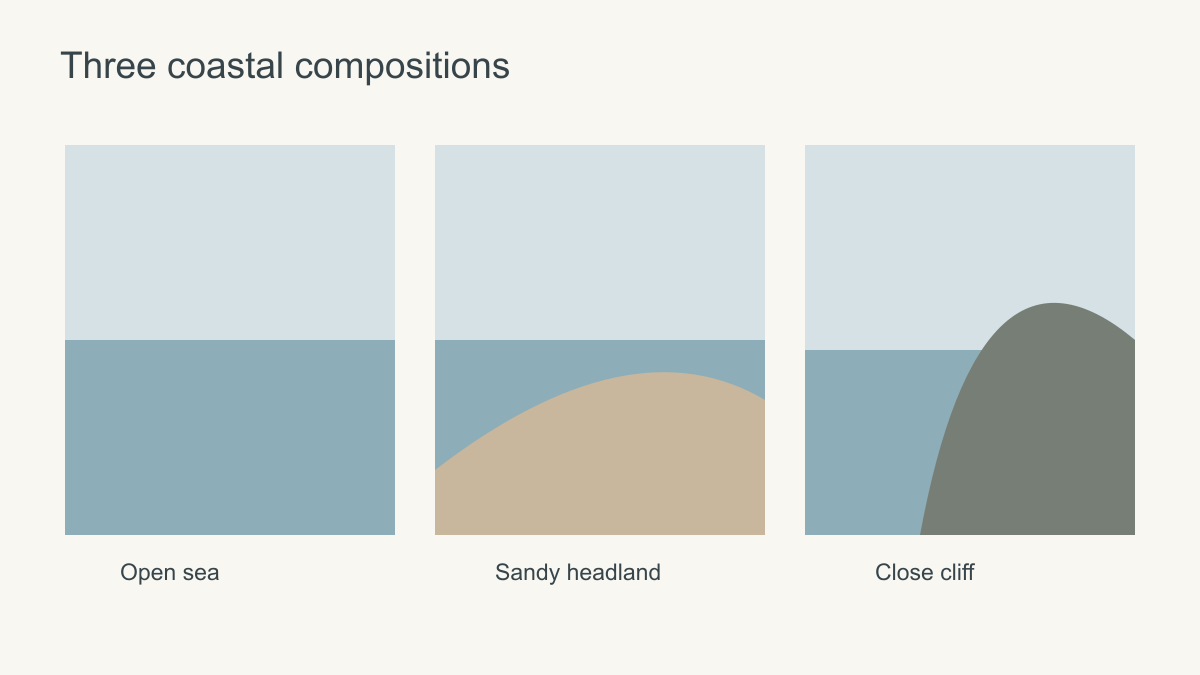 Different shorelines bring different levels of visual activity.
Keep the shoreline's direction readable
A sea horizon is only one line in a coastal scene. The curve of sand, the edge of a headland and the break between foreground grasses and water can lead the eye in different directions. In the featured dining room, the shore bends towards a headland on the right. That gives the view a destination beyond the table; remove that point through a narrow crop and the mural becomes mostly horizontal sea and sky.
Overlay the table and chair backs on the measured-wall crop. Their job is not merely to stay below the horizon. They may also hide the near beach that makes the coastal view feel accessible. If the lower shore disappears, check whether the remaining water and headland still make a recognisable scene. If only sky survives, move the crop or choose artwork composed with a higher visible coastline.
Place the printed view beside the room's real windows. In the featured dining room, the left window shows actual daylight while the sea begins on the wall next to it. The pale sky provides a gentle transition rather than a second dark focal object. If a window or curtain cuts through a mural, open water may tolerate that interruption, while a single boat or rocky point can look stranded between openings. Use the measured wall and normal curtain position when testing the crop.
The coast's direction should still make sense from the approach. A headland can lead the eye towards a window or pull it back into the wall; a close cliff placed by the doorway may feel more immediate than one at the far end. Compare positions without reversing or stretching the image unless the artwork and supplier permit it. The aim is a believable route through land and water, not a horizon mechanically centred over every piece of furniture.
What should the palette do?
Sea blue is only one part of a coastal image. Sand, chalk, grey rock, olive grasses and sky may occupy more of the wall. A blue-heavy mural can cool a room with pale stone flooring; an image with warm dunes can connect to oak. Choose based on the entire colour distribution and the materials already present. A small swatch of the most attractive blue may not represent how the full wall reads.
Light areas can provide breathing room behind furniture. Dark foreground rocks can anchor a pale room, but they may merge with a charcoal sofa. A pale headland may give depth without strong contrast, but it can fade in bright daylight. Compare a printed sample on the intended wall during the day and under evening lighting. Printed colour is not identical to a backlit screen.
Judge the palette by visible area. A wall that is mostly pale sky will contribute less blue to the room than one filled by deep water, even if both have the same small sea-colour swatch. Sand hidden behind a table contributes little to the finished view. Compare a physical sample with the floor, curtains and table, then compare the complete wall crop with furniture in place. The sample establishes the printed tones; the crop shows which of them the room will actually see.
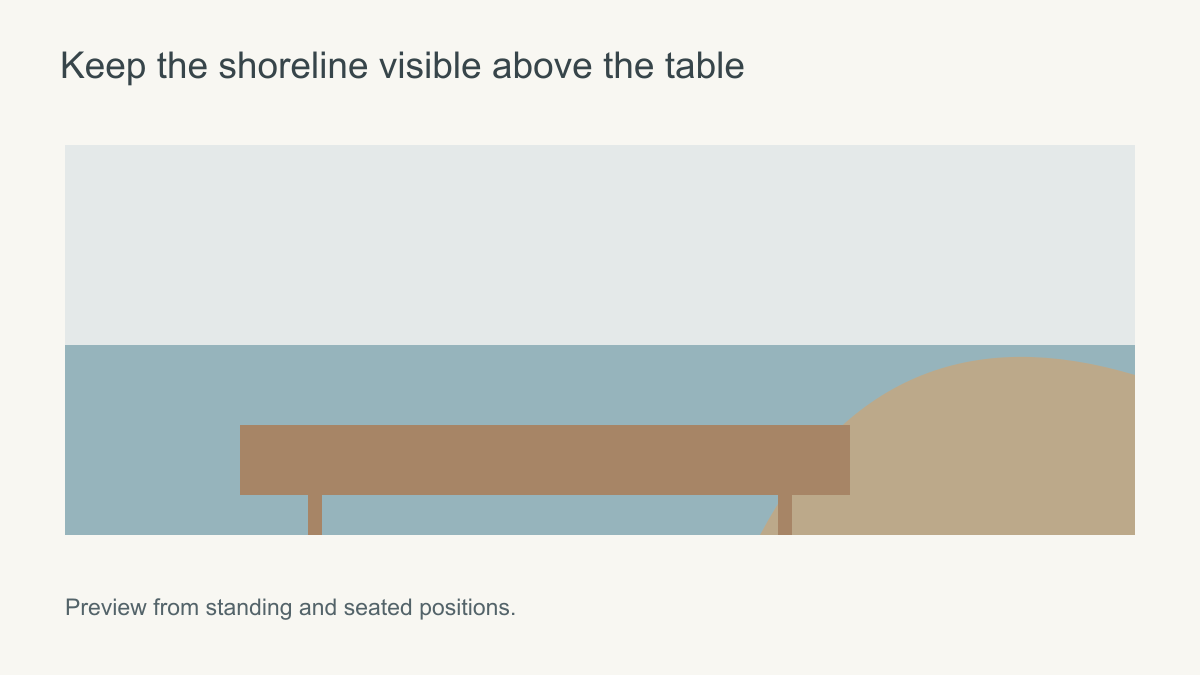 Keep the coastline legible from the room's main viewing positions.
Compare the coast from the approach and the table
From the doorway, the shoreline may read as a diagonal leading towards the headland. At the table, chair backs and the tabletop conceal much of the near beach, while guests still see sea and sky. The pendant can interrupt the upper wall without destroying the view if it hangs against open sky rather than covering the only distant landmark. Make both viewpoints in a room-scale preview; an empty-room photograph is not enough for a dining wall.
Fine waves and grasses may merge into texture across the room, leaving the large shore curve to carry the image. On a close passage wall, those small marks can become the main experience. Decide whether the coast should work chiefly as a long view or as a drawing worth inspecting up close. That choice affects subject and print detail more than a generic “coastal” label does.
A coastal mural can be an imagined decorative view rather than a documented place. Do not assign it a specific location without evidence. The shore's direction and visible balance of land, water and sky do more for the room than nautical accessories or an unsupported destination name. For a broader choice between near plant forms and a distant scene, the botanical-versus-landscape guide addresses that separate decision.
Check the shoreline across the printed panels
Trace the horizon and shoreline across the numbered panel proof, especially where a headland or dark waterline crosses a join. A small shift there can break the view more noticeably than a slight mismatch in open sky. For a photographic coast, inspect a print sample for detail at the proposed scale; for a painterly scene, check that its broad transitions still read as intentional colour rather than an accidental band when enlarged.
Confirm the selected wallcovering's preparation and installation requirements. A seaside image does not imply water resistance or suitability for a wet area. A clean, sound, dry wall remains important; the mural cannot conceal dampness or loose paint. Where the proposed surface is near a sink or other splash zone, check the specific material guidance instead of assuming all wallcoverings behave alike.
Keep the coast's main gesture visible
The final choice should still read after ordinary furniture and curtains are in place. A dining room may need the bend of the shoreline visible above chair backs; a bedroom may retain a band of distant water even when a headboard hides the beach. A short hallway gives only a passing glimpse, so one clear coast line may work better than harbour detail. If the chosen crop loses its headland, beach and visible water, the solution is a different composition or placement—not more nautical accessories to explain a view that is no longer there.