Do You Need Extra Material for Trimming a Wall Mural?
Explain trimming allowance, uneven ceilings, skirting boards and why ordering exactly the visible size can create installation risk.
Article focus: pricing and measurement
Budgeting this wall with confidence
Start with accurate wall measurements; the final custom mural price depends on area, material and any finishing options.
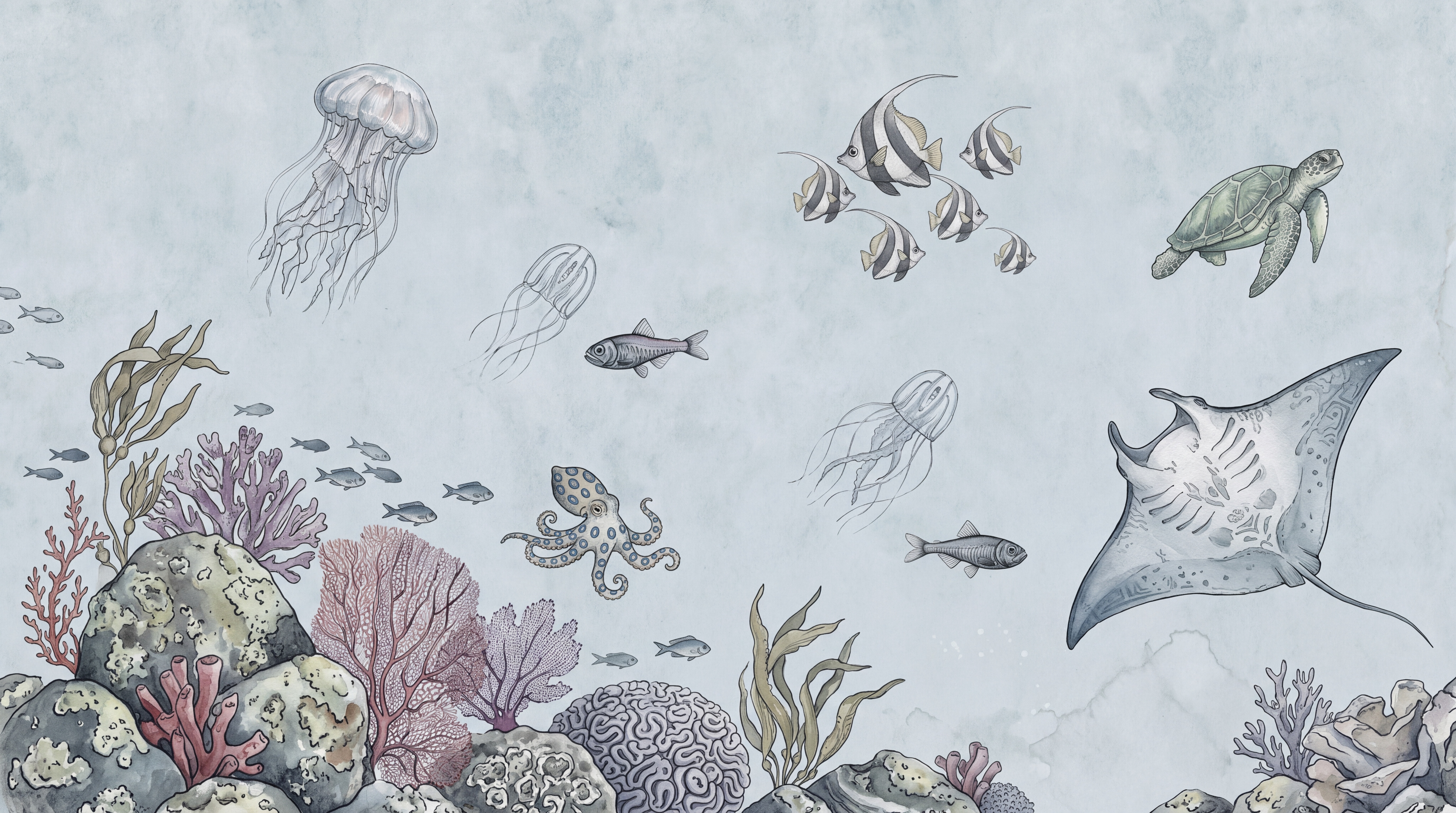
Example application: Any room with a suitable, prepared wall · pricing and measurement
Yes. Solowalls asks you to add approximately 4 inches (10 cm) to the measured total width and the measured total height before entering a mural size. That small overhang lets the installer align the panels to a true vertical line and trim to ceilings, skirting and corners that may not be perfectly square. It is one addition per dimension—not 10 cm on each of four sides—and it does not replace measuring the wall's widest and tallest points.
Why an exact-size print can be too small
A mural differs from a framed picture. It has to meet the ceiling, the floor or skirting, and two vertical boundaries while its individual panels remain aligned. Those boundaries are rarely perfect. Even when the wall measures 300 by 240 cm at one point, it may be slightly wider near the ceiling or taller at the opposite end. An exact-size print gives the installer no freedom to square the first panel or accommodate a crooked edge.
Consider a wall whose left height is 239 cm and right height is 241 cm. A print cut precisely to 239 cm cannot reach the higher side. If it is printed to 241 cm, the shorter side can be trimmed. The same logic applies to width. A small overhang is controlled with a straightedge and sharp blade after placement; an uncovered strip cannot be filled by stretching the printed design. Stretching can distort the image or open seams, so it is not a safe substitute for correct sizing.
Allowance also helps when the first panel must be positioned against a true vertical line rather than an uneven corner. If the installer follows the corner instead of a plumb guide, later panels can drift. A little excess at the outer edge makes it possible to set the design straight and trim to the actual corner afterwards. The material should be planned for the full wall, not cut to a single measurement taken at eye level.
What changes when the mural extends past the wall?
The extra print belongs around the outside of the whole composition. It gives the installer room to position the first panel against a plumb line and cut the finished ceiling, lower and side edges after the image is aligned. The surplus is not necessarily shared evenly between opposite edges: a leaning corner can consume more on one side. Treat the visible finished wall as a smaller window inside the ordered print, and keep any face, lettering or single focal subject away from that uncertain outer band.
Solowalls asks you to include the allowance in the dimensions entered on the product page, so the preview should be checked at the larger print size. A different retailer may add its own margin after receiving finished-wall measurements. These workflows cannot be combined. If the crop shifts when you increase the entered size, compare the image within the finished-wall outline rather than judging only the outer print rectangle. For the arithmetic and uneven-wall examples, see the trim-allowance calculation guide.
This surplus is not a spare panel. Narrow offcuts may contain only fragments of the scene and cannot replace a damaged full-height numbered strip. If a future replacement is important, ask about a separate complete panel before ordering; do not enlarge the mural blindly in the hope that an offcut will serve that purpose.
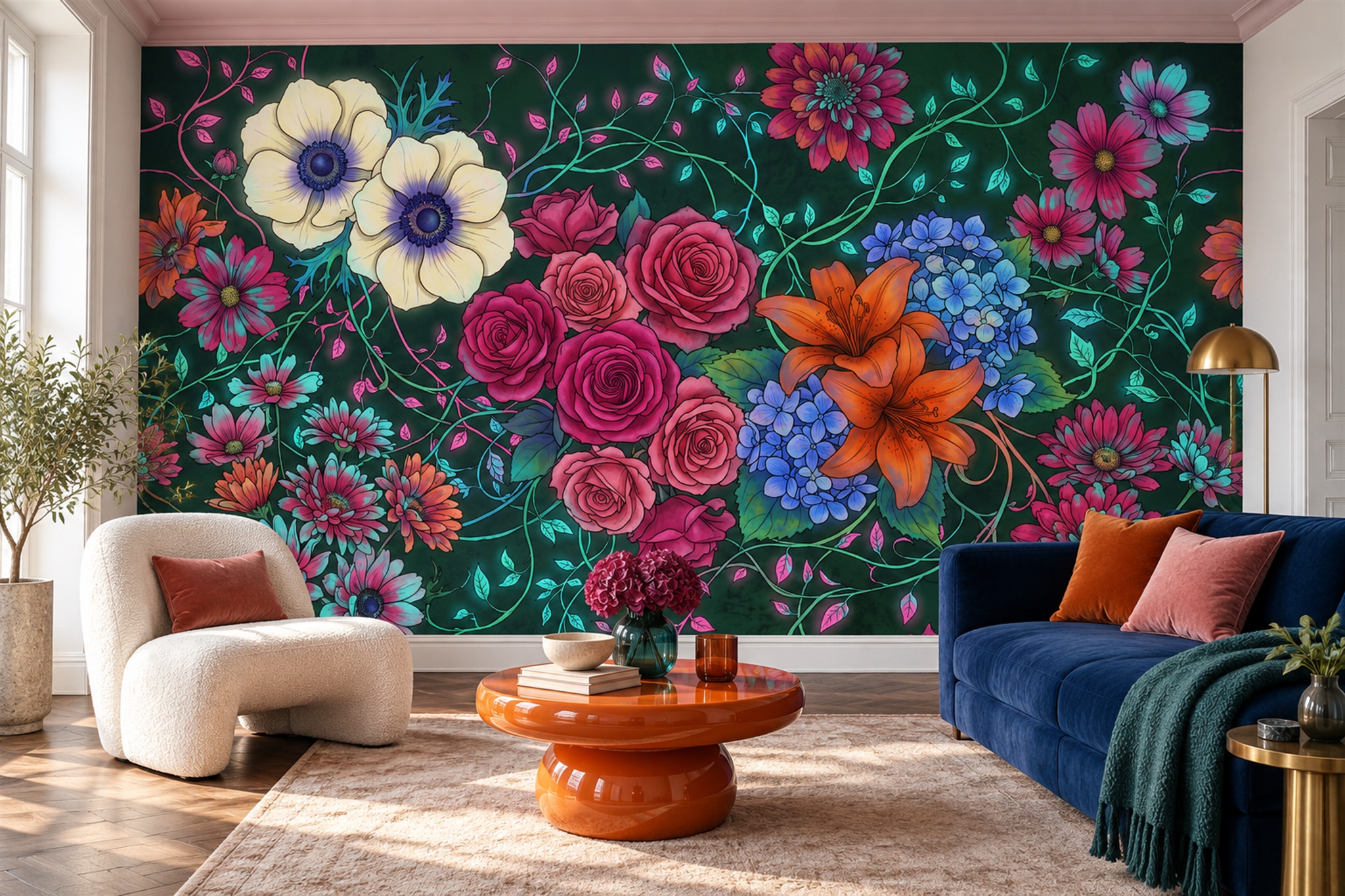
Protect important artwork from the cut zone
The installer may need to remove a different amount at each side. A flower petal, face, animal or line of text that sits directly against the print edge is vulnerable. When reviewing a custom crop, ask which area will definitely remain visible after trimming. Keep important subjects within that safe zone. A soft background, foliage or sky can usually tolerate a small cut better than a subject whose shape must remain complete.
Do not assume the excess is an identical blank border around the image. Depending on the supplier’s layout method, the additional width may reveal more artwork or alter how the scene is positioned. The online crop may show only the entered print rectangle. If a horizon must sit at a precise height, overlay the smaller finished-wall outline on the screenshot and ask whether the supplier can confirm the placement before ordering.
For a mural with a window, door or sloping ceiling, the perimeter margin is only part of the plan. The print may need to be cut around internal openings too. Measure and mark those interruptions so the designer can keep the focal point clear. Do not subtract a window’s area from a rectangular print merely because it will be removed during fitting; the artwork on either side still has to align.
How trimming happens during installation
Installers typically align numbered panels in sequence, smooth them according to the material instructions and leave the planned overhang until the panels are in place. The edges are then trimmed against the real ceiling, skirting or corner. This sequence avoids committing to a cut before the image has been positioned. Work with the manufacturer’s panel and seam method; a peel-and-stick film and a pasted wallcovering may be handled differently.
Use a sharp blade and a suitable straightedge or trimming guide. A dull blade can drag fibres or tear a damp panel. At an uneven ceiling, a careful cut along the actual line is safer than trying to pre-cut the panel on the floor from one measurement. Keep the cut controlled; removing too much cannot be reversed. Around a door frame, make small relief cuts where needed rather than pulling the panel tightly into a corner. If the wall or design is difficult, a professional installer is a sensible option.
Inspect the full wall before cutting the last edge. Confirm that panel seams and key visual elements are aligned and that no section has been stretched to compensate for a sizing problem. The margin is there to absorb minor irregularities, not to hide a major measurement error. A wall that is dramatically out of square may need a larger or specially planned print, and that should be resolved before production.
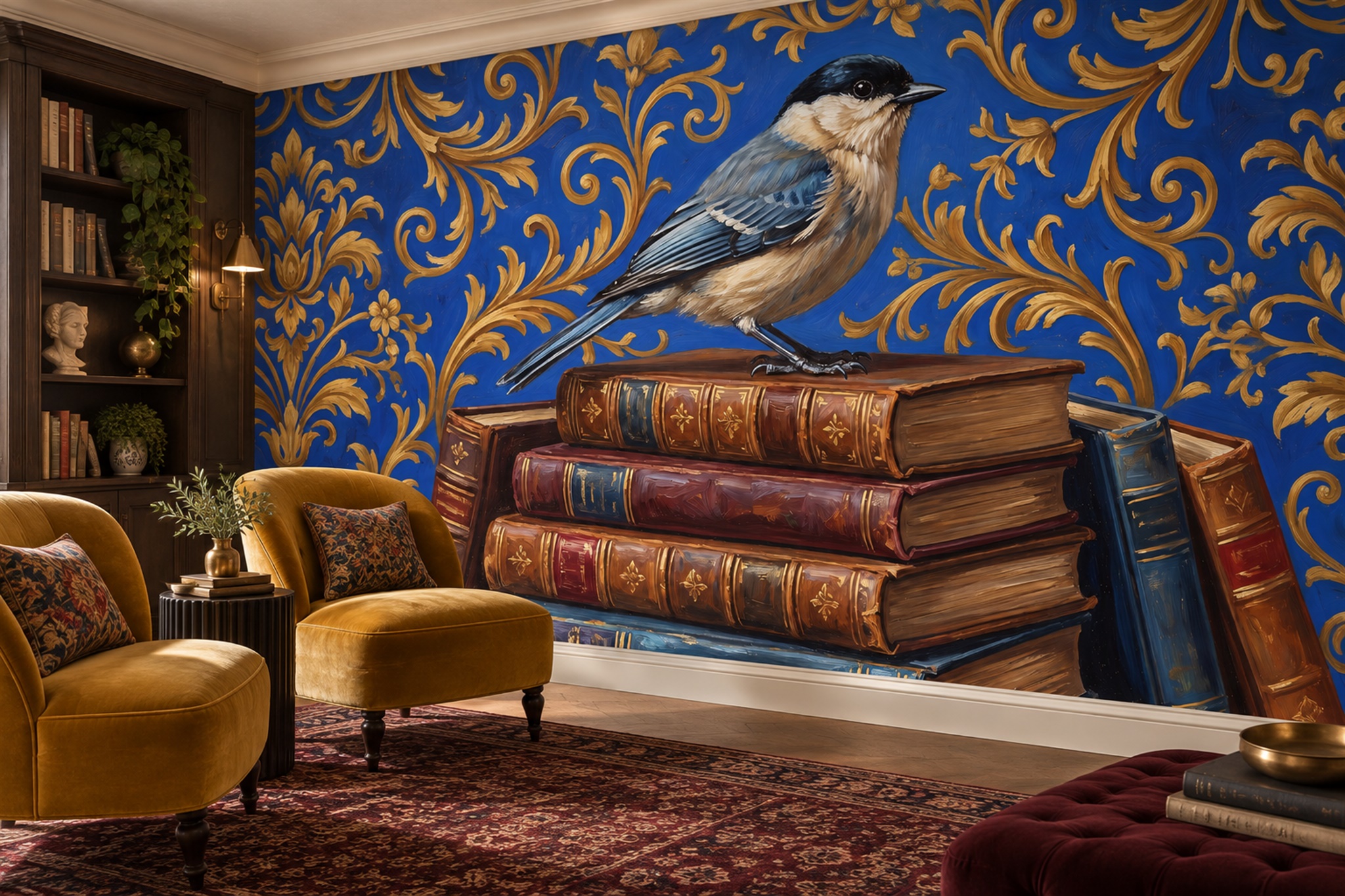
Know when extra trim is not the solution
The standard margin addresses ordinary unevenness at the outer boundaries. It does not make a mural measured from the wrong corner fit, restore artwork already lost to a crop, or resolve a doorway through the only focal subject. Nor can a wider print reliably disguise a major lean or stepped ceiling without a new layout decision. Before increasing the size beyond the stated allowance, mark the wall's widest and tallest points and draw any slope or return at scale.
Send the supplier that dimensioned sketch if the ceiling changes height sharply, the walls are significantly out of square or a face, tree or line of text lies close to a cut edge. Ask where the focal detail will fall on the finished wall, not just whether the larger rectangle can be printed. If the problem is a lost panel rather than a difficult perimeter, the separate extra-material guide explains why a complete spare panel is a different request from trimming surplus.