How Floral Mural Wallpapers Change a Room
Consider flower scale, composition, contrast, seasonality and the mood created by a floral wall.
Article focus: installation and removal
The installation choice in practice
The right installation method depends on the chosen material and wall condition, so prepare the wall before ordering and follow the material-specific instructions.
Example application: Bedroom · installation and removal
A floral mural can change a room by altering its focal point, scale and mood before it changes any furniture. Oversized blossoms can make a plain living room feel expressive; a scattering of small flowers can add rhythm without becoming the main event; a panoramic garden can give the wall a sense of place. The effect comes from the drawing, colour and placement of the flowers, not simply from the fact that they are flowers.
Scale is the first transformation
Large blooms read almost like shapes in an abstract painting. Their petals and stems can provide movement across a broad wall, and they remain visible from a doorway. That scale can make a neutral sofa and simple table look more deliberate because the wall supplies the room's character. But if the main flower sits directly behind a tall cabinet, the composition may collapse into disconnected petals. Preview the mural with the furniture in front of it.
Small florals work differently. From a distance they may form a soft textured field rather than a set of individual blossoms. That can support a room with stronger furniture or framed art. A very dense repeat can also feel busy when combined with patterned cushions, a detailed rug and open shelving. The right scale depends on the other visual information in the room.
Medium-scale flowers often sit between those extremes. They can be recognised across a dining room yet still create a repeat that tolerates doors and changing furniture. Compare candidates at roughly true size, not as similarly sized thumbnails. A motif's printed dimension is more useful than a vague label such as “large floral”.
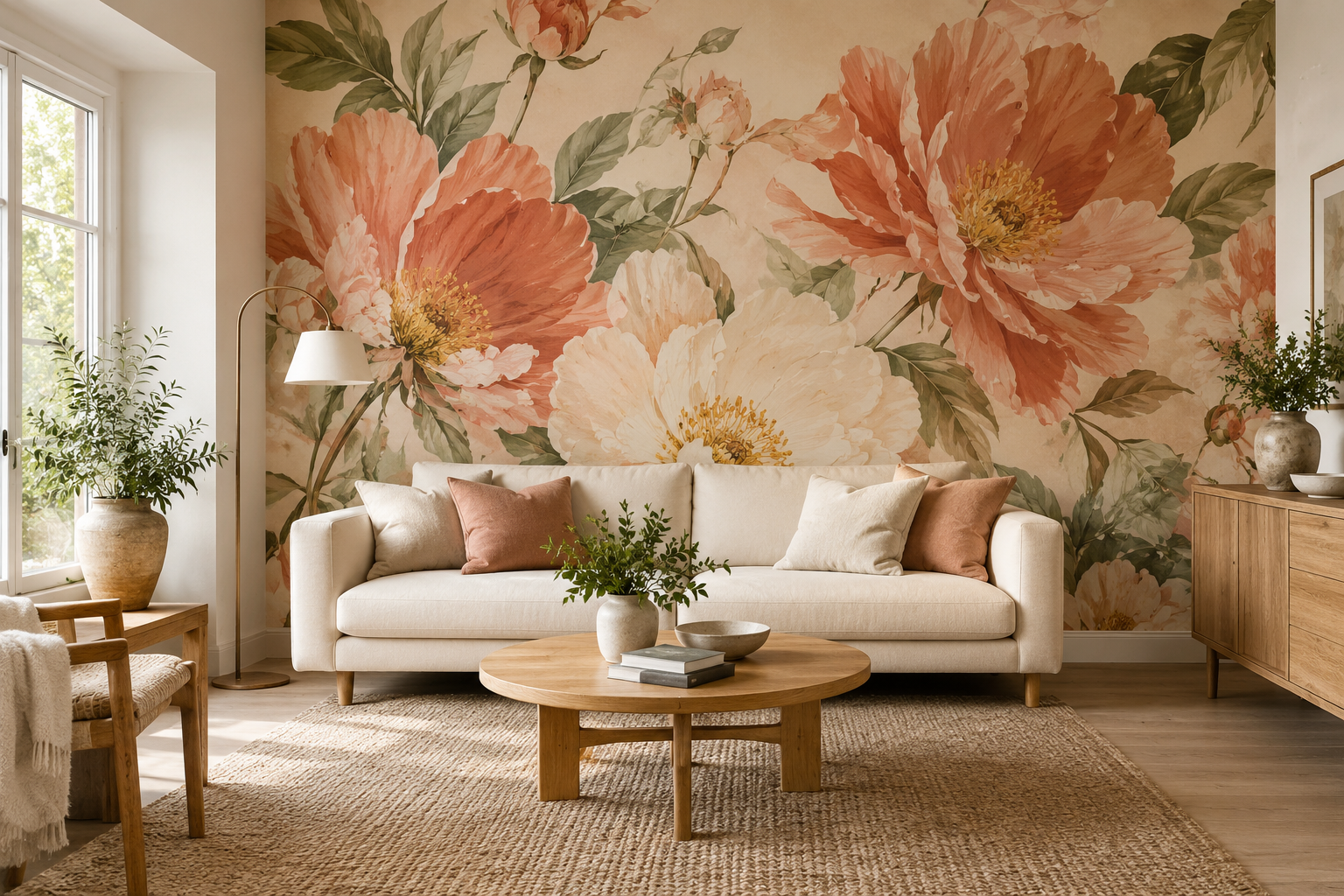
The feature image shows why medium-to-large blooms can feel like artwork rather than an all-over surface. Coral and cream flowers rise above the sofa, shifting attention from the coffee table towards the wall. The neutral upholstery remains a distinct foreground, and timber picks up the ground's warmth without matching every petal. Move the largest flower below the sofa line and the room keeps the colour but loses that focal shift. Scale and position work together.
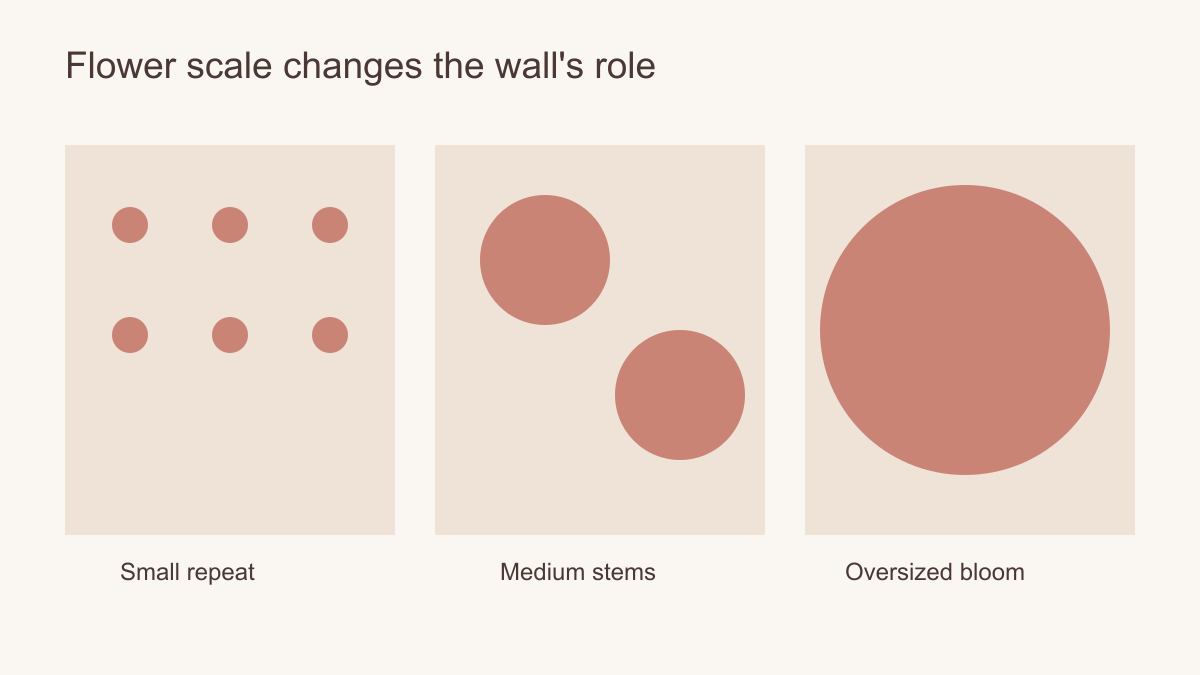 Flower size changes whether the wall reads as texture or artwork.
Colour changes the room's centre of gravity
Coral and cream blossoms can warm an otherwise pale room. A navy-ground floral can anchor a dining area. A muted sage and blush composition can sit quietly with timber and linen. These effects are not guaranteed by colour names. The proportion of dark ground, saturated petals and open space determines how much visual weight the mural carries.
Consider the furniture directly in front of the wall. A cream sofa stands clearly against a stronger floral; a coral sofa may merge with coral petals of similar value. A dark timber sideboard can give a pale floral useful contrast. If the room already has colourful upholstery, choose a floral that borrows one colour and provides enough quiet ground rather than adding several unrelated hues.
Light can change the impression. Warm evening lamps may amplify peach and coral; daylight may reveal subtler pinks or greens. View a printed sample in the room at several times. A screen image can suggest the composition but cannot establish the exact printed colour beside your materials.
Consider how much of the wall is actually coloured. A few saturated blossoms on ivory may make the room feel warmer without changing its overall lightness. A dark ground behind pale flowers can make the same room feel more enclosed and dramatic. If the ceiling, adjacent walls and furnishings are light, the contrast can be deliberate. If they are already dark and patterned, another high-contrast surface may make the furniture hard to distinguish. The mural's ground often affects the room more than the petal colour that first catches your eye.
Colour also changes which existing object appears most prominent. Coral against oak can draw those warm surfaces together; blue or lilac flowers may make the timber stand forward. Before adding matching cushions, view a print sample beside the actual sofa, floor and curtains. A mural can reorganise attention among things already in the room without requiring a newly coordinated set of accessories.
Drawing style sets the mood
A watercolour floral has soft edges and may feel airy. An engraved or toile-like flower can provide a more structured rhythm. A block-print-inspired design often has clearer, bolder outlines. A painterly fresco-style garden can create an atmospheric wall with less obvious repetition. These terms describe visual treatment; they do not imply that the finished wall has brushstrokes, carved lines or a textured surface. Check the actual product and print sample.
Photographic flowers have their own effect. A single macro bloom can be striking, but it also places more demand on image resolution at large size. Check a sample or proof if detail looks critical. An illustrated flower may tolerate enlargement differently because its lines and areas are intentionally simplified. Choose the style that works with the room's furniture and architecture rather than assuming realism is always more sophisticated.
Compare the edge of a petal and the treatment of the background, not just the flower subject. Fine engraved lines may become an ordered field behind a desk, while broad painterly petals remain legible as artwork across a living room. That difference is easiest to judge at the intended print size and from the room's usual viewing position.
See what the room notices first
Take a photograph of the furnished room from the entrance and another from the principal seat. Without a mural, does a window, pendant, chair or fireplace lead the view? Add a fine floral repeat at wall scale and that object may remain in charge while the background becomes richer. Add one oversized bloom and the wall may take over as the first impression. Add a garden panorama with an open path and the eye may travel beyond the furniture. This before-and-after test is about the room's visual order, not simply whether a floral is suitable for a bedroom or dining room.
Look for a hand-off rather than several equal focal points. In a dining room, a table can anchor the foreground while a flower cluster above seated heads provides the second event. A prominent pendant directly over the cluster may compete with it; shifting the crop or choosing a more distributed floral can make the relationship clearer. In a hallway, people may only glimpse the wall for a few seconds, so one legible blossom can work better than a finely painted garden that needs time to explore.
Test one plausible furniture change, such as a taller bookcase. If it would hide the only major bloom, the mural's effect is fragile. A distributed repeat may survive that change more easily, though it will not create the same single focal point. For a separate selection method based on plant forms, spacing and drawing, see what to look for in botanical mural wallpaper. Here the question is how the floral artwork alters the finished room.
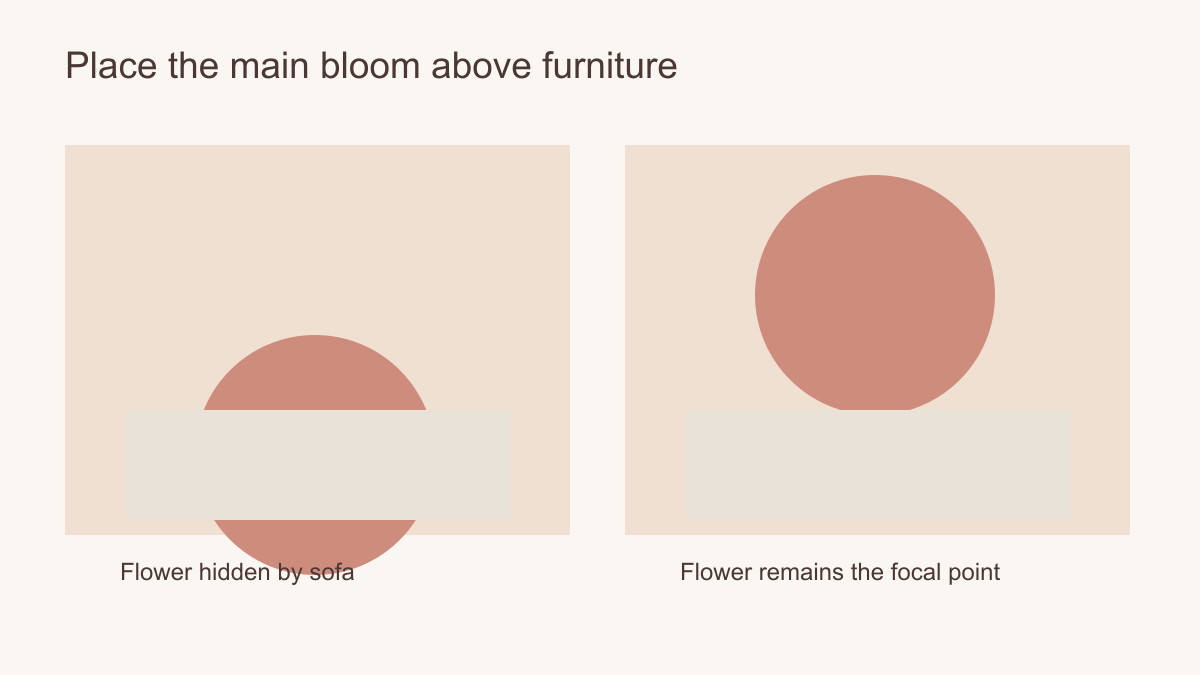 Keep the important bloom or garden opening visible after furnishing.
Pattern interaction matters
Flowers do not need an entirely plain room, but they need a clear relationship to other patterns. A striped cushion can complement a loose floral because its geometry differs. A small floral rug with a similarly sized small floral wall may create visual competition. Change either the scale, the contrast or the amount of one pattern. Let one be the principal pattern and the other a supporting note.
Existing flowers in vases, textiles and framed art also count as pattern. If they already make several strong points around the room, the wall may work better as a broad floral gesture or a low-contrast repeat than as another field of tiny blossoms. This is not a rule against mixing flowers; it is a check that each floral element has a different scale or role.
Choose the transformation, then the flowers
A floral mural can soften a background, become the main artwork or create a garden-like view. Those effects are not interchangeable. If the room already has a strong fireplace and art collection, fine flowers may add useful texture without changing its hierarchy. If a plain seating area needs a clear focal point, a larger bloom may do more. If the aim is a sense of place beyond the furniture, preserve the garden's opening in the final crop. Decide which change improves the existing room before deciding whether the petals should be coral, blush or cream.