How Long Does Mural Wallpaper Last? Lifespan and Durability Guide
Learn what determines mural wallpaper lifespan, how peel-and-stick compares with permanent materials, and how to extend the life of your wall mural.
Article focus: installation and removal
What the installer needs to know
The right installation method depends on the chosen material and wall condition, so prepare the wall before ordering and follow the material-specific instructions.
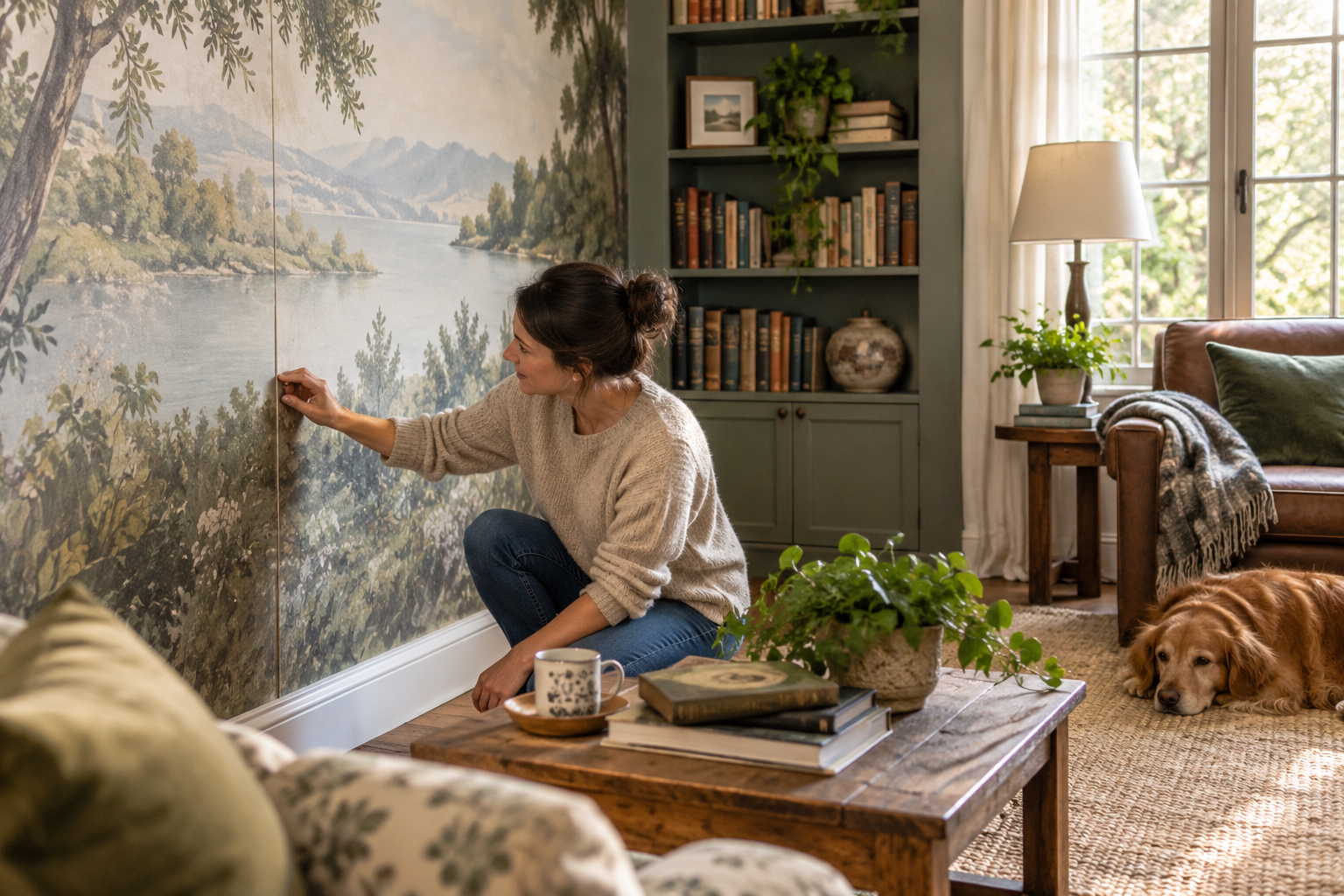
Example application: Bedroom · installation and removal
There is no defensible single lifespan in years for every mural wallpaper. A print can remain attached while its image is scuffed, or look clean while a seam begins to lift. Its useful life depends on the prepared wall and adhesive bond, the finish's documented properties, exposure to light or moisture and daily contact. A protected bedroom wall and a busy corridor cannot be assigned the same expectation merely because they display the same design.
Define what “last” means in your room
Decide what would make the mural unacceptable on this wall. For one household it may be a lifting seam; for another, a scuff beside a chair or a colour difference on a sunlit section. Separate functional failure, such as lost adhesion, from a cosmetic change or a decision to redecorate. Otherwise a claimed “lifespan” can conflate three different events and cannot be compared meaningfully with another product.
Ask which failure you are most concerned about. For a nursery, marks near the floor may matter more than direct sun. For a stairwell, bumps and brushing contact may be the main issue. For a sun-facing office, colour change might be the first question to raise. Choosing a material becomes more focused when the expected use is clear.
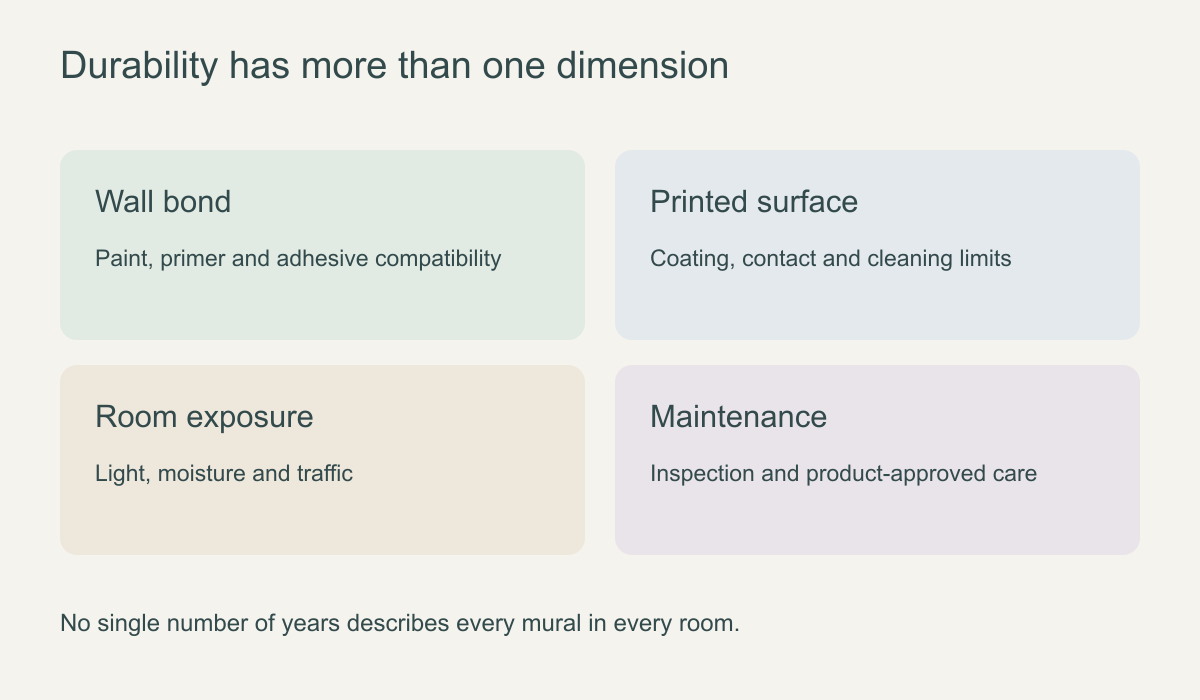 Several independent conditions shape the mural's useful life.
The wall can fail before the wallpaper does
Loose paint, dusty plaster, old adhesive and moisture can undermine even a well-made printed panel. If the decorative sheet bonds to weak paint, it may lift with that paint rather than detach from the adhesive. A damp patch can cause staining or local separation. That is why wall preparation is not simply an installation convenience; it is one of the foundations of long-term appearance.
Freshly painted walls also require care. Paint can feel dry before it is fully cured for adhesive contact; the actual waiting period depends on the paint and room conditions. A sample test after the recommended cure can reveal a compatibility issue before the entire mural is installed.
Material names are not performance ratings
A label such as non-woven, vinyl, heavy or peel-and-stick identifies a material or application option, not a guaranteed lifespan. Finishes may differ in protective coatings, abrasion tolerance, cleanability, dimensional stability and removal method. The Wallcoverings Association explains that a wallcovering's decorative layer, intermediate layer and backing all affect its characteristics, which must be checked for the actual product.
Ask what can be confirmed in writing: Is the finish rated washable or only suitable for dry cleaning? What preparation is specified for the wall? What kind of adhesive or application process is required? Is there a documented performance claim for light or abrasion exposure? If a seller cannot provide a rating, do not infer one because another product made from a similar material has it.
Light, moisture and traffic are different stressors
Strong sunlight can alter some printed surfaces over time; the rate depends on inks, coating, window treatment and exposure. A photo of a bright room does not prove fade resistance. If the wall receives prolonged direct sun, ask for the selected product's light-exposure information and consider how curtains or blinds are actually used.
Humidity and repeated condensation are another concern. A wall that stays damp can affect both the mural and the underlying paint or plaster. A bathroom location away from spray may be quite different from a wall inside a shower, but ventilation and the material's documented suitability still matter. Do not translate “vinyl” into “waterproof”.
In high-traffic spaces, abrasion and impact can dominate. Chair backs, luggage, toys and pets may repeatedly touch the same lower section. A mural with a delicate matte print could show these marks long before its adhesive fails. Plan furniture clearances and choose a finish whose stated care properties match the room.
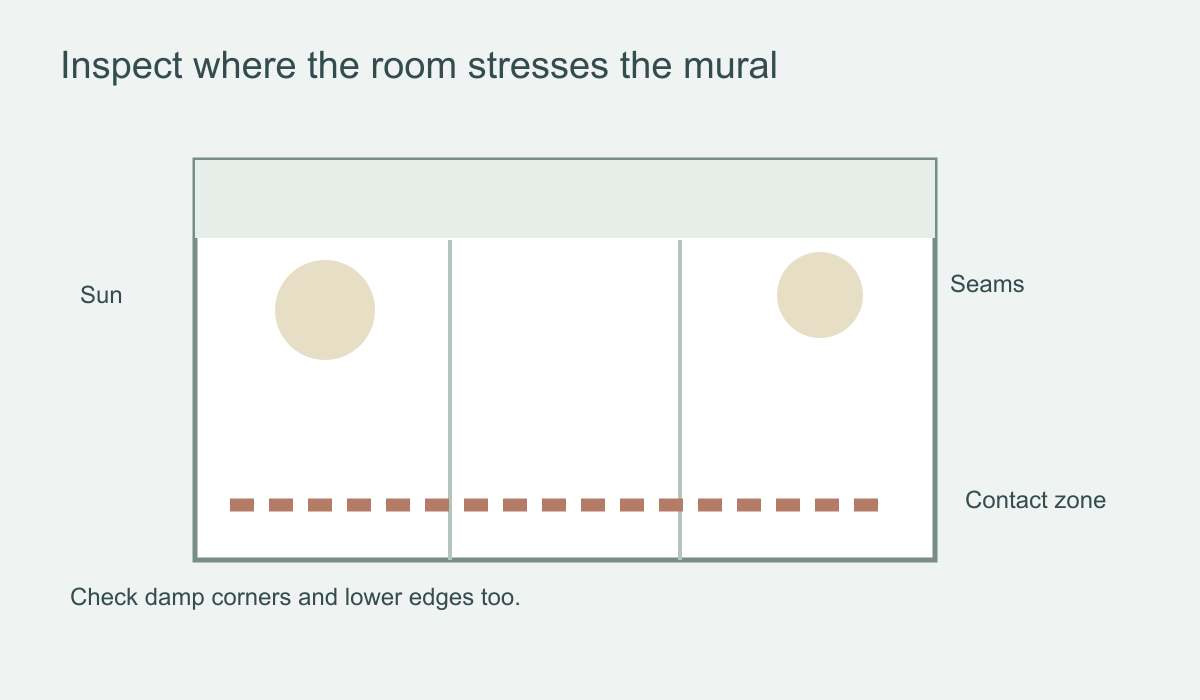 Inspect the parts of the wall exposed to the room's real stresses.
Installation quality changes the outcome
Panels should be inspected before hanging and installed in their prescribed sequence. A first panel that leans or a stretched seam may be noticeable from day one and harder to maintain later. Use the correct joining method for the product, smooth air pockets as directed and trim with sharp tools. The Wallcoverings Association's installation guidance recommends examining the first few hung panels for uniformity rather than carrying on through a visible problem.
A professional installer can be valuable for difficult access, tall walls or artwork with critical subjects crossing seams. However, professional labour does not eliminate the need for a sound substrate and correct product instructions. Record the material and wall-preparation method so any future repair can be assessed sensibly.
Maintain gently and investigate change early
Dust with a clean, soft tool, and use water or detergent only if the exact finish permits it. The Wallcoverings Association's care advice directs owners to the manufacturer's guidance because wallcoverings vary. Harsh scrubbing can damage a print that would otherwise have remained attractive.
Check edges and seams occasionally, particularly after seasonal changes or nearby building work. A lifting edge can point to local contamination, weak paint or moisture. Photograph it and find the cause before applying random adhesive. A recurring dark patch deserves moisture investigation, not simply a stronger cleaner.
Ask for evidence about the failure that matters to you
For a bright office, ask for any documented light-exposure performance of the exact printed finish; for a busy corridor, ask about its care and abrasion guidance; for a room with condensation, ask whether the full material-and-adhesive system is approved for that wall. Include photographs of the wall and describe furniture contact, cleaning and existing paint condition. A sample can show the current print and texture, but it cannot forecast years of wear on its own. Keep the finish name and written guidance with the order so future maintenance is based on the material actually supplied.
If a seller quotes a number of years, find out whether it describes a limited warranty, a test result or an informal expectation. Read the covered faults, exclusions and remedy. A manufacturing warranty does not mean the image will remain visually unchanged under direct sun, nor does the absence of a headline year count prove a shorter service life. Compare products against the same wall and the same likely cause of failure. That gives “how long” a useful meaning without inventing a universal lifespan.