How Many People Do You Need to Install a Wall Mural?
Explain why large panels benefit from a second person and how room size, material and height change the installation plan.
Article focus: installation and removal
Planning the work and the exit
The right installation method depends on the chosen material and wall condition, so prepare the wall before ordering and follow the material-specific instructions.

Example application: Any room with a suitable, prepared wall · installation and removal
How many people does it take to install a mural wallpaper? For a reachable domestic wall with full-height panels, plan around two people: one controls alignment and smoothing while the other supports the loose length and checks the picture. A practised installer may handle a smaller, narrow-panel job alone. A stairwell is not solved by inviting a third friend; it needs a safe access and staffing plan. The distinction is about how many tasks must happen simultaneously, not how many people fit in the room.
Count simultaneous jobs, not square metres
A useful rehearsal is to hold an unopened panel at its planned starting position. Can one person keep its top aligned while the lower length stays supported and clear of the floor? Can that person also see the join along its full height? If not, schedule a helper before removing backing or mixing paste. This test is about controllability, not a universal minimum crew size, and it must be done without unsafe reaching or balancing.
Read the panel diagram and note the width and height of the largest individual drop. A four-metre wall divided into narrow lengths can be easier to handle than a shorter wall supplied in broad ones. During placement, someone may need to hold the upper edge, keep the lower sheet clean, watch a vertical line and compare the new image edge with the previous panel. If one person cannot do all of that without losing control of the material, the job calls for a second pair of hands.
For self-adhesive material, the release liner is another moving part. Removing too much backing can let a large section attach to itself or the wrong part of the wall. For paste-applied material, the helper may support a flexible length while the lead installer works within the manufacturer's stated adhesive timing. Neither method automatically requires the same crew for every panel width. Base your plan on the actual product instructions rather than the label “easy to install”.
Artwork raises the attention load. A cloudy wash may have few exact visual landmarks; a horizon or geometric grid has several places where a seam can visibly break. One person can control the edge while another looks along the entire join from top to bottom. That second person is an observer and support, not someone pulling on a panel to make a printed line fit.
Choose a crew size for the limiting task
One experienced person may be sufficient when every drop is narrow, the wall is low and clear, and the loose length can remain supported while the join is inspected. Two people are the more useful starting assumption for long domestic drops: one can control placement while the other prevents the free section from folding or dragging. This is not a rule that every mural requires exactly two. The dry rehearsal should decide whether either person would have to let go of a critical edge to fetch a tool or see the seam.
A third person is useful only if there is a distinct safe task that two people cannot cover: observing a long join from a separate vantage point, supplying the next numbered drop without abandoning the current one, or managing a large section under a fitter's direction. Three people pressing the same panel do not provide three times the control. If the real difficulty is an inaccessible high edge, specialist access and an experienced fitter matter more than headcount. Plan equipment and staffing together for a stairwell.
For each panel, count the simultaneous tasks the selected material imposes: upper-edge control, support of the loose length, liner or adhesive handling, and image registration. Then assign people only where a task cannot safely wait. The hands-on DIY guide sets out how a two-person team can rehearse its roles and pause signal; this article is about deciding whether that team is enough. Stop and ask the supplier or fitter if panel dimensions or instructions make the task count unclear.
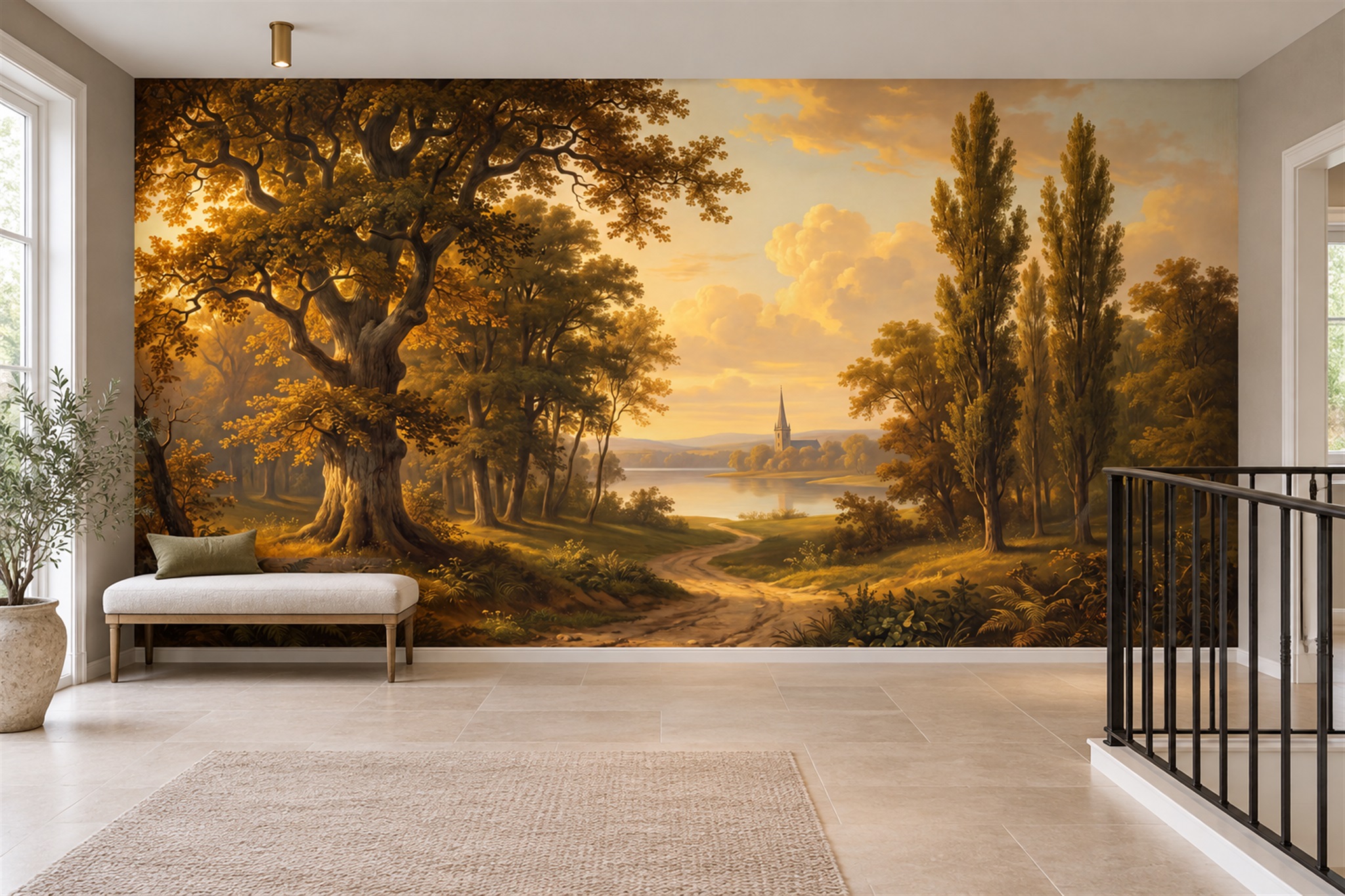
Test whether solo fitting is genuinely controllable
A practised fitter may handle narrow lengths on a short, clear wall alone. The important test is whether they can keep the free section supported while checking the vertical reference and adjacent join. If the panel repeatedly folds, touches the floor or pulls the upper edge out of place, the setup has failed that test. Stop before exposing more adhesive or paste, and bring in help or use a different safe method permitted by the manufacturer.
A beginner should plan more conservatively. On the first length, they must allow the specified trim, align to a true vertical line and avoid distorting the print. The Wallcoverings Association's plumb-line guidance explains why a room corner is not a reliable substitute for that line. A helper can read instructions aloud, verify numbering and observe the seam while the installer controls the material. Both people must know the stop point if the image fails to match.
Physical strength is not the deciding qualification. A long panel that is light but flexible can still fold or drag while one person looks up at the ceiling. Nor does adding several inexperienced people automatically improve control: three hands pushing at different points can crease a sheet. If the team cannot agree who leads and who supports, simplify the task before beginning.
Keep stairwells out of the ordinary two-person rule
On a staircase, the crew question is inseparable from safe access. A person at the bottom of the stairs cannot make an unstable ladder or overreaching at the top acceptable. Ask a competent installer to assess the stair geometry, landing, wall height and suitable platform or other equipment before deciding the number of people. The UK's Health and Safety Executive guidance on ladders warns against overreaching and says to use more suitable access equipment when a ladder is not appropriate. It does not prescribe a universal mural crew size.
Deep alcoves, angled ceilings and large openings create different coordination problems. One person may need to support the panel while another controls a cut or checks the image against a recess. Allow for that in the installation plan and follow the exact material instructions. The point of a trained crew is not speed; it is keeping each part of the print controlled while everyone works from a safe position.
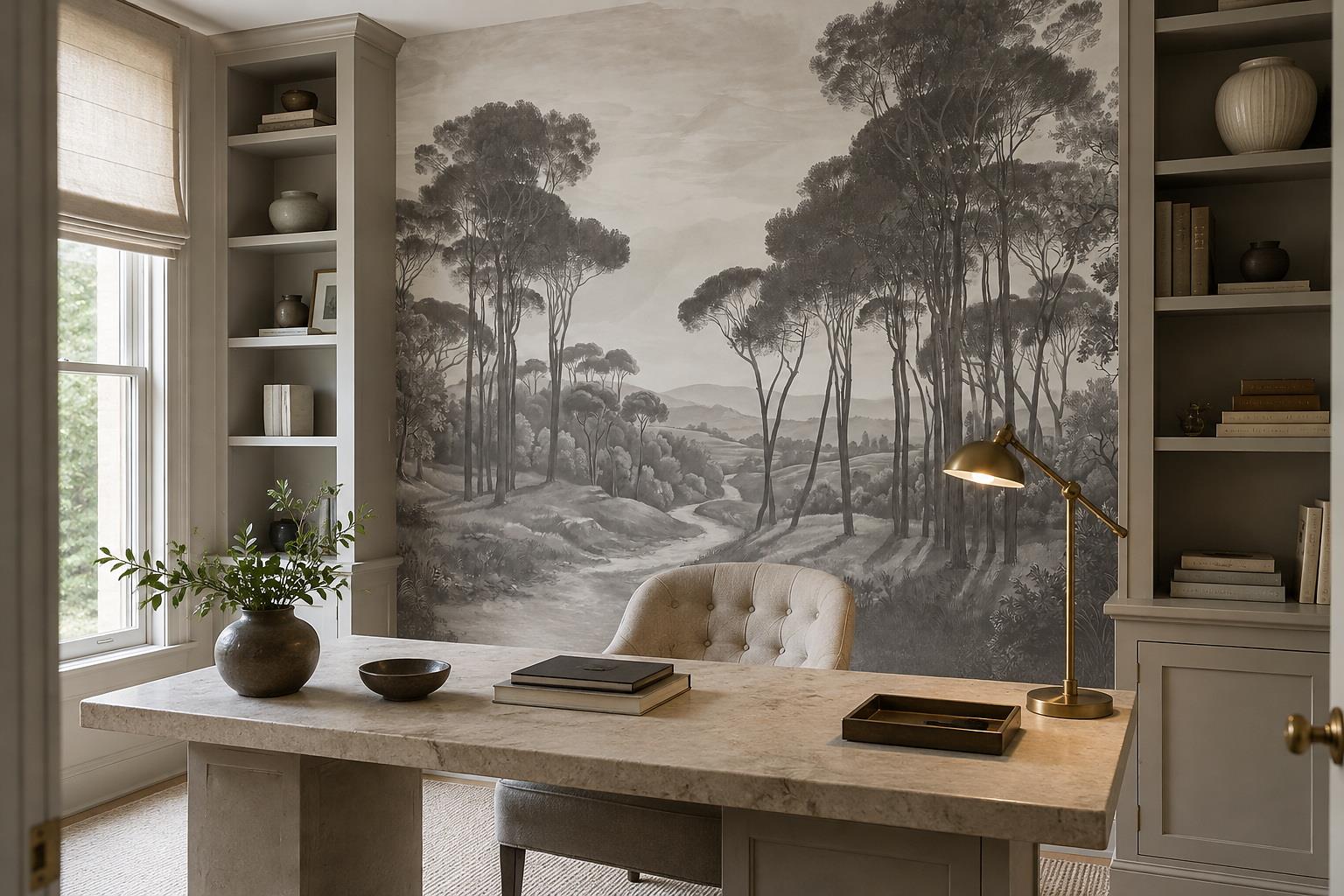
Assign positions before opening adhesive
Before the fitting date, write down the largest panel size, maximum working height, proposed access method and number of people available. Walk through the first drop with the print still protected. If one person cannot control the panel without letting its free length fall, add a helper; if two cannot both stand safely while handling it, do not simply add a third person to the same cramped spot. Ask an experienced fitter to plan the access and sequence. Keep a separate observer only where there is room and a real image-checking task for them. The smallest safe crew is the one that can cover every simultaneous task without improvising at height.