Can You Install a Mural Over Existing Wallpaper?
When an old covering must be removed, when a surface might be overlaid, and how seams and loose paper affect the result.
Article focus: pricing and measurement
Budgeting this wall with confidence
Start with accurate wall measurements; the final custom mural price depends on area, material and any finishing options.
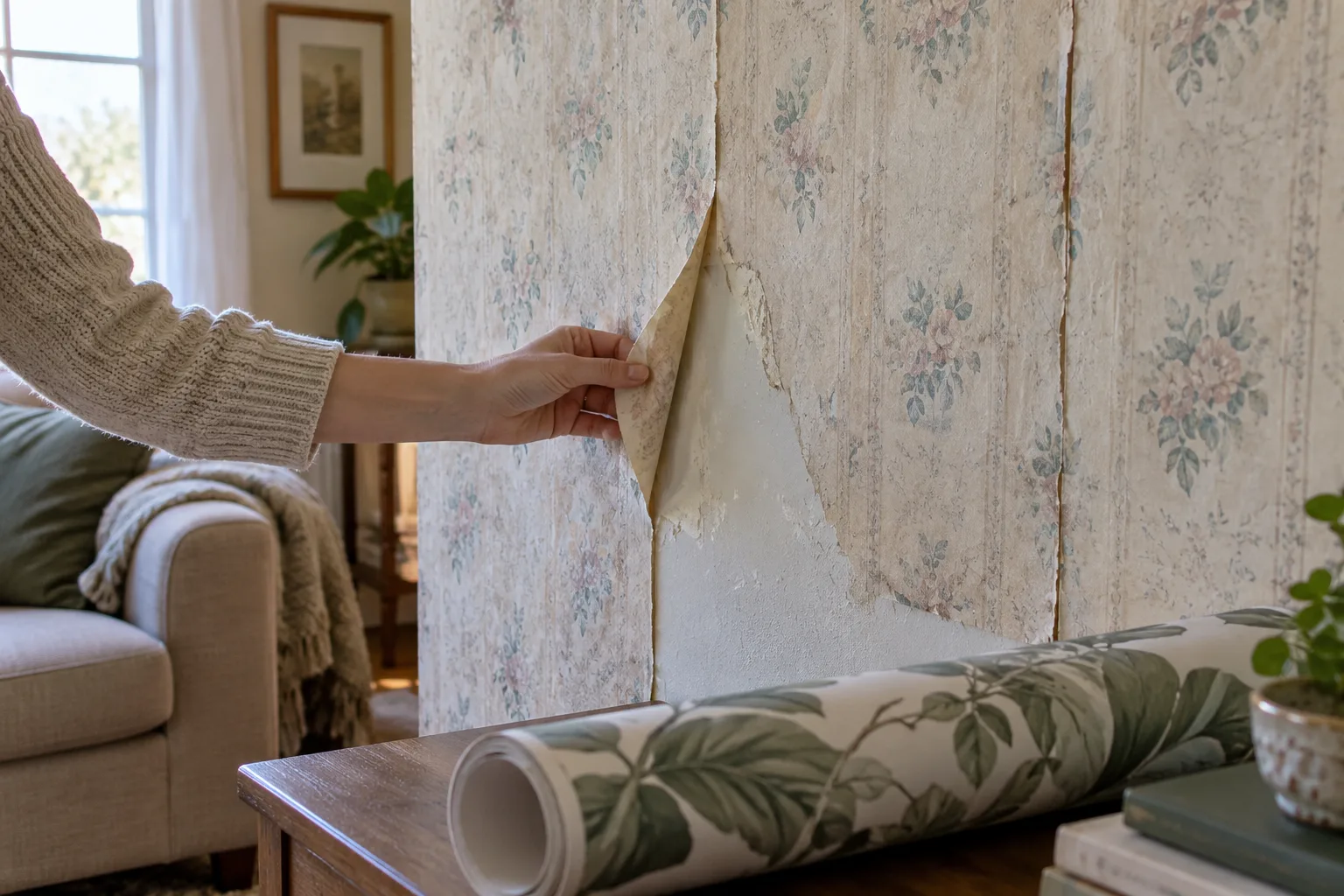
Example application: Any room with a suitable, prepared wall · pricing and measurement
Installing a mural over old wallpaper is possible only in a narrower set of circumstances than “the old paper looks tidy”. Every older seam and adhesive layer becomes part of the new installation's foundation. Raised joins can show through, moisture from paste may disturb the earlier bond, and a dark design may be visible beneath a pale print. Removing the old covering and preparing the wall is the more predictable route. Consider an overlay only when the exact new material permits it and the entire old surface is demonstrably sound.
The new mural is only as secure as the old layer
Even a strong new adhesive cannot make a poorly bonded old wallpaper layer sound. Paste moisture can affect the older adhesive; pressure from a self-adhesive panel can pull at weak seams. If the earlier paper is peeling near skirting or window reveals, that weakness does not disappear behind the print. York Wallcoverings calls a clean wall with previous wallpaper removed the ideal surface, while acknowledging limited situations in which covering old wallpaper may be possible.
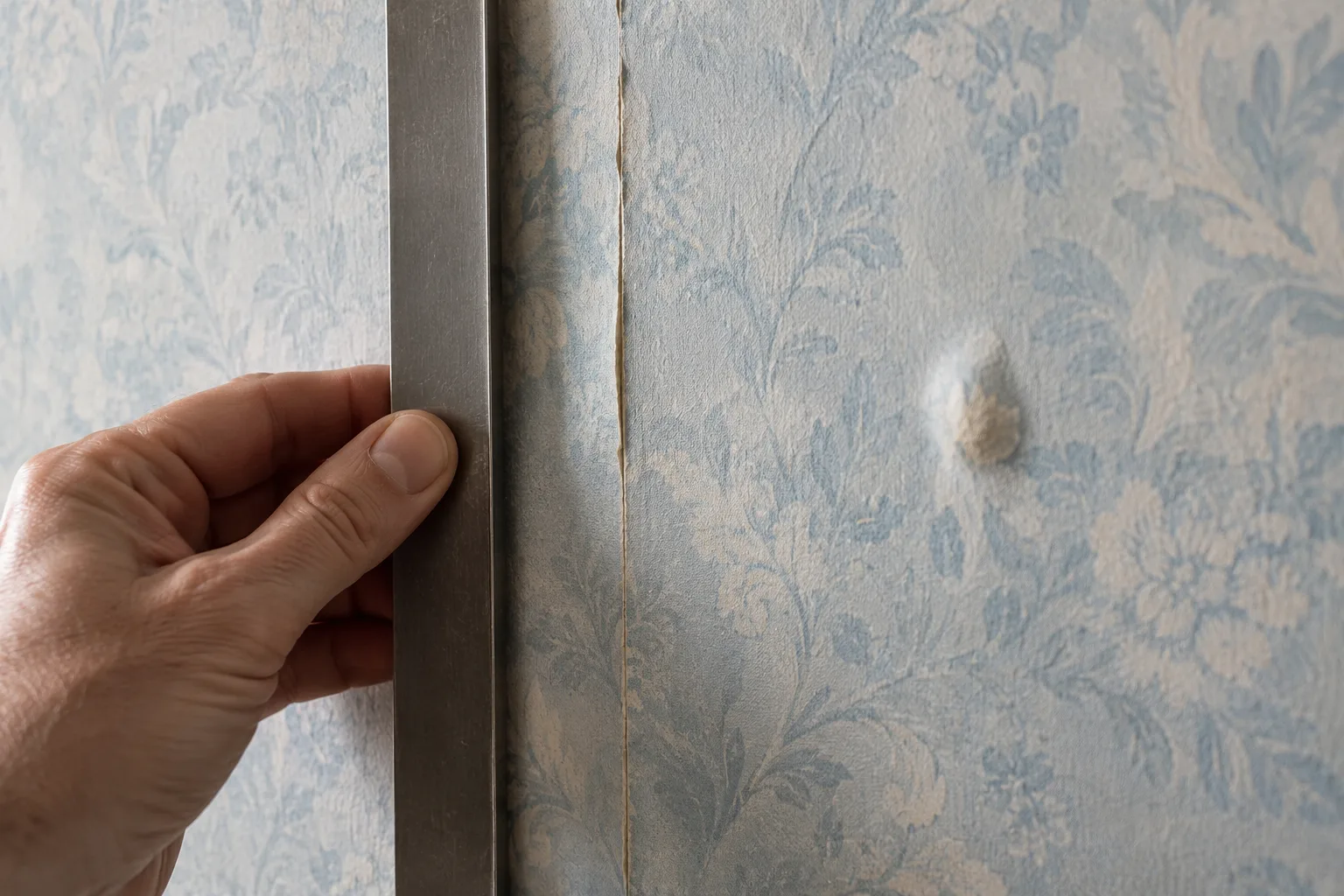
Run your hand across the old wall and inspect it in raking light. Look for raised seams, bubbles, curling corners, tears and damp staining. Press a hollow-looking area gently. If several layers are present, you may not know which is bonded to the plaster and which is merely attached to another sheet. A continuous mural scene makes an old seam ridge especially noticeable; the new seam should not be planned directly on top of it if an approved overlay is attempted.
A dark or brightly patterned old wallpaper may influence a pale new print, depending on the new material’s opacity. A smooth photograph in a catalogue will not reveal that risk. Hold a sample of the exact new material against the old covering in the room’s light. If the old pattern shows through or the surface texture is obvious, an overlay is not a good shortcut.
Why the old wallpaper type matters
Some old coverings have a vinyl face that resists ordinary paste adhesion. Others are porous or fragile and may swell when moisture is introduced. Textured or embossed papers create a visible pattern beneath a thin mural. A peel-and-stick product may not bond reliably to the old paper’s coating, or it may bond to the paper only for that paper to detach from the wall. The labels on the new product cannot tell you what is hiding in an older installation.
If the existing surface is a paintable liner installed recently and known to be secure, a supplier or decorator may approve a specific overlay system. That is a narrower case than “there is wallpaper on the wall”. Obtain the material name, check the manufacturer’s guidance and test a sample. Do not use one successful sample patch to ignore loose edges elsewhere on a large wall.
In an older building, removal itself can reveal damaged plaster or other issues. Plan preparation time rather than assuming the old paper will peel away in one sheet. If the wall has persistent dampness, investigate and resolve that cause before installing another covering. Papering over a stain does not treat the source.
The safer preparation sequence
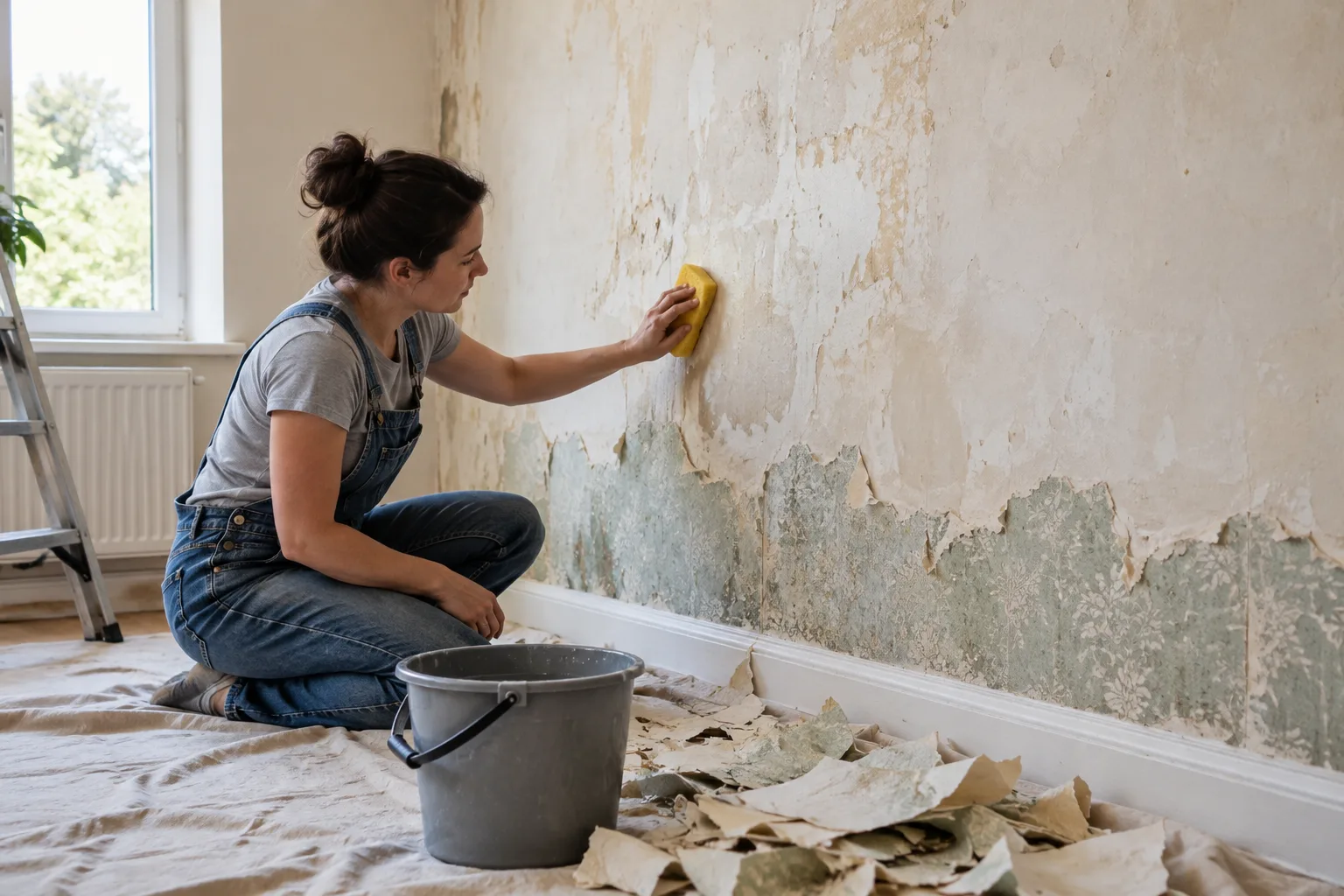
First confirm that removal is permitted, particularly in a rental or protected interior. Follow a method suitable for the old covering and wall beneath it. Strip the paper without gouging the plaster, remove residual paste, then inspect for cracks, loose paint or uneven patches. Repair the surface as needed. If the exposed substrate is uncertain, consult the wall-suitability guide before ordering. The Wallcoverings Association advises removing old adhesive after stripping wallpaper and preparing a clean, dry, sound substrate before a new installation.
Do not rush the drying stage. A wall that feels dry at the surface may still retain moisture from stripping or repairs. The exact waiting time depends on materials and room conditions, so follow the preparation product and wallcovering instructions. Take new measurements after preparation, especially if skimming or lining has changed the wall outline. Custom mural dimensions are unforgiving of assumptions made before the substrate was repaired.
If the old wallpaper is difficult to remove without damaging the wall, consult a qualified decorator. They may recommend a particular repair or lining approach. Avoid layering products based on online anecdotes from a different wall and adhesive. The cost of preparation should be part of the project budget, not an unpleasant surprise after an expensive print arrives.
If an overlay is being considered
Ask the new mural supplier four direct questions. Is application over this particular old wallpaper permitted? Does the old surface need a specific primer? How are old seams to be treated? Will the new adhesive or paste affect the old layer? Record the answers. Then inspect the entire wall, not just a small central patch. Corners, radiator zones and window reveals often fail first.
A sample or test strip can check adhesion and show-through on a representative area. Leave it for the period the new supplier specifies, then inspect the older layer when removing it. If the old paper comes away, the test has answered the question. If it holds, that is encouraging but not proof for every seam on a long wall. York's guidance for its wallpaper-over-wallpaper exception also calls for flat old seams, staggered new seams and a test hang; those instructions do not automatically authorise a different mural or adhesive.
Consider future removal too. A new mural bonded to old wallpaper creates a two-layer system whose removal may be more complicated than either product alone. If you are decorating a rental, obtain permission before covering an existing landlord-installed wallpaper. The restoration obligation may require more than peeling away the new mural.
Approve the foundation before ordering the picture
If an overlay is explicitly approved, test across an existing seam as well as on a flat area; check show-through, adhesion and whether the older join remains visible. Mark those old joins on the installer's plan so new seams can be placed according to the chosen product's instructions. If instead the old paper is removed and the wall repaired, take final measurements after preparation. The print should fit the surface that will actually receive it.