Is Mural Wallpaper Reusable? Repositioning, Removal, and Storage
Understand whether mural wallpaper can be reused after removal, including repositioning during installation, adhesive loss, storage, and realistic limits.
Article focus: pricing and measurement
The cost and measurement decision
Start with accurate wall measurements; the final custom mural price depends on area, material and any finishing options.

Example application: Any room with a suitable, prepared wall · pricing and measurement
Usually, you should treat a made-to-measure mural as a one-wall purchase unless the exact product explicitly supports reuse. Adjusting a fresh panel during installation, removing it months later and sticking it to a second wall are three separate capabilities. Even reusable adhesive cannot restore edges trimmed from the first wall or create missing image for a larger one. Check the product's written reuse and storage instructions, then compare the old panel set with the next wall before planning a move.
Three stages that are often confused
At the first stage, a small misaligned section is lifted while hanging and laid down again. At the second, an installed sheet is removed without tearing or pulling paint. At the third, that sheet is applied a second time and remains aligned. A material can succeed at one stage and fail at the next. For example, it may peel off a sound wall but collect dust on the exposed adhesive; it is then removable but difficult to reapply.
The Wallcoverings Association's definitions distinguish self-adhesive, peelable and strippable characteristics. They do not make “reusable” an automatic property of all products in those groups. RoomMates Decor's mural FAQ makes the distinction unusually clear within one brand: its peel-and-stick murals are reusable, while its wallpaper murals are removable only. Neither claim establishes how a different manufacturer's custom mural will behave.
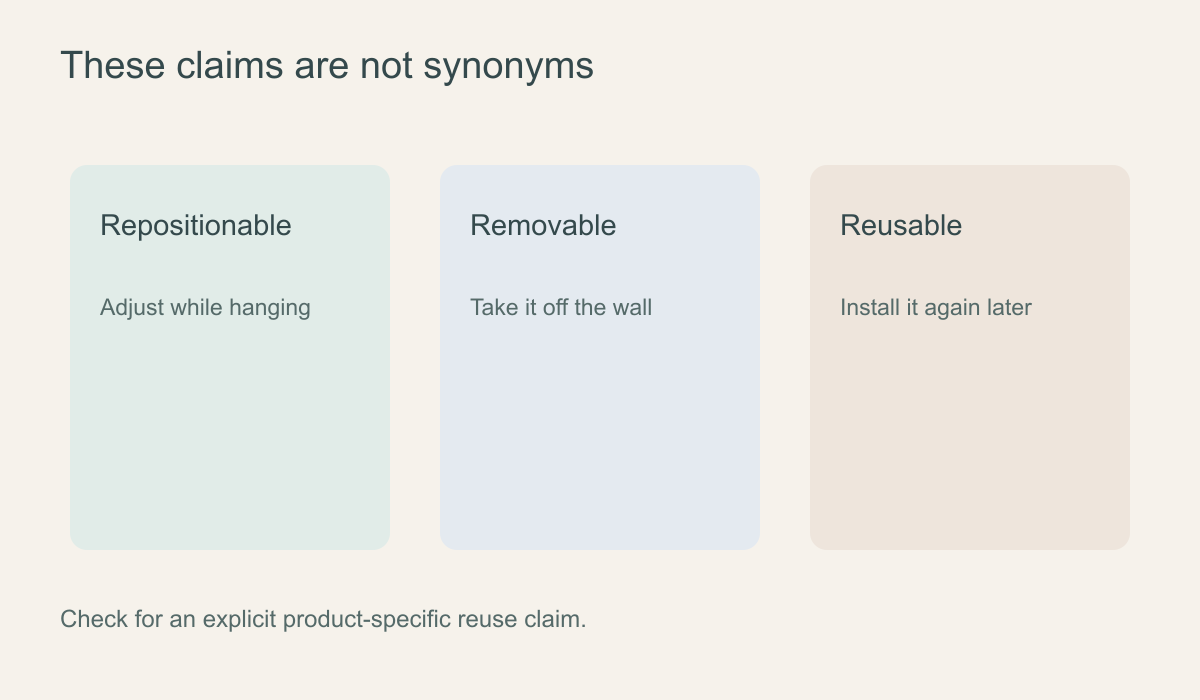 Each step requires an additional capability beyond the previous one.
What happens to a panel when it comes off?
The sheet may stretch as you lift it, especially if you pull from one point instead of supporting a broad edge. Stretch can shift a printed branch or architectural line enough that the original seams no longer meet. A paper or fabric backing may curl. A pressure-sensitive adhesive can pick up dust, hair or fibres, or fold onto itself. A pasted sheet may have adhesive residue and a different removal process entirely.
Even if every panel comes down intact, the wall may not. Paint can lift or adhesive can remain; those outcomes are separate from whether the mural is reusable. Plan removal according to the manufacturer's instructions and test in an inconspicuous area if wall preservation matters. Do not yank faster because you hope to store the paper afterward.
The second wall has to fit the old artwork
Custom-size murals are produced for the proportions and crop of the original wall. The second wall may be narrower, taller or interrupted by a window. A trimmed edge from the first installation cannot be untrimmed. You may be able to cut down a panel for a smaller area, but that could remove a subject or misalign the continuous image. A larger wall may expose missing coverage. Compare the full original print dimensions and panel layout with the new wall before attempting a move.
Numbered panels must retain their sequence. If a large tree crosses panels two and three, swapping them or trimming one differently breaks the scene. Take a straight-on photograph before removal and mark each panel on its backing, never on the printed face. Record which edges were trimmed and where the original wall had a slope or fitting.
Before removing the first panel, draw the original and proposed walls at the same scale. Mark the width and height of every retained panel, the portion previously cut away at the skirting and corners, and any new door or window. Overlay the old composition without stretching it. If the new wall exposes an unprinted strip or the only workable crop cuts through the focal subject, a successful removal would still not make the mural reusable for that location.
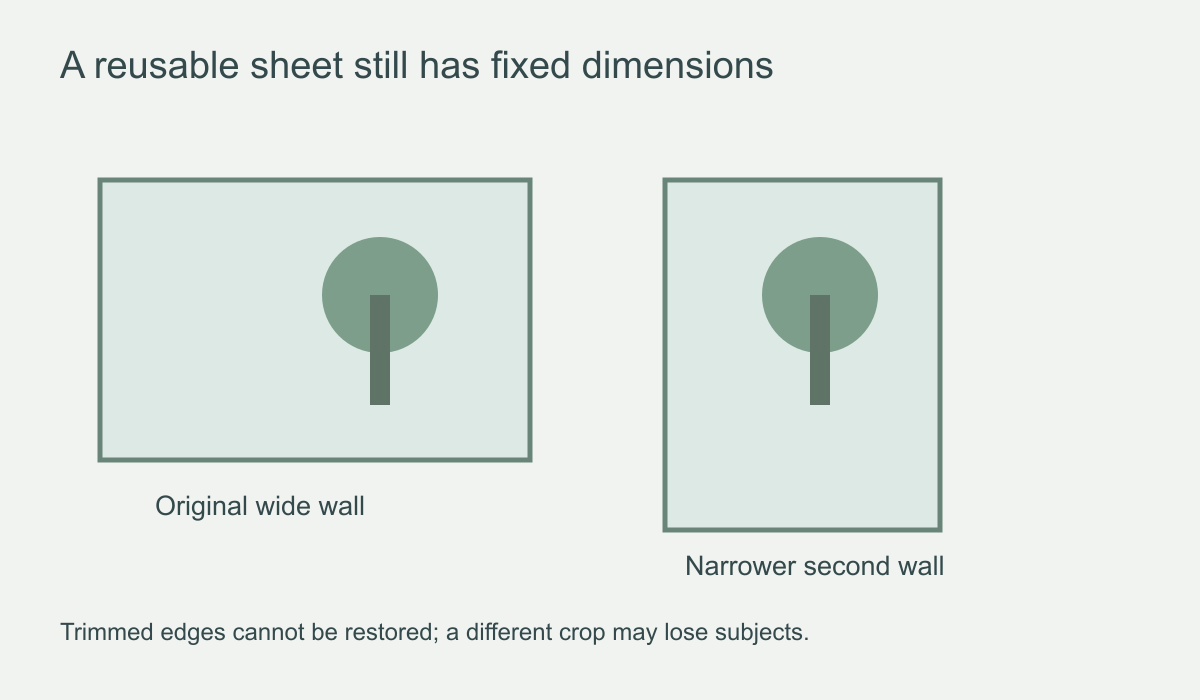 A sound reusable panel may still be the wrong size for the next wall.
How should a potentially reusable sheet be handled?
Only attempt storage when the specific product says it may be reused. Keep any original release liner or backing if the instructions call for it. Work with a helper to support the panel while removing it so the adhesive does not touch itself or the floor. If the product specifies a particular peel angle or method, follow that rather than pulling from a random corner.
Place the panel on a clean, suitable liner as directed. Avoid trapping dust, folding the artwork sharply or pressing adhesive against incompatible plastic. Store it in the manner and environmental conditions specified by the manufacturer. A loosely rolled sheet may be safer than a folded one for some products, but do not invent a universal storage rule. The print, coating and backing differ between brands.
Before reapplication, inspect each panel for stretched edges, tears, surface damage and contaminated adhesive. Prepare the new wall to the product's specifications and test a small area. If alignment or adhesion is poor, do not keep forcing the panels into place. A failed second installation can damage both the mural and the new wall.
Can pasted murals be moved?
Do not assume so. Some pasted wallcoverings are designed to strip off during redecorating, but strippability describes removal from a prepared wall, not recovery of a clean sheet for reuse. Pasted materials may tear, retain adhesive or lose dimensional stability when removed. Ask for explicit reuse instructions if moving the mural is part of the purchase decision.
Peel-and-stick is the more common format associated with repositioning, yet “peel-and-stick” still does not equal reusable. Adhesive formulation, substrate, wall preparation and time on the wall can all change the result. A supplier's statement about a small repeat wallpaper roll should not be applied to a custom multi-panel mural without confirmation.
Decide whether a move is realistic before lifting a panel
Before taking down a mural you hope to reuse, ask the seller for written confirmation that this exact finish can be reapplied after removal, not merely repositioned during installation. Check whether the original release liners must be kept, how long the panels may be stored and how to test adhesion on the new wall. Measure the retained printed panels after the first installation; trimming may have removed material that the next wall needs. If the new wall is wider or taller, those missing edges cannot be recovered by changing adhesive. On a smaller wall, test a scale crop against the focal artwork and openings before making another cut. If the reuse claim, clean storage method or wall fit remains uncertain, plan for a new print rather than damaging the current mural to find out.