Is Mural Wallpaper Suitable for Kitchens?
How to assess heat, grease, steam, splash, cleaning and distance from hobs or sinks before choosing a kitchen mural.
Article focus: pricing and measurement
Budgeting this wall with confidence
Start with accurate wall measurements; the final custom mural price depends on area, material and any finishing options.
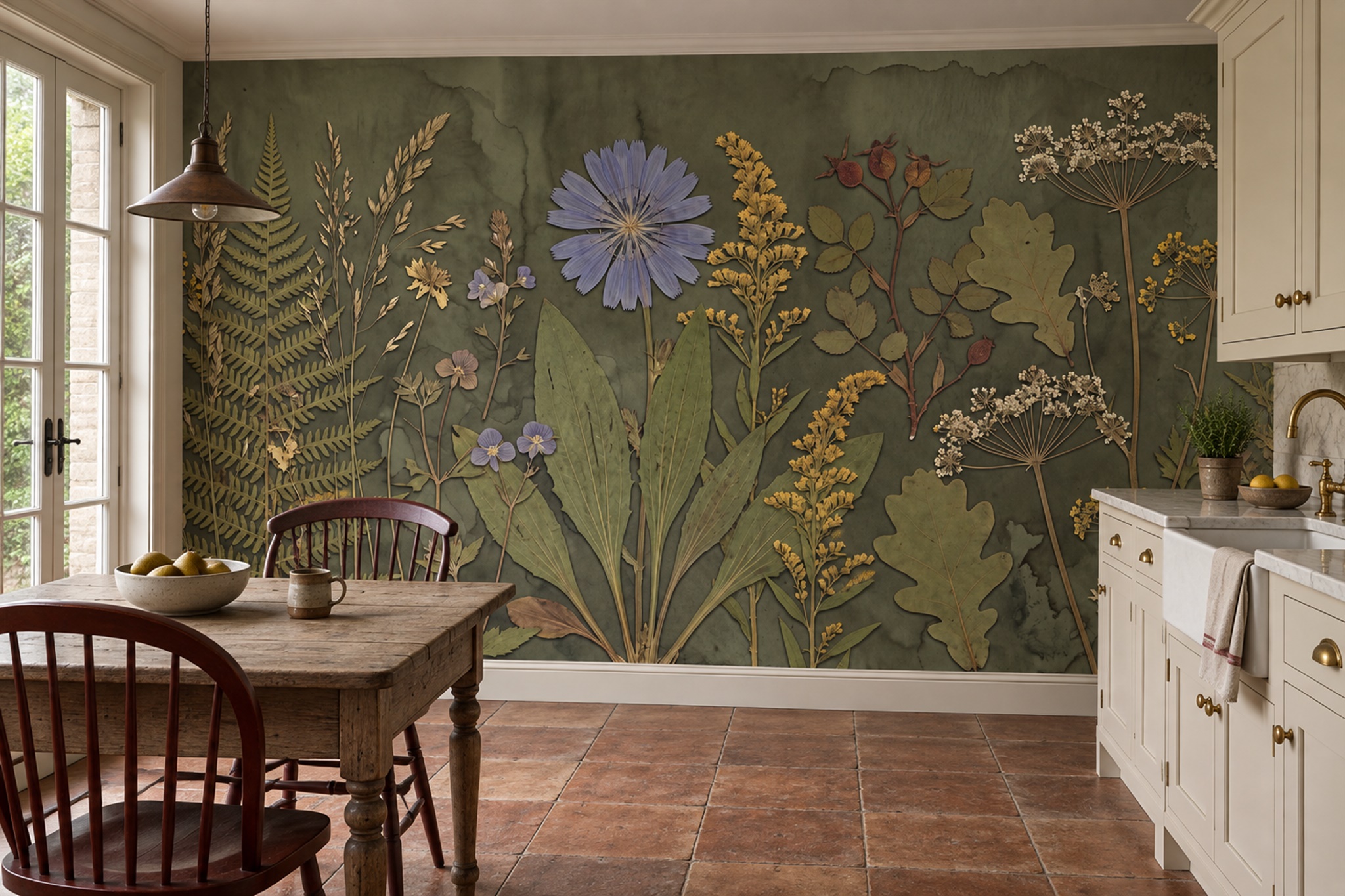
Example application: Kitchen · pricing and measurement
A kitchen-dining wall away from the sink and hob can be a candidate for a mural; the working splashback is a different specification problem. Watch where steam condenses, grease settles, water lands and chairs or doors rub the wall during ordinary use. Then check the selected finish's written installation and cleaning limits for that exact location. Neither a vinyl name nor a peel-and-stick backing establishes heat clearance, waterproofing or tolerance for repeated degreasing.
Identify the wall’s everyday exposures
Stand in the kitchen during normal use and note where water lands when dishes are washed, where oil or food splashes while cooking and where steam condenses after boiling. A dining wall may remain comparatively dry, while the surface immediately behind the sink can be repeatedly wet. A hob wall can experience heat and grease even when it is not visibly splashed. There is no universal distance that makes an ordinary mural suitable: the appliance layout, actual exposure and product instructions decide.
Ventilation changes the picture. A working extractor can reduce lingering steam and grease, but it does not turn a splashback into a dry wall. Poor airflow can allow moisture to accumulate at corners or behind cabinets. If paint is already peeling or plaster is damp, correct the underlying issue before installing a mural. Decorative wallpaper is not a moisture barrier or a repair for an unstable wall.
Consider traffic too. In a compact kitchen, chair backs, cupboard doors and people carrying trays may brush a feature wall regularly. In a larger kitchen-diner, a mural behind the dining table may have less exposure. Ask how the selected finish can be cleaned and whether gentle wiping is permitted. Frequent scrubbing with household degreasers should not be assumed safe for a printed mural.
Choose the wall before the artwork
A dining-area wall or a wall clear of sinks and cooking appliances is often the simpler mural location. It can provide the visual character of a kitchen mural without placing seams in the most demanding zone. A scene behind open shelving can also work visually, but map the shelves before approving the crop. The shelves may hide the main subject or require precise cuts around brackets.
Directly behind a sink, the edge at the counter can see repeated water. A decorative print may look convincing in a styled photograph yet be unsuitable for that exact exposure. Ask the supplier whether the chosen material and installation system are approved there and what protection, if any, is specified. Do not improvise a clear coating or sealant over a product that has not been designed for it. If there is no explicit guidance, a conventional suitable splashback may be the safer choice.
Behind a hob, check the appliance manufacturer’s clearance and wall-finish requirements. Heat, flame and grease introduce conditions beyond routine wallpaper care. Do not place ordinary mural wallpaper where a fire or heat rating is required unless the exact system has the relevant approval. A mural can still be used elsewhere in the same kitchen. Graham & Brown's kitchen-wallpaper guidance likewise distinguishes decorative kitchen walls from the sink and hob area, where a suitable splashback may be needed; that advice does not certify another brand's mural.
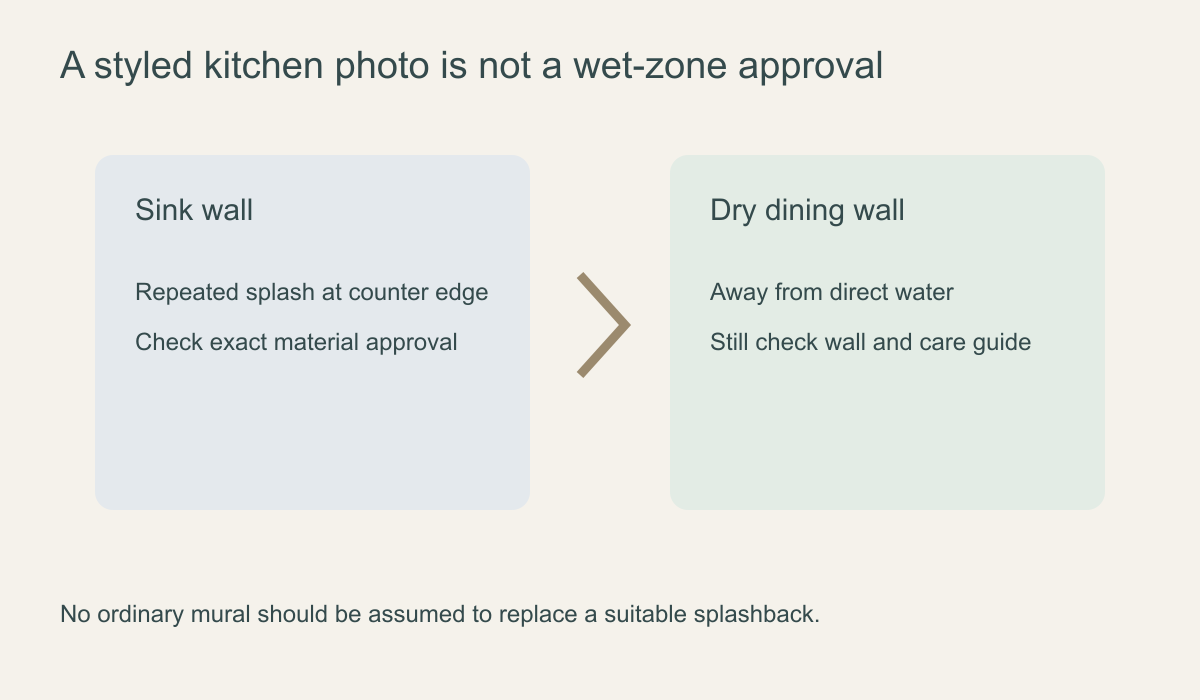
Read the material sheet rather than the marketing phrase
Vinyl surfaces are often considered where wipeability matters, but formulations, backings and seam methods differ. Some non-woven finishes permit light cleaning; others are more delicate. Peel-and-stick avoids separate paste but its adhesive still needs a sound, dry wall and may have restrictions on heat or humidity. Ask for the exact product’s installation and care sheet. Words such as “washable” should be interpreted according to the maker’s stated cleaning method, not as permission to soak seams.
Check the wall behind the material too. A durable printed face is not enough if moisture can enter an unprotected seam or if the paint beneath is loose. Surfaces near counters and window reveals have edges where water can collect. If a supplier proposes special edge treatment, ask for the complete approved system and whether it changes the appearance of the mural. Do not take a generic DIY shortcut from another wallpaper type.
Request a sample and view it in the kitchen under its actual lighting. Daylight, cabinet colour and warm task lights can change the appearance of print colours. Test the sample on the prepared wall if adhesion is uncertain, following the seller’s test period. A sample can reveal colour and finish; it cannot by itself certify suitability for direct heat or water exposure.
Plan composition around the room
Kitchen walls often contain cabinets, windows, switches, rails and appliances. Measure the complete wall as intended to be covered, then mark these interruptions on a sketch. A custom mural’s subject should remain visible after upper cabinets and shelves are in place. Large botanical motifs can disappear behind a run of cupboards, while a broad landscape may still read across the open wall area.
Keep the useful visual focus away from the most exposed areas if possible. A quieter part of the image can sit behind dining furniture or at a trimmed edge, while the main detail occupies the cleaner open wall. Use the site's crop preview alongside your own measured sketch of cabinet outlines; the preview does not automatically show your cabinets. A supplier's kitchen photograph may use different cabinet heights and therefore show more of the artwork than your own room will.
If renovation work is still underway, measure after cabinets, counters and splashbacks have been fitted. A change to the counter height or trim line can alter the visible mural area. Make sure the wall has been repaired, painted and allowed to cure according to the mural’s instructions before installation begins.
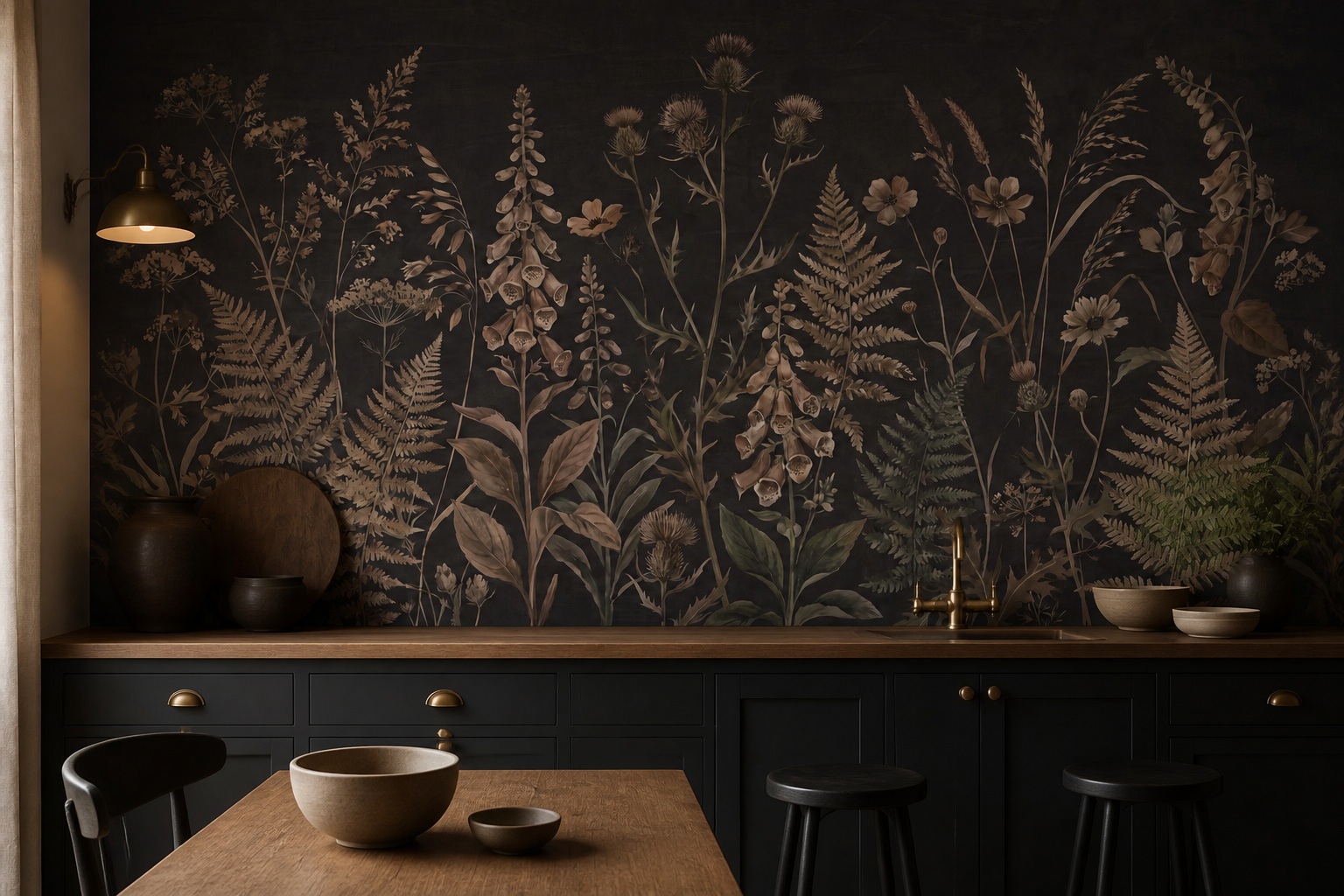
Ask for approval of one exact kitchen position
Send a marked photograph naming the proposed position, then ask about the exact finish, adhesive, edges and approved cleaning method for that exposure. If it is a working splashback or heat zone and no complete suitable system is specified, use a surface designed for that duty and place the mural elsewhere. For an approved lower-exposure wall, finish cabinets and splashbacks before measuring, and map shelves and sockets over the crop. The preview can protect the composition; it cannot certify resistance to kitchen water, grease or heat.