Is Peel-and-Stick Mural Wallpaper Really Removable?
Explain repositioning, removal, adhesive strength, paint condition and why removable does not mean damage-proof.
Article focus: installation and removal
The installation choice in practice
The right installation method depends on the chosen material and wall condition, so prepare the wall before ordering and follow the material-specific instructions.
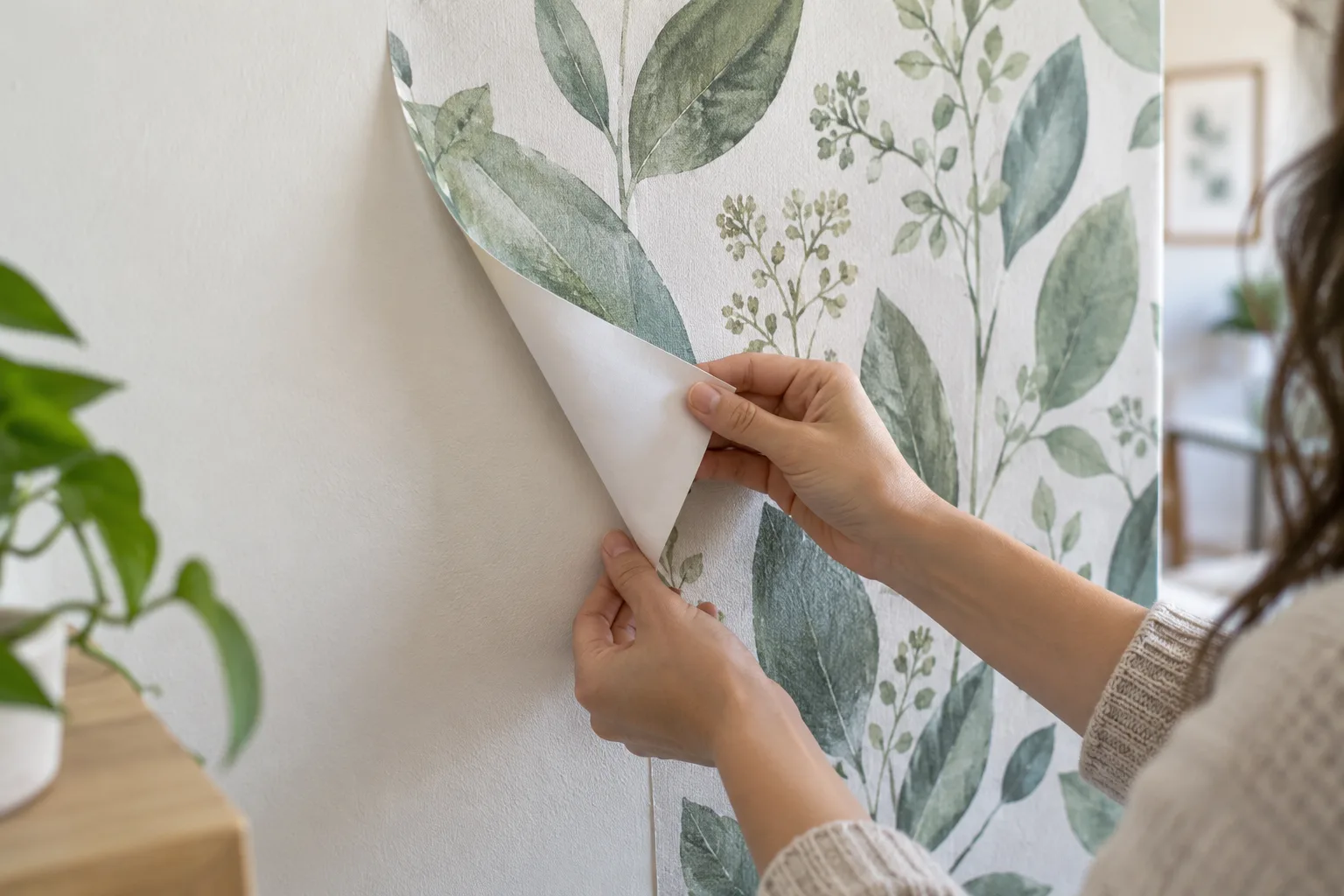
Example application: Bedroom · installation and removal
A peel-and-stick mural may be designed to come off a suitable wall, but a clean result on your paint is a separate claim that needs testing. The word “removable” says little about a newly painted patch, old filler, textured coating or future residue. Ask the supplier whether the exact finish is only repositionable while fitting, removable after use, or genuinely reusable after storage. Then test the intended material on representative areas of the actual wall before relying on the label.
Three claims that are often confused
Repositionable means you may be able to lift and correct a panel during installation. Removable means the installed panel is designed to be taken off later. Reusable means it can be stored and installed again. A product may support the first two without reliably supporting the third. Dust on the adhesive, stretching, curled edges and changes in wall texture can prevent a second installation from matching the first, even when the original panel came off intact.
Ask how long a panel may be repositioned and whether repeated lifting weakens adhesion. A large mural panel is harder to handle than a small sticker: its edge may fold or the adhesive may touch itself. Instructions should distinguish a quick correction during fitting from taking the whole mural down months or years later. Neither action establishes that a used panel can be stored and installed again.
Also distinguish release from clean release. A panel might peel away while leaving some adhesive residue, or the adhesive may pull away a weak layer of paint. A wall can be damaged even if the mural itself is technically removable. The most useful question is therefore “What happens on my painted surface?” rather than “Does this product say removable?”
Look for the conditions attached to each claim. Does the supplier specify a smooth painted wall, a particular paint cure period or a maximum installation time before removal? Does “repositionable” refer only to the first minutes of application? Does “reusable” require retaining a liner or special storage? If the listing is silent, ask before buying rather than reading the most generous meaning into a short badge.
The wall condition often decides the result
Paint must adhere securely to the wall before any self-adhesive mural is applied. If paint flakes under a fingernail, lifts at old repairs or leaves powder on your hand, wallpaper adhesive cannot fix it. Glossy coatings, highly textured finishes, primer residues and damp surfaces may also interfere with adhesion. Some surfaces let the mural release too easily; others grip unpredictably. The seller’s approved surface list should be your first reference.
Fresh paint is a special risk. It may feel dry yet continue curing for a period that varies by paint and conditions. Applying adhesive too soon can affect both initial bonding and later removal. Ask the paint manufacturer and mural supplier for their waiting guidance, and use the longer relevant requirement if they differ. A rental wall with unknown repaint history calls for caution rather than optimism.
Humidity, heat and direct sunlight can change the conditions over time. That does not prove a particular mural will fail, but it is a reason to follow the product’s room limitations. A wall beside a shower, radiator or cooker is not equivalent to a calm bedroom wall. Ask for written suitability guidance for the exact product instead of extrapolating from a small bedroom demonstration.
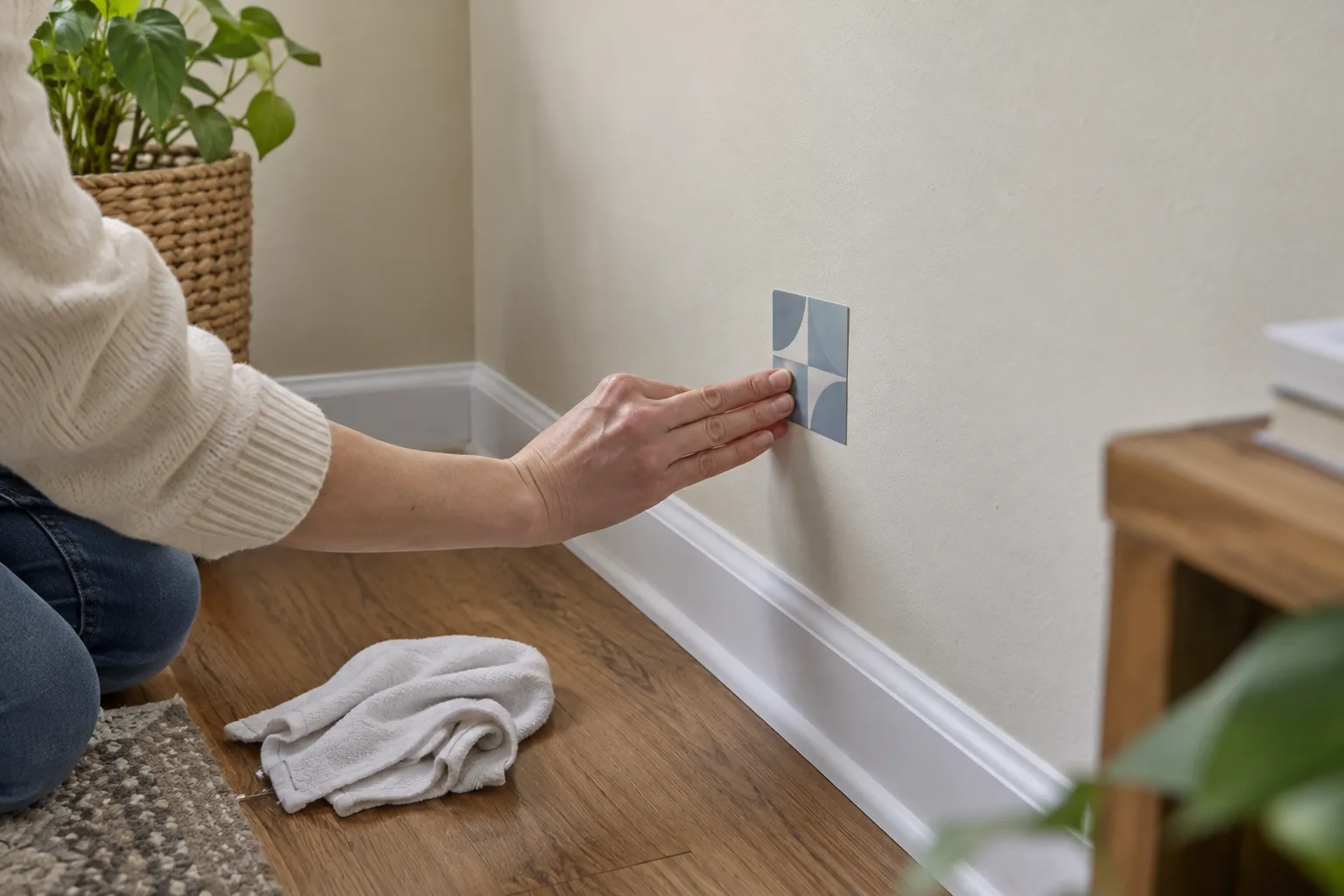
Run a test that resembles the real project
Request a sample of the same material and adhesive you intend to order. Solowalls currently offers an A4 sample option on product pages; confirm that the sample matches the chosen Peel and Stick finish before treating it as an adhesion trial. Place it on a discreet part of the actual wall after preparing the surface as directed. Leave it for the supplier’s recommended test period rather than judging it immediately. Then remove it by the stated method and inspect the paint and adhesive side.
Test more than one area if the wall has different paint or repaired patches. Photograph the surface before application and after lifting the sample, particularly in a rental. A patch can reveal an immediate incompatibility, but it cannot reproduce years of exposure or the force involved in removing a full-height panel. If paint comes away during the trial, stop: covering the entire wall is unlikely to make that weak coating stronger.
If you have already installed a mural and want to remove it, keep the installation instructions. Clear furniture so you can work without pulling at an awkward angle. Follow the manufacturer’s recommendations for starting at an edge, speed and direction of peeling. Do not use water, heat, solvents or a scraper unless that specific product’s instructions allow them. Such methods can damage paint or wallboard even when they release adhesive.
Read the sample result as four separate signals
First, did the sample stay attached for the recommended test period? Edge lift suggests the mural may not adhere reliably to that surface, even if it comes away without damage. Second, did the panel release as the instructions describe, without tearing or requiring an improvised tool? That tells you something about handling, but not yet about the wall beneath it.
Third, inspect the painted surface in side light. Missing paint, a changed sheen or a powdery patch means the test was not a clean release. Stop there rather than assuming a full-height panel will be kinder to the wall. Fourth, check for tacky residue. A clean-looking panel with adhesive left behind may still require a removal method that the paint cannot tolerate. Record each outcome separately; a single verdict of “passed” or “failed” hides useful information.
If a result is ambiguous, send photographs and the paint history to the supplier and ask for written product-specific advice. A sample result is evidence about one location at one moment, not a warranty for the whole room. The most consequential failure is paint loss; early edge lift may instead signal poor adhesion. Those lead to different next steps and should not be collapsed into one vague “pass” or “fail”.
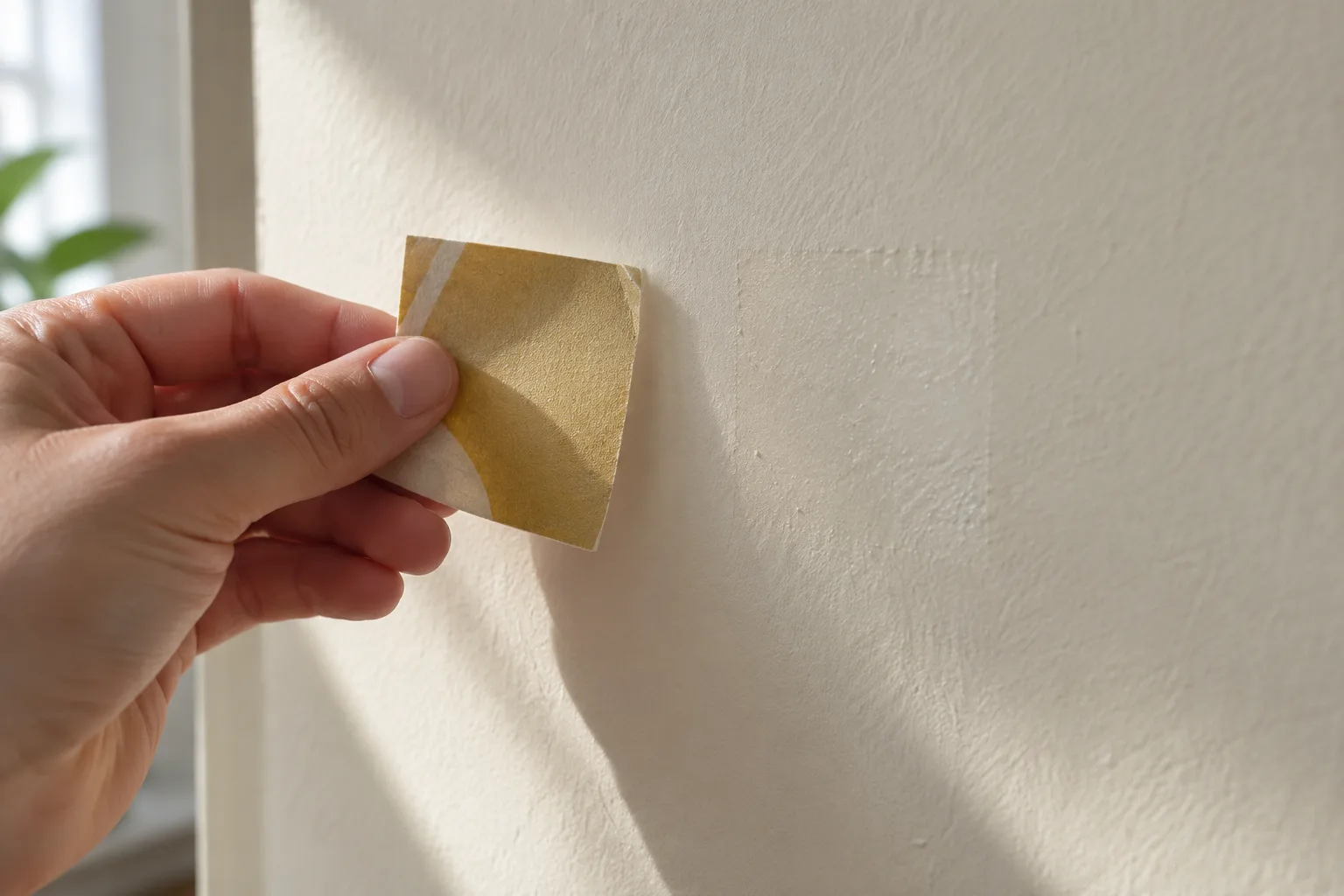
Turn the sample result into a decision
A short, successful test is useful evidence for that patch, not a promise about full-height panels after years of use. Where results vary across repairs or old coatings, ask for product-specific advice or choose another prepared surface. For a rental, obtain permission and clarify the required move-out condition independently of the adhesive test. In this sense, “really removable” is not a single yes-or-no property: it is a claim about a particular product, wall, period of use and acceptable aftermath.