Can Mural Wallpaper Be Used Behind a Fireplace?
Review heat, clearance, surface condition and composition before placing a mural near a fireplace or mantel.
Article focus: pricing and measurement
What to settle before pricing
Start with accurate wall measurements; the final custom mural price depends on area, material and any finishing options.
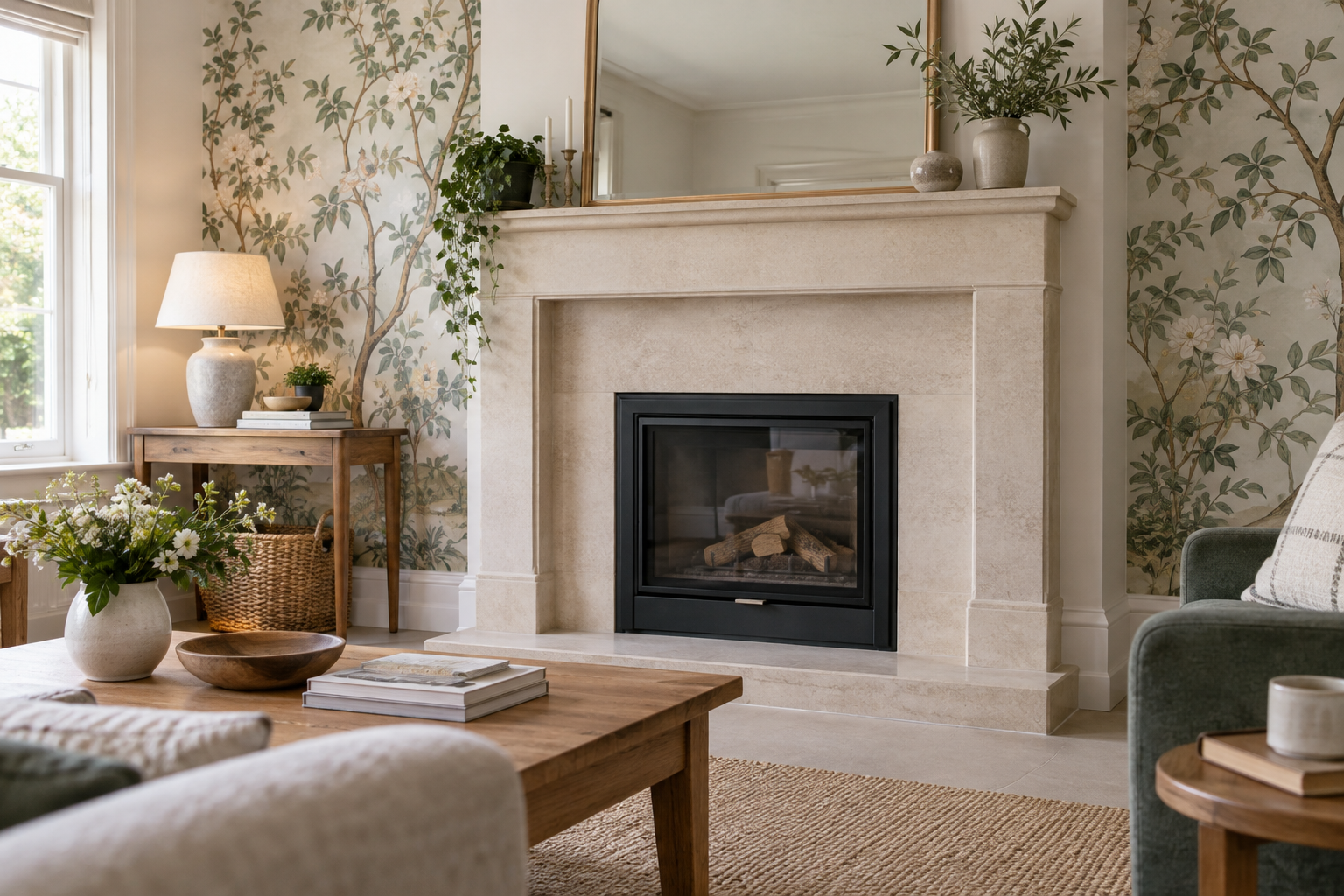
Example application: Living room · pricing and measurement
Possibly, but only on a wall area permitted for the actual appliance and wallcovering system. “Behind” may mean above a mantel, on a chimney breast, beside the surround or in a stove recess; those positions have different requirements. The floral room photograph is an illustration, not evidence of a safe installation. Identify the fireplace and proposed surface before choosing artwork, and never cover a required noncombustible facing with ordinary wallpaper.
Quick answer: First identify the appliance, fuel type and exact proposed wall area. Consult the appliance instructions and a qualified local professional about permitted finishes and required clearances, then obtain documentation for the selected wallcovering and adhesive system. Keep any required noncombustible facing intact. If these details cannot be confirmed, use another wall for the mural.Start with the actual fireplace, not the room photograph
Wood-burning, gas and electric appliances are not interchangeable. Even two fireplaces that look similar can have different installation manuals, surrounding constructions and heat patterns. A decorative mantle may disguise the dimensions of the real appliance opening or vent. Find the model information, installation instructions and any drawings showing where combustible finishes may or may not be installed. If those documents are missing, stop the mural decision until the fireplace manufacturer or a qualified professional can identify the unit.
It is also important to know whether you are dealing with a purpose-built masonry fireplace, an insert, a stove or a recessed unit. Each arrangement has its own construction and approved finishing details. Do not infer safety from a supplier's generic description of wallpaper as durable, washable or suitable for living rooms. Such claims do not establish suitability beside a heat source. Nor does the appearance of a stone surround prove that the hidden wall assembly meets requirements.
Separate the fireplace facing from the decorative wall
The room photograph below shows a dark tree-and-lake mural on a separate wall beside a pale fireplace surround. That is a useful compositional alternative to forcing the image around the opening. It is still only an interior-design illustration, not a tested construction detail or a clearance diagram. The actual permitted boundary for your room must come from the appliance documentation and the professionals responsible for the work; the distance in an image cannot be measured into permission.
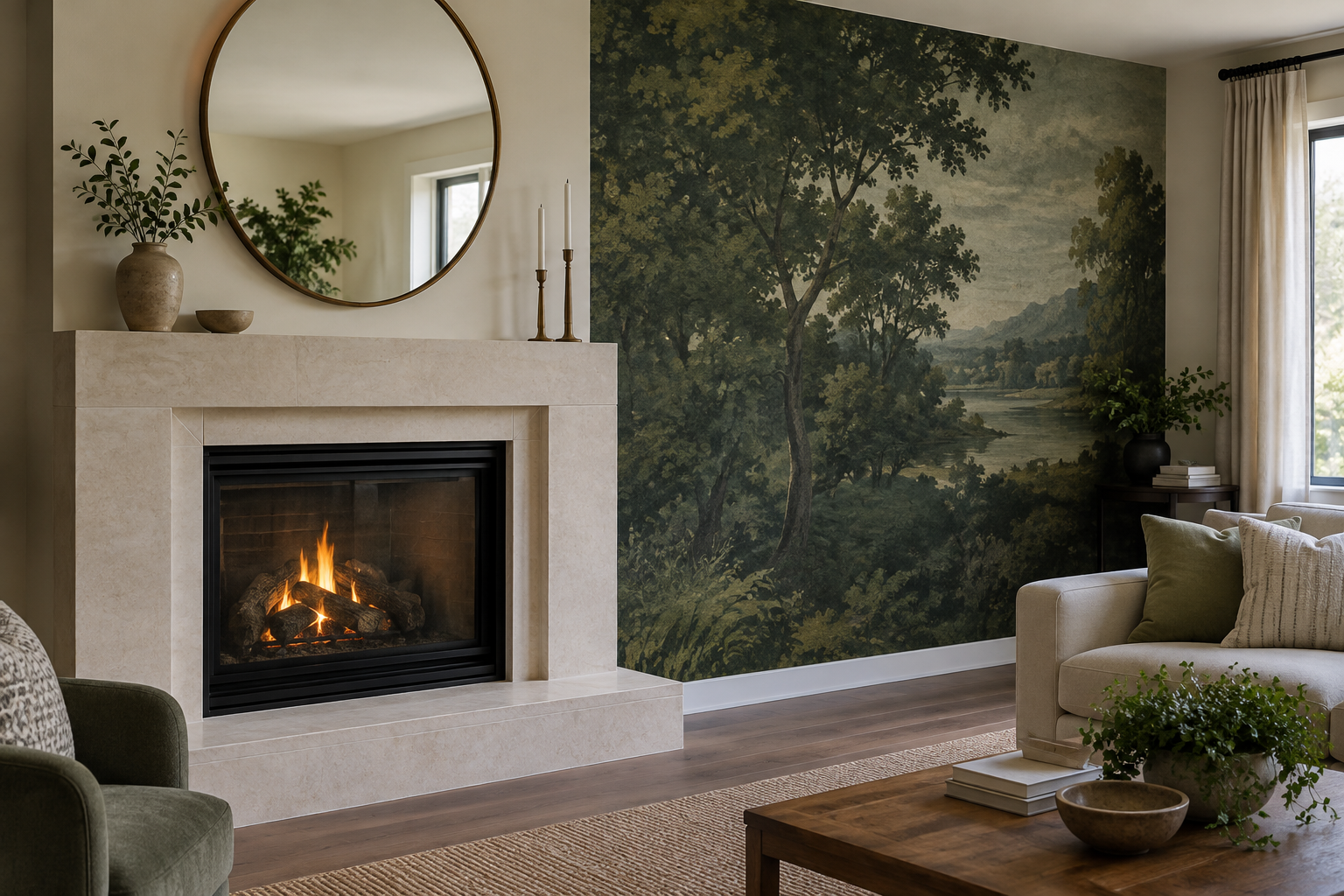
Mark the proposed printed area on a photograph or elevation when asking the appliance manufacturer or installer for advice. Include the firebox, mantel, surround, vents and any recess. An answer about wallpaper on a side wall cannot simply be transferred to the facing around the opening or to the area above a mantel. The wall may look continuous while its permitted finishes change by zone.
Do not make up a universal distance
There is no single wallpaper-to-fireplace distance that can be safely copied from a blog for every appliance and building. Clearance and finish requirements depend on the equipment and its installation. If the manufacturer specifies noncombustible facing or an exclusion zone, keep that zone free of ordinary mural wallpaper and adhesive. If local building or fire rules are stricter, follow them. Where the instructions are ambiguous, have a qualified professional resolve the detail before purchasing or installing.
The U.S. Fire Administration's heating fire safety guidance tells readers to keep burnable items away from heat sources and to have heating equipment and chimneys professionally maintained. It is general fire-prevention advice, not an approval for any particular wallcovering or a substitute for the fireplace's installation instructions. Do not convert a general safety message into a wallpaper placement rule.
Check the wallcovering and adhesive as a system
Ask the wallcovering supplier for material data for the exact finish you intend to order, and show the supplier the marked wall elevation rather than asking whether “wallpaper near a fireplace” is generally acceptable. Where a documented fire classification is required, the responsible professional should check evidence relevant to that product and installation in the applicable jurisdiction. The substrate, adhesive and installation method may matter as well. A print sold in several material options should not be assumed to perform identically in each one, and documentation for a wall lining does not override the appliance's prohibited zones.
Peel-and-stick is not automatically suitable near heat because it is easy to apply elsewhere. Vinyl is not automatically suitable because it can be cleaned. A mural printed on a heavier substrate is not automatically a protective lining. These are material descriptions, not approval for use on a fireplace surround. If the documentation does not specifically address the proposed location, choose another treatment for that area.
Plan the composition around a safe finished boundary
Once the construction and permitted decorative zone are confirmed, the visual problem becomes easier. Use a separate wall elevation to show the fireplace, mantel, chimney breast, adjoining wall and any shelving beside the proposed crop. Put the mural's focal point where it remains visible without requiring print in a prohibited zone. A distributed botanical or landscape can tolerate a non-mural surround more readily than a design whose only subject would be interrupted by the opening.
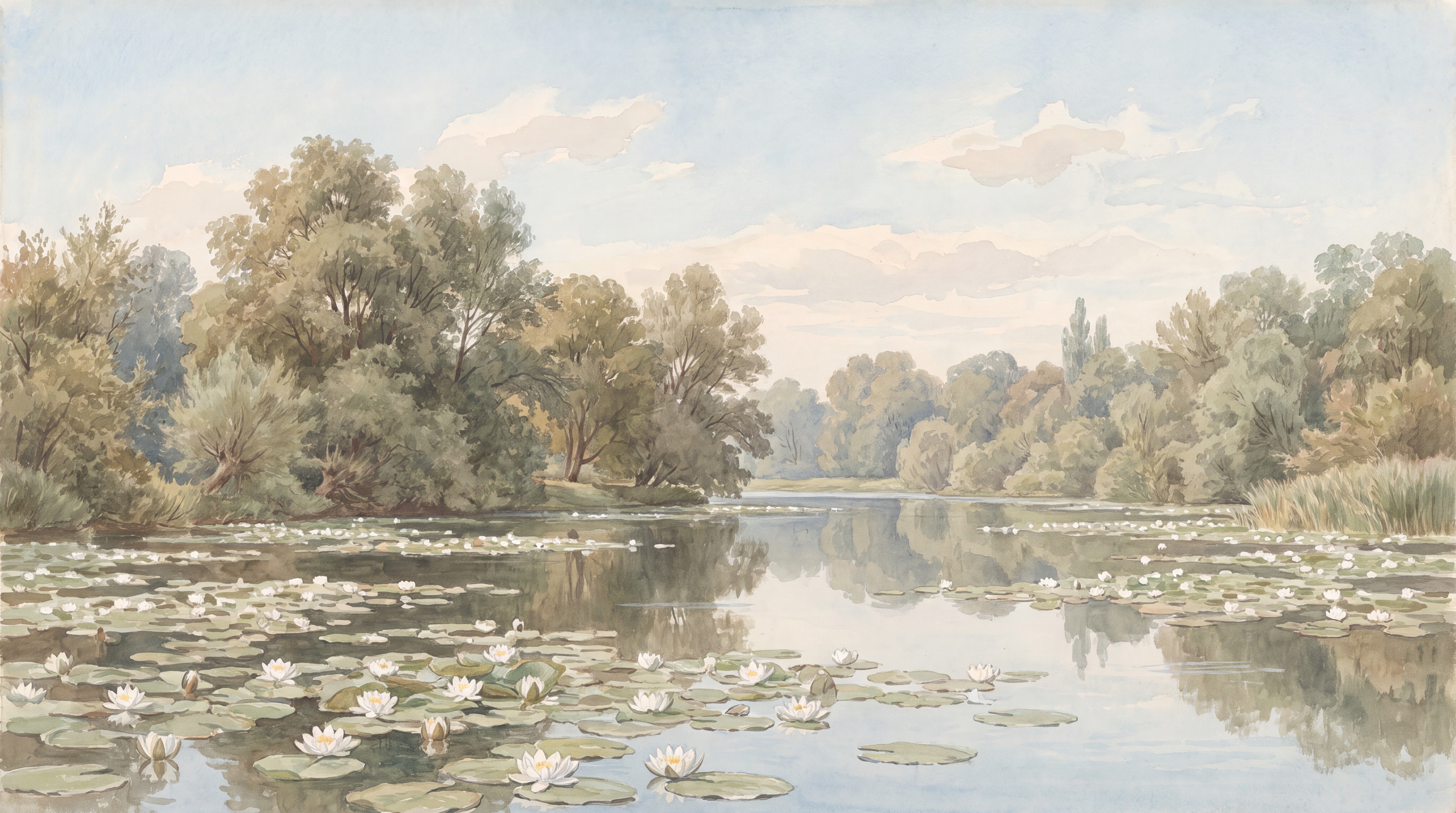
That pale pond artwork, for example, could lose much of its water-lily foreground if the permitted decorative area were only a narrow strip above the mantel. It would read more clearly across a full adjacent wall. The dark landscape in the room photograph above makes a different choice, staying on a separate wall beside the fireplace. Neither image certifies the construction or wallcovering, and neither should be measured for clearances.
For a mural planned on the same wall plane as a fireplace, make the non-mural facing an intentional part of the scheme. It may be stone, tile or another approved finish selected by the project professional. A clear visual break often looks more considered than trying to hide the junction with an arbitrary strip of wallpaper. Agree where the print ends before ordering panels so that a critical image detail is not lost at the boundary.
Keep the installation and maintenance questions separate
A wall can be structurally and thermally suitable for a specified finish yet still need ordinary wallpaper preparation: clean, sound, smooth and dry. The installer should follow the mural material instructions on approved wall areas. Do not apply print over vents, access panels, inspection points or controls. If the fireplace is used regularly, monitor the surrounding finishes for signs of discolouration, lifting or unusual heat, and consult the relevant professional if anything changes.
Professional inspection of heating equipment and chimneys remains a separate responsibility. The mural should never make access more difficult or conceal a problem. Where a remodel changes a mantel, surround or appliance, revisit the finish decision rather than assuming the old wallpaper placement is still suitable. A photo taken before renovation cannot answer the safety question after it.