What Mural Wallpaper Works Best Behind a Bed?
Choose a balanced focal point, comfortable contrast and a crop that works with the headboard and bedside furniture.
Article focus: pricing and measurement
What to settle before pricing
Start with accurate wall measurements; the final custom mural price depends on area, material and any finishing options.
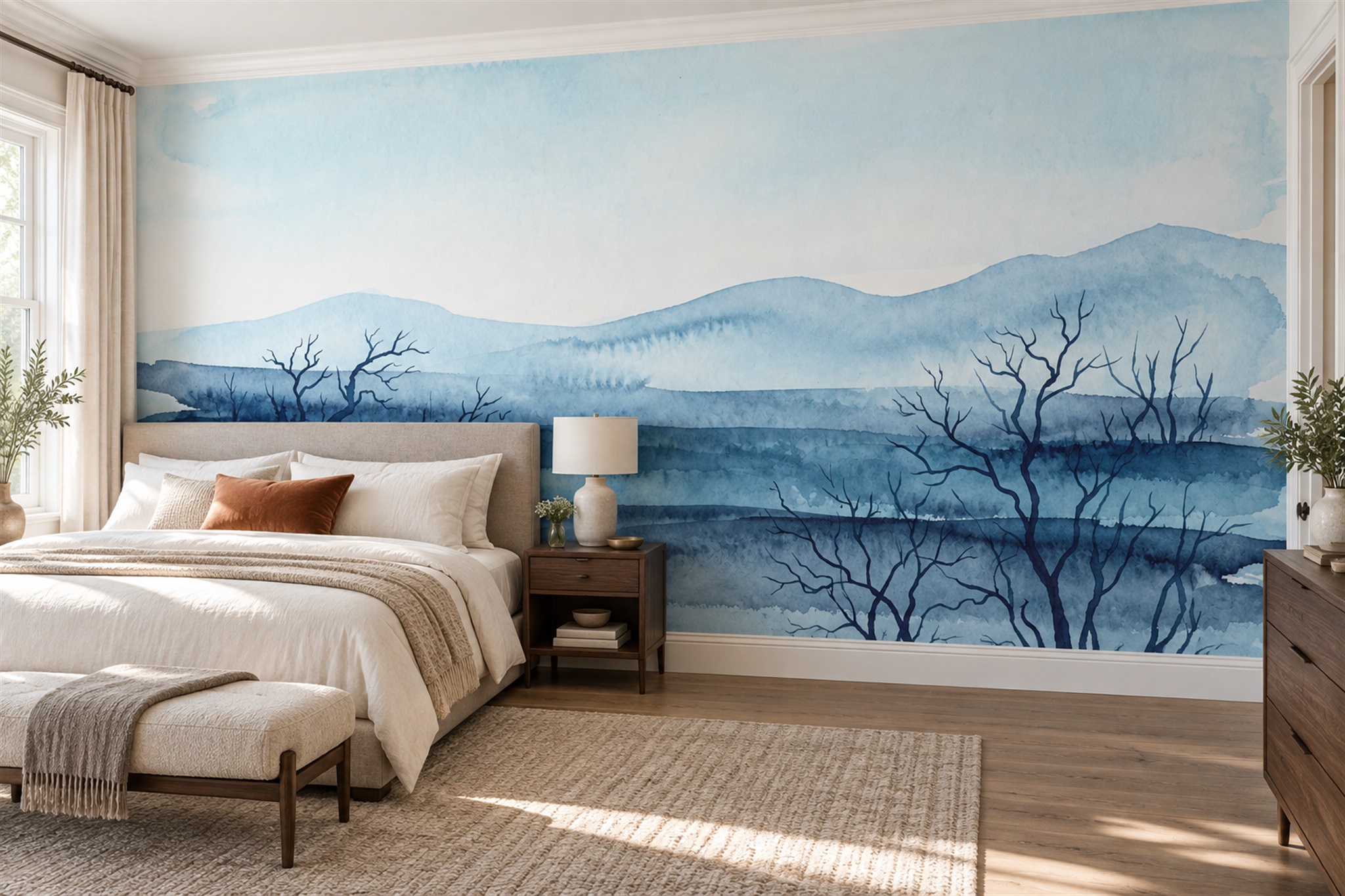
Example application: Bedroom · pricing and measurement
The best mural behind a bed is one whose important parts survive the headboard, lamps and the crop. A broad landscape can open a plain room; a distributed abstract can tolerate substantial obstruction; small botanicals create quieter detail; and a tonal printed surface can make the wall recede. None is automatically best for every bedroom. Judge the exposed wall above and beside the bed, then compare how the image feels from both the doorway and the pillow.
Let the headboard define the visible canvas
Measure the full wall, but also measure the headboard's width and top height. Add the nightstands, lamps and any wall lights to your own sketch. The exposed wall may be a broad band above the bed plus two narrow strips at either side. A dramatic scene centred low on the wall can vanish entirely once the bed is in place. Compare that sketch with the site's crop preview rather than judging an empty wall alone.
The upholstered headboard in the room below covers a substantial part of the tonal abstract mural. The image still works because its broad marks continue above the bed. There is no single tiny subject that needs to remain visible. Notice also the lamps: they create their own bright focal points against the wall. A mural with a central face or sharply outlined object could compete with them in a different way.

Choose a visual role, not just a theme
Some bedrooms benefit from a scenic focal point: a misty landscape or distant trees can give the bed a setting. The blue watercolour scene at the top of this article keeps its pale hills above the upholstered headboard, while darker bare trees remain visible to the right. Because the bed is left of centre, a perfectly symmetrical landscape would be a poor fit here. The broad wash lets the composition tolerate that asymmetry. A different crop could hide the ridgeline behind the bed and weaken the scene.
Other bedrooms need a quieter backdrop, such as fine botanical drawing or a restrained abstract. Think about what the room already contains. A patterned duvet, decorative headboard and several framed pictures create competition. A plain bed and simple furniture leave room for a stronger mural. The question is whether the wall should supply the room's main subject or support a bed that already has one.
Do not assume that every bedroom must use pale colours. A dark scene can make the wall feel enveloping, especially with controlled bedside light. But deep contrast can also make a narrow bedroom feel visually heavier. Compare samples under morning daylight and the lamps used before sleep. The right level of drama depends on your tolerance for the image in daily use, not on a rule attached to the word bedroom.
Judge pattern scale from the doorway and the bed
A print of tiny leaves may look beautifully detailed up close and become visual noise from the doorway. An oversized branch can be effective from across the room but feel awkward when you lie beneath it. Test both viewpoints. Mark the approximate size of the largest motif with paper on the wall, then photograph it with the bed in position. If the wall is narrow, check that the design does not lose its subject when trimmed at the sides. In a room viewed mostly from the entrance, readability at a distance may matter more than miniature detail.
The subtle botanical in this sunlit bedroom uses small, scattered stems. It reads as atmosphere rather than a single central scene. That works with its low headboard and soft bedding, but a taller bed could cover much more of the visible pattern. Its softness depends partly on the daylight and pale textiles shown; test the print beside your actual curtains and bedding. Botanicals are not automatically the best bedroom choice: motif scale and visible wall area have to work together.

Plan around symmetry without being trapped by it
A bed is often centred on its wall, which makes a symmetrical mural tempting. This can look composed, particularly when the nightstands and lamps also balance. Yet exact symmetry is not essential. An off-centre tree or floral cluster may feel more natural, provided its focal point remains visible. If the bed has to be off-centre because of a doorway or window, do not automatically centre the mural on the wall; consider centring its main subject over the bed instead.
Check whether the design has a definite left and right edge. A panoramic landscape may lose balance if one side is cropped substantially. A repeating or distributed pattern often tolerates an uneven bed position more easily. Ask the supplier what can be repositioned in the print and whether changing the crop also changes the apparent size of the motifs.
Notice what lighting will do to the artwork
Bedside lights graze the wall at an angle and can make one part of the image brighter than another. A large pendant may cast a shape across a central subject. Daylight from a side window can wash a pale print on one side and leave the opposite side darker. Test a sample on the intended wall at several times. Screens cannot accurately reproduce the room's light, and a small sample cannot prove that the final full-wall crop is balanced; both checks are needed.
If artwork imitates plaster, fabric, stone or paint, remember that a printed image does not necessarily have the physical texture it depicts. The close-up below shows a quiet, textile-like wall beside a dark dresser; the mirror reflects part of the bed. This sort of surface can be a useful choice when the bed or lighting already provides the focal point. Use the photograph to judge visual mood, but confirm the actual wallcovering finish from a physical sample and the supplier's material information.

Check practical interruptions
Map switches, sockets, wall sconces, an air-conditioning unit and any shelving on the wall elevation before approving the crop. A socket hidden behind a bed is one issue; a reading light installed through a face or delicate floral centre is another. If the mural is intended to continue behind a floating shelf, consider how the shelf brackets and objects will divide the image. A design with usable negative space can make these details easier to absorb.
Confirm the condition of the wall and follow the installation instructions for the chosen material. A mural should go onto a properly prepared, clean, dry surface, and the panel order and seam positions should be checked before installation. If the headboard is fixed to the wall, plan whether it is removed before hanging and how it will be reinstalled without concealing a critical part of the composition.