How to Choose Mural Wallpaper Behind a Sofa
Consider sofa height, sightlines, artwork scale and the relationship between the mural and living-room furniture.
Article focus: pricing and measurement
What to settle before pricing
Start with accurate wall measurements; the final custom mural price depends on area, material and any finishing options.
Example application: Any room with a suitable, prepared wall · pricing and measurement
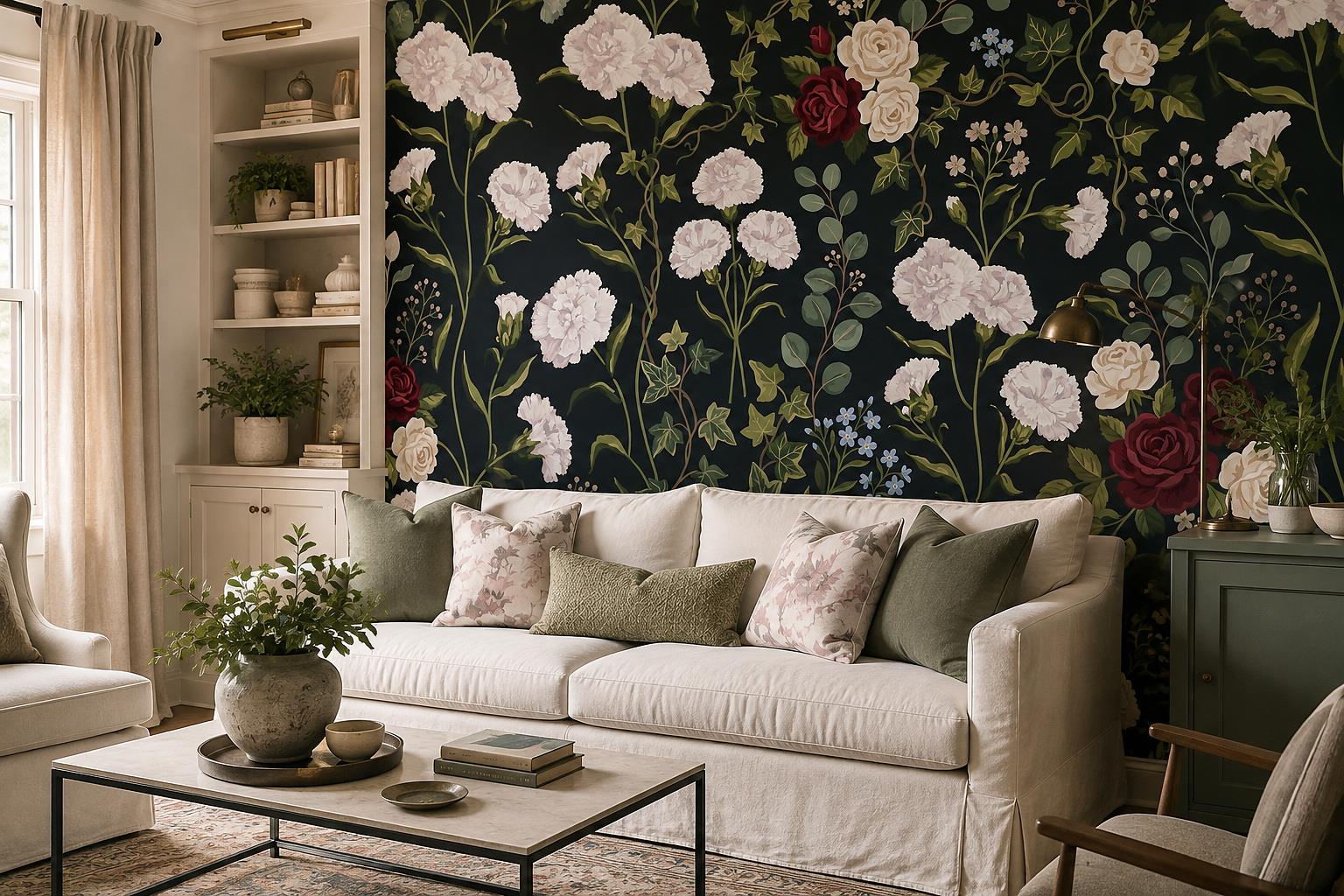
Choosing a mural for the wall behind a sofa begins with what the sofa will cover. Its back and cushions interrupt the image, while its width sets a strong horizontal line beneath the design. The dark floral scene shown above works because the pale blooms remain visible above the white seating; the flowers are not confined to the hidden lower wall. A different crop of the same artwork could lose that effect. Choose the composition for the occupied room, not for an empty wall preview.
Sketch the sofa before selecting a scene
Record the wall's full width and height, then the sofa's width, back height and position along that wall. Note tall cushions, a chaise extension and nearby side tables. A deep sofa placed slightly forward can hide more of the wall from a seated viewpoint than a flat elevation suggests. Photograph the arrangement from the entrance and the chair or walkway opposite. On a scaled printout or digital preview, draw the sofa as an opaque shape rather than a thin outline: what disappears matters as much as what remains.
If the sofa is off-centre, decide whether the mural should be centred on the wall or on the seating group. A single flower directly over the sofa's midpoint can feel composed, yet that placement may leave an awkwardly empty strip near a doorway. A panoramic landscape may read better across the entire wall. Compare two crop placements if the artwork can be adjusted, and check both from the angle at which the room is normally entered.
Keep the main story visible
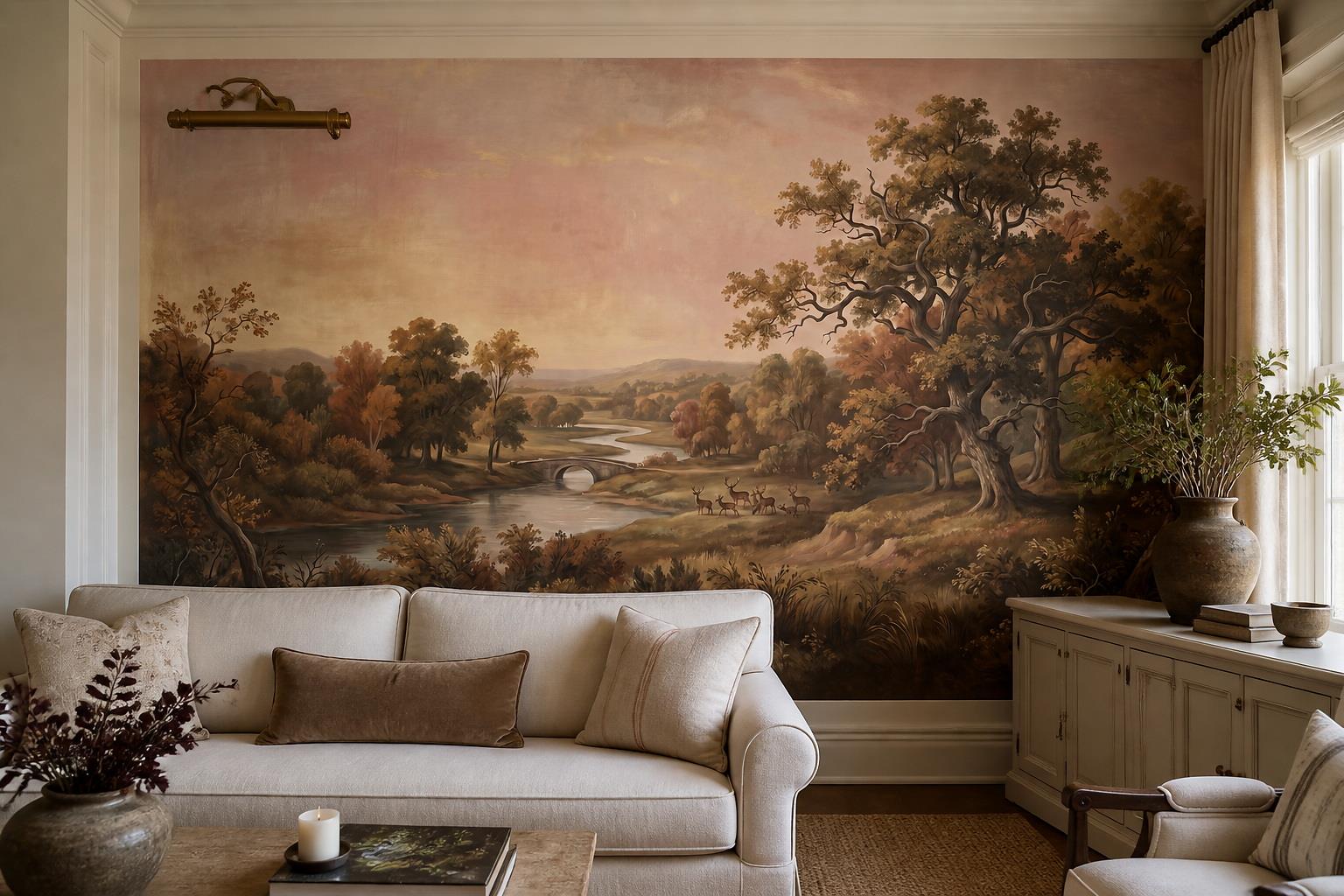
The warm landscape below includes a river, small bridge, distant hills and a large tree. The sofa obscures some low foreground, but the bridge and tree remain visible. This matters more than the fact that the image is labelled a landscape: a different crop of the same artwork could place the bridge behind the backrest and make the mural feel less coherent. Mark each important element on the final-size preview, then compare it with the sofa outline.
A distributed botanical or abstract composition is often more forgiving because it has no single focal object to lose. The dark floral feature image, however, shows why that freedom still needs judgement: large light blossoms stand out sharply against the nearly black ground. They give a plain sofa a dramatic backdrop, but the same contrast could compete with strongly patterned upholstery and crowded shelves. Where the room already has several visual centres, look for more open space immediately above the seating.
Compare scale with the sofa, not a thumbnail
One flower larger than a cushion reads as a deliberate statement; many tiny flowers may register as an overall texture from across the room. Neither scale is universally preferable. Mark the approximate size of the main motifs with paper on the wall, or use a scaled mock-up that includes the sofa. Stand at the entrance, then sit opposite. If the mural breaks into disconnected pieces at normal viewing distance, try a larger, simpler composition. If a single subject is squeezed between the ceiling and sofa back, reduce it or shift the crop.
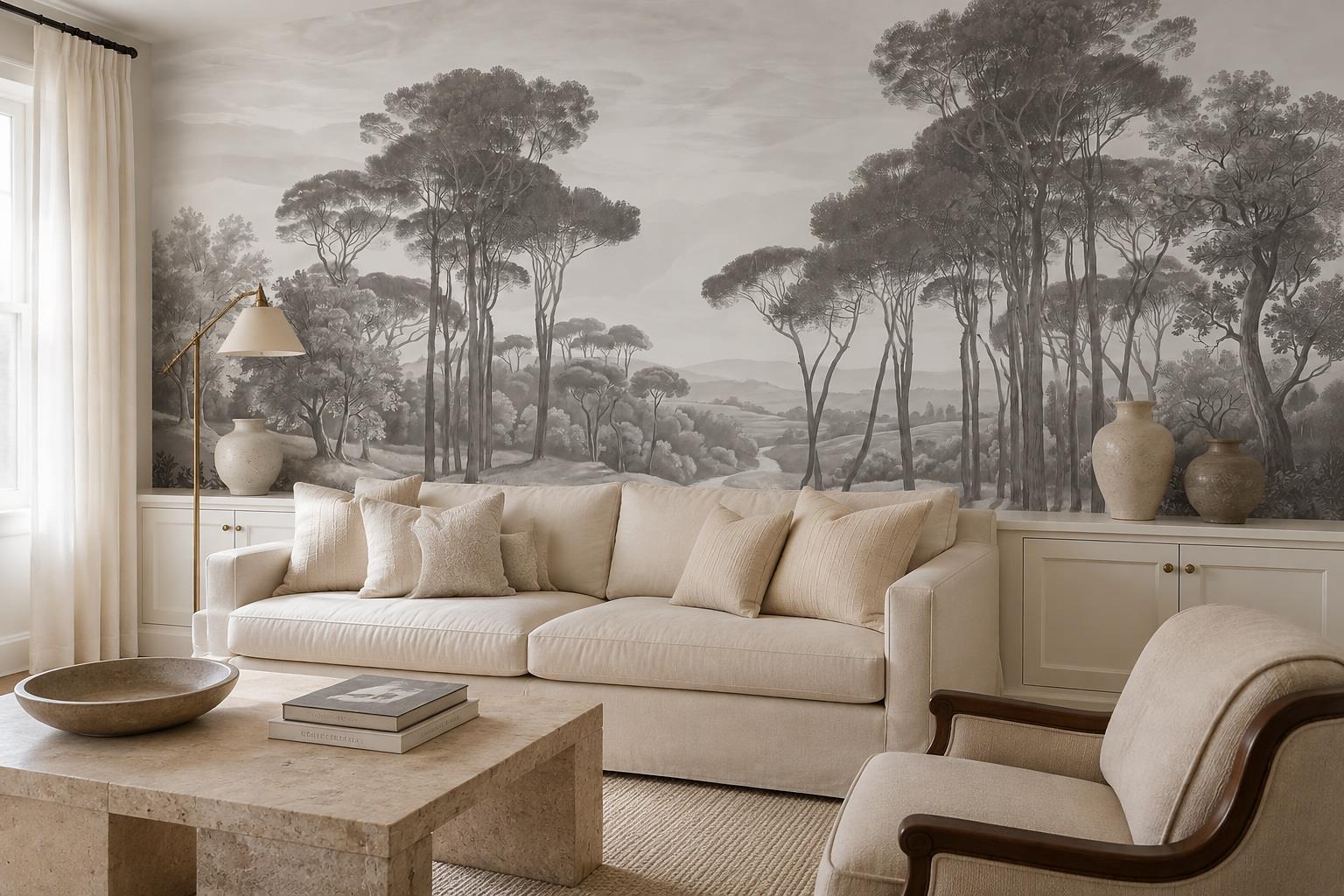
The grey woodland room below makes a different choice. Tall, fine tree trunks remain legible above the cream sofa, while the seating and low cabinets conceal the lower ground. The muted scene gives the wall depth without competing strongly with the furniture. If you want a mural to recede rather than become the room's main contrast, this kind of vertical rhythm is worth comparing with a bold floral at the same wall size.
Make the upholstery part of the colour test
A mural can look calm against an empty white wall and clash once a coloured sofa returns. Bring a fabric swatch into the selection process, and notice the upholstery's undertone as well as its broad colour. The white sofa in the floral room heightens the contrast of the dark ground; the cream seating in the woodland room keeps the transition much softer. Neither pairing is inherently better. Place a printed sample on the intended wall and compare it in daylight and under the lamps you use at night; a screen preview cannot reliably show either relationship.
Consider cushions and throws separately from the sofa itself. They are easier to change, so do not choose a whole-wall image solely to match one seasonal cushion. Instead, find a colour or tonal relationship between the mural and the permanent pieces: upholstery, flooring, large curtains or built-in cabinetry. Small accessories can then echo or contrast with the scene without carrying the entire scheme.
Account for pictures, shelves and lamps
A mural behind a sofa often competes with the usual over-sofa artwork. You may not need framed pictures at all. If you do want to hang them, choose a mural with an open area where frames will not cover its main subject. Similarly, floor lamps can cut across trees or architectural lines in a way that looks awkward in photographs and in daily life. On your own wall sketch, mark the lamp and shelf positions alongside the proposed crop before committing.
Check how the wall is lit after dark. A floor lamp beside the sofa may graze one edge of the artwork, while ceiling spots create brighter zones. Dark tones can make the seating feel enveloped; pale scenes can keep the wall visually open. Compare the sample under the lighting you actually use. A product image shot in a bright showroom is not a substitute for your own evening conditions.
Decide what happens at the wall edges
A sofa is often shorter than its wall. That leaves exposed mural strips on both sides, which may be more visible than the area directly above the seating from certain angles. Make sure those edges do not contain half a face, an abruptly severed building or an unbalanced block of colour. A full-width scene can still work beautifully, but its side zones must be considered as part of the design rather than discarded as background.
If the sofa sits beneath a window or beside a doorway, measure those features too. The visible mural may be an L-shaped area rather than a simple rectangle. Use the site's crop preview with the full wall dimensions and confirm the installation trim allowance. Keep a separate sketch showing openings and their distances from the wall edges; if their placement affects a focal point, ask the supplier whether a layout review is available. Ordering only the visible strip above the sofa may not produce the intended result.
Check whether the wall survives a different sofa
Make three quick versions of the preferred crop: with today's sofa, with a plausible taller or wider replacement, and with the seating removed. The first shows whether the current room works; the second reveals subjects that would be lost behind a higher back or shifted arm; the third shows whether the mural is a complete wall image rather than a collection of fragments arranged around one piece of furniture. Do not move the artwork between versions. You are testing the resilience of one proposed print, not improving each picture separately.
The floral wall can remain coherent if its pale blossoms occupy more than a thin strip above the cushions. The landscape is less flexible if a future backrest covers the bridge that connects foreground and distance. The woodland's repeated trunks may tolerate a change in sofa width, provided its side edges still read intentionally. If a change in seating would remove the only recognisable subject, favour a more distributed composition or a different crop now. Order for the architectural wall; let today's sofa shape the view without making it the mural's permanent frame.