How Much Should You Budget for Mural Wallpaper?
Build a realistic project budget by considering wall size, material, preparation, installation, delivery and any design support.
Article focus: pricing and measurement
The cost and measurement decision
Start with accurate wall measurements; the final custom mural price depends on area, material and any finishing options.
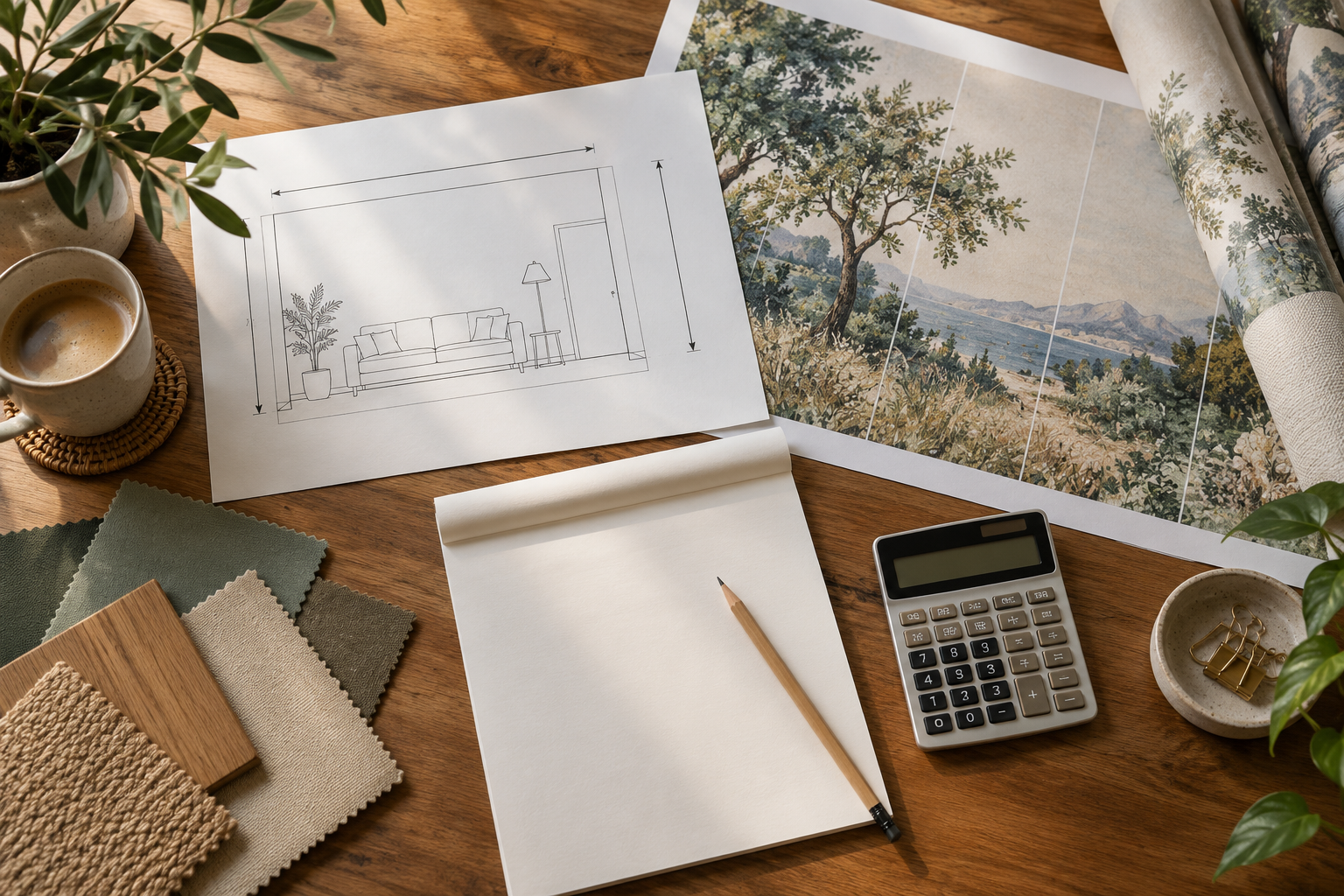
Example application: Any room with a suitable, prepared wall · pricing and measurement
A mural wallpaper budget is easier to control when it starts with the finished wall rather than the price printed beside a design thumbnail. Wall dimensions, material choice, preparation, installation and delivery can all change the total. Instead of searching for one universal price per square metre, build a short project budget with the same dimensions and scope you intend to order.
Start with measured wall area, not floor area
Measure the width and height of each wall at more than one point, then follow the mural supplier's instructions for installation trim. A room's floor area or a property listing will not tell you the quantity of mural required. If the product is priced by area, the ordered dimensions rather than the visible dimensions usually determine the print charge. A wider wall can also change panel count and the amount of installer time needed, even if the artwork looks similar in the preview.
For a simple planning example, a wall measuring 3.2 metres wide by 2.4 metres high has a visible area of 7.68 square metres. If the supplier asks you to add 10 centimetres to the overall width and height for trimming, the order dimensions become 3.3 by 2.5 metres, or 8.25 square metres. That is 0.57 square metres more than the visible rectangle. This illustrates why the exact ordering rule matters; confirm whether the stated allowance is total or per edge for the product you buy.
For a supplier quoting a fixed amount per square metre, multiply that supplier's confirmed rate by 8.25, not by 7.68. If its checkout rounds sizes or applies a minimum charge, use the configured checkout total instead of a hand calculation. Keep units consistent: 330 cm by 250 cm is 3.3 m by 2.5 m, not 330 square metres. Photograph or save the final dimensions entered in the order form so the budget and approved crop refer to the same wall.
Identify what the mural price includes
Read the product page for the selected material, print size and price unit. One listing may show a starting price, another a price per square metre, and a third a total that changes when you enter dimensions. Some shops display a material selection as a relative surcharge. Do not add a surcharge twice, and do not assume a photograph of a room is a quotation for that room's wall. Save the final configured price after entering your own measurements.
Ask whether the price includes all printed panels and what crop review is available for this design. Check whether a sample is purchased separately and whether its cost is credited against an order; those policies vary. A design commission, where offered, may require its own quotation rather than the direct-upload price. The useful budget line is the configured figure for the exact dimensions and finish you intend to order, with any unconfirmed design service listed separately.
Separate a design's displayed starting price from the configured price for your wall. A listing can use a small demonstration size, while your mural may need several panels and a different finish. Look for size limits, minimum orders and any charge for adapting or extending artwork. If a room image shows the mural wrapped round a corner, do not infer that the listed price includes the return wall. Add each printed surface explicitly and check whether the supplier treats it as one continuous image or two crops.
Allow for the wall you are covering
Wallpaper does not make a damaged wall sound. Fill holes, resolve flaking paint, repair failed plaster and address moisture before installation. Depending on the surface, a suitable primer or lining system may be necessary; follow the mural and adhesive manufacturers' guidance. The Wallcoverings Association describes the importance of proper surface preparation, which is easy to overlook when estimating from the product price alone.
Set a separate line for preparation rather than burying it in an undefined contingency. If the surface is newly plastered, previously papered or heavily textured, request an installer assessment. Removing old coverings, smoothing a wall or dealing with a leak can exceed the cost of routine preparation. A quote that says “installation” may exclude those tasks, so ask exactly which condition the installer expects on arrival.
There is a useful difference between a known task and an unknown condition. If old paper must be stripped, that is a known budget item to price now. If the plaster beneath it cannot yet be seen, note that as an uncertainty and ask how additional repair work would be agreed. Do not place a serious damp issue in the contingency column as though it were a minor decorating variation. Resolve the building problem before committing to the mural or installation date.
Decide how installation will be paid for
A confident DIY installer may budget for the specified adhesive, primer, tools, protective materials and time. A first-time installer should account for the cost of a possible replacement panel if a mistake occurs, without assuming replacements are automatically available. Professional installation has a labour charge but may also reduce the risk of a poor seam or incorrect panel alignment on a complex wall. A staircase, high ceiling, many obstacles or difficult access can alter labour cost.
Request a written installer quote based on wall photographs and dimensions, then confirm whether it includes preparation, adhesive, disposal of old wallpaper, moving furniture, travel and tax. The Wallcoverings Association's installation guidance is a useful reminder that preparing, positioning and smoothing the covering are distinct tasks. Do not compare a supply-only price with a fully installed price as if they cover the same work.
For a fair comparison, give each installer the same photographs, measured elevation, material choice and expected wall condition. Ask whether the quotation is for one visit or assumes that priming and hanging can happen on separate days. A return visit, parking or access equipment may be excluded unless specifically listed. If one quote looks much lower, check its scope before assuming the labour rate is better. The cheapest supply-and-fit number may simply omit the surface work the other contractor has recognised.
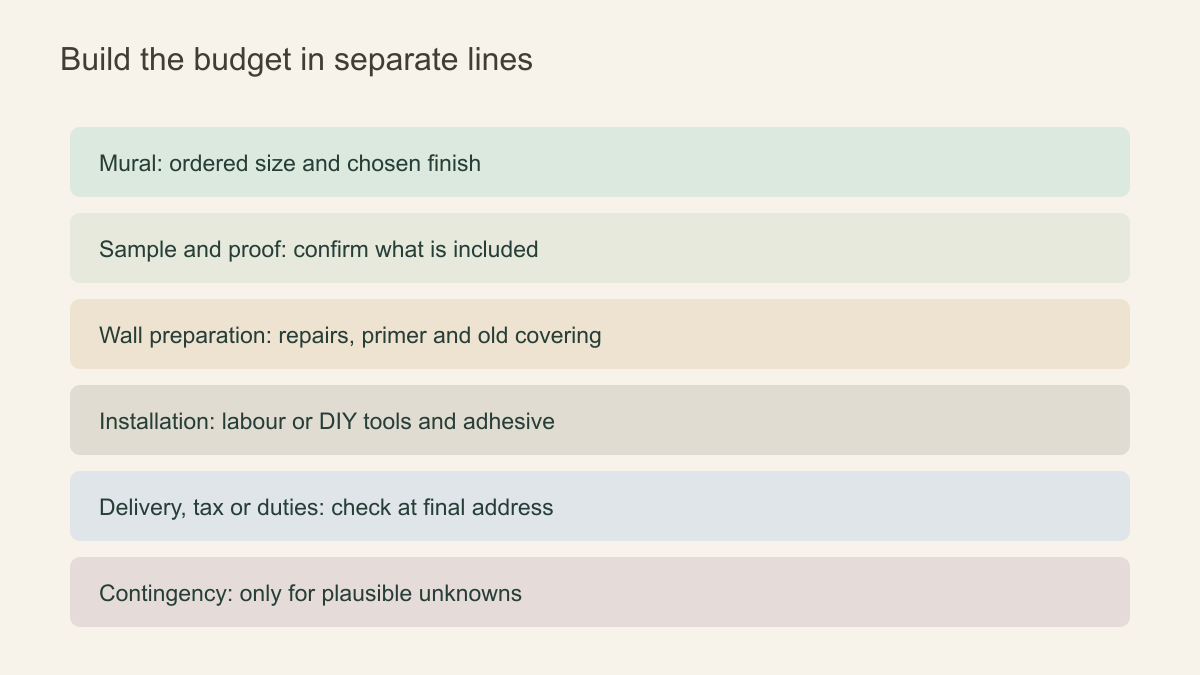 Separate the mural purchase from the supporting costs that make the wall ready.
Add delivery, taxes and a deliberate contingency
Enter your delivery address and check the shipping charge before treating an online total as final. For an international order, find out whether import taxes or duties are included, collected at checkout, or payable on arrival. Currency conversion and card fees may matter when buying across borders. Delivery speed can change both cost and project timing; a rush shipping fee is not the same thing as a quicker printing lead time.
Tax treatment depends on the destination, shipment value and how the seller arranges delivery. For example, UK government guidance on goods sent from abroad explains that VAT or duty may be charged at purchase or collected by the delivery company in relevant cases. It is not a price list for every order or country. Check your actual checkout, delivery terms and local customs guidance rather than copying a rate from someone else's invoice. Ask whether the courier may add a handling charge if import fees are collected separately.
Keep a contingency for minor, plausible changes: extra filler, a revised wall measurement, or a small amount of installer time if the surface is worse than the photographs suggested. This is not a reason to accept an open-ended quote. If the wall has visible damp, structural movement or suspect wiring, get the relevant problem assessed before budgeting for a decorative finish at all.
Use one worksheet for every option
Write the budget as: configured mural price plus sample plus wall preparation plus adhesive and tools or installation labour plus delivery plus taxes or duties plus contingency. Mark each line “included”, “excluded” or “not yet confirmed”. Use the same wall dimensions and trim rule for every supplier. Where a quotation is unclear, ask a question before purchase instead of inserting a guessed zero.
For a worked illustration, suppose the configured print is £235, delivery £18, a known filling and priming job £75, and a written fitting quote £220. The known project total is £548 before any applicable tax or sample charge. Setting aside £50 for a plausible small extra raises the planning figure to £598; that £50 is the buyer's reserve, not a seller fee. These invented amounts should be replaced with real quotes for the actual wall. If removing old paper reveals failed plaster, stop and price that repair separately instead of forcing a major job into the small reserve.
Keep a third column for the evidence behind each figure: a configured checkout screenshot for the mural, a written installer quotation for labour, and a destination-specific shipping or tax statement where available. Mark the date, currency, tax status and whether each number is firm or provisional. If the plaster is still hidden beneath old paper, record the repair cost as unresolved instead of entering zero. Update the worksheet after the site survey so the budget distinguishes confirmed spending from risks that require a separate decision.
Budget is also about timing. Order a sample early enough to judge its colour in the room, if that service is available, and review the chosen crop before booking installation. A delayed repair can make a fixed installation appointment costly even if the print arrives on time. Keep the appointment provisional until the wall is ready and the delivery has been checked; production time, transit time and preparation time are different parts of the schedule.
Set one maximum for the completed wall, then identify which decisions can change the scope. A smaller, deliberately framed mural may reduce the printed area, but it does not make a damp wall sound or remove the need for safe access. If the known items already exceed that maximum, reduce the mural area or postpone the project; do not erase preparation or duties from the worksheet to make the arithmetic fit. If the wall condition remains unknown, get it inspected before turning a provisional budget into an order.