Is Mural Wallpaper Suitable for a Feature Wall?
Understand why a feature wall can benefit from a mural and how to balance focal artwork with the rest of the room.
Article focus: pricing and measurement
The cost and measurement decision
Start with accurate wall measurements; the final custom mural price depends on area, material and any finishing options.
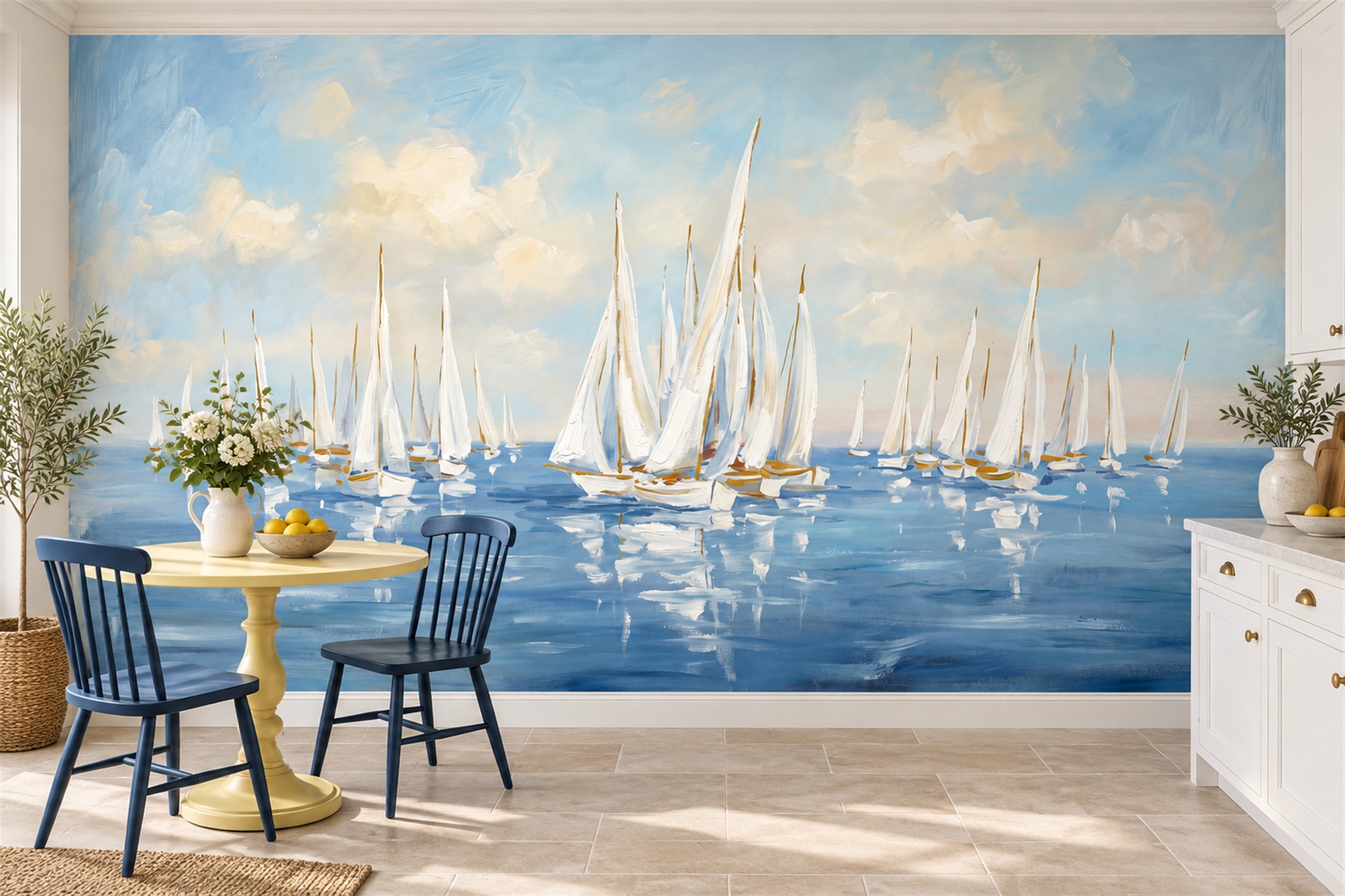
Example application: Living room · pricing and measurement
Yes, a mural can make an effective feature wall, but the best wall is not automatically the largest blank one. A feature wall needs a clear job: anchor a seating area, mark a dining zone or give the eye a destination when entering the room. Test candidate walls from the positions where people actually see them, then choose an image with enough visible area to read properly. The result should clarify the room's visual hierarchy rather than create a second competing focal point.
Try a three-view test before choosing the wall
Give each candidate wall a short description of its job: “seen first from the door”, “backdrop to the sofa” or “defines the dining area”. If two walls both qualify, compare how much uninterrupted artwork each would show after the real furniture is drawn in. This avoids choosing a wall merely because it has the largest measured area. A smaller but continuously visible surface can support a stronger composition than a larger one split by a door and cabinet.
First stand at the main entrance and notice which surface is visible without turning your head. A mural here can establish the room's first impression. Second sit where the room is used most: sofa, bed, dining chair or desk. A wall that photographs well from the doorway may disappear behind a television or tall shelving from that everyday position. Third look at the candidates in the room's normal daylight and evening lighting. The light may change colour perception and reveal panel joints or wall texture from certain angles.
Compare two candidates rather than choosing by habit. In a living room, the sofa wall may be a natural anchor but mostly hidden by framed art; the wall opposite may be clearer yet share space with a large screen. A high-contrast mural behind a television could make viewing uncomfortable, while a quieter image may work. In an open-plan room, the dining wall may define a zone without a physical divider. The wall's role, not its area alone, determines whether it is a useful feature.
Mark the major interruptions on a photograph: door, window, cabinet, screen, headboard and radiator. Ask whether the mural's principal subject would still be recognisable in the uninterrupted portion. The Wallcoverings Association's planning guidance links focal points with doors, windows and pattern placement. An image that fragments around several openings may be better suited to another wall or a different composition.
Give the feature wall one level of visual emphasis
A mural can lead through scale, contrast or subject matter; it need not use all three at maximum strength. A pale landscape with a clear horizon may establish a focal point in a restrained room. An oversized geometric print can do the same through shape even with few colours. A dense botanical design on the most visible wall may be right for a quiet room, but compete with patterned curtains, a strong rug and a gallery wall when those are already present.
View a wall-sized crop, not only the product thumbnail. At normal viewing distance, a small intricate motif may read as texture, while one huge flower may dominate the entire room. Mark the actual sofa, bed or table on a separate wall sketch beside the crop so you can tell whether the visible parts carry the composition. A catalogue room with low furniture does not predict what remains visible behind a tall headboard or bookcase.
Compare the mural with other existing focal points. A fireplace, large window view or statement ceiling already asks for attention. The mural may complement it through a calmer palette or sit on a different sightline; it need not compete for the same visual position. The Wallcoverings Association describes accent walls as one way to draw focus, not as a rule that the focal wall must be dark or loud.
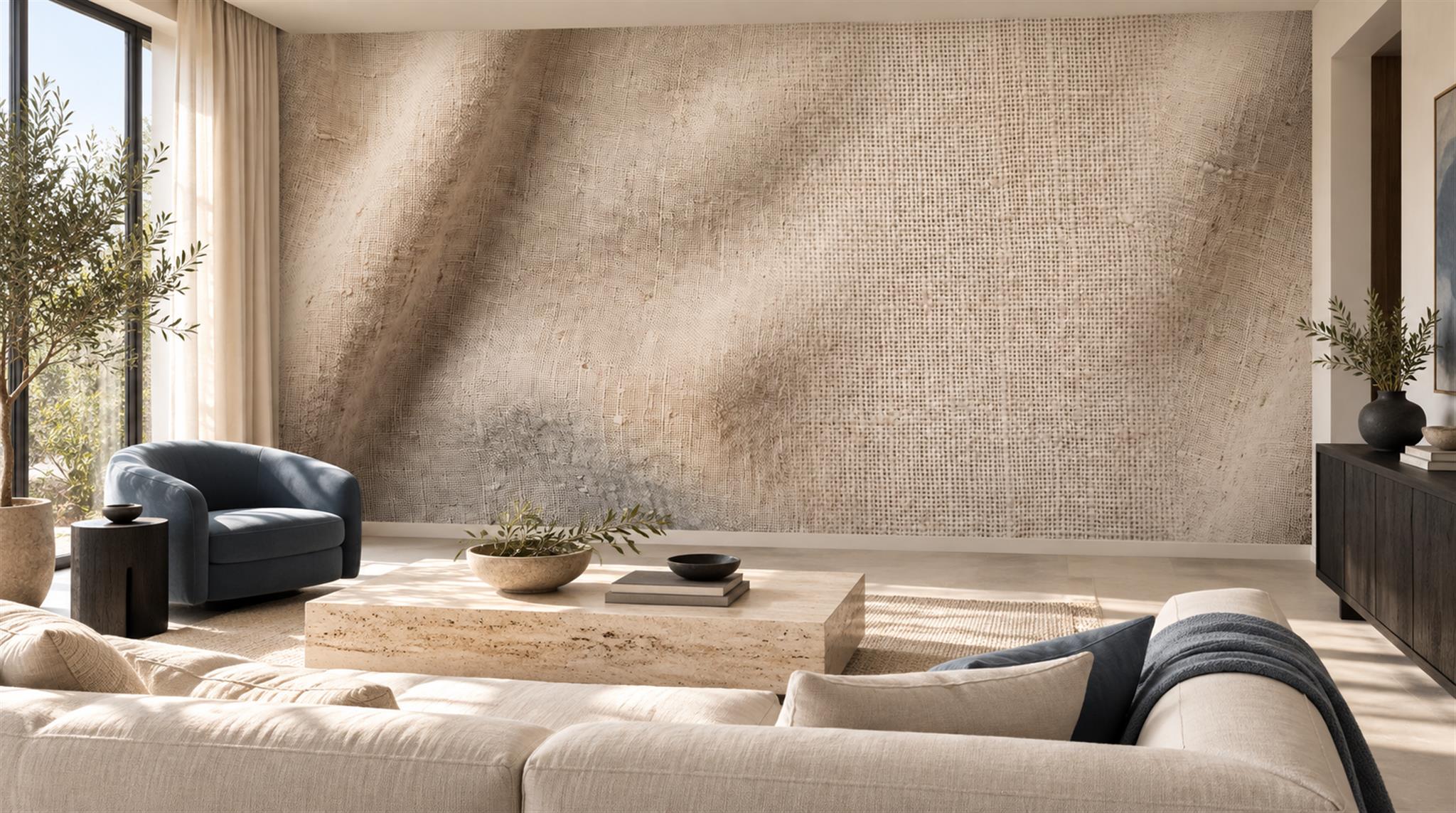
Check the crop against the winning sightline
Only after choosing the wall should you finalise the mural crop. Measure its width at several heights and its height at several positions, then follow the supplier's trim instruction once. Mark doors, windows, fixed shelving and large furniture on your own wall sketch alongside the crop preview; the standard preview does not automatically overlay them. The image may look balanced as a flat rectangle yet lose its focal subject behind a headboard when installed. Adjust the crop before ordering if that subject matters.
Clarify whether the mural stops at the two wall corners or returns onto an adjoining surface. A scenic image that reads well on one wall may not wrap a corner without losing its balance, and a repeating-looking design may not actually repeat. If the proposed feature has a strong horizon or geometric line, review where panel joins fall and plan careful fitting. A physical seam can be more noticeable on the room's main focal wall than on a quieter background surface.
Soundness is a gate, not a style preference. If the chosen wall has dampness, flaking paint or deep texture, repair it before judging the final appearance. A dramatic scene cannot compensate for unstable substrate. If another candidate wall is sound and gives a better uninterrupted view, it may be the better feature even if it is slightly smaller.
Let the other walls support the decision
Bring a physical mural sample into the room before choosing neighbouring paint. Screens and print can differ, and the same sample can look warmer or cooler beside the floor and upholstery. Instead of matching the most vivid accent literally, try a quieter background colour or undertone from the artwork. Compare paint swatches beside the sample in both daylight and evening light. The goal is a relationship among surfaces, not a perfect digital colour match.
Trim and ceiling colours also frame the mural. A bright white skirting can sharpen a pale scene's boundary; a deeper or warmer neutral can make the transition quieter. There is no universal right pairing. Assess the whole room from the same entrance and seating positions used to choose the wall. If the mural now dominates every view and the furniture already has strong pattern, adjust one element rather than adding more competing decoration.