Can Mural Wallpaper Be Used on a Balcony Wall?
Check whether the wall is protected, the surface is suitable and the product guidance covers the intended environment.
Article focus: pricing and measurement
What to settle before pricing
Start with accurate wall measurements; the final custom mural price depends on area, material and any finishing options.
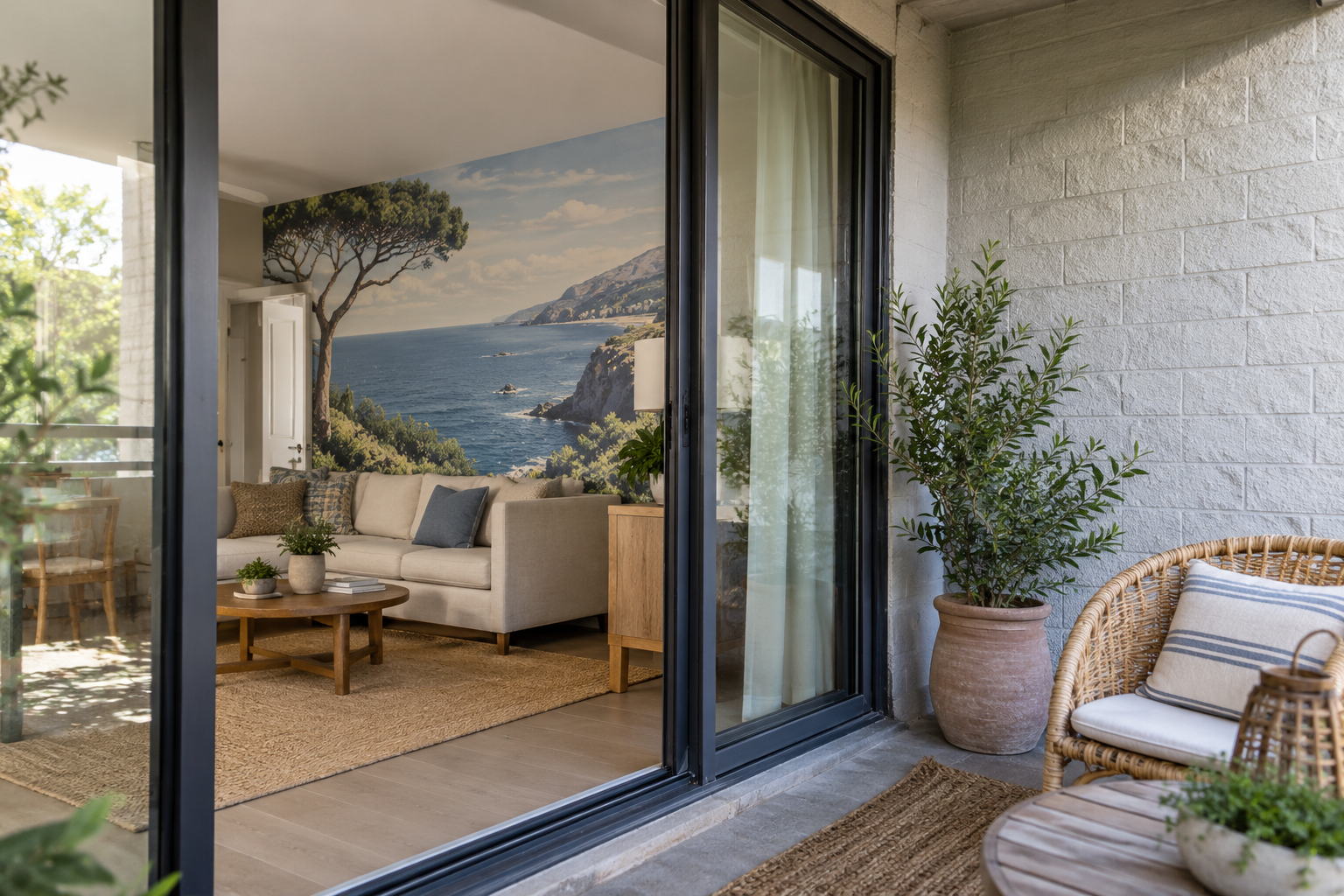
Example application: Living room · pricing and measurement
Ordinary interior mural wallpaper should not be put on an exposed balcony wall. A roof over the space does not necessarily prevent wind-driven rain, condensation, strong sun or temperature swings. It may be possible to use a printed wall graphic outdoors, but only when the supplier approves the complete material, print, adhesive and surface-preparation system for that particular exposure. An enclosed balcony that genuinely behaves like a dry interior is a different case and still needs its own wall and product assessment.
Identify the exposure before discussing a design
There are three useful starting categories. An open balcony is directly exposed to weather. A covered balcony may avoid vertical rain yet still receive moisture from the side, remain unheated and experience outdoor temperatures. A fully enclosed, conditioned balcony may be closer to an interior room, although glazing can still bring condensation and strong light. These categories are descriptions for assessment, not product approvals.
Inspect the actual wall during or after challenging weather. Where does rain reach when the wind changes direction? Does water run from the slab above or collect around railings? On an enclosed balcony, check window returns and the lower wall during cold periods rather than relying on a dry afternoon photograph. Note whether the surface is painted render, brick, concrete or another substrate. Any salt staining, flaking coating, dampness or movement needs diagnosis before decoration.
The Wallcoverings Association's interior surface guidance calls for clean, dry and sound walls. Meeting that condition briefly after a sunny day does not make an interior product suitable for exterior weather. If the balcony's use or construction is uncertain, have the wall assessed locally before ordering a print.
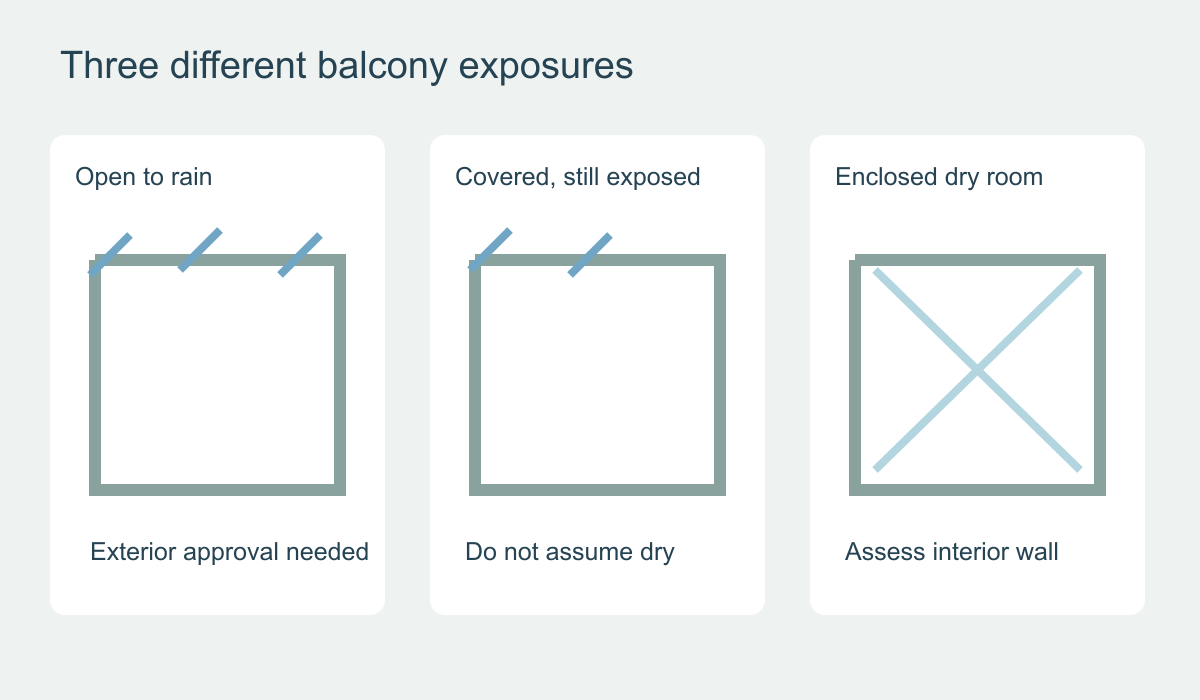 Open, covered and enclosed balconies require different exposure assessments.
Why the entire printed system matters outdoors
The printed face is only one part of the installation. Moisture can reach seams, edges, railing brackets, drains and door junctions; temperature changes can affect an adhesive or substrate; prolonged light can change the appearance of ink. A material called vinyl, non-woven or peel-and-stick is not automatically an exterior mural. The Wallcoverings Association's ratings guidance ties performance to individual products and their specifications.
York Wallcoverings' instructions for one peel-and-stick line warn that high humidity and rapid temperature shifts can affect it. That is an example of product-specific limits, not a claim that every wallpaper fails identically, nor an exterior approval for another print. Adding an untested clear coat or stronger glue to an indoor mural does not establish weather resistance and may change its appearance or installation behaviour.
Ask an exterior-graphics specialist or supplier for written approval that covers the specific balcony conditions. The answer should address the print, any protective layer, adhesive or fixings, primer, substrate, seams, edges, cleaning and expected exposure. If the supplier cannot verify the assembly, do not use an indoor wallpaper mural on the outdoor wall.
Give the supplier photographs taken after rain as well as a description of the wall's orientation and existing coating. Ask who will inspect the substrate, how the system will terminate at the floor and door, and what maintenance is required once it is installed. An approval for a sheltered vertical panel elsewhere does not automatically cover a balcony parapet with a different surface and water path. Keep the written specification with the installation record so later repairs are based on the approved assembly rather than guesswork.
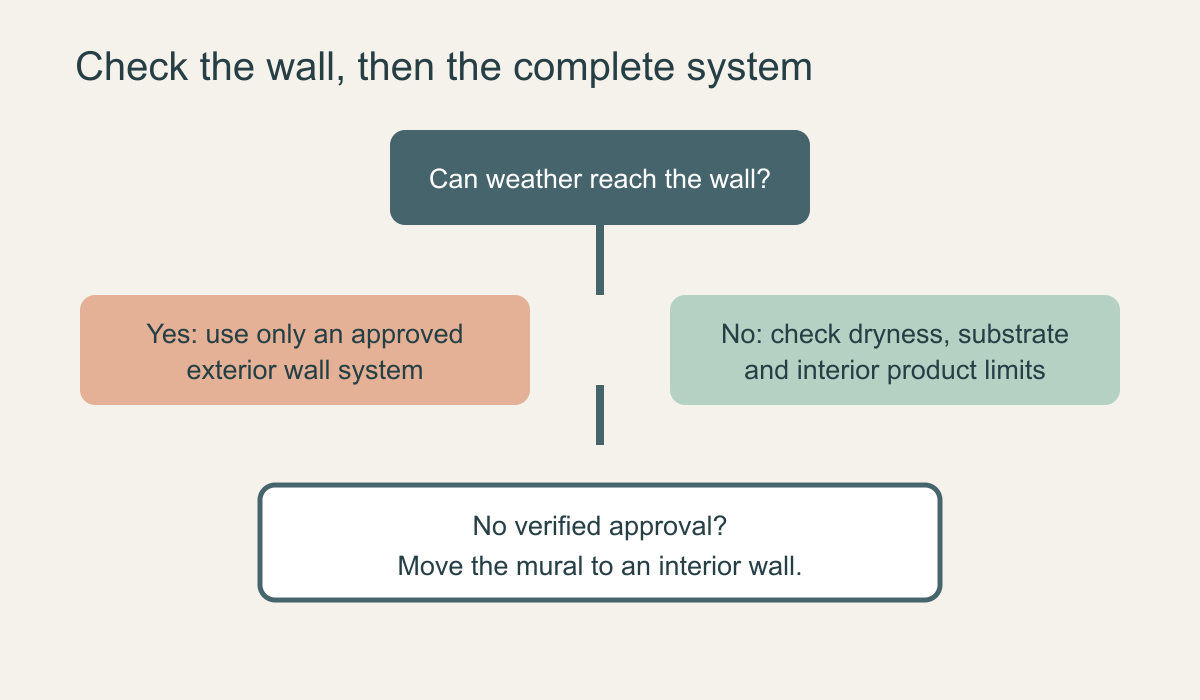 Without approval for the complete system, move the image to a suitable interior wall.
Check permissions as well as product limits
A balcony wall may be part of a shared façade or structure. A landlord, building manager or local authority may control finishes, colour or fixings visible from outside. Check the relevant rules before ordering, particularly if an exterior panel or mechanical fixing is proposed. A print described as removable is not automatically exempt from building requirements.
Also clarify who is responsible for the substrate and any existing water ingress. Covering stained masonry can hide the evidence while the source remains. The decorative project should follow, not precede, repairs to the wall.
Use an indoor mural to connect the balcony visually
When the outdoor wall is unsuitable, a mural on a dry interior wall visible through the balcony doors can preserve the design idea. The feature photograph demonstrates the distinction: the coastal scene is inside the living room, while the open-air masonry beside the balcony chair remains uncovered. This arrangement does not make interior wallpaper weatherproof; it simply keeps the print in the environment for which it can be assessed.
Plan that indoor mural from both sides of the glazing. Sit in the usual balcony chair and photograph the wall through the open and closed doors. Door frames, curtains and reflections may reduce a full panorama to a narrow slice. Put a recognisable part of the subject in the visible opening while keeping the complete scene coherent from the living room. In the photograph, the tree, sea and distant coast still read through the doorway, although the frame cuts across the view.
Evening reflections can hide more of the mural than daylight photographs suggest. Test the actual sightline before selecting the crop. Do not move furniture or block access simply to expose more of the image from outside.
Assess an enclosed balcony as its own room
Glazing reduces direct rain but does not guarantee a dry wall. An enclosed balcony may remain unheated, collect condensation or have large temperature changes. Inspect it across seasons and describe those ordinary conditions to the wallcovering supplier. If the wall is consistently dry, the substrate sound and the exact interior product approved for those conditions, a mural may be considered. The decision follows evidence about the room and product, not the fact that glass was installed.
After suitability is established, measure the usable wall between glazing, railings, doors and fittings. A landscape cropped into thin strips may make little visual sense even if installation is technically possible. Preview the artwork from the adjoining room and the balcony seat; a simpler repeated motif or a plain finish may be a better design for a highly broken wall.
The practical answer is therefore conditional but firm. Do not put ordinary indoor mural wallpaper on a weather-exposed balcony. For an outdoor image, seek a fully specified exterior system and any required permissions. For an enclosed, reliably dry space, assess the exact wall and material as an interior installation. When neither is suitable, put the mural on the indoor wall that the balcony overlooks.