Can Mural Wallpaper Be Used in a Bathroom?
Assess ventilation, condensation, splash exposure, material guidance and the position of the mural before ordering.
Article focus: installation and removal
Planning the work and the exit
The right installation method depends on the chosen material and wall condition, so prepare the wall before ordering and follow the material-specific instructions.
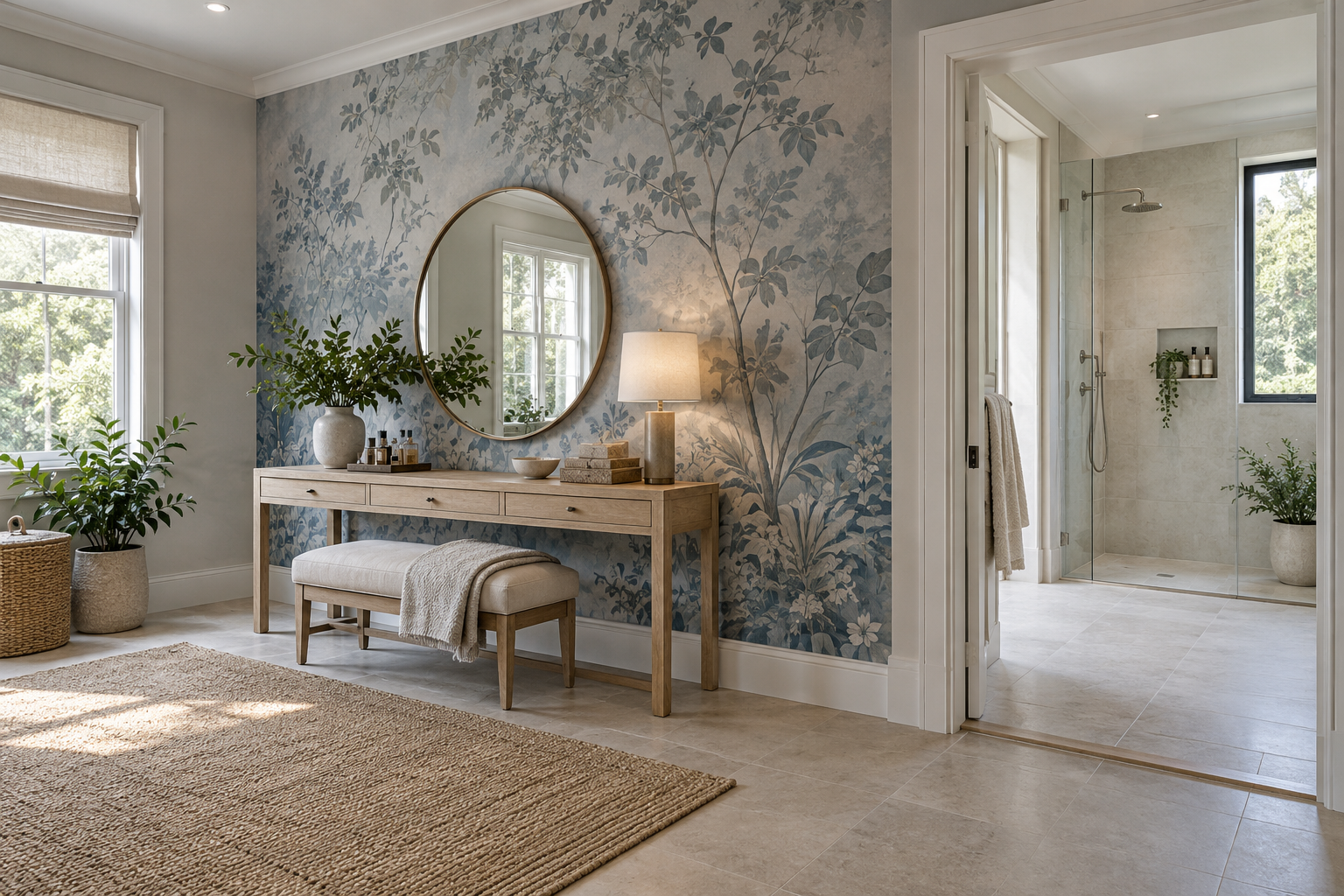
Example application: Bathroom or powder room · installation and removal
Yes, mural wallpaper can work in some bathroom layouts, but the wall's exposure matters more than the artwork. The photograph above makes that distinction visible: the blue botanical mural is on a dressing-area wall outside the glassed shower room, not on a shower wall. Even there, the picture does not prove the print or adhesive is rated for a humid environment. Identify a genuinely dry location, confirm the exact product's limits with its supplier and leave directly wet surfaces to a specified wet-area system.
Read the photograph as a floor plan
The apparent bathroom mural in the feature photograph is actually on a dressing-area wall separated from the glassed shower room. That distinction is easy to miss when browsing images by room name. Before using any image as a reference, trace the boundaries of its wet space, identify the wall carrying the print and look for the basin and bath. Then draw the same boundaries on your own plan. If your only available wall is inside the shower or directly beside the bath, the photographed layout is not an equivalent example.
Mark the route people take with wet hands or towels as well as the obvious splash points. A wall can be outside the shower yet still be brushed by a damp robe each day. Observe the proposed position during ordinary use and after ventilation; note whether droplets remain, rather than deciding from a dry, staged room. The diagram below is a planning aid, not a building-code zone map. Actual exposure and the chosen product's instructions determine whether a mural is even worth considering there.
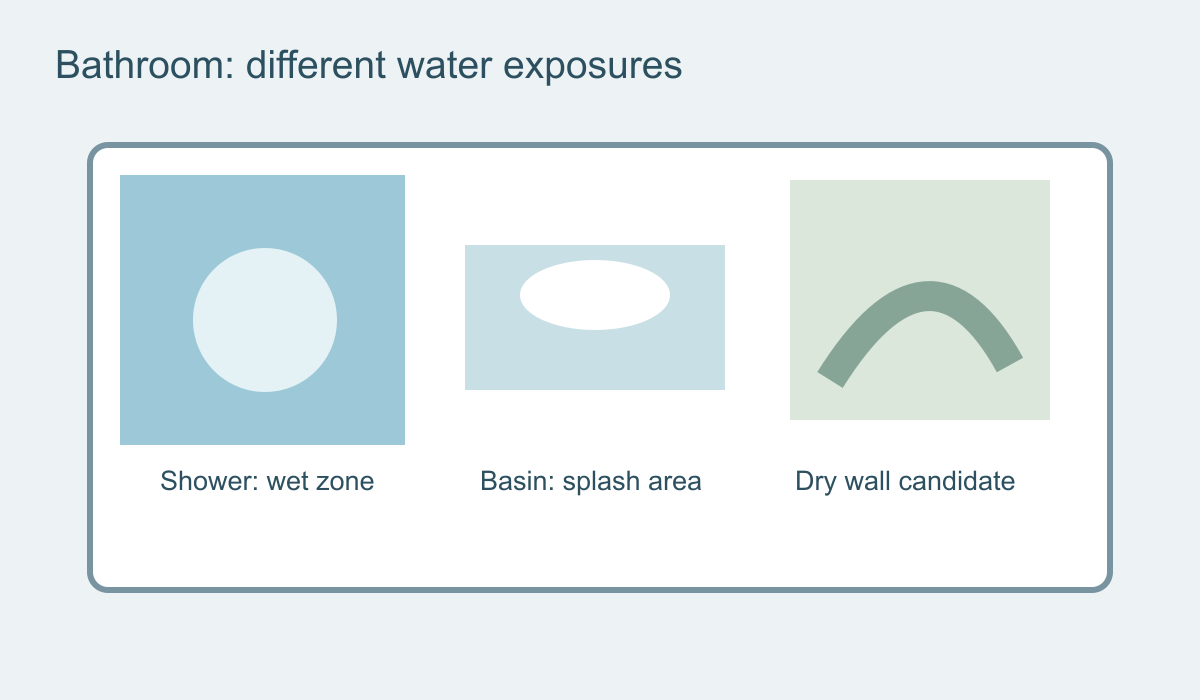 Choose the wall by water exposure, not by the bathroom label alone.
Decide what part of the image remains visible
In the pictured layout, the round mirror removes a large circle from the middle of the print. Branches continue around it, so the design still reads as a garden rather than a scene with its main subject hidden. A mural with a single bird, face or building in the same position could lose its focal point. On an elevation of your wall, draw the mirror, vanity, cabinet, towel rail and door swing at their actual sizes. Place the proposed crop behind those outlines before judging the design.
View the planned image from where the bathroom is entered and where someone stands at the basin. The best-looking flat crop may not be the best installed view if a tall cabinet blocks one side. Distributed foliage or an all-over abstract design can tolerate interruptions differently from a panorama with a central horizon. A narrow wall may show only a fragment of the artwork; ask for a crop of the exact print dimensions rather than relying on the full design thumbnail.
This visual planning comes after location approval, not instead of it. Vinyl, non-woven and peel-and-stick names do not establish suitability for steam, splashes or cleaning. The Wallcoverings Association distinguishes washable and scrubbable characteristics, which need to be checked for the exact finish. Obtain the selected mural and adhesive system's instructions for the proposed dry wall. A shower wall needs a purpose-specified wet-area system, not an attractive crop or an improvised clear coat.
Check the wall before the artwork
The substrate must be sound, suitably smooth and free from persistent dampness. Flaking paint, stained plaster, mildew or loose previous wallpaper need investigation before decoration. The Wallcoverings Association's surface-preparation guidance calls for a clean, dry, structurally sound wall and for moisture sources to be addressed. A printed mural may hide staining while leaving the cause untouched.
Freshly painted walls need the cure time specified by the paint and wallpaper manufacturers. Do not equate dry-to-touch with ready for adhesive. Check whether a primer is recommended for the product and wall type. If the bathroom has a known moisture issue, consult an appropriate professional rather than treating wallcovering as a repair.
Plan edges near fixtures. A basin, towel rail or mirror may mean many cut-outs and penetrations, which introduce handling and potential splash points. A simpler uninterrupted dry wall may be both visually stronger and easier to maintain. Electrical fixtures and outlets require appropriate safety procedures; do not make bathroom wiring decisions from a decorating guide.
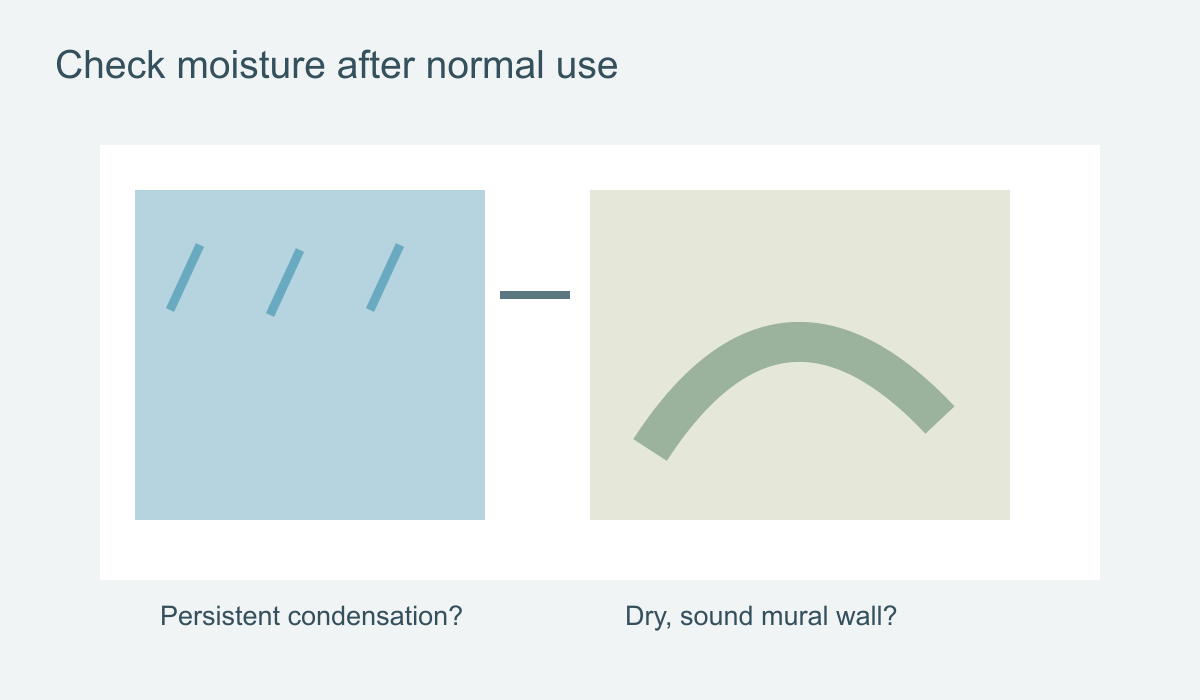 Observe the room after normal use to find where moisture really persists.
Judge colour and detail at bathroom viewing distance
A bathroom mural is often viewed from less than a metre away while someone uses the basin. A delicate line or printed stone effect that looks convincing in a distant room photograph may read very differently close up. Inspect an actual sample beside the tile, vanity finish and paint you plan to retain. If the design contains tiny repeated details, look for whether a panel join will interrupt them at eye level.
Mirrors and bright tiles reflect the artwork and can make a restrained image appear busier than it does on a flat screen. Check the view from the doorway and the basin under both daylight and the room's usual lamps. A dark design may feel rich under warm lighting yet flatten in a windowless room; a pale design may need enough contrast to remain legible beside white sanitaryware. The crop preview establishes placement, but only the physical room shows these reflections and colour shifts.
If the print depicts stone, tile or plaster, remember that it is an image, not the physical material. Do not describe it as a waterproof tiled surface or assume it can be scrubbed like ceramic. The appeal may be visual softness on a suitable dry wall, while actual wet zones retain appropriate hard finishes.
Think through everyday care
Bathroom walls encounter aerosol products, hand splashes and frequent cleaning. Ask the supplier what can touch the surface and how stains should be treated. The Wallcoverings Association advises following the particular manufacturer's cleaning guidance. A generic cleaning recipe is not a safe substitute for the mural's care sheet.
In a small bathroom, storage choices can change the exposure of a wall after installation. A new towel hook may put damp fabric against the mural; a moved mirror may expose an area previously sheltered from splashes. Draw likely future fixtures on the wall elevation as well as current ones. If the only available surface will receive daily wet contact, ordinary interior mural wallpaper is not the default answer. Consider a finish specified for that location, or keep the artwork outside the wet room.
Make the decision for your particular wall
Before ordering, write down the proposed wall's distance from the shower and basin, whether condensation remains after normal ventilation, and what touches the surface during daily use. Include a marked photograph and the intended mural dimensions when you ask the supplier about the exact print, adhesive, substrate and cleaning method. An answer about a different finish or a generic “bathroom wallpaper” label does not confirm this installation.
If the wall remains dry, sound and outside regular contact, use the approved product information to decide whether the blue botanical example's mirror-friendly composition suits your own layout. If spray, persistent condensation or wet towels routinely reach it, move the artwork to a genuinely drier wall or choose a surface specified for wet exposure. The room photograph helps with placement; it cannot certify the material for your bathroom.