What Mural Wallpaper Suits a Coastal Interior?
Look beyond obvious motifs and consider softened sea tones, atmospheric landscapes, natural textures and relaxed composition.
Article focus: installation and removal
What the installer needs to know
The right installation method depends on the chosen material and wall condition, so prepare the wall before ordering and follow the material-specific instructions.
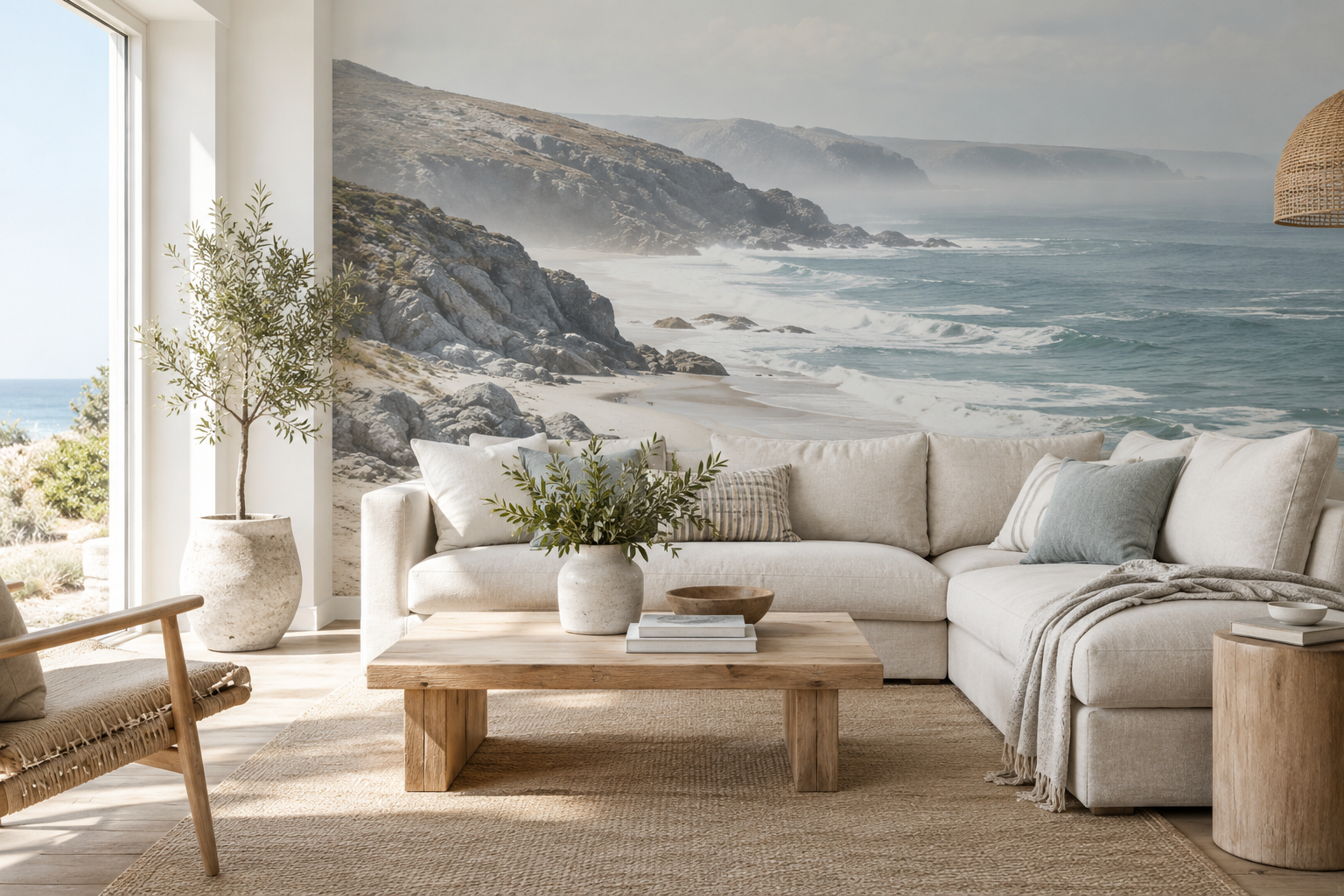
Example application: Bedroom · installation and removal
A coastal interior does not have to look like a souvenir shop. The sea can be suggested by a low horizon, weathered rock, moving water or a palette of salt-softened blue and sand. The right mural depends on which part of the coast you want to bring into the room and how strongly it should register. A misty shoreline and a crashing wave create very different spaces, even when both are labelled “coastal”.
Start with the kind of coast you mean
A calm sandy beach is not the only reference. An Atlantic headland can bring grey stone and steel blue; a Mediterranean shore may suggest chalky cream, warm rock and deep water; a dune landscape can be mostly pale grass and sky. These are visual directions, not claims that an artwork depicts a named place. If a product does not identify its location, do not invent one. Let the actual image tell you whether its mood is airy, rugged, warm or atmospheric.
There are three useful roles for the mural in an existing room. It can supply the primary view when the architecture offers none; it can echo materials such as pale stone, weathered timber and linen without depicting a literal beach; or it can contribute one graphic movement, such as a wave-shaped abstract. Decide which role the room lacks before comparing products. A room that already has a strong sea view may need the second or third approach, while a windowless dining area may benefit from the first.
Work from what cannot easily change. Photograph the floor, cabinetry, upholstery and window together. A warm stone floor and cream curtains may support dune grass without any blue; dark joinery may give a pale seascape a useful frame. If the room already contains striped textiles and woven chairs, a mural full of close, sharp detail could add another busy layer. The word “coastal” cannot resolve that interaction; the actual drawing and furnished-room preview can.
Decide what to leave out as well as what to add. A convincing coastal room does not need shells, anchors and rope motifs when the mural already provides a clear reference. If the artwork is subtle, a single weathered surface or muted textile may carry the idea further than several themed objects. This makes the mural part of the room's material language rather than a label applied to every accessory.
Choose between a view and a coastal surface
A scenic mural behaves like an additional view; a dune-grass drawing, weathered-stone print or abstract wave behaves more like part of the room's surfaces. That distinction is useful when choosing between two otherwise attractive products. If a window already frames real water, a second photographic horizon may compete with it. A quieter pattern can echo the coast without pretending to open another window. If the room has no view, a distant shoreline may supply the visual depth it lacks.
Look at the architecture before deciding. Horizontal panelling, long shelving and a low sofa already create several strong bands. A mural with another crisp sea horizon can make them feel stacked; a broad tonal wash or vertical dune grass may interrupt that rhythm more gently. Conversely, a tall blank wall with little furniture can give a clear horizon room to read. The diagram below illustrates a scenic choice, but it is not a rule that every coastal interior needs a visible line of water.
Once the choice is specifically a landscape, the coastal landscape mural guide addresses shoreline direction, crop and furniture overlap. For the broader interior decision, ask which role is missing: a long view, a natural motif or a graphic suggestion of movement. These are different contributions to the same coastal feeling.
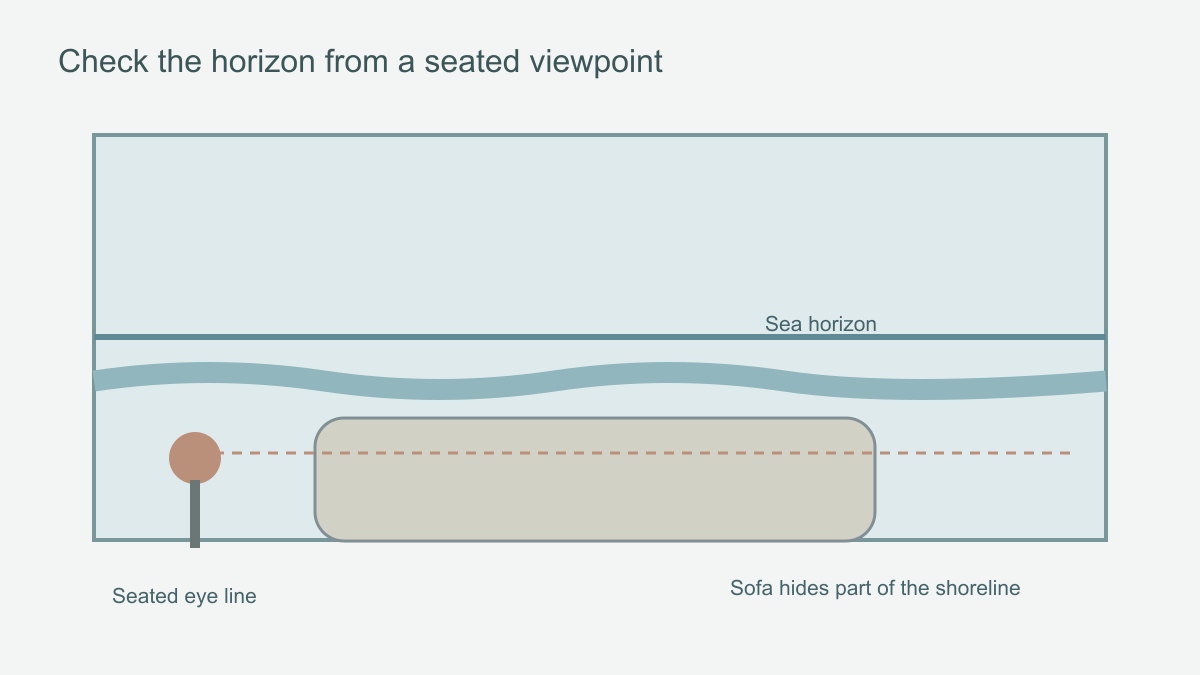 Check what remains visible above the sofa from the normal seat.
Let the fixed finishes decide how much blue belongs
Inventory the large surfaces that will remain: flooring, cabinetry, worktops, upholstery and trim. A coastal direction can grow from their undertones instead of beginning with a favourite shade of sea blue. Warm oak and cream stone might suit sand, reed and chalk tones; cool grey joinery might support slate water or a restrained blue-grey abstract. If those fixed surfaces already create a coherent warm scheme, adding turquoise merely to signal “coastal” can feel arbitrary.
Compare the proposed mural with the adjacent wall paint at their actual boundary, not as two separate online swatches. A blue-grey scene beside warm white may need a small shared neutral to bridge them. A dune design can let the paint continue its sandy ground, while a dark marine abstract may benefit from a deliberate contrasting edge. There is no requirement to repeat the most vivid colour on every cushion. One restrained echo in a textile or object is often enough to connect the mural to the room.
Consider colour distribution as well as hue. A mural that is mostly pale sky adds more lightness to the scheme than one dominated by deep water, even if both contain the same blue. A nonliteral wave can introduce marine colour in a smaller, controlled area when the existing room is already colourful. View a printed sample in the intended finish and lighting if available, then return to the wall-size image to judge the overall proportion; neither view answers the other's question.
Beyond literal beach photography
The technique changes the mood as much as the subject. A photograph emphasises recognisable light and location; watercolour can soften boundaries between sea and sky; a spare engraved treatment makes line and rhythm more important than realistic colour and can sit well with a heritage interior. An abstract wave may echo the movement of water without dictating a precise landscape. Dune grasses or coastal reeds provide a botanical reference without a literal ocean view. Examine the actual design closely before assigning one of these labels. A printed imitation of a painted surface is still a flat printed wallcovering, not textured plaster or brushwork.
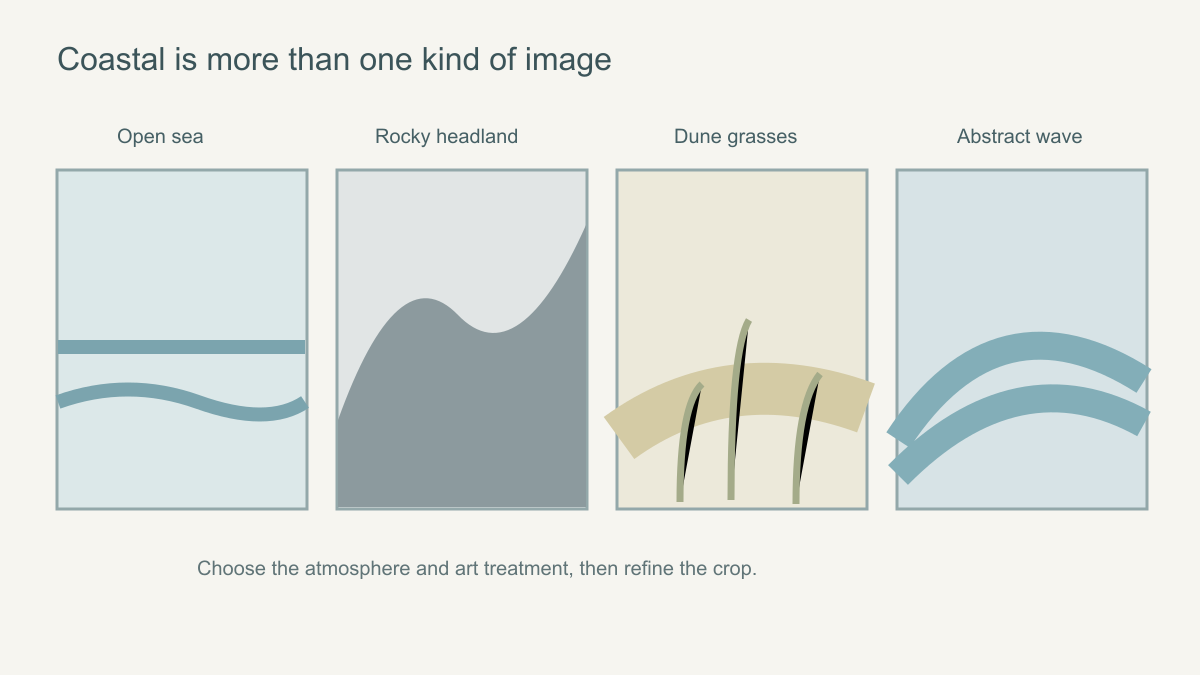 Coastal is a visual family, not a requirement to use anchors or seashells.
Use the room's daily view to choose the degree of literalness
In a bright sitting room with pale oak and a real sea view, a tonal dune or weathered-stone drawing can support the window rather than repeat it. In an inland dining room with dark timber, a rocky coast may become the room's main image. In a bedroom with warm neutral flooring, dune grasses in sand and muted olive can feel coastal without a patch of blue. The decision is not which motif is most recognisably seaside; it is which one makes sense with the view and finishes the room already has.
A hallway is seen at an angle and in motion. A subtle line of water may disappear at that glance, while a larger sweep of rock, grass or abstract movement can remain legible. A sitting room rewards slower viewing and may support a softer photographic scene. Test the mural from the positions people actually use. A straight-on catalogue image cannot tell you whether a delicate coast will register from the doorway or whether a bold one will dominate a small, occupied room.
Keep accessories subordinate to that choice. If the wall already depicts a shoreline, shells, ropes and anchors need not repeat the message around the room. If the mural is nonliteral, a woven chair or chalky ceramic can provide a quieter material connection without turning every object into a coastal symbol. The resulting interior can refer to the coast while still feeling like a lived-in home, not a themed display.
Check practical suitability without assumptions
A coastal look may be used in a living room, hallway, bathroom or holiday rental, but the theme does not determine material suitability. For a humid or splash-prone area, read the product-specific material and installation guidance and assess ventilation. Do not infer that a sea image makes a wallcovering waterproof. Repair dampness or flaking paint before installation; a mural cannot seal a failing wall.
For a frequently touched wall, ask how the chosen finish is meant to be cleaned. Near a sink or shower, seek specific suitability advice before ordering. Keep that material decision separate from whether the coastline image suits the room.