Which Mural Wallpaper Is Suitable for a Dining Room?
Explore colour, atmosphere, scale and cleanability when choosing a mural for a dining room or entertaining space.
Article focus: pricing and measurement
Budgeting this wall with confidence
Start with accurate wall measurements; the final custom mural price depends on area, material and any finishing options.
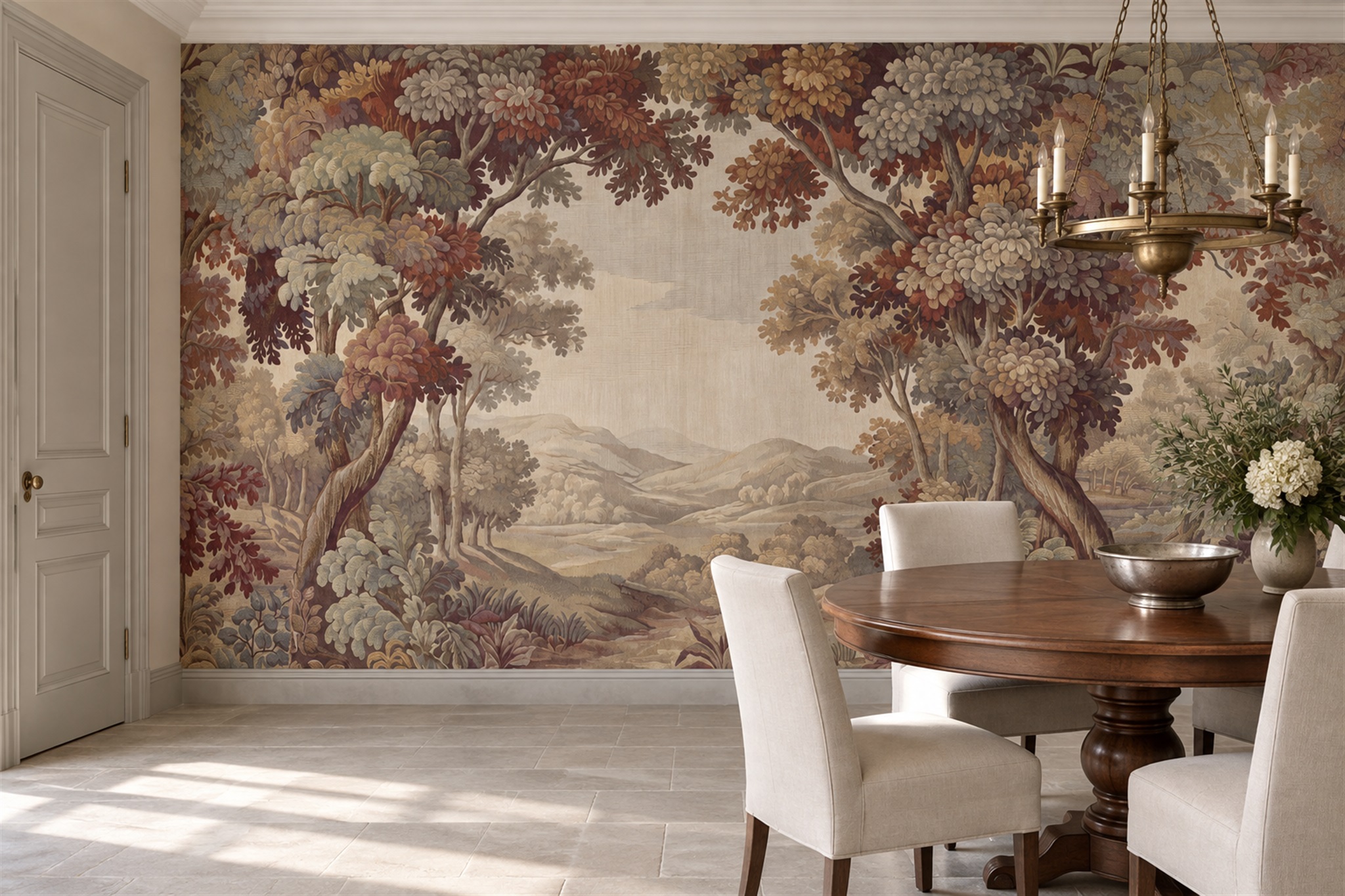
Example application: Dining room · pricing and measurement
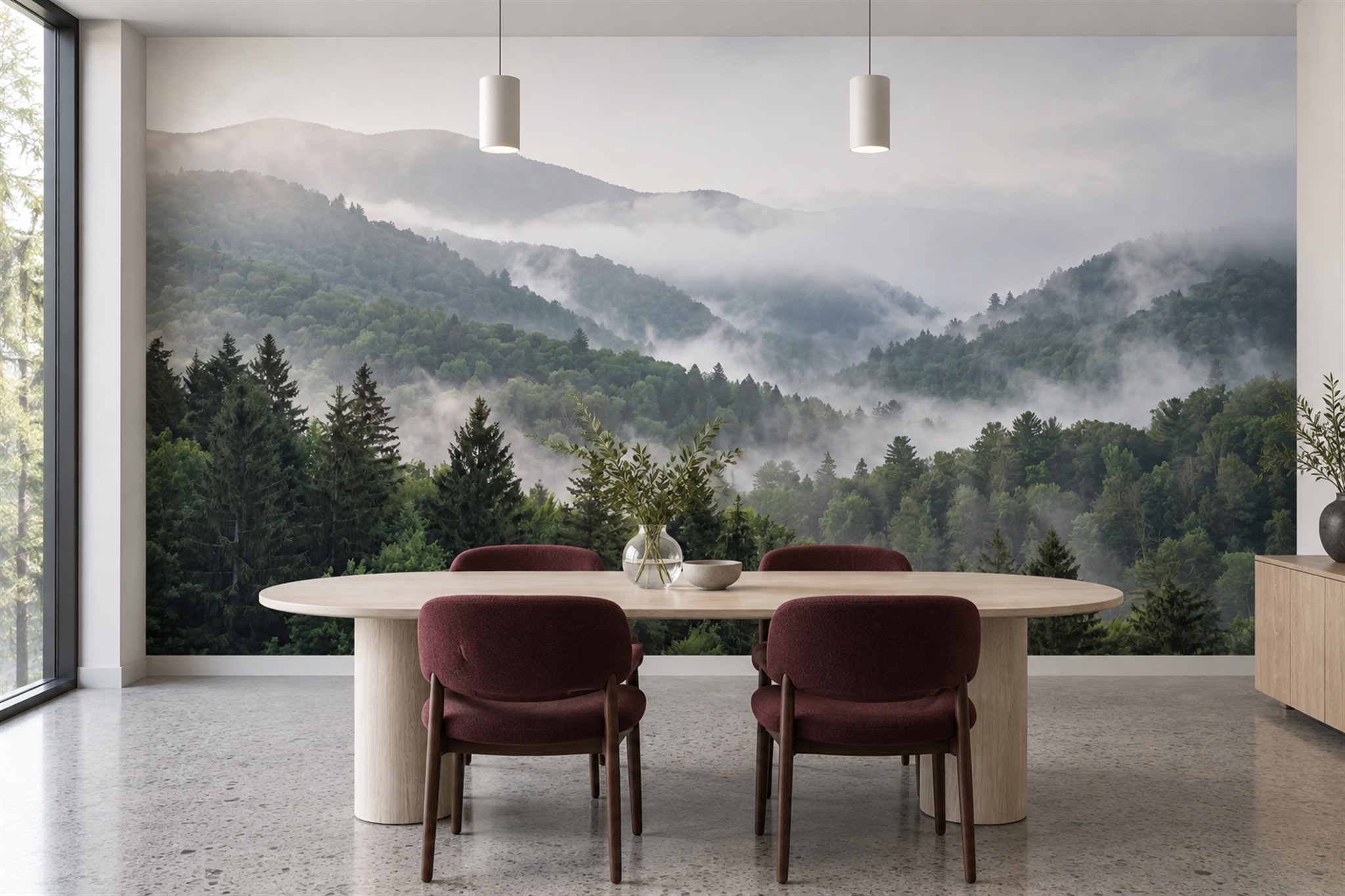
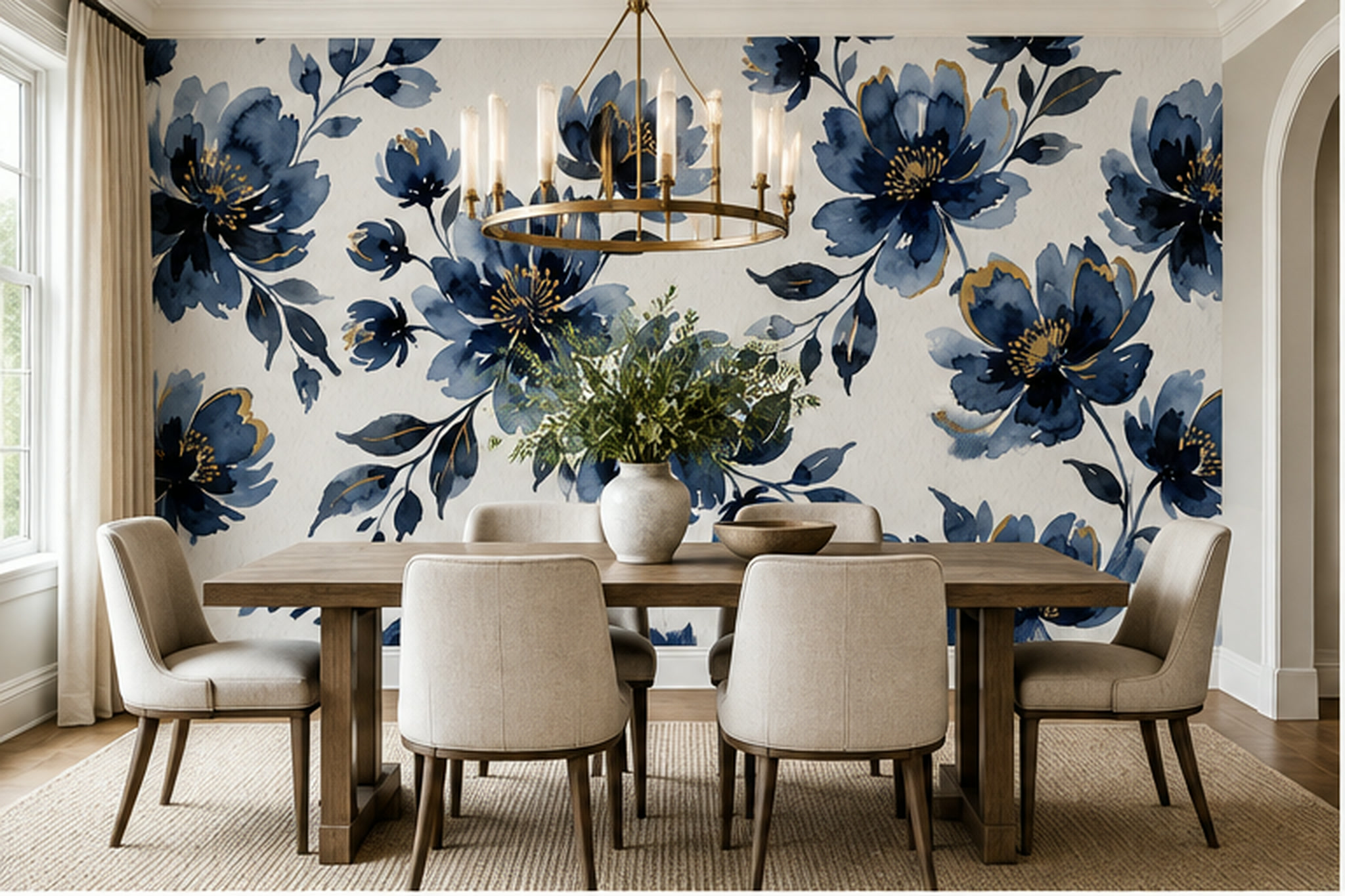
A dining-room mural is seen through chairs, over the table and often beneath a pendant—not on an empty wall. A misty forest can form a quiet backdrop to conversation; blue flowers can make a plain dining set feel more expressive; a warm woodland scene can give a traditional room depth. The suitable design is the one whose important detail stays visible from seated positions and whose contrast fits the way the room is lit at mealtimes.
Design for the seated viewpoint
Standing at the doorway can make a mural look expansive, but diners spend more time seated. A sideboard may hide a broad lower section, and chair backs repeatedly move in front of the print. Sit at the table and look toward the proposed wall. Is the main scene at a comfortable height, or does it disappear behind furniture? Does a horizon cut across people’s heads, or does it provide a calm backdrop above them?
In a long dining room, guests at opposite ends of the table may see different portions of the mural. A balanced composition spreads interest along the wall, whereas a single centred subject may work better in a compact nook. Do not assume the largest motif creates the strongest effect. A very large flower can be awkwardly cut by a chair back, while a layered landscape can remain intelligible even when some foreground disappears behind the table.
Mark pendant and wall lights on your wall sketch. A low pendant may obscure the focal point from the entrance, while a sconce can cast a strong pool of light on one part of the artwork. The lighting can be an asset if planned, but it should not be discovered only after the mural is installed.
Compare three different dining-room directions
For a restrained room, the misty green forest shown below offers depth without a small central subject that must be preserved. The blue floral example later in the article is more graphic: large blossoms remain visible above a dining table, while cream chairs keep the furniture quiet. The warm woodland mural used as the feature image sits between those approaches. Its rust and taupe trees frame a pale opening, so the wall reads as a scene even when the round table covers part of its lower edge.
A dining room can be formal, relaxed or multifunctional. Richer colour may suit an evening setting, but it is not automatically better for dinner; a pale landscape can work well under soft pendant light too. Test whether the artwork still has a clear hierarchy when a table setting, guests and furniture are present. The photograph of an empty styled room cannot answer that question for your layout.
Consider what else is already patterned. Upholstered chairs, a rug, curtains and table linen can create a busy visual mix. If those pieces are expressive, look for an artwork with larger calm areas. If the furnishings are simple timber and plain fabric, a more detailed mural can provide the room’s visual interest. Keep a relationship between the mural’s undertones and the table or floor rather than trying to match a single exact colour from an online image.
The composition should survive everyday changes. Chairs move, a table may extend for guests, and seasonal decorations can temporarily cover part of the wall. Place essential artwork where those changes are least likely to hide it.
Measure the wall with furniture and openings in mind
Measure the full wall width and height at several points if the print will run corner to corner. Follow the supplier’s rule for trim allowance. If only the area above panelling will be covered, define that architectural boundary and measure it separately. A sideboard that happens to stand against the wall is not a permanent print boundary unless the design is intentionally framed above it.
Mark windows, doors, radiators, shelving and mirrors on a wall sketch. A large mirror can reflect the mural and make a busy design feel even more active. A window may remove the centre of a panoramic scene. Compare that sketch with the site's crop preview; ask whether a separate layout review is possible if an opening threatens the main subject. Product photographs often use tables and wall dimensions unlike yours.
Check the material’s panel layout if a precise line, face or symmetrical motif crosses a seam. On a prominent dining wall, guests may see the artwork at close range. Installation should begin with the wall condition required by the chosen material; Wallcoverings Association guidance emphasises a clean, dry and sound surface. A professional fitter may be worthwhile for a high or irregular wall.
Think about cleaning before a spill happens
Pull out every chair as though guests were getting up during a meal. If its back reaches the mural, that strip of wall is a repeated-contact zone even when the room looks spacious in photographs. A serving sideboard creates another zone for hands and trays; the wall behind it may need a different treatment from the uninterrupted wall at the opposite end of the room.
For those zones, ask for the exact printed finish's approved cleaning method before deciding on full-height coverage. “Washable” is not permission to scrub with strong detergent, and a vinyl label does not make every seam waterproof. If the dining wall is beside a sink or active service area, ask about that exposure specifically. The Wallcoverings Association recommends following the particular wallcovering maker’s cleaning guidance rather than assuming one method suits every product.
Where chair contact cannot be avoided, panelling below the mural can create a deliberate boundary while keeping the artwork visible above seated heads. If full-height print remains the preference, leave chair clearance and test the maker's approved cleaning method on an offcut. The decision is about this wall's everyday use, not a generic material label.
View that sample in the real room. Daylight from a large dining window and warm evening pendants can change the apparent colours. A cool floral print on a phone may look different beside a timber table under amber light. Use the on-site preview to assess the crop and the physical sample to assess colour and finish.
Test the mural when the table is in use
Extend the table to the length used for guests, pull out chairs at both ends and view the wall from seated height beneath the evening pendant. In the blue floral example, the larger blooms need to remain above chair backs; in the warm woodland, the lower trees may disappear while the pale opening still gives the room depth. A narrow dining nook and an extendable table create different moving masks over the print. Draw the largest everyday furniture outline on the final crop, not just the smallest tidy arrangement shown in a catalogue photograph.
Set out the table as you actually use it. Patterned ceramics and flowers may compete with a highly detailed mural, while a misty forest leaves quieter space behind them. If the table also serves as a desk, check the daylight view and where a monitor might block the image. Choose the composition that survives both meals and the room's secondary use, then ask about the exact finish's cleaning limits where chair backs or serving furniture contact the wall.