Can Mural Wallpaper Be Used in a Hotel Interior?
Plan a hotel mural around guest experience, repeatable dimensions, installation access, traffic and the chosen material.
Article focus: pricing and measurement
What to settle before pricing
Start with accurate wall measurements; the final custom mural price depends on area, material and any finishing options.
Example application: Bedroom · pricing and measurement
Yes, mural wallpaper can work in a hotel interior, but the same image cannot be judged in a guestroom and a public lounge by the same criteria. Guests see the wall at different distances and at different times of day; beds, seating and doors interrupt the artwork; and hotel staff must live with its maintenance needs. The design may create identity, but its crop, specified material and installation must be evaluated for the actual property rather than assumed from a residential-style photograph.
Give each area a different job
A guestroom mural can establish mood around the bed. A lobby or lounge wall has to register from farther away, across furniture and people. A corridor wall is often viewed obliquely and broken by doors. Using one artwork at one scale in all three settings can make the hotel's spaces feel interchangeable. Decide first whether the wall should welcome, orient, calm or distinguish a room type; then select a composition that performs that job.
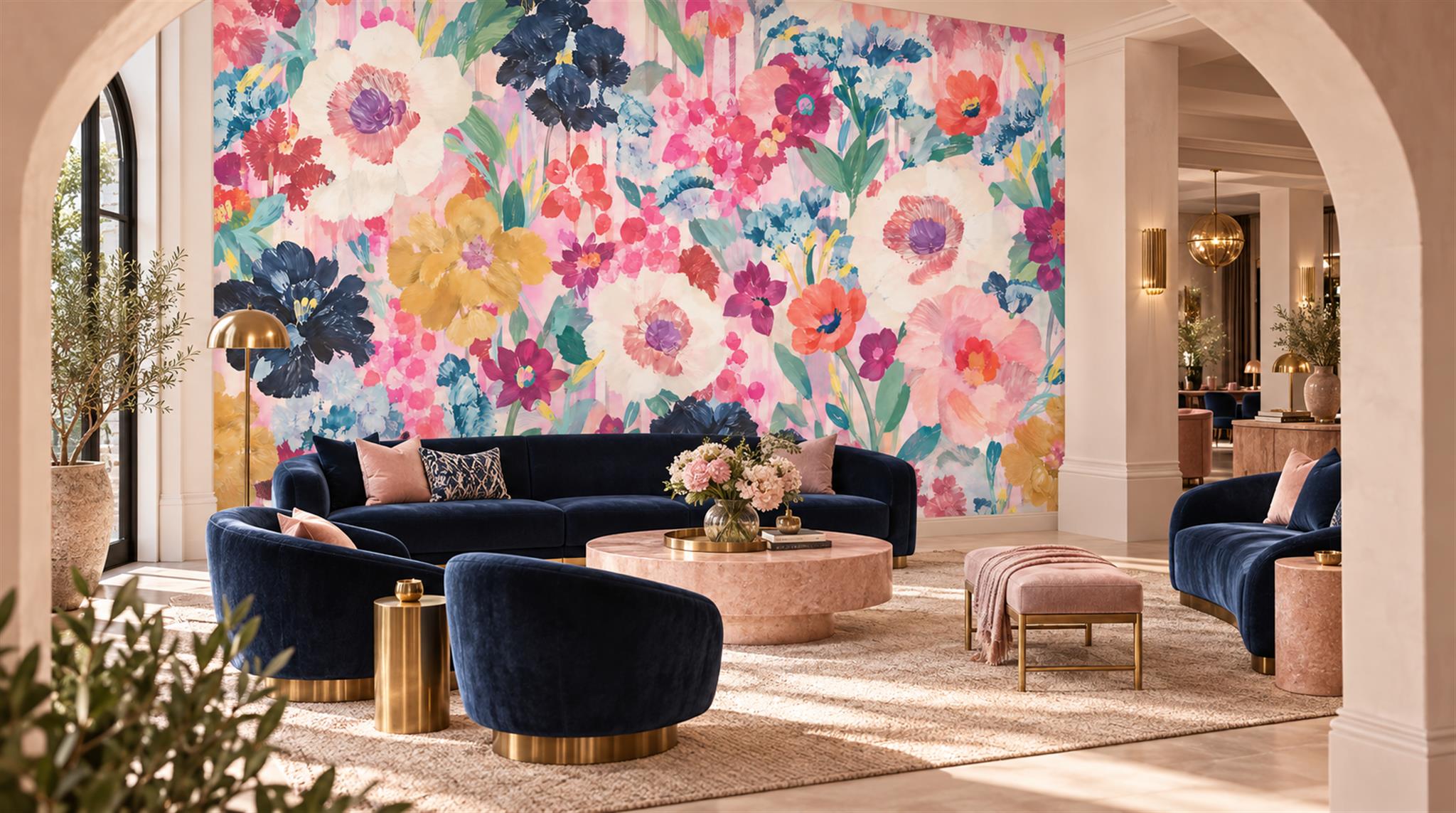
In a guestroom, compare the first view from the entrance with the view while seated or lying down. A headboard may cover the lower half of the print. A floral composition with blossoms above it can remain legible; a figure or building cut off by pillows and lamps will not. The colourful floral lounge image at the top of this article succeeds differently: its large blooms remain visible around the sofas, while the navy upholstery provides a visual pause. That energetic wall might be welcome in a social space yet overstimulating directly behind every bed.
For corridors, a long horizontal composition can guide movement, but doors and signs may interrupt it. A distributed motif may survive those interruptions better than one central figure. Compare the crop with an elevation showing every opening and fixture. The nominal wall width is not the same as the visible image area.
Use artwork to support a place, not to invent one
A hotel may want a visual connection to its setting: coastal forms, local vegetation or a city palette. That can be effective when it is specific and credible. A generic “tropical” scene in a property with no relation to that landscape may feel like an arbitrary theme. If the brand brief calls for a destination story, confirm the actual location and imagery before claiming a place or cultural reference in copy.
Not every hotel needs literal scenery. A calm floral can soften a guestroom; an abstract can connect architectural finishes; a bold botanical can lend energy to a suite. The right subject follows the property's atmosphere and the needs of the room. Avoid choosing by filename or style tag alone. Inspect the print at the intended scale and compare it with bed fabrics, joinery and lighting.
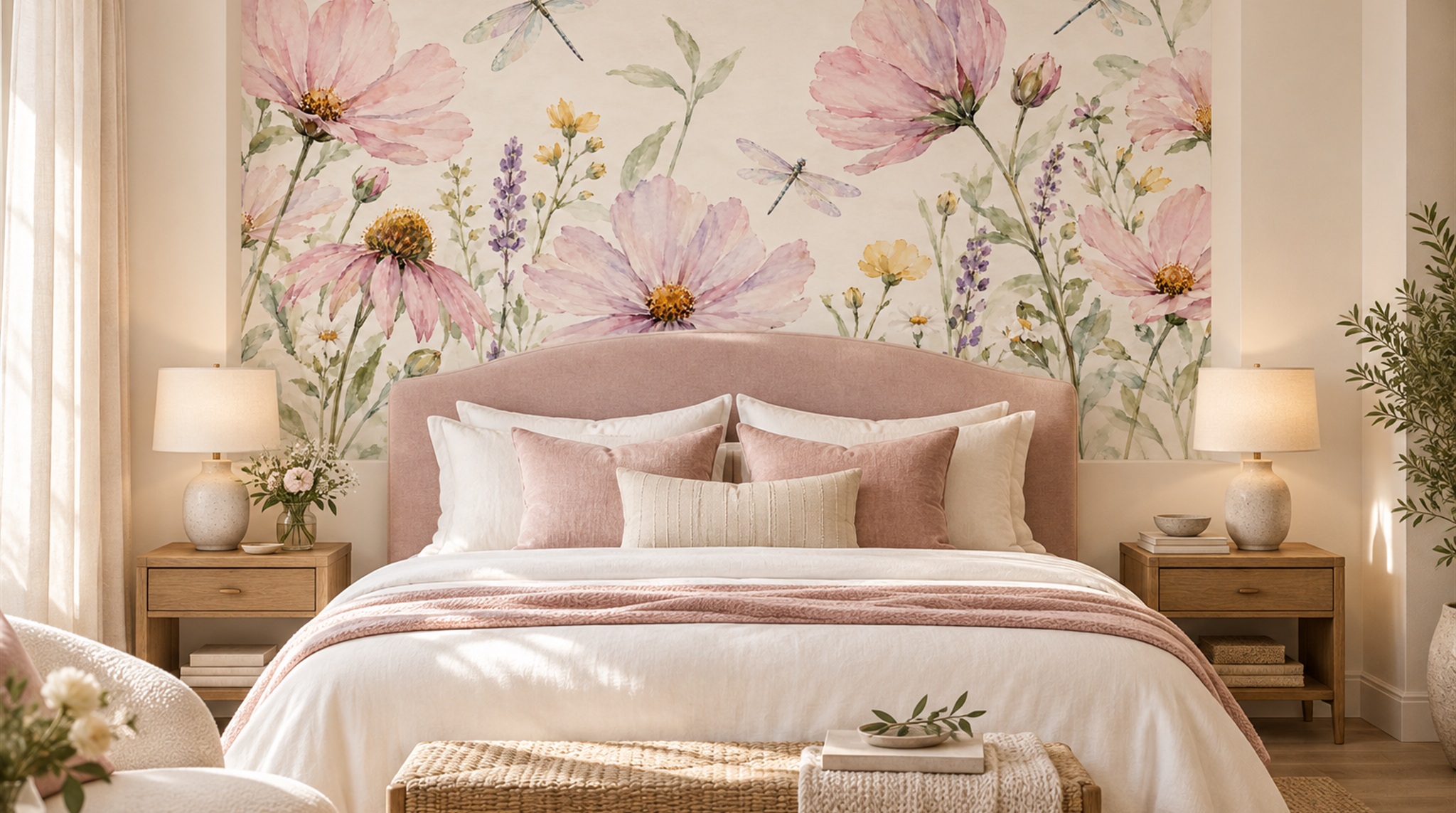
The softer pink floral room below uses a different scale and tempo from the lounge. The headboard covers lower stems while the large blossoms and delicate dragonflies remain visible above it. Pale bedding and paired lamps reinforce a restful symmetry. Compare that with the bird-filled tropical room later in this article: both are styled bedrooms, but they would create very different first impressions for a guest. Neither should be treated as a universal hotel solution.
Plan repeatability across rooms
A hotel may use one mural in several guestrooms, but those walls may not be identical. A change in bed width, window location or mirrored layout can put the floral centre behind a lamp or shift a bird to the edge of a panel. Create a room-type schedule rather than assuming one print file fits every wall. For each type, record measured dimensions, openings, bed and lamp positions and the selected crop; ask the supplier for a separate panel layout where necessary. Compare the entrance view in both left- and right-handed rooms.
Keep a record of the approved artwork, crop and production specification so future repairs can be discussed accurately. Confirm with the supplier how replacement panels and print-batch colour differences are handled; do not assume a later order will match an earlier one perfectly. The maintenance team should know which room type received which version. Spare material may be worth considering, but the amount depends on the project's repair strategy and the chosen product.
Review installation scheduling. A room out of service has a different cost from a residential feature wall. Wall preparation, curing or drying time, access and housekeeping handover should be coordinated with the selected material's instructions and the installer. These are project decisions, not qualities that can be promised from a generic mural description.
Check the material against operational requirements
A guestroom, corridor and lounge may be subject to different project requirements for wall linings. Before treating any of the pictured murals as a hotel specification, request current test and installation documentation for the exact wallcovering, adhesive and substrate combination. The Wallcoverings Association's standards overview distinguishes commercial wallcovering performance from an image or a material name. Have the responsible project professionals check the applicable local rules and the property's fire strategy; a residential product listing establishes none of those approvals.
Consider where guests and luggage may touch the wall. A mural behind a bed, near a luggage rack or along a narrow corridor faces different levels of contact. Ask what cleaning methods are permitted for the chosen material and whether the finish can tolerate the hotel's actual maintenance routine. The Wallcoverings Association's cleaning guidance directs users to the particular manufacturer's instructions. A visually matte printed effect is not evidence of washability or scratch resistance.
Colour and sheen matter operationally too. Strong side light from a guestroom window can make panel joins more apparent, while a dark printed area may make some marks easier to notice. Test the actual material sample in the room under daylight and evening lighting. A digital proof helps settle placement; a physical sample helps the team judge colour and surface appearance. Neither replaces the product documentation.
Design for a guest's ordinary experience
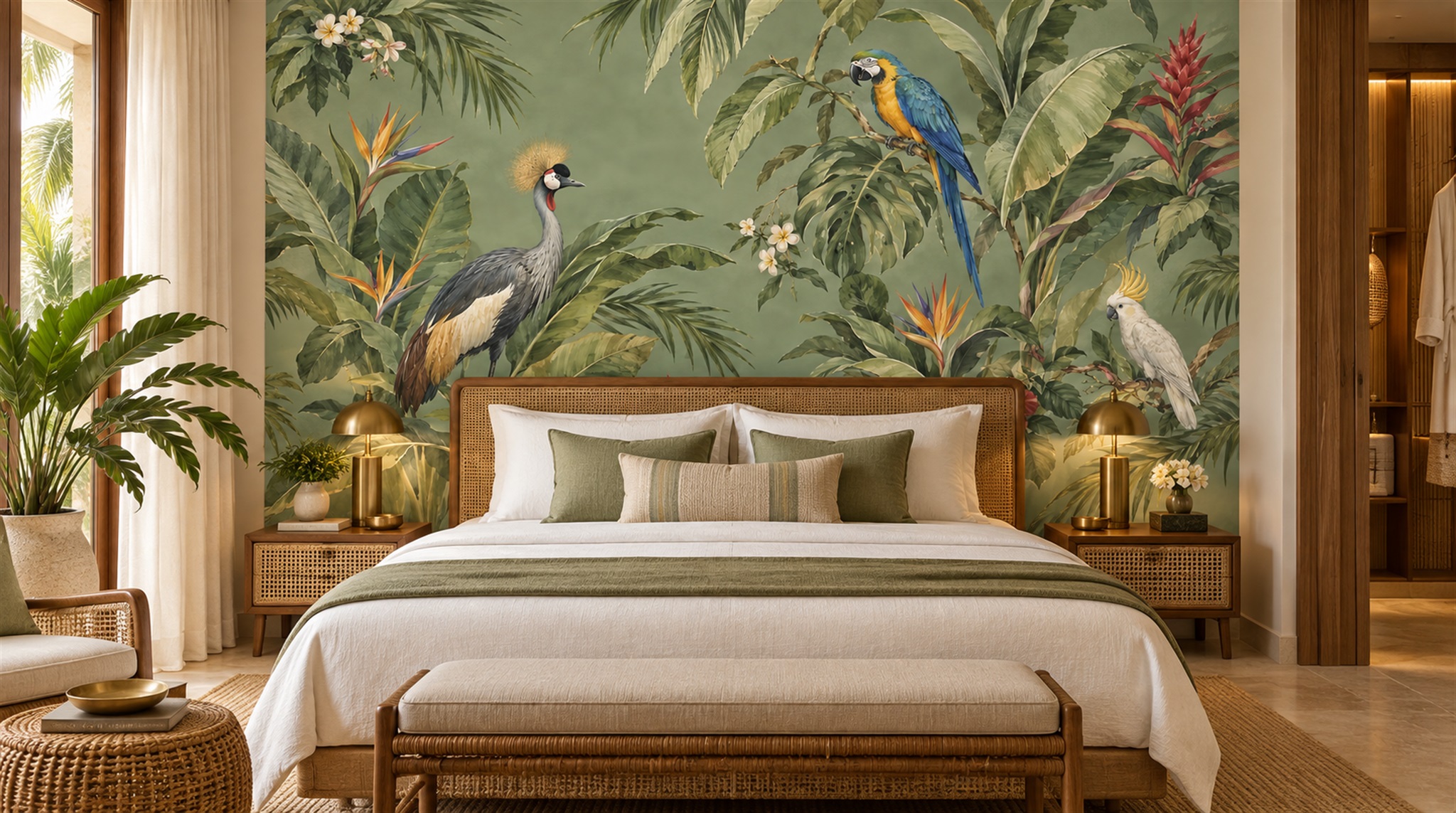
A mural should not make navigation confusing or obscure essential signage. In a corridor, check the legibility of room numbers and wayfinding against the printed background. In a guestroom, consider how mirrors reflect the artwork and whether the main subject dominates the bed view. The large birds in the tropical example are appealing from the doorway; from the pillow, their scale might feel much stronger. The project mock-up should be assessed from both positions.
Check photography too, but do not design solely for it. A mural can make a room memorable in marketing images, yet guests live with it at full scale. Test a mock-up from the room entrance, the bed and the seating area. The preferred crop should work at each important point without relying on a wide-angle camera to create extra space.