Can Mural Wallpaper Be Used in a Kitchen?
Review heat, grease, steam, splashes, cleaning and distance from cooking areas before selecting a kitchen mural.
Article focus: pricing and measurement
What to settle before pricing
Start with accurate wall measurements; the final custom mural price depends on area, material and any finishing options.
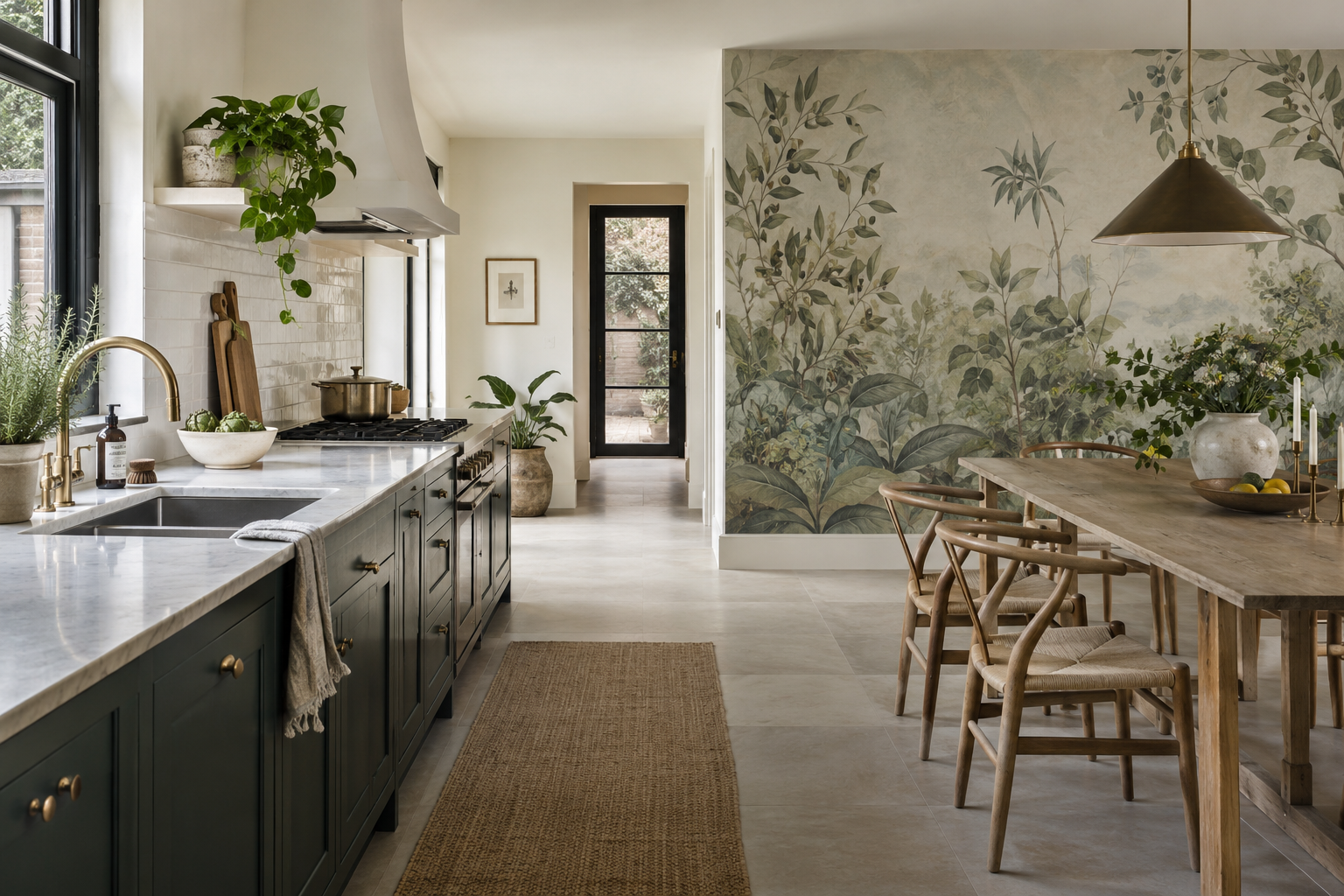
Example application: Dining room · pricing and measurement
Yes, a mural can belong in a kitchen when it is placed where a decorative wall can actually function. In the room pictured above, the sink and hob have a hard-surfaced working area on the left; the leafy mural sits across the walkway behind the dining table. That separation matters more than the botanical subject. Heat, grease, water and frequent wiping make a working splashback a different specification from a dining wall. Choose the wall first, then check whether the exact printed material is approved for its real exposure.
Map cooking, washing and dining zones
Mark the hob, oven, sink, kettle, dishwasher vent, worktops and table on a plan. Then watch where cooking residue and water actually land during normal use. A wall across the table may stay mostly dry; a wall close to the hob may collect grease even if it is not directly behind the pan. Steam can reach cabinets and upper corners. In an open-plan kitchen, the dining side often offers the mural a more coherent visual role and a less demanding surface.
Do not move the artwork behind the hob merely because a product photograph calls it “kitchen wallpaper”. Appliance instructions, local requirements and the wall-finish specification govern what belongs near heat and cooking equipment. Use a properly specified splashback or other approved working-surface finish there. If a printed image is essential in that location, it needs a complete system designed and approved for the application; ordinary interior mural wallpaper should not be assumed to qualify.
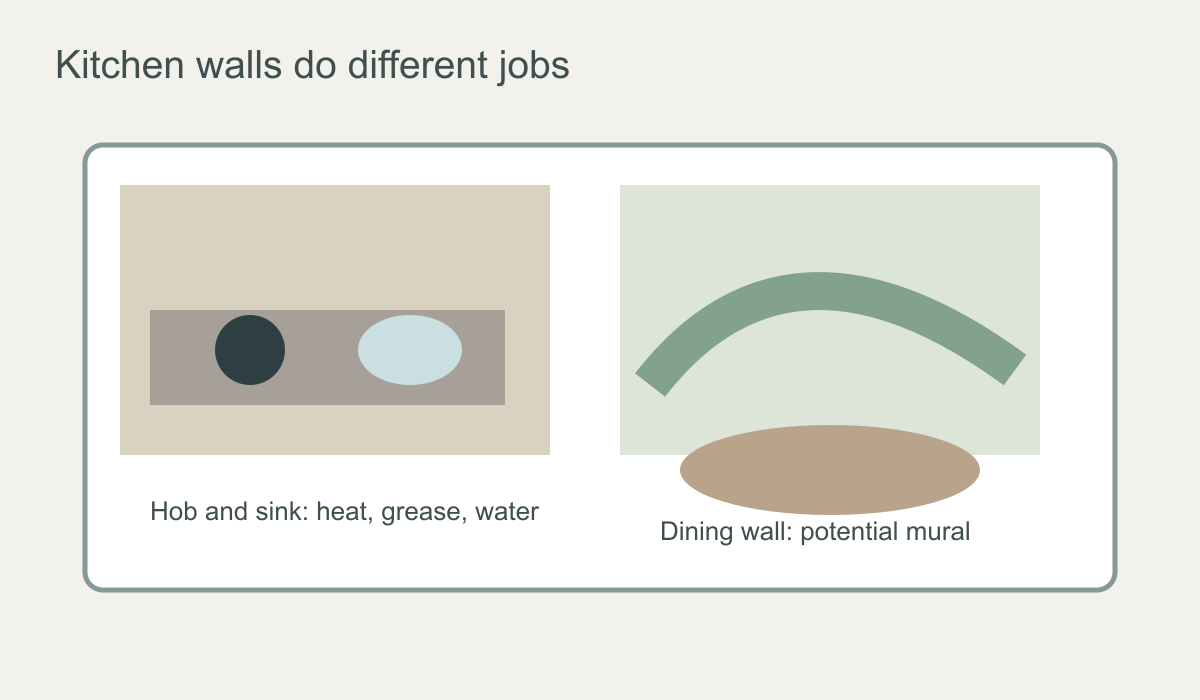 The dining wall and the working backsplash are different specifications.
Check the room shown, not just the wallpaper shown
The feature photograph works because the leafy artwork is legible from the dining table while the sink and hob occupy a separate hard-surfaced working run. When collecting kitchen inspiration, record three details for each image: which wall carries the mural, where cooking and washing happen, and from which seat or doorway the design is seen. A photograph of a print behind a cooker is not evidence that the depicted material has the necessary approval for heat or grease.
Translate the useful parts of a reference into your own plan. If your dining table faces an open wall, mark the view from each seat and the space occupied by pulled-back chairs. If cabinets cover the top half of your proposed wall, the same botanical crop may disappear. The design can be shifted or scaled only within the actual options offered for that print, so check a dimension-based preview before committing. A scene that looks balanced in a large photographed kitchen can become an isolated fragment above a short counter.
Performance still sets the boundary for this design exercise. A Vinyl label is not proof of grease-proofing, waterproofing or heat suitability. The Wallcoverings Association distinguishes washable, scrubbable and stain-resistant characteristics; ask for the selected product's actual care and installation instructions. Do not add an unapproved clear coat or assume a glass sheet turns a decorative mural into a suitable hob splashback. If the only wall is a working splash or heat zone, the material specification must be solved before the composition.
Prepare a sound wall
Kitchen walls may have invisible grease residue even when they appear clean. Follow the wallcovering manufacturer's preparation instructions, including any specified cleaning, primer and cure time. Loose paint, old adhesive and moisture problems must be dealt with first. The Wallcoverings Association's surface-preparation guidance calls for a clean, dry and sound substrate; contaminants can interfere with adhesion.
Do not cover an active leak behind a sink or refrigerator with wallpaper. Resolve the source and repair the wall. Newly plastered or painted surfaces must reach the condition required by the product instructions. If the wall is heavily textured or has uneven patches, a detailed mural may reveal defects rather than hide them.
Plan around existing outlets, cabinets, pipes and the backs of dining chairs. In the feature photograph, the loose botanical composition remains readable where the table and pendant interrupt it. A panorama with one central landmark might not. Measure the whole wall for ordering, then compare the crop preview with a separate drawing of the visible area and furniture. If the kitchen layout may change, delay a made-to-measure print until cabinets, worktops and the table position are settled.
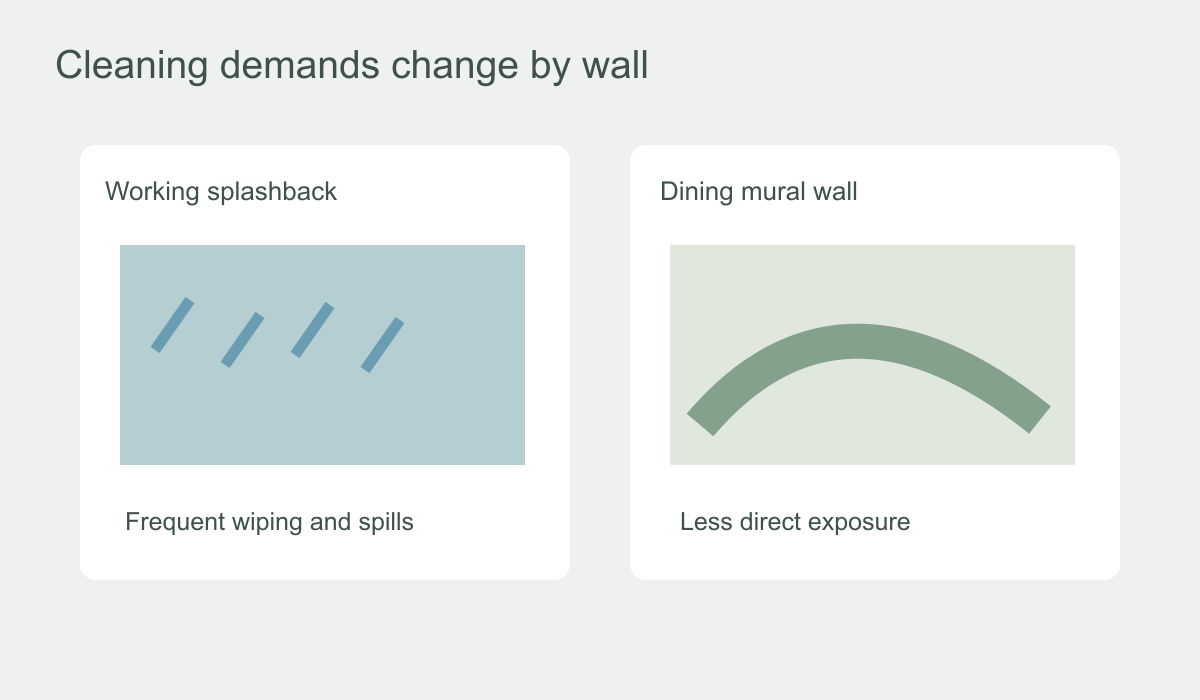 Cleaning frequency is part of choosing the mural location.
Choose imagery that relates to the room without copying it
A kitchen mural does not need to depict food. The muted leafy scene in the feature photograph connects the dining area to the garden glimpsed through the black-framed doors. A pale landscape could make a breakfast nook feel open; an abstract composition could bring colour to a mostly functional room. Think about the sightline from the table and from adjoining living space. In an open-plan interior, the mural may be seen more often from the sofa than while cooking.
Pattern scale should account for cupboards, extractor hoods and pendant lights. A large central flower hidden behind a fridge is wasted. A soft image with multiple points of interest may survive interruptions, while a precise architectural scene may need an uninterrupted wall. Ask for a crop preview using the finished cabinet layout. A smaller dry wall may produce a better mural than forcing one across every working surface.
Colour changes under task lighting and daylight. Warm under-cabinet lights may make a cream ground look more yellow; cool window light can make blue-green shades seem sharper. Examine a physical sample where the mural will hang. The artwork's description may say watercolour or plaster effect, but that names the printed look, not a physical washability rating.
Plan for maintenance and replacement
Even on a dining wall, chairs may rub the lower print and food may splash. Check the pull-back space behind each chair, not only the table's position when nobody is seated. Ask how the selected finish should be cleaned and what happens if an edge is damaged. The Wallcoverings Association advises using manufacturer-specific cleaning guidance. Do not assume that abrasive sponges or solvents are suitable for an unverified printed surface.
Consider whether the kitchen may be remodelled soon. A made-to-measure mural is tied to its wall geometry. Moving a doorway, adding cabinets or changing the splashback height can make the image crop obsolete. If the layout is uncertain, use a temporary framed artwork or wait until the final wall is ready. “Removable” does not guarantee that a mural can be reinstalled intact elsewhere.
Use a two-part ordering check
First, settle the finish question. Show the supplier a marked kitchen plan identifying the hob, sink, dishwasher vent and proposed mural wall; describe any steam, grease, splashes or chair contact observed during a normal meal. Request instructions for the exact product and adhesive in that position. If it is a working splashback or heat-exposed wall and the system is not expressly specified for that use, do not treat the decorative mural as an approved substitute.
Only then settle the picture. With the final cabinets and table in place, measure the wall and overlay the furniture, pendant and door swing on a dimension-based crop. The pictured leafy design has several readable areas around the dining furniture, while a single-centre scene may not. If the layout is about to change, keep the measurements and defer the custom print until the wall geometry is final.