What Mural Wallpaper Works in a Playroom?
Choose imagery, scale, contrast and wall placement that support activity while keeping the room visually organised.
Article focus: pricing and measurement
Budgeting this wall with confidence
Start with accurate wall measurements; the final custom mural price depends on area, material and any finishing options.
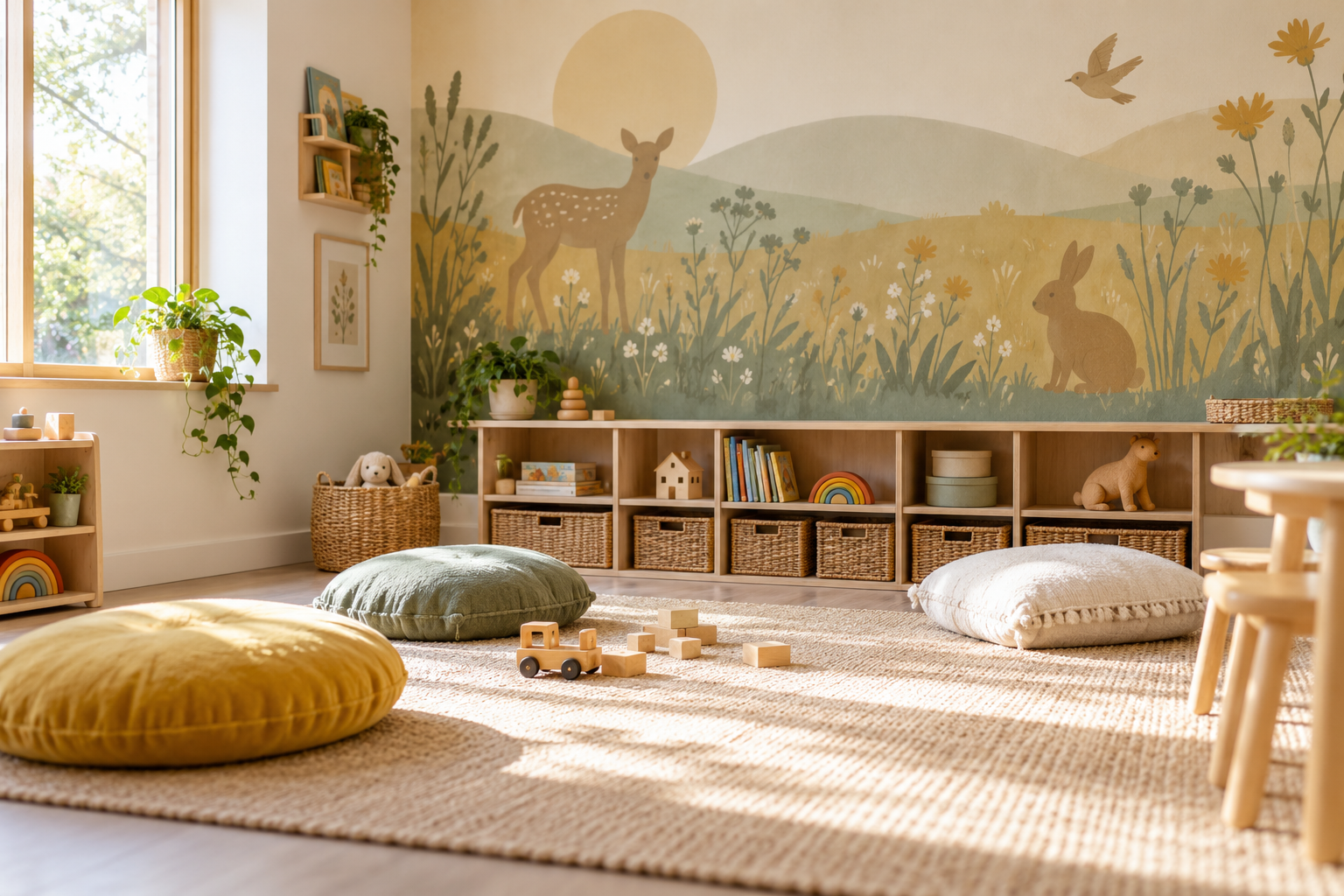
Example application: Nursery or children’s room · pricing and measurement
A playroom mural works when children can see and enjoy its main idea amid the furniture and toys that actually fill the room. An illustrated meadow can offer characters and a setting for stories; broad hills or a gentle repeat may be easier to live with as interests change. Start at floor height, mark what storage hides, and keep messy or high-impact activities in mind before choosing a wallcovering. The picture can contribute to the room, but it cannot make the room safe by itself.
Try the child's view before choosing the crop
Get down to the height at which a child sits and plays. A mural selected while standing may lose its most interesting animal behind a low shelf when viewed from the floor. Mark the actual storage height and the likely position of cushions, a play table and books. Check what remains visible from the play mat as well as from the doorway.
The accompanying playroom image makes this easy to see. A deer, rabbit and flying bird remain recognisable above the long open storage unit, while much of the printed grass sits behind the baskets and shelves. The sunny meadow still reads as a scene because its important figures and the gentle hill shapes occupy the exposed upper wall. If the rabbit had been placed at basket height, a child might never see the detail that prompted the choice.
Ask for a wall-size crop proof with furniture drawn at measured dimensions. A small product thumbnail cannot show whether a bird is cut by a window, a path stops at a shelf or a single character falls into a corner. Once the image is positioned, inspect it from both seated and standing views. The goal is not to put every motif high up; it is to keep the picture coherent at the heights where it will be used.
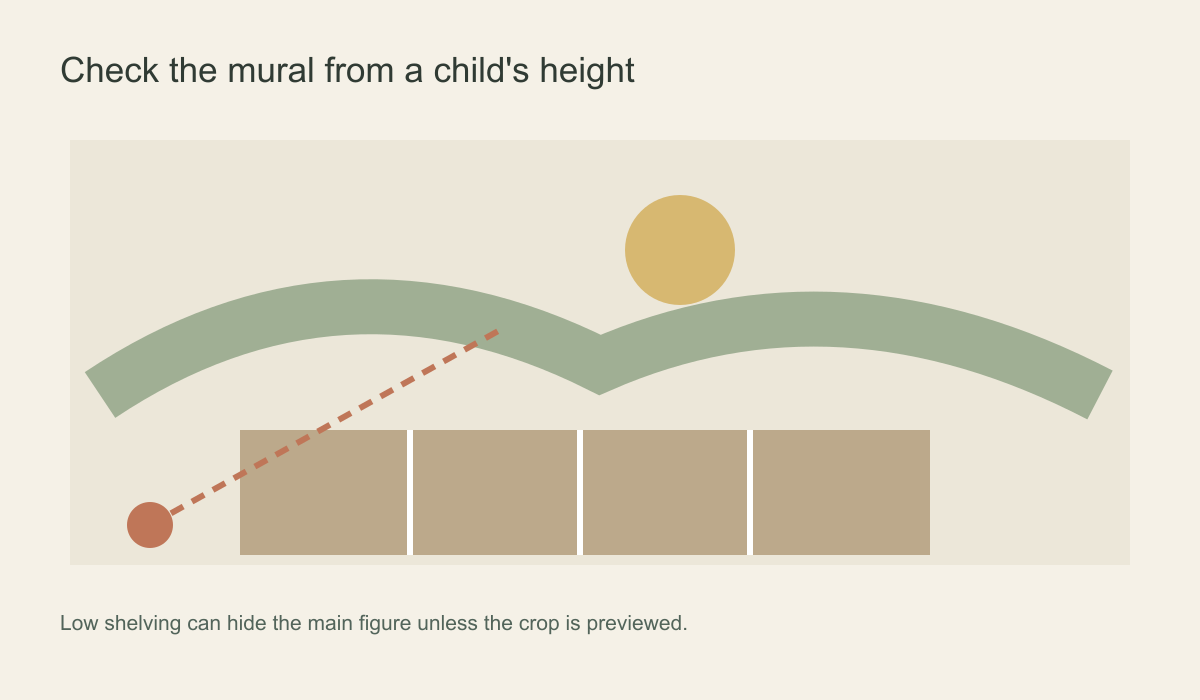 Low storage can hide the main subject unless the crop is checked from the floor.
Choose a scene, a repeat or an open backdrop
An illustrated scene offers details a child may point to and invent stories around: an animal, a path, a flower or a sequence of hills. It needs a crop that preserves those relationships. A repeat does not depend on one central character, so a later furniture move may matter less. But a tiny all-over pattern can become visually crowded when toy boxes, book covers and drawings fill the room. Neither choice is automatically better.
A broad abstract landscape or open sky is a third option. It can give a colourful room a larger, simpler shape without fixing one particular story on the wall. If the room already has a bright rug and busy storage, that visual space may be useful. If the furnishings are mostly plain, a more detailed illustrated scene can carry the room's main character.
Compare two or three full-wall options in the same photograph of the furnished space. When a child is old enough to take part, ask which details they notice, not just which thumbnail they like. Check whether that detail survives the crop and whether the design still works when favourite toys change. A permanent mural can be the setting; books, cushions and a separate display board can carry shorter-lived interests.
Make room for the child's own work
A playroom often changes quickly. Drawings appear, toys migrate and a reading nook may replace a small play tent. Leave some visual breathing room around the mural's main subject and plan a separate place for changing artwork. Repeatedly pinning or taping pictures onto the printed surface may damage a finish that was never specified for that use; the display rail or board should be designed and fixed appropriately in its own right.
In a room shared by children of different ages, one broad landscape can offer common ground without forcing their current favourite characters into a permanent print. A simpler wall may also sit better beside different activities: active floor play in one area, reading or quiet making in another. This is a matter of layout and household preference, not a rule that children's rooms must be pastel or low contrast.
Put the mural away from the messiest activity
Make a quick activity map: floor play, storage, craft table, snack spot and the route of large toys. A wall beside a play mat can still be struck by ride-on toys. A craft table that moves during the week may bring paint and wet materials closer to the mural than the original plan suggests. Choose the focal wall with those everyday movements in mind.
For a dry, lower-contact wall, a decorative mural may have an appropriate role. Behind a paint table or handwashing area, do not assume the print can be scrubbed or disinfected. The Wallcoverings Association's cleaning guidance directs users to the manufacturer's instructions for the particular covering. Request the exact product's cleaning information for the intended position. If it does not support the needed routine, use a suitable surface in the messy zone and keep the mural elsewhere.
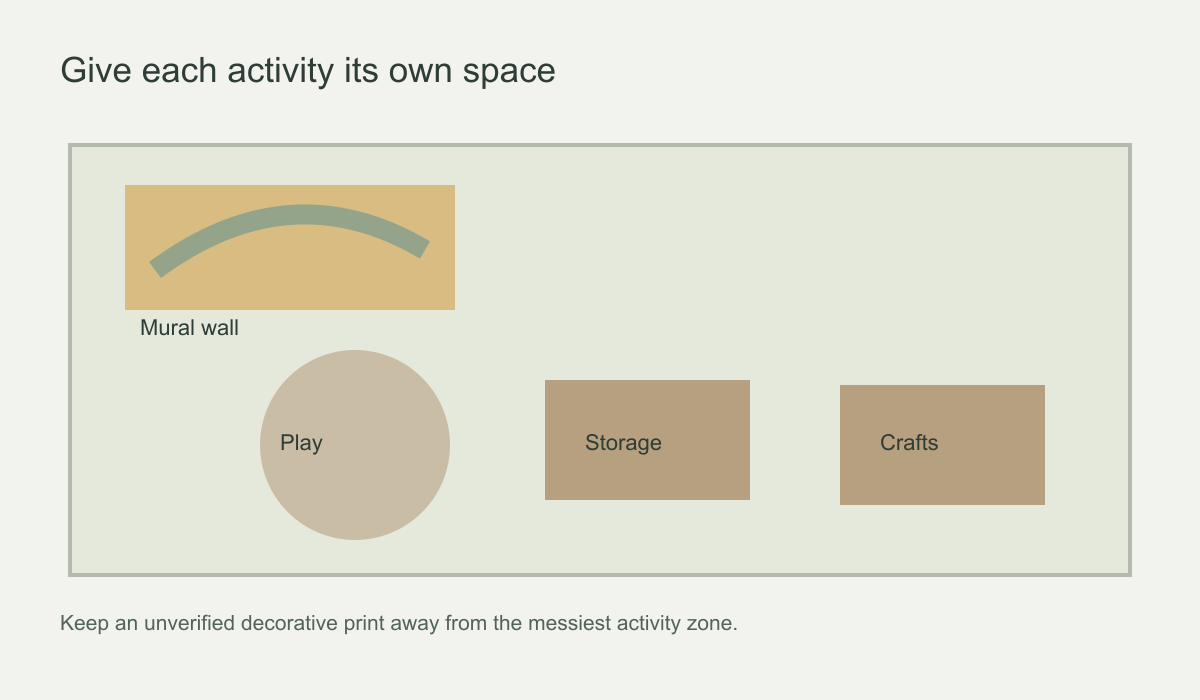 Give each activity a place; keep an unverified decorative finish out of the main splash zone.
Keep safety decisions separate from decoration
A friendly animal drawing does not make furniture stable. The US Consumer Product Safety Commission's Anchor It guidance recommends securing furniture and televisions to reduce tip-over risks. Follow the furniture and anchoring instructions; a printed wallcovering provides no structural support. Do not move a storage unit to an unsafe position merely to reveal more of the artwork.
Inspect the wall before installation. Loose paint, dampness and unsound surfaces need attention first. After installation, assess any damaged edges or lifting material and follow the supplier's advice rather than leaving reachable loose sections in place. Keep cords, fittings and other room hazards under their own safety plan; wallpaper is not a substitute for those checks or for supervision.
If the mural is for a school or childcare setting, request the exact product's relevant testing and compliance documents and check local requirements. Words such as “eco-friendly”, “non-toxic” or “fireproof” should not be inferred from an illustration or a generic material name. The same design can be printed on products with different specifications, so the approved material matters as much as the picture.
Sample the colour and plan for change
Inspect a physical print sample in daylight and under the room's evening light. A digital preview helps with composition but does not establish the printed colour or surface. A painted-looking image is still a flat print unless the selected product's actual finish says otherwise. Look at the sample beside the rug, baskets and books, not against an empty white wall.
Then imagine a future layout. If low storage becomes taller, will a recognisable part of the scene remain? If a desk replaces the play table, will the mural become a distracting backdrop or stay a pleasant view? Keep the approved crop and panel layout with the order details so future changes can be judged against the actual installation.
The strongest playroom choice is an image the child can see from their normal play position, with a wall location suited to real activity. Let the design provide a flexible setting, protect space for children's changing interests, and verify material and safety requirements separately instead of asking the mural to solve them.