Is Mural Wallpaper Suitable for a Rental Home?
Compare removable options, wall condition, landlord requirements and careful installation planning before ordering.
Article focus: pricing and measurement
Budgeting this wall with confidence
Start with accurate wall measurements; the final custom mural price depends on area, material and any finishing options.
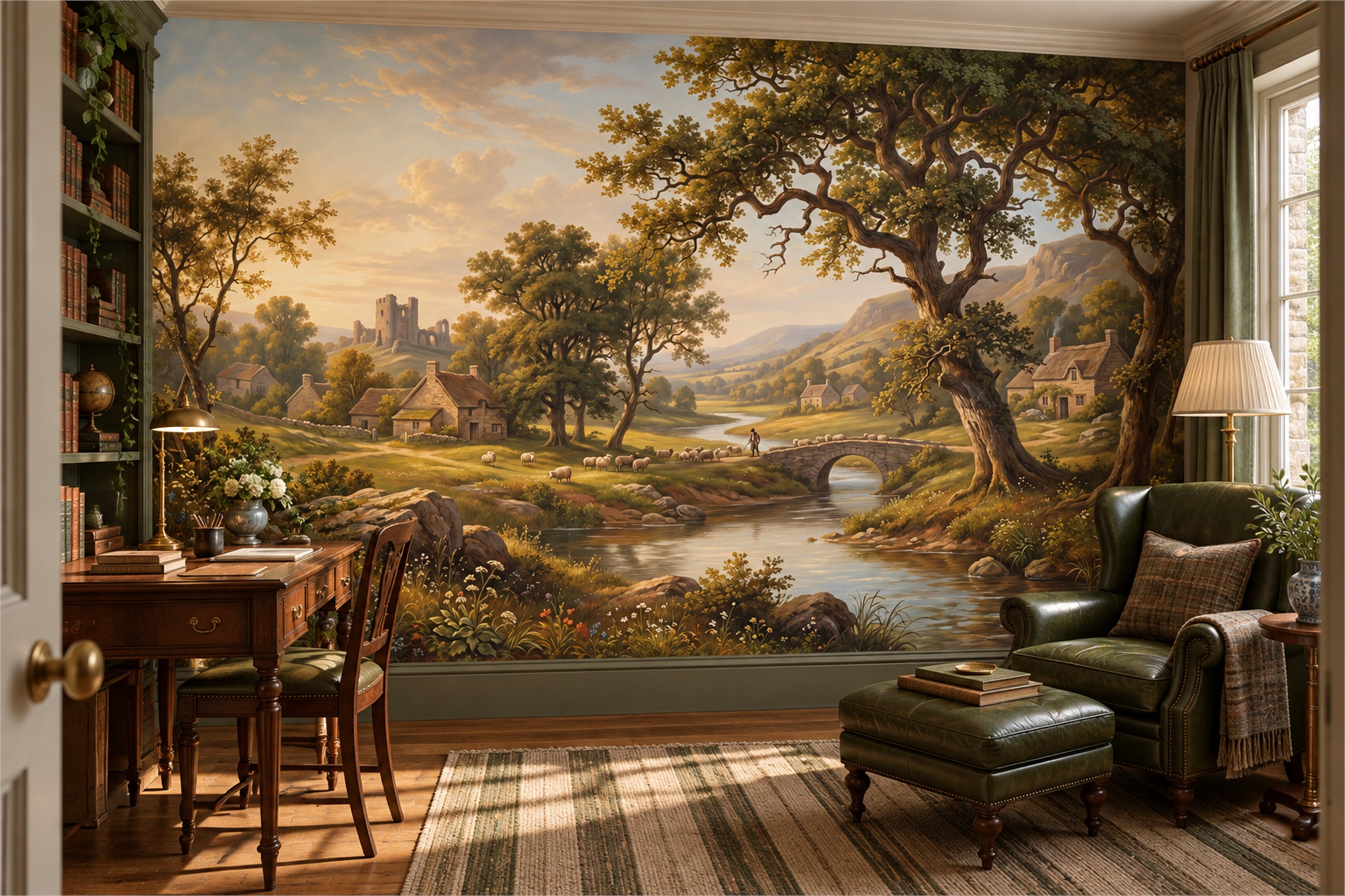
Example application: Bedroom · pricing and measurement
Yes, mural wallpaper can suit a rental home, but the answer depends on the wall and the tenancy rather than the artwork alone. A print sold as removable does not automatically have permission to go on a rented wall, and an adhesive designed to release may still lift weak paint. The golden pastoral mural shown above makes one study wall the focus of the room; its visual appeal tells us nothing about the wall beneath it. Decide whether to use a mural by working backwards from the condition in which you must leave the property.
Begin with permission and a record of the wall
Before choosing a design, check what the agreement says about decorating, wall coverings and alterations; requirements differ by property and location. Where permission is needed, make the request specific: identify the wall and proposed material, say whether any fittings must be moved, and ask what finish is expected when the tenancy ends. Clarify whether a small adhesive test is permitted too, because a test can mark weak paint before the full mural is installed. Keep the written answer with your move-in photographs. A product described as “renter-friendly” cannot settle a particular agreement or prove that the wall will release cleanly.
Photograph the wall in daylight before touching it. Include close-ups of existing chips, patched areas, uneven paint and damp marks. This establishes a baseline, but it is also a practical surface check: weak paint or filler may come away with adhesive later. If there is moisture, staining that suggests a leak, or loose paint, raise that issue with the owner or property manager before covering it. A mural should not conceal a problem that needs attention.
Choose the wall as carefully as the design
A single feature wall in a study, bedroom or living room can make a noticeable change while limiting the area you may eventually need to restore. Choose a surface that is dry, sound and reasonably smooth, not simply the first wall visible from the door. Look at door swings, windows, radiators and shelves that may require drilling. An interrupted wall demands extra trimming, and permanent fixtures may complicate both installation and removal.
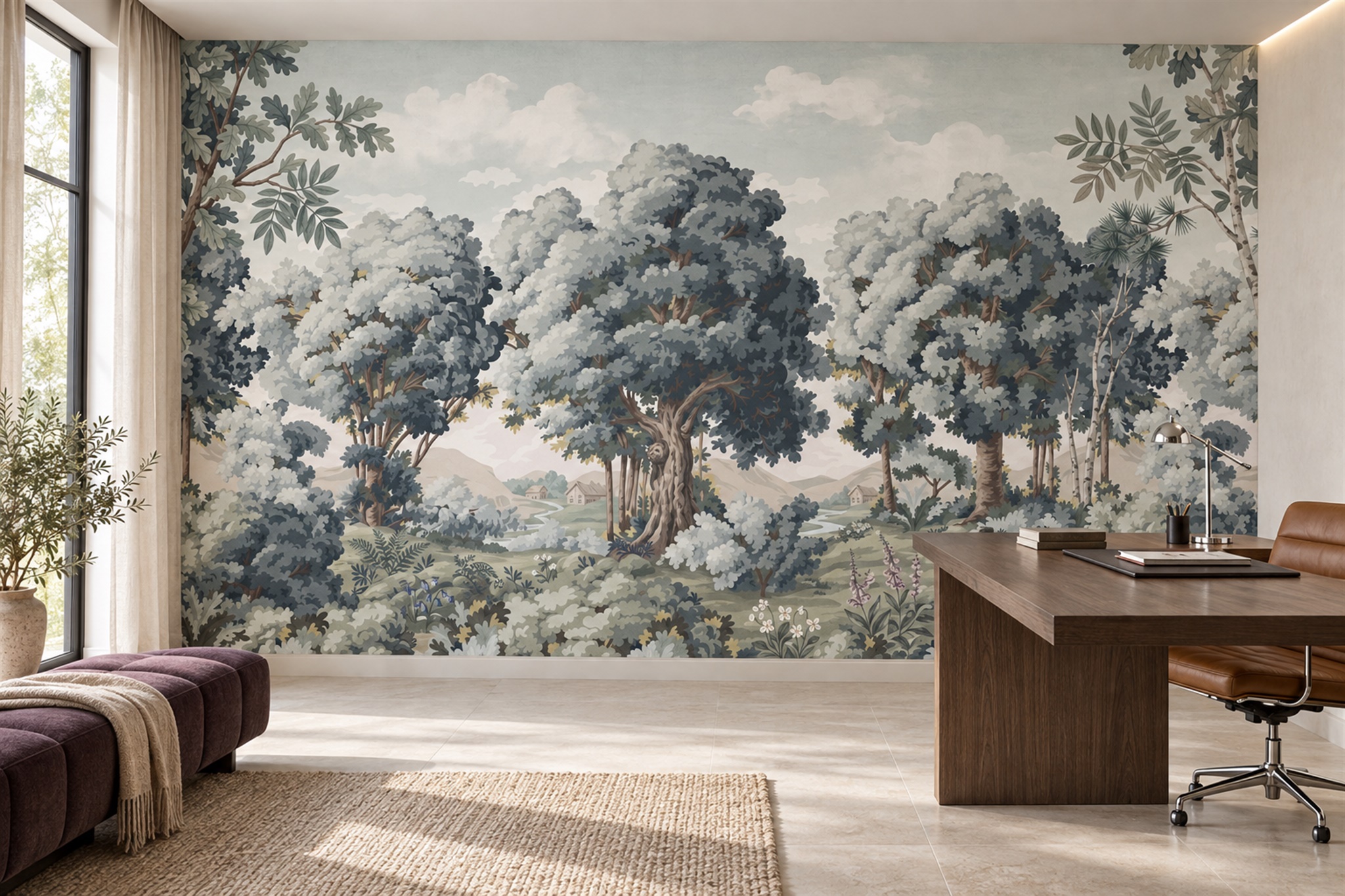
The blue woodland example below gives a plain study a distinct backdrop. The desk sits to one side, leaving much of the scene visible. It illustrates how one wall can carry a room without changing every surface. The photograph does not tell us whether the particular print or adhesive would be suitable for a rental; that still has to be confirmed for the exact product and wall.
Assess the wall beneath the paint
Freshly painted walls, chalky surfaces, textured finishes and old filler can respond differently to adhesives and removal. Ask the supplier about surface preparation and any paint cure period for the exact material. If testing is permitted, apply a sample in an inconspicuous place for the recommended period and remove it exactly as instructed. Look for paint lifting, residue or a changed sheen. Even a small test can cause damage, so permission matters before the test as well as before the full installation. A successful patch lowers uncertainty; it does not prove that every part of a large wall has the same substrate condition.
Be wary of “removable” as an absolute claim. It may describe how the material is designed to be taken down, not guarantee that old paint stays attached. Conversely, traditional paste-applied wallpaper may be appropriate when a landlord approves a longer-term finish, provided everyone understands the future removal work. Choose a material by the actual plan for this property, not by a generic ranking of formats.
Think about the exit before the entrance
At the start of the project, ask what the room must look like when you leave. Will the owner accept the mural in place, or must the wall return to its previous finish? A later agreement to leave the mural for the next tenant is possible, but should not be assumed now. Keep the paint specification if the wall may need repair, and allow time for removal, filling, priming or repainting if required. Who performs that work and who pays for it should be clear before installation.
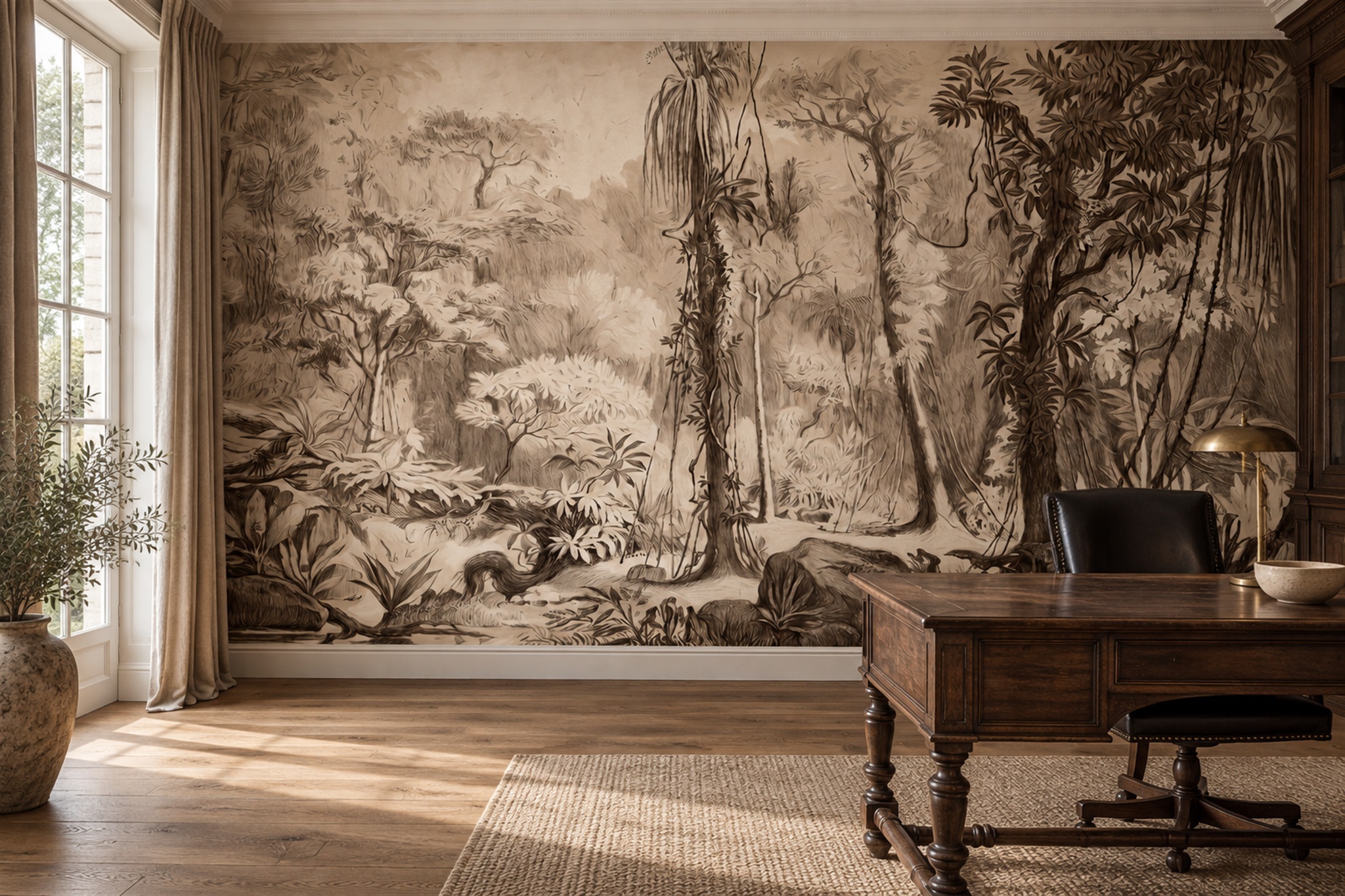
The sepia, jungle-like line drawing below has a very different character from the blue woodland mural: vines, trunks and dense foliage sit behind a dark timber desk. Either scene could work in a rented study if the owner agrees and the wall is suitable. The difficulty of restoration is not determined by whether the print is dark or light; it depends on the adhesive, wall finish, installation and removal. Select the design you want only after those conditions are understood.
Measure once for this exact home
Custom mural dimensions belong to the current wall, not to a future property. Measure width and height at several points, note skirting, ceiling irregularities and openings, and follow the supplier's trim allowance. If you expect to move soon, weigh the price of a wall-specific print and its eventual removal against the time you will enjoy it. Do not assume panels can be peeled off and rehung elsewhere: removability and reusability are different claims. Unless the manufacturer explicitly confirms reuse, budget as though the mural will stay with this wall or be discarded.
Store the order details, material name, panel layout, batch information and installation instructions. Those records help if a panel is damaged or if the same wall needs repair later. If a contractor installs the mural, agree who is responsible for wall preparation and any damage discovered beneath existing paint. Clear responsibilities are particularly useful when tenant and owner are different people.
Weigh the room transformation against the move-out plan
Only order after permission, wall condition, product instructions and the exit plan agree. Keep the approval and dated paint photographs with the order, and allow for any restoration the tenancy actually requires. If those questions remain unresolved, a framed image or freestanding display may give the room a focal point without committing to a wall-sized adhesive print. The alternative has its own fixing and space needs, but it may suit a short tenancy better than an attractive custom mural that cannot simply move to the next property.