What Mural Wallpaper Works in a Retail Shop?
Use scale, colour and visual direction to support a retail environment without competing with products or signage.
Article focus: pricing and measurement
The cost and measurement decision
Start with accurate wall measurements; the final custom mural price depends on area, material and any finishing options.
Example application: Nursery or children’s room · pricing and measurement
The mural that works in a retail shop is the one that helps shoppers see the merchandise and understand the space, even after the display changes. A densely stocked wall often needs a quiet, broad-scale image; a sparse display may have room for more detail. Before choosing a botanical, landscape or geometric design, decide what must stay visually prominent: the products, a department, a route through the shop or a fixed service desk.
Give the mural one retail job
Stand outside the window, then enter as a first-time customer. What is visible from the pavement? Where does the eye go after the door? A back-wall mural can draw attention towards a destination farther inside, whereas an entrance-wall print may compete with the window display. A wall behind a fixed checkout desk can carry a deliberate focal image because the desk is unlikely to move. A wall behind seasonal racks has a less predictable future.
Mark the customer route and the main pause points on a floor plan. Include the actual height of rails, shelving and promotional stands. Decide whether the artwork should identify a department, provide a calm backdrop for goods or make an otherwise blank wall memorable. If it has no clear role, the shop may simply gain another layer of visual noise.
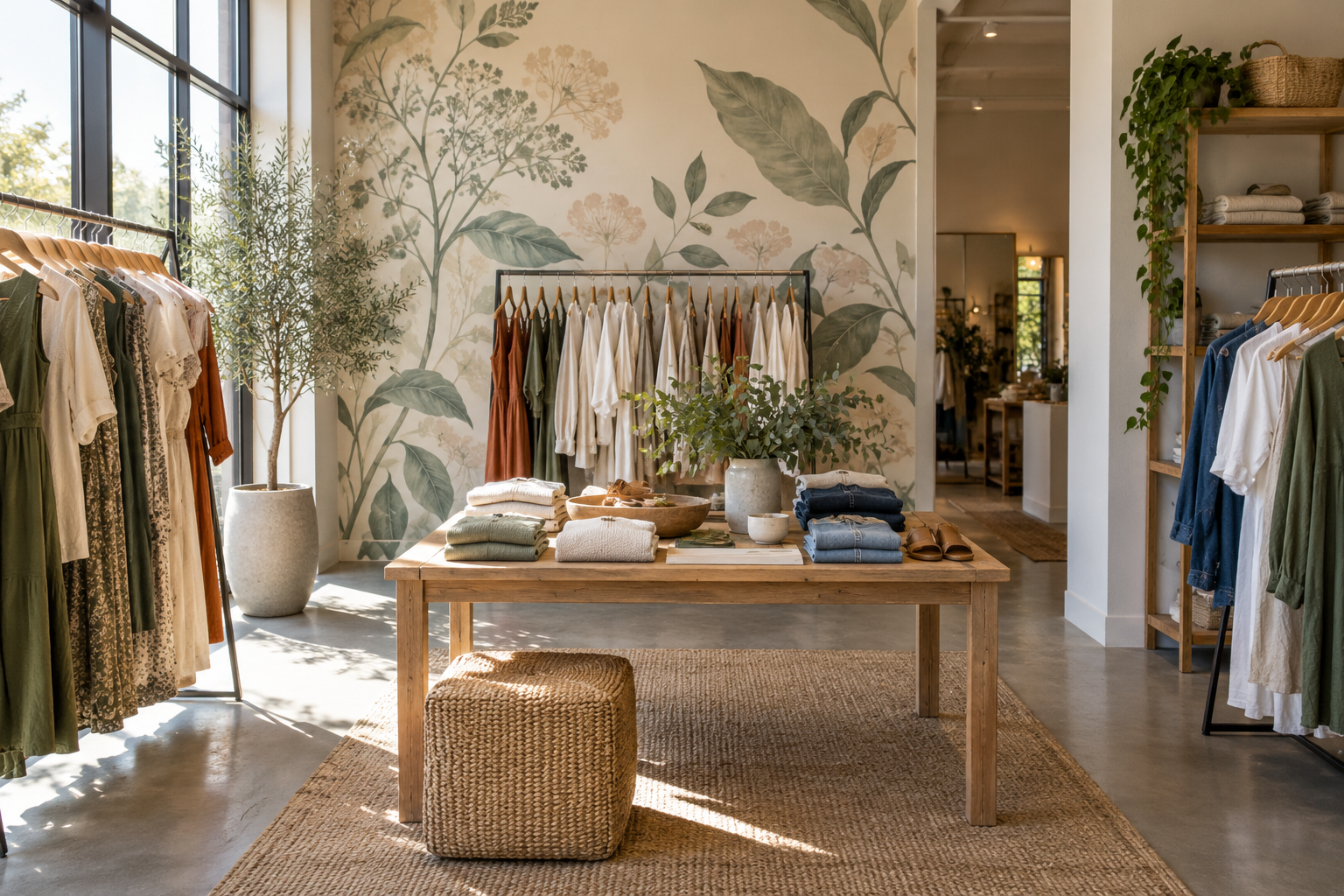
The botanical wall in the accompanying boutique photograph shows the trade-off. Its soft green leaves and pale flowers add character behind a central clothing rail, yet the garments remain the reason to look at the display. The rail also hides some of the print. That is acceptable for a broad botanical composition; it would be more problematic for a mural whose only subject is a single face, bird or arch placed exactly behind the clothes.
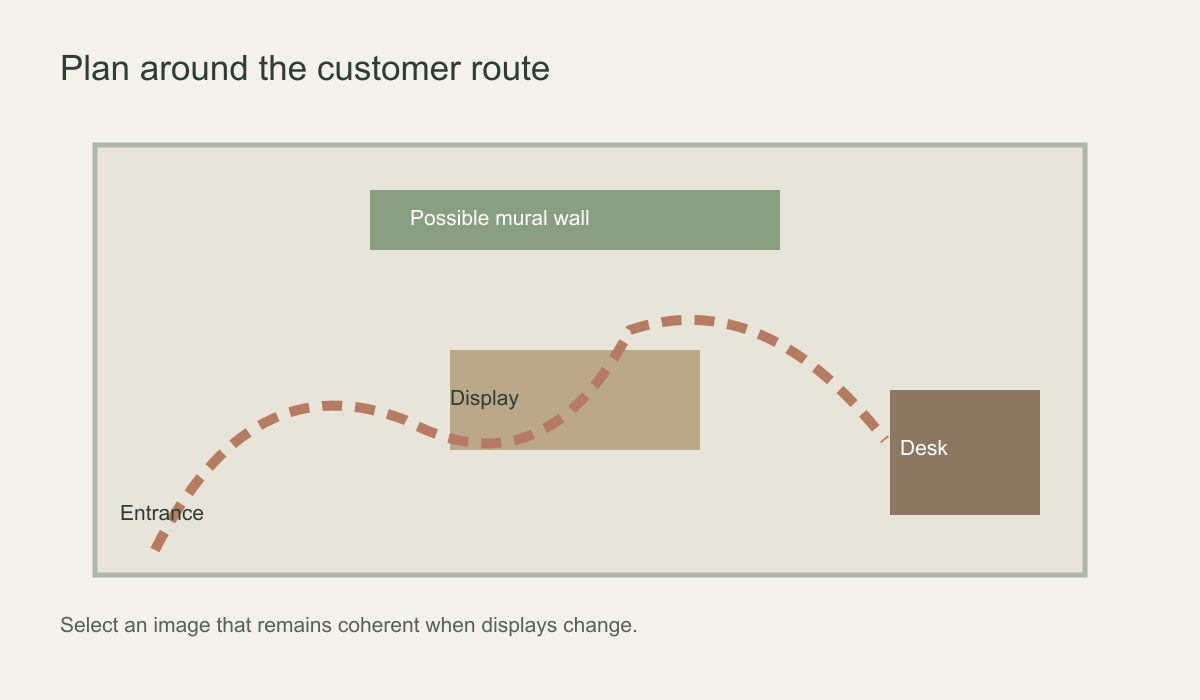 Choose the wall by what customers can see along their normal route.
Test the artwork with real stock
Do not approve a mural against an empty fixture. Put representative goods in front of a large printed sample and step back to the distance at which a customer first notices the display. Include pale and dark products, patterned items, price tickets and packaging. Check whether garment edges, product shapes and essential information still stand out. If the artwork and merchandise have equally busy edges, reduce the print's contrast or move it to a less crowded wall.
Scale matters as much as colour. Small repeated motifs behind small objects can create a field of competing detail. One broad shape or a gentle tonal transition may give those objects a cleaner outline. By contrast, a small number of large pieces can hold their own against a richer scene. The aim is not to make every mural faint; it is to establish a hierarchy suited to the merchandise.
View the test under the shop's actual lighting. A window, track lights and spotlights can make one print look different across the day. Look at the sample beside the items the shop sells most often, not only the launch display photographed for marketing. If a green botanical works with cream linen but swallows the next season's olive coats, the backdrop has not passed the practical test.
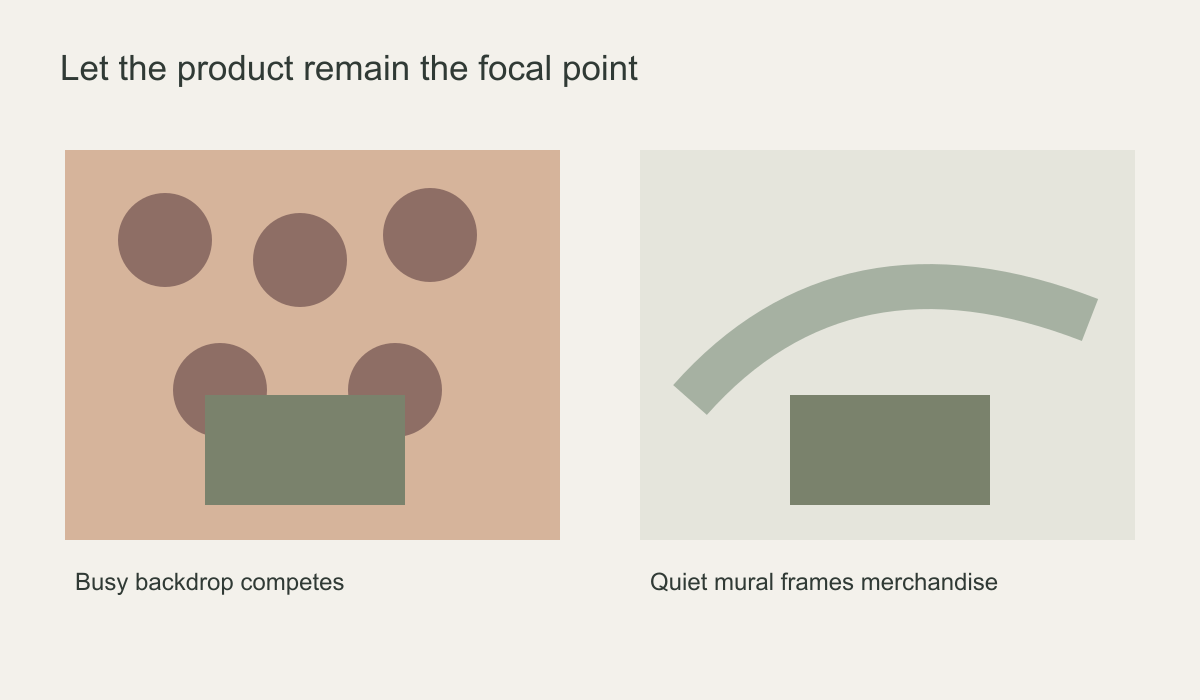 A quieter backdrop can make the merchandise easier to distinguish.
Design for the next layout as well as the opening layout
Retail fixtures move. Draw a second layout over the proposed crop: replace a low table with a taller rail, shift a seasonal stand, and imagine a fuller stock day. If either change hides the mural's only recognisable subject, choose artwork that tolerates partial obstruction or place the focal image behind a fixture that will remain fixed.
A flexible composition need not be a seamless repeat. Large, distributed botanical forms, a soft landscape or an open abstract field may still read when part of the wall is covered. A tightly centred illustration needs a more dependable viewing area. Confirm the final crop with the dimensions and locations of the real shelves, door openings, sockets and signs; an empty-wall preview is not enough.
Think also about fixtures attached to the wall. Moving a shelf later may expose fixing holes through the printed image. Record bracket positions and ask the installer how penetrations and edges should be finished. In a leased shop, check what the lease requires when fixtures or wallcoverings are removed. No material name alone proves that a later removal will leave every painted surface intact.
Keep signs and campaigns readable
A permanent brand sign may be planned over a quiet area of the artwork. Prices, department labels and promotional posters change more often and should remain easy to replace. Small lettering over dense leaves or a sharp contrast boundary is harder to read; test the exact sign at its intended size and height. Leave a clear field where text must be seen, rather than relying on a digital mock-up with oversized lettering.
A seasonal discount should not be baked into a mural intended to last through several campaigns. Separate temporary messages from the permanent image, and agree how any removable sign will be mounted without damaging the specified finish. A photogenic corner can support the shop's identity, but it still needs to function when customers, stocked shelves and staff occupy the frame.
Match the wallcovering to the wall's wear
A wall behind a fixed counter faces a different level of contact from an aisle corner brushed by bags and trolleys. Watch a normal trading period before assigning the mural wall: where do customers queue, where do staff move racks, and where do deliveries pass? If the chosen surface is exposed, request the exact product's documented abrasion and cleaning information. The Wallcoverings Association's types and usage guidance treats traffic as an important selection factor, while its ratings overview describes properties that must be established for the actual covering.
Do not infer a commercial rating, fire classification or cleaning tolerance from the word “vinyl”, “fabric” or “peel-and-stick”. Check the supplier's specification, the landlord's conditions and any applicable local requirements. If the proposed finish has no evidence for a high-contact position, a sheltered feature wall may be the better choice. The decorative design can remain the same even when the practical location changes.
Apply the test to different shops
In a clothing boutique, put both light and dark garments in front of the sample; fabric edges and colours should remain easy to judge. In a ceramics shop, test pale and dark glazes against the mural rather than assuming a neutral print suits every collection. A children's shop can carry a lively illustration, but small product labels still need clear ground. A store selling small accessories may need a quieter background so the individual pieces do not disappear. These are visual tests, not claims about any material's performance.
The least convenient collection is the useful one. Include the patterned stock, brightly labelled packaging or dark merchandise most likely to challenge the design next season. A backdrop that works only with one carefully colour-matched display can restrict future buying and merchandising decisions. If the mural fails this trial, change the artwork, the crop or the display location before ordering.
Schedule installation as a shop operation
Remove movable fixtures and assess the exposed wall before final measurement. Plan where stock will go during preparation and hanging, and keep customers away from the work area. A wall beside the main customer route may require a temporary layout change or closure; do not promise to reopen that zone before the chosen product's instructions allow it. Agree who will remove and refit signs and shelves so the installer can work to the final plan.
Keep the approved crop, panel positions and material sheet with the shop's display records. The Wallcoverings Association's cleaning advice directs users to the specific manufacturer's instructions. Staff should not assume that a cleaner used on shelving is appropriate for the printed wall. Those records also make a future scrape or display change easier to assess without guessing which part of the image was originally covered.
In short, the strongest retail mural supports a clear visual priority, survives plausible fixture changes and is specified for the conditions of its wall. Let the merchandise remain the focal point; the image should make the shop easier to recognise and navigate without becoming an obstacle to selling what is on display.