Is Mural Wallpaper Suitable for Homes with Pets?
Consider wall position, pet access, cleaning routines, material guidance and furniture placement when choosing a mural.
Article focus: installation and removal
Planning the work and the exit
The right installation method depends on the chosen material and wall condition, so prepare the wall before ordering and follow the material-specific instructions.
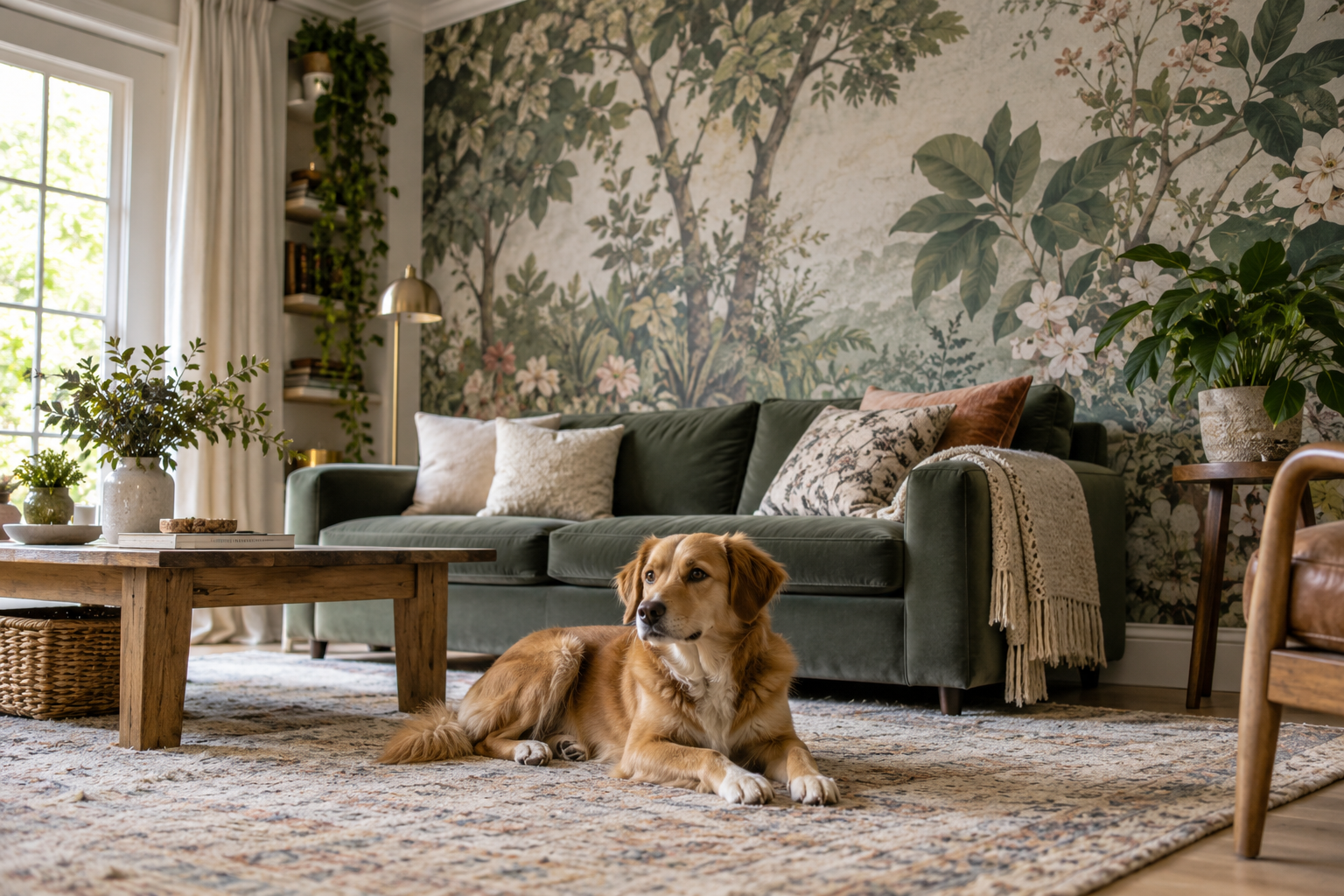
Example application: Bedroom · installation and removal
Yes, mural wallpaper can be suitable for a home with pets, but only if the chosen wall fits the animals' actual habits. A dog resting on a rug in front of a sofa is different from a dog shaking off water beside a hallway wall; a cat that never touches a headboard is different from one that climbs it and paws the wall above. A mural remains a decorative finish, not a chew-proof, scratch-resistant or ingestion-safe surface unless the specific product has evidence for those claims. Decide on the wall before deciding on the picture.
Observe the pet before choosing the wall
Spend a few days noticing where the animal brushes past, sleeps, paws or jumps. Does the dog shake after coming in from the garden beside a particular wall? Does the cat scratch the corner near a sofa? Is a water bowl placed against the intended feature wall? These details tell you more about suitability than the room name on a product page. A mural behind a sofa that is rarely touched may be practical, while the same material on a narrow hallway wall beside a feeding station may receive daily contact.
Consider the animal's height and reach. A large dog's tail can strike a low panel edge; a cat on a console can reach higher than floor-level planning suggests. If the pet is still learning house routines, wait before committing to a wall that it currently uses as a scratching or chewing target. No colour or busy design prevents physical damage. A detailed pattern might draw the eye away from a tiny scuff, but it cannot stop a claw from catching an edge.
Look at the whole route rather than one resting place. The animal may travel from its bed to a water bowl, through a narrow gap beside the sofa and up onto a windowsill several times a day. If that route brushes the proposed mural, the risk is repeated contact rather than one dramatic accident. Watch the route at feeding time and after walks, when wet paws or excited movement can change how the room is used. A rarely touched bedroom wall may be a stronger candidate than a busier corridor even if both are equally attractive in a photograph.
Make the layout do some of the work
Move pet beds, food and water bowls away from the printed surface where possible. Leave room for an animal to turn without brushing the wall. A sofa, headboard or low cabinet can create a buffer, provided the furniture itself is not pressed into the mural and does not trap dampness. Use a door stop if a swinging door would knock the wallpaper. These are ordinary room-design decisions, not special treatments that change the material's properties.
Check whether a furniture buffer actually blocks access or merely becomes a step. A sofa can separate a dog from the wall at floor level while giving a cat a raised platform beside the upper panels. A bedhead may cover the lowest print but invite an animal to jump behind it. Stand back and imagine each animal's route at its own height. If a scratch point or feeding station cannot be moved away, consider a different feature wall instead of relying on the mural to withstand that activity.
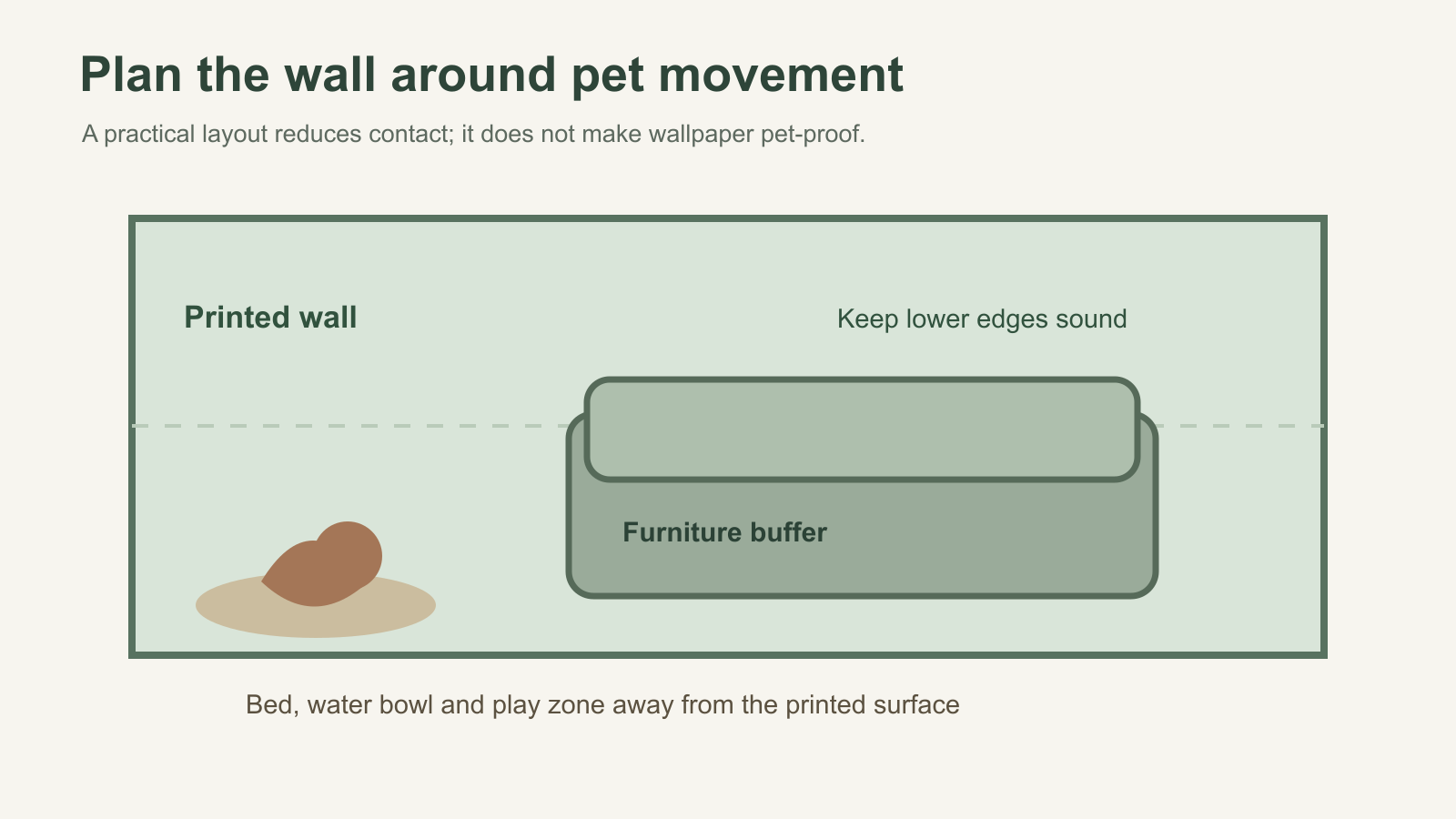
The diagram below marks the printed wall, a furniture buffer and a pet's floor zone. It simplifies a real room, but the central idea is useful: keep the highest-contact activities away from the lower edges and joins. If the only possible mural wall is a high-traffic pet route, a painted wall may be easier to live with until the route can be changed.
Think about the lowest panel edges
Panel edges and corners deserve attention in homes with animals. A loose edge can become something to paw or chew. A correctly prepared wall and an installation method suited to the chosen material matter more than a decorative claim on a label. Inspect the completed wall before letting the animal back into the room. If an edge later starts to lift, keep the pet away from it and ask the supplier or installer for the appropriate repair method. Do not pull the panel further free or apply an unapproved household glue.
During installation, keep pets out of the work area. Uncut panels, backing, adhesive containers, blades and discarded packaging should not become toys. Follow the supplier's installation and drying instructions before normal use of the room. If you suspect your pet has ingested adhesive or another potentially harmful substance, contact a veterinarian or a recognised animal poison service promptly; the ASPCA Animal Poison Control gives that advice for possible poison exposure. This article cannot assess the safety of a particular material or incident.
Choose the picture for the household, not as a durability substitute
A pale mural can show dirty paw marks quickly, while a dark mural may show light-coloured pet hair or scratches. A busier pattern may make an occasional small mark less obvious at room distance, but it can also make a damaged seam harder to notice early. There is no universally “best” colour for pets. Decide what you enjoy looking at, where natural light falls and how the room will actually be used. Then ask whether the selected print finish has care information suitable for that use.
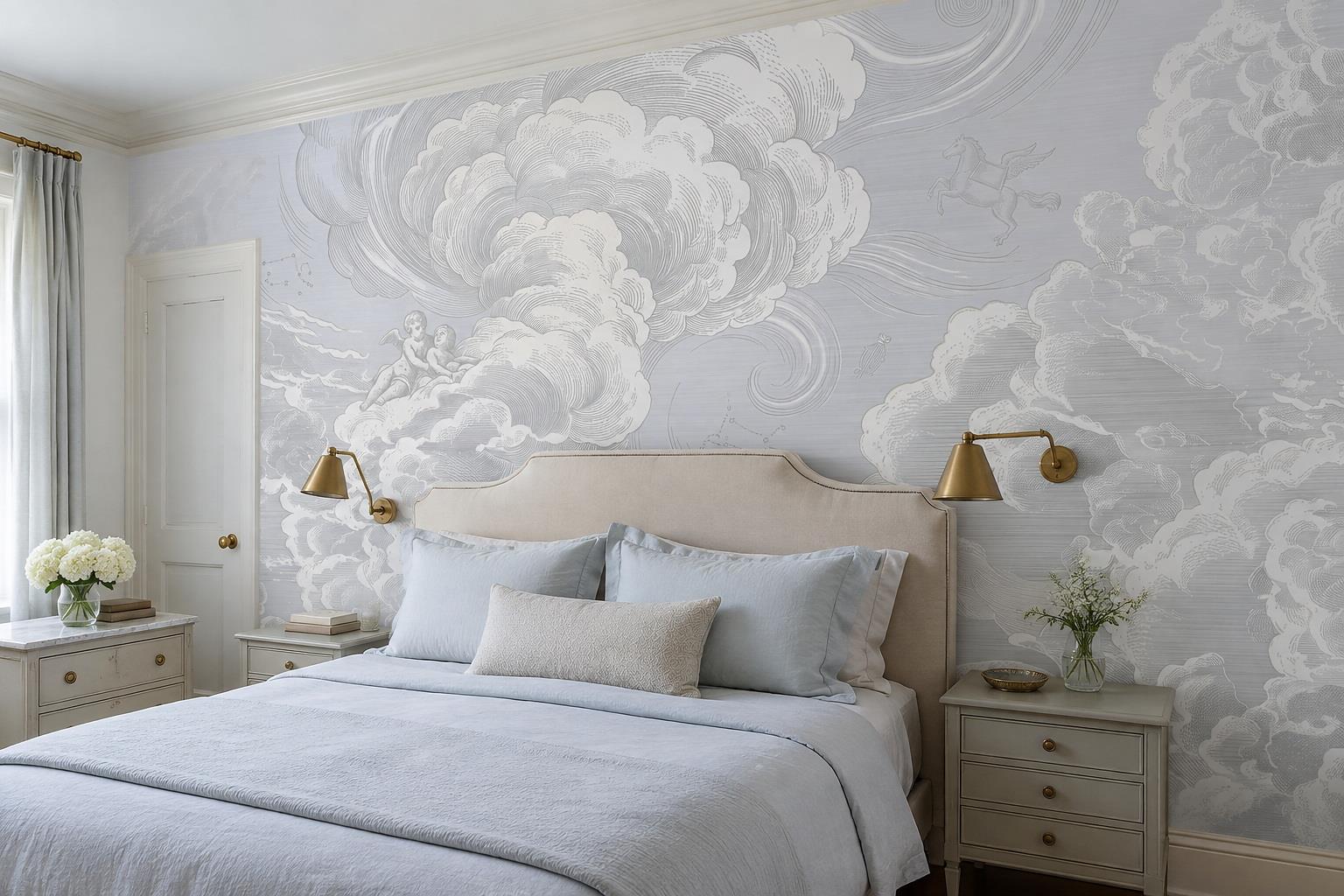
The bedroom image below shows a cloud mural partly shielded by a large upholstered headboard. It is an example of furniture creating separation between everyday activity and the printed wall, not evidence that this mural is pet-resistant. In a pet household, check whether the animal jumps behind or onto that furniture before treating it as a reliable buffer.
Cleaning and certification questions to ask before buying
Ask for the care instructions for the exact material you intend to order. Pet homes may have dust, fur, splashes or smudges, but that does not make every finish washable. Do not plan to use a wet sponge, disinfectant spray or abrasive pad unless the supplier explicitly approves it. If hygiene requirements are central to the room, get written confirmation of the permitted cleaning method before buying rather than relying on a generic description of “vinyl” or “peel and stick”.
It helps to separate routine fur and dust from a water-bowl splash or repeated nose marks. The first may be addressed by a permitted dry-care method; the others require the selected finish's own instructions. If you know you will need to clean the same low section frequently, ask that question before purchasing. A decorative print that you must protect from regular wet cleaning may be a poor fit for the wall directly behind a feeding area, whatever the design or colour.
Likewise, do not infer that a decorative mural has a pet-specific safety certification, low-emission rating or tested resistance to chewing from a lifestyle photograph. Request the actual documentation for the selected product if those properties are essential to your decision. If a pet regularly chews wall finishes, preventing access and consulting a veterinary professional about the behaviour are more important than changing the mural design. A different picture does not make ingested material safe.
A practical yes-or-no test
Before ordering, ask whether the wall is a frequent pet route, whether its lower portion will be rubbed or scratched, whether there is a secure place for feeding and sleeping away from it, and whether the material's care instructions meet your real cleaning needs. A mostly calm, low-contact wall with a sound installation is a sensible candidate. A wall beside a water bowl, scratching point or enthusiastic play zone may be better left as an easier-to-maintain finish.
For example, a living-room mural behind a sofa may work for a dog that stays on the floor if the sofa does not rub the wall when people sit down. The same position is exposed to a cat that regularly perches on the sofa back and paws the print; moving the artwork to a less accessible wall is more useful than choosing a darker pattern. A quiet study can be a stronger candidate even in a busy multi-pet household if the animals rarely enter it. Make a quick floor-level and furniture-height survey before choosing the design.