How to Choose a Mural Wallpaper That Matches Your Furniture
Coordinate mural colour, artwork scale and visual rhythm with existing furniture and textiles.
Article focus: pricing and measurement
Budgeting this wall with confidence
Start with accurate wall measurements; the final custom mural price depends on area, material and any finishing options.
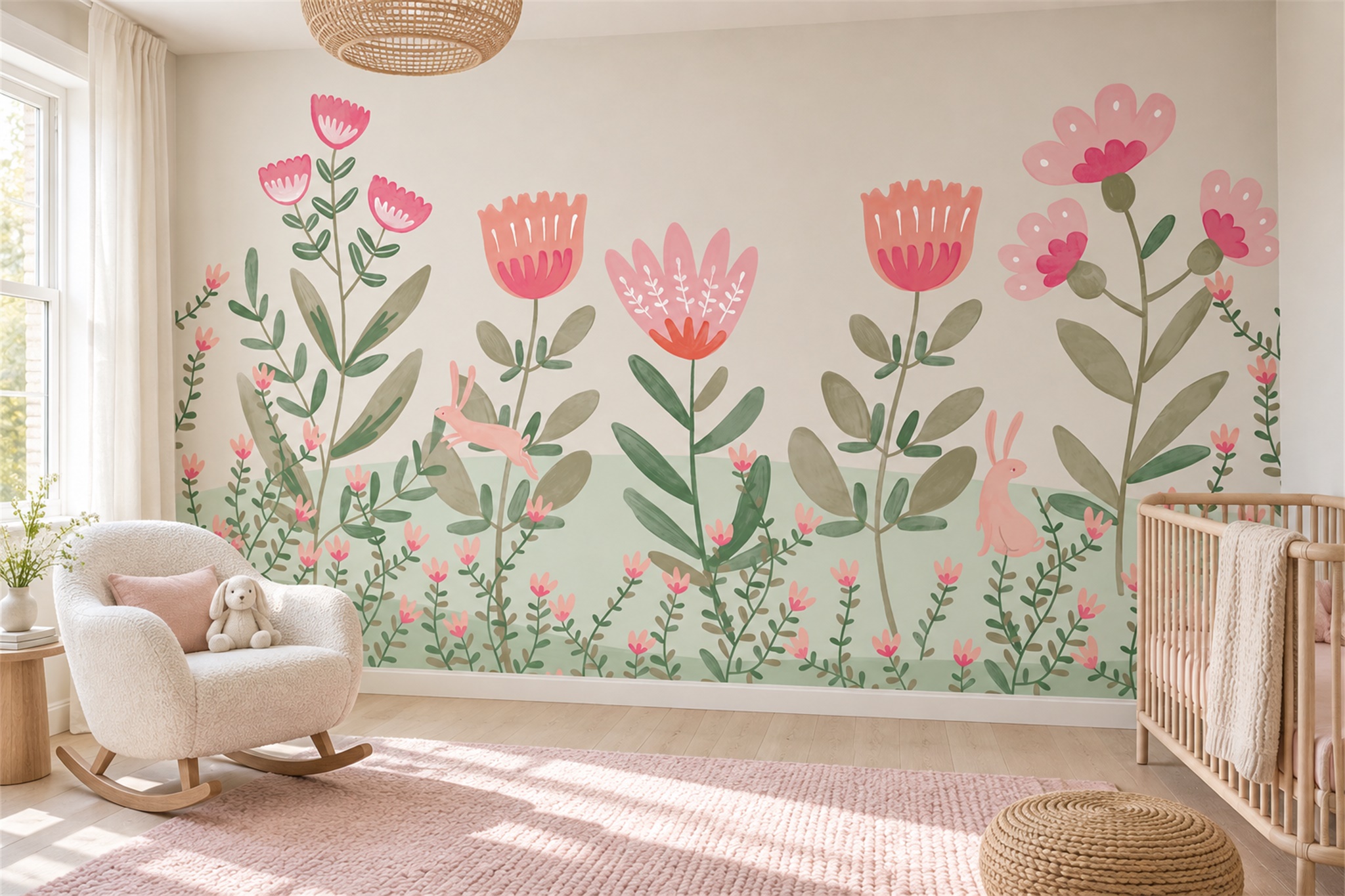
Example application: Bedroom · pricing and measurement
The quickest way to choose the wrong mural is to judge it on an empty wall and imagine the furniture later. A sofa may cover the lower half of a landscape; a tall cabinet can remove the focal tree altogether. Begin with the pieces that will actually stand against the wall, then decide whether the mural should lead the room or give those pieces a quieter backdrop. Matching is a question of visible composition, colour relationship and pattern hierarchy—not finding an identical shade in every cushion.
Draw the furniture on the mural preview
Mark two furniture outlines if the layout may change: the current position and a plausible future one. A sofa can move along the same wall, but a mural printed with its only focal flower immediately above today's armrest may not survive that shift visually. Put irreplaceable artwork detail in a zone likely to remain visible under both arrangements. For a built-in cabinet, treat its outline as permanent and ask the supplier to position the crop around it before printing.
In a bedroom, a headboard hides the lower middle of the wall. A living-room sofa covers a broad horizontal band, whereas a bookcase may block a narrow strip from floor to ceiling. Mark the height and width of those silhouettes on a scaled wall elevation before judging a crop. A bird, face or single flower placed behind a headboard contributes nothing to the view from the doorway, however closely its colour matches the bedlinen.
Measure the wall independently of furniture if the print runs edge to edge: a sofa determines what you see, not the dimensions to print. A mural confined above panelling or inside a frame is different; measure that intended area explicitly. Before approving a layout, stand at the doorway and at the seat you use most. A composition that looks balanced straight on may lose its subject from the angle at which the room is normally seen.
Compare the wall with the furniture's visible face
A fabric swatch shows a hue, but the sofa shows how much of that hue the room actually contains. Photograph the furniture from the doorway and mark its full visible width and height on the mural crop. A long rust sofa can form a continuous saturated band beneath the print; a single rust chair is a small accent. Those two arrangements should not be judged with the same tiny swatch beside a mural thumbnail. Compare the furniture and wall as areas, not isolated colour names.
Next inspect the surface that faces the mural. A heavily grained timber cabinet introduces strong lines; a cream boucle sofa has visual texture but little sharp pattern; a smooth dark leather chair reads as a compact block. The mural can either repeat that visual energy or counter it with open space. If the sofa is already the strongest object in the room, a quieter crop may let it lead. If the furniture is visually restrained, a more detailed wall can take that role without forcing every accessory to match.
Use a physical print sample to compare the actual wallcovering with the fixed upholstery or wood, especially where their undertones nearly match. Hold them together under the room's ordinary daylight and evening lamps. Then return to the wall-sized crop: a sample cannot show whether a coloured flower will emerge directly behind the brightest part of the sofa. The broader task of coordinating the mural with floors, adjoining paint and neighbouring rooms belongs to the existing-decor guide; this comparison asks how the furniture and mural share one sightline.

Match the motif to the furniture's outline
Look for the line made by the furniture top. A low sofa leaves a large continuous field above it; a tall headboard cuts a central notch into the visible mural; a bookcase divides the artwork vertically. Place a recognisable motif where that outline will frame rather than amputate it. A giant leaf that begins behind a low sofa may rise naturally above it, while the same leaf behind a tall cabinet may survive only as an unexplained tip.
Compare one known dimension on each side of the relationship: the sofa-back height and the approximate height of a flower, the chair width and the printed circle, or the cabinet edge and a vertical tree trunk. A staged photograph may use smaller furniture than yours. On your wall-sized crop, a circle that is only slightly wider than a chair can read as its backdrop; one much wider may become the wall's main subject. Decide which effect you want rather than treating “matching scale” as an abstract rule.
If the upholstery itself carries a strong print, first check whether the two patterns occupy the same sightline and similar area. A patterned cushion is not equivalent to a fully patterned sofa. The separate patterned-furniture guide examines motif hierarchy and scale mixing in detail. Here, the practical check is whether the mural still has a clear subject once the actual sofa, bed or cabinet is drawn over it.
Account for what changes over time
People often replace cushions and chairs more easily than a wall-sized custom mural. Choose the mural around durable elements such as flooring, major furniture and the room’s light. Use smaller accessories to bridge colours that may change later. If you are designing around a trend-driven sofa that may leave within a year, a more adaptable mural palette could be wiser than an exact match.
A child’s room changes particularly quickly. A mural chosen only to match nursery furniture may feel unrelated to a later desk and bed. A scene with a clear visual idea and a flexible colour range can remain useful as furniture changes. The same reasoning applies to a rental where you may move your furniture into a different layout.
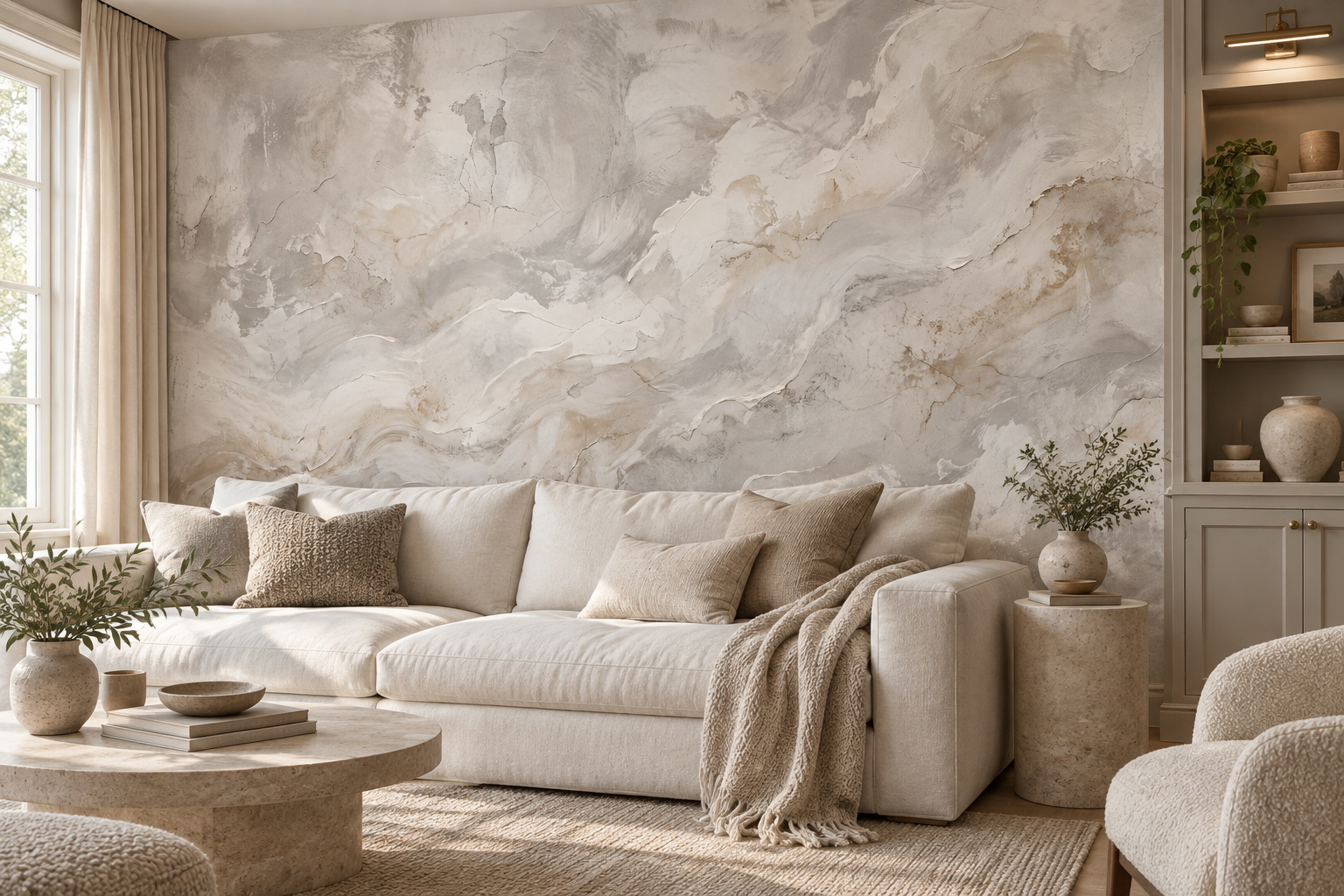
Test two different kinds of match
Consider a cream sofa and pale timber floor. One option is the colourful floral scene above: the furniture remains restrained while the wall supplies most of the colour. The other is the pale plaster-effect print: the wall stays within the furniture’s neutral range, so interest comes from tonal variation and the room’s fabrics. Neither is inherently a better match. The choice depends on whether the wall should be the focal point and how much pattern is already present elsewhere.
A strong-coloured sofa changes that decision. First try a mural with some breathing room around the sofa silhouette, then compare a bolder option that shares only one of the sofa’s secondary tones. Do not let a product photograph dictate your answer: its furniture may be lower, lighter or farther from the wall than yours. A real room photograph with the proposed crop overlaid is more informative than a styled thumbnail.
Make a final room board
Compare the final two candidates against the same furniture silhouette, not two differently styled product photographs. For example, on a 300 cm-wide wall with a 210 cm sofa, draw that sofa at its actual back height on both wall-sized crops. If the floral scene's only large blossom falls behind the backrest, try moving the crop before rejecting the artwork. If moving it cuts off the branches at the ceiling, that design is a poor fit for this furniture arrangement; a more evenly distributed scene may solve the problem without changing the sofa.
Then remove movable cushions and accessories from the comparison. The permanent floor, upholstery and cabinetry should still relate to the mural through scale, tone or material, even if no accent cushion repeats its colour. Save the chosen crop together with the furniture outline and one photograph taken from the normal seat. Those records make the decision specific to the room and give you a useful reference if the layout changes later.