Can Mural Wallpaper Be Installed on a Textured Wall?
Understand how orange peel, knockdown, plaster, brick and other textures affect adhesion and the final appearance.
Article focus: pricing and measurement
The cost and measurement decision
Start with accurate wall measurements; the final custom mural price depends on area, material and any finishing options.
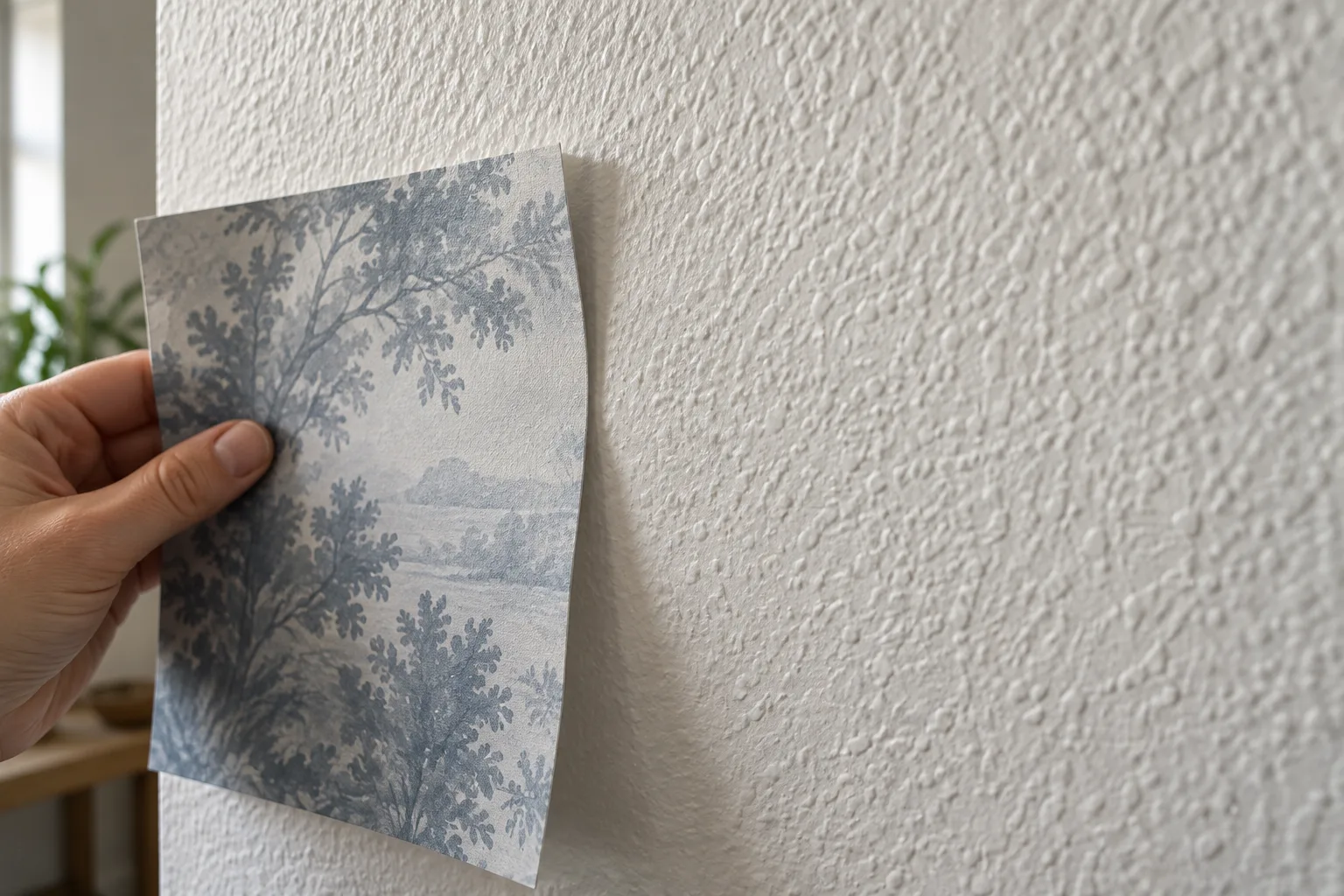
Example application: Bathroom or powder room · pricing and measurement
Sometimes, but “textured wall” is too broad to approve a mural. Fine, stable orange peel may be worth testing with the exact chosen finish; deep knockdown, brick joints, embossed paper or dusty plaster present different contact and show-through problems. Inspect peaks and valleys with a straightedge and side light, then ask whether the product requires a smooth prepared plane. An adhesive panel that grips a few high spots has not passed a full-wall suitability test.
What texture does to an adhesive panel
On a flat surface, adhesive or paste can contact the wall across most of the panel. On a textured surface, the covering initially touches the high points and spans the low ones. With peel-and-stick, that can leave too little contact to hold edges or seams securely. With pasted material, unevenness can still show through or make the image difficult to smooth. A mural printed as one continuous scene is particularly sensitive to lifting seams because a small gap interrupts the picture.
The issue is not just whether a panel stays up on day one. Raking light can reveal raised patches beneath a smooth finish. Fine architectural lines or a face in the mural may look distorted over bumps, while a lifted seam can interrupt a continuous landscape. A textured surface can also complicate neat cuts at skirting and door trim. Examine a sample under the room’s actual light as well as checking adhesion.
Temperature and humidity can worsen an already marginal bond. A textured wall beside a bathroom or kitchen may need more than a stronger adhesive; it may need the underlying moisture problem resolved. Never use a mural to conceal damp, crumbling or moving plaster. The wall must be stable before any decorative layer can be expected to stay in place.
Orange peel, knockdown, plaster and brick are not equivalent
Fine orange peel has shallow, fairly even bumps. Medium or heavy orange peel increases the difference between contact points. Knockdown texture has broader flattened peaks divided by valleys; the edge of each patch may telegraph through a smooth mural. Those names do not tell you the actual relief. Hold a straightedge against the wall and look across it in side light. If you can readily see gaps and sharp ridges, a direct mural application deserves scepticism even before an adhesion test.
Decorative plaster may be firm and smooth in one room, chalky and uneven in another. Rub the surface gently; if powder transfers to your hand, the finish needs attention before wallpaper. Exposed brick and masonry have joints and porous areas that make a direct mural application particularly difficult. A temporary adhesive film stretched over brick can bridge gaps and lift; a pasted covering can reveal mortar lines. Ask a qualified decorator about preparing a smooth intermediary surface rather than assuming a thicker print will make the joints disappear.
Existing embossed wallpaper is another texture source. Even if it looks well attached, its seams or raised pattern can remain visible beneath the new mural, and the older layer may release under the additional adhesive load. Removing it and preparing the underlying wall is generally a more predictable route than stacking a new custom print on top of an unknown covering.
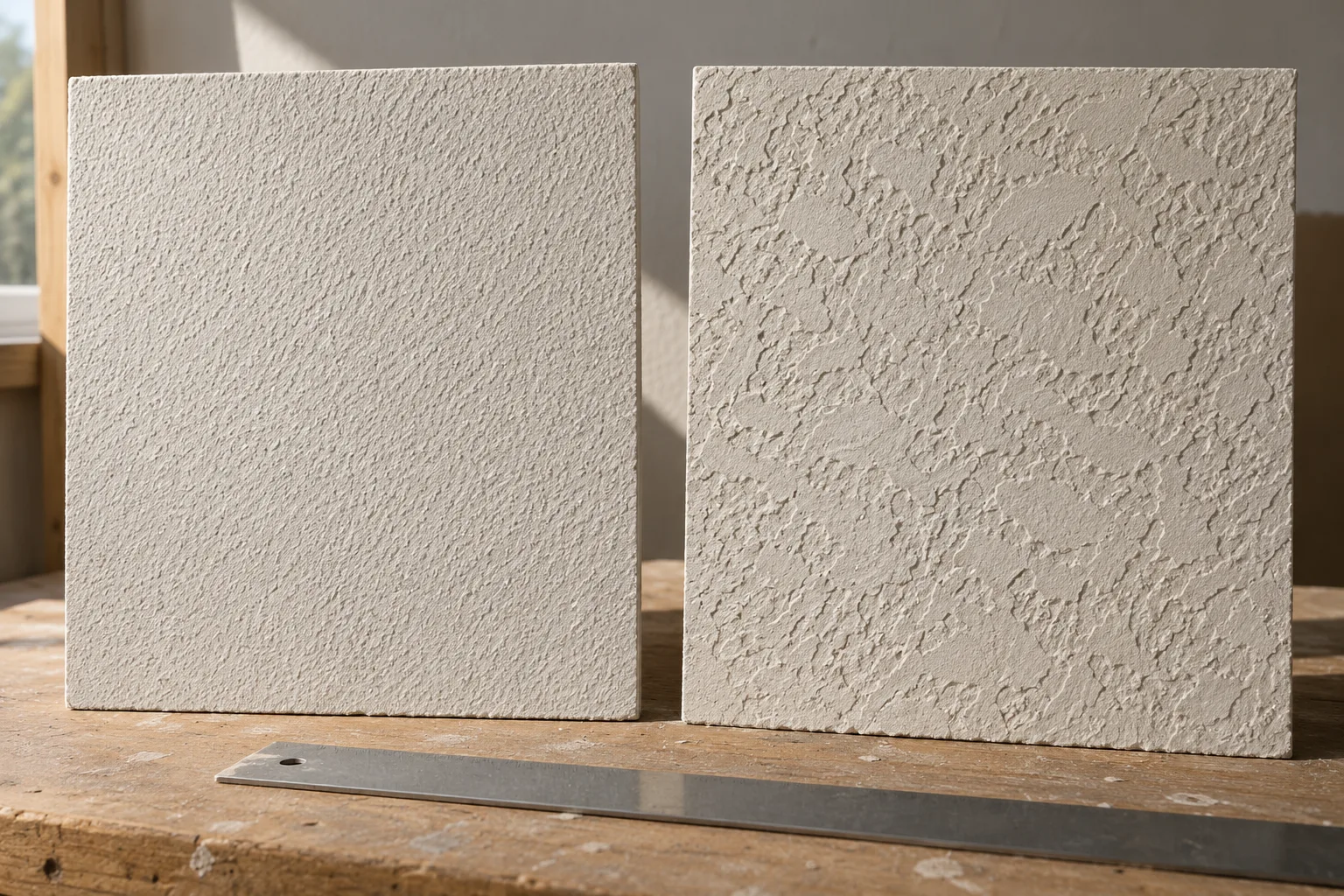
Make a wall-type record before choosing a finish
Photograph the proposed wall both straight on and with a lamp shining across it. Add a close view beside a straightedge, and note whether the texture is painted plaster, an applied coating, brick or an older wallcovering. Record where the relief changes: a repaired patch may be smoother than the original wall, while a corner can have thicker paint. This gives a decorator and the mural supplier something more useful than the single description “slightly textured”.
For fine orange peel, ask whether the exact finish may be tested on that surface; the answer cannot be inferred from the texture name alone. For knockdown, record the height and spacing of the flattened ridges, because a broad shallow patch may behave differently from sharp isolated peaks. For dusty plaster, the immediate question is whether the coating itself is sound. For brick, mortar joints create a separate plane problem even if the brick faces feel smooth. Embossed wallpaper adds the risk that the existing layer, rather than the new mural, will release.
The Wallcoverings Association's surface-preparation guidance treats soundness and preparation as prerequisites. Send your photographs and wall-type notes to the chosen product's supplier and ask which preparation method they approve for that exact covering. A sample trial is useful only after an obviously unsound or damp substrate has been repaired; it cannot turn crumbling plaster into a suitable base.
When to smooth the wall instead
If the texture has visible depth, if you can feel sharp ridges under a straightedge, or if the existing coating sheds dust, smoothing is the more reliable starting point. A professional decorator can tell you whether skim coating, repair or a compatible lining surface is needed. Painting over texture alone does not remove its profile. A mural cannot substitute for structural repairs or treat dampness.
For a rental, wall preparation may require permission and may not be realistic. That could make a mural unsuitable for that particular textured wall even if a different wall in the same flat would work. Do not damage a landlord’s finish by sanding or priming without approval. A framed artwork or freestanding backdrop may be the more sensible way to achieve a large-scale image.
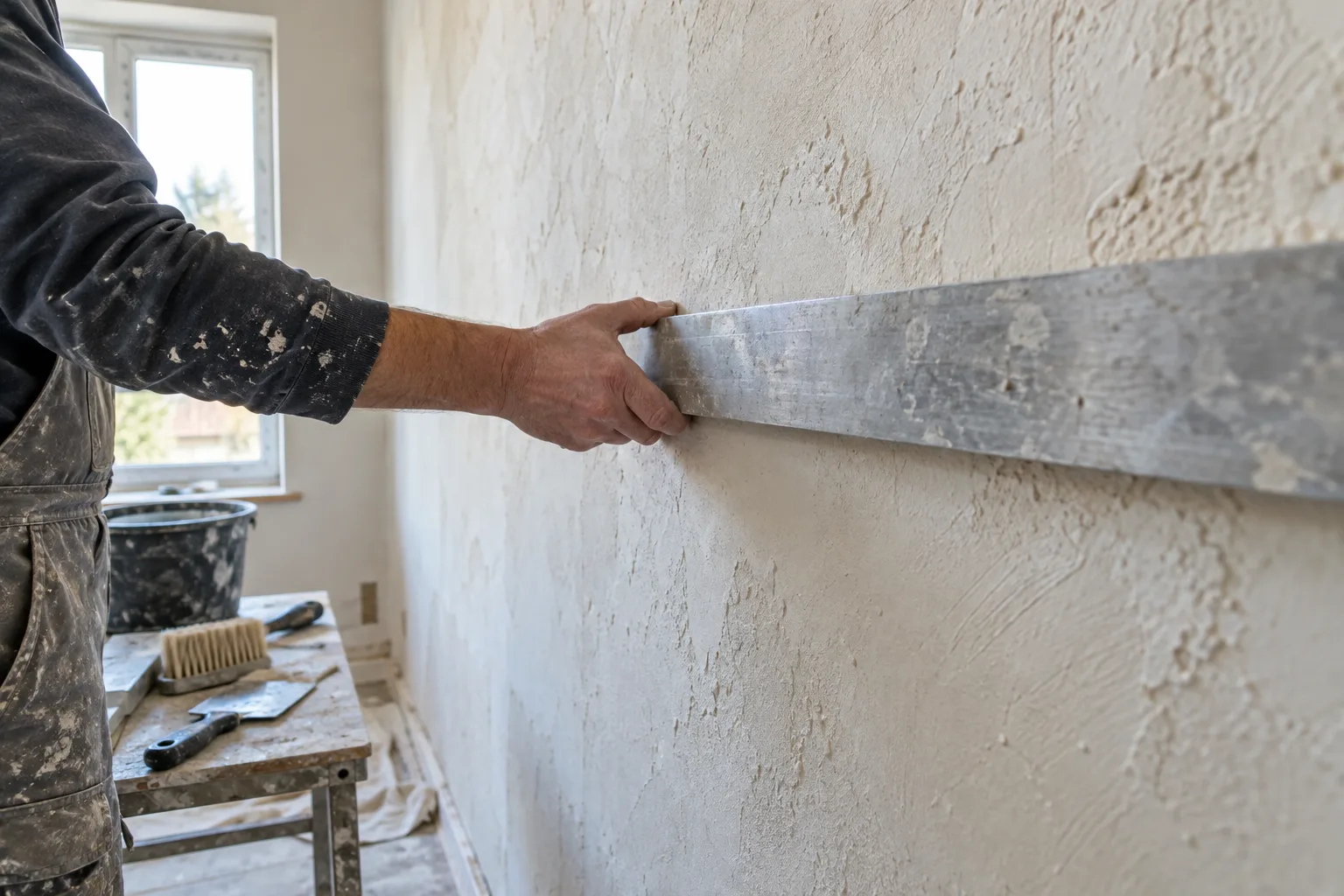
Choose preparation for the actual substrate
Chalky decorative plaster needs its condition addressed first; primer is not automatically a cure for a loose finish. With brick or blockwork, ask a qualified decorator about a suitable prepared plane and any building-specific moisture concerns. If the texture comes from embossed wallpaper, establish whether the old covering should be removed before levelling. Each route changes the finished wall dimensions slightly, so make the final made-to-measure order after preparation rather than from measurements taken over a surface that will be altered.
Material labels do not resolve these substrate differences. Non-Woven, Vinyl and Heavy still need a sound prepared wall, while Peel and Stick depends on adequate adhesive contact. Tempaper excludes textured surfaces for its own self-adhesive product; that restriction belongs to its product, not every mural on the market. Obtain the installation instructions for the exact finish you intend to use and keep the supplier's answer with your wall notes.
If the wall cannot be made suitable—common in a rental where sanding, skimming or a new lining would need permission—move the artwork to a smoother wall or choose a different display method. Pattern choice can change how much shallow relief is noticed from across a room, but it cannot bond a mural to loose plaster or bridge open mortar joints. The practical outcome of this survey is a named preparation route, a justified approved trial, or a decision not to hang wallpaper on that wall.