Why Are Mural Wallpaper Panels Numbered?
Understand panel order, left-to-right installation, matching edges and how numbering reduces mistakes during a large-wall project.
Article focus: pricing and measurement
What to settle before pricing
Start with accurate wall measurements; the final custom mural price depends on area, material and any finishing options.
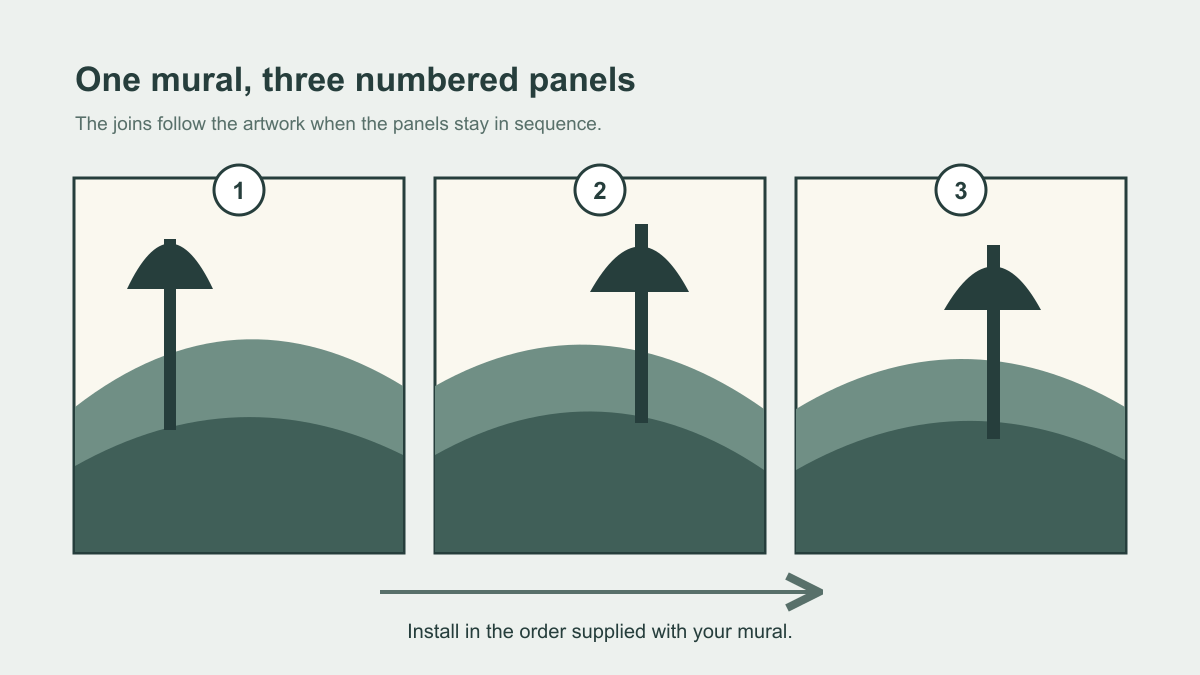
Example application: Any room with a suitable, prepared wall · pricing and measurement
Why are mural wallpaper panels numbered when the finished wall is meant to look like one picture? A wide image is printed in manageable vertical sections, and each label tells you where that section belongs. The simplified three-panel illustration above shows an image continuing across successive pieces. Without a reliable order, a similar-looking sky or area of foliage could be placed in the wrong position, leaving the branch or horizon broken several panels later.
How a whole image becomes individual panels
Imagine cutting a panoramic print into vertical sections: the left portion becomes panel one, the next portion panel two, and the rightmost piece carries the last number. A supplier may choose a different panel count or width according to the ordered dimensions and material. The feature illustration uses three panels only to explain the sequence; it is not a template for what every delivery should contain. Check the plan supplied for your own wall.
Numbering is especially useful where adjacent pieces share a pale sky, repeating leaves or a nearly uniform wash of colour. Two edges may look plausible at a glance. The label and the full order image together reveal whether the distant ridge or branch continues in the intended direction. Also check top and bottom: a strip turned upside down can still share a background colour with its neighbour while making the complete image impossible to assemble.
Lay out the entire order before hanging
On a clean, dry surface, arrange the protected panels by number and compare their combined image with the crop chosen for the order. Check that the sequence is complete, every strip faces the right way and the printed edges relate to one another. Look for damage before any cutting, paste or liner removal. If a panel is missing or the picture differs from the order, stop and ask the supplier while the evidence is still easy to photograph.
Where the numbers appear can vary: a trim edge, liner or packaging may carry them. Record each panel's identity before discarding a wrapper or trimming a label. A photograph of the dry layout is useful if you need to roll the panels up again. Keep the order sheet until the wall is finished; it connects the loose pieces to the design you actually approved.
Why the first number matters most
Panel one fixes the position of all the others. Start too far left and the right edge of the artwork may disappear; start slightly out of plumb and each later seam can drift even if its motifs initially match. Use a spirit or laser level to mark a vertical guide rather than trusting a corner that only looks straight. Check the ordered width and the supplier's trimming allowance before deciding where that line goes.
The number one does not mean “put this panel in the middle”. It identifies its place in the supplied sequence; follow the starting side shown by the supplier. The actual starting location comes from the measured wall and chosen crop. If a bird must clear a window or a mountain must sit above a sofa, compare the crop with a separate sketch of those obstructions before installation. Numbering carries a plan into the room; it cannot correct a plan that was never checked against the wall.
What is supposed to happen at a seam?
At a join, use a recognisable detail rather than a plain area of colour. A palm frond, shoreline or narrow branch gives a clearer test of whether the next panel is in place. Compare the edges before smoothing the entire strip, and do not stretch one piece to force a match. Use the supplied seam instructions: the site's general guide says to butt panels unless the material-specific directions call for an overlap. That is a procedural detail, not something the printed numbers alone can tell you.
The flat tropical artwork below offers a crop exercise. Palms frame its sides, several birds cross the open centre, and a river leads towards a distant mountain. If this were divided into panels, each bird would need to occupy the planned section, while the riverbanks and fronds would continue at their joins. The picture is an undivided design file, not a photograph of labelled printed strips. Swapping similar-looking sections would disturb the scene even if their sky colours matched.

Why can't a repeated pattern be hung in any order?
A conventional repeating wallpaper and a made-to-measure mural do not necessarily behave alike. In a panoramic mural, each panel is a different slice of one approved scene. Even a design with repeated-looking foliage can be prepared as a particular crop for a particular wall. A true repeat may have its own match and repeat instructions, but that does not make supplied panel numbers optional. Read the order sheet instead of deciding from the pattern's appearance.
The difference matters around openings. A made-to-measure crop may have been approved so an important bird or flower stays clear of a window. If the panels are swapped or the sequence begins at a different edge, that subject can end up behind the frame. Panel numbering helps preserve decisions made before printing, while careful measurement preserves their position in the room.
The finished wall should not look numbered
The room image below shows a different bird-and-branch design across a living-room wall. It is not the panelised version of the tropical artwork above. Here the birds, blossoms and fruit-bearing branches should read as one continuous composition around the furniture; no number is meant to become part of the visible decoration. The photograph illustrates the intended finished impression, not a way to identify individual panel joins by sight.
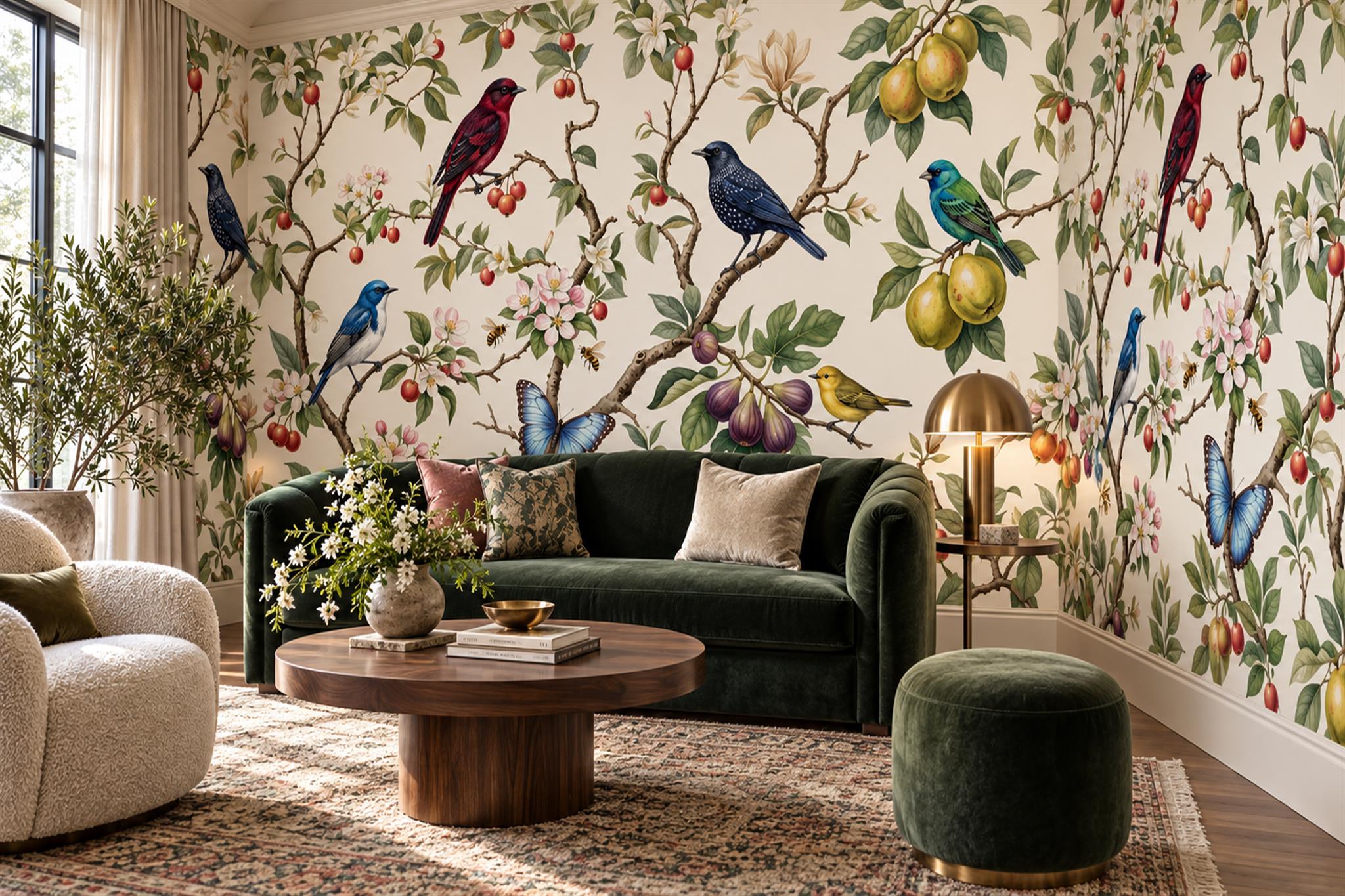
Panel count is not a quality score. A wider wall may require more sections, and different materials may have different workable widths. The useful questions are whether all supplied panels are present, whether their sequence covers the approved crop and whether the seam method is clear. If the count differs from the order paperwork, ask before hanging anything rather than improvising a new layout.
What if two numbers seem to match equally well?
Pause and return to the complete dry layout. Trace a detail across several pieces, not only one pair: a branch, shoreline, roofline or colour gradient may reveal where a seemingly plausible swap goes wrong. Compare the sequence with the order image and labels. Do not apply paste, remove a liner or cut away identifiers while you are unsure. If a label has been lost, photograph the pieces and ask the supplier to confirm their order.
For example, two strips of pale sky may appear interchangeable when viewed alone, but a riverbank crossing panels two, three and four reveals their true order. If the bank breaks at panel three, hanging panel four will not repair the misplaced piece. The continuity of a detail across several panels is a stronger test than the colour at a single join.