Can Mural Wallpaper Work with Changing Seasonal Decor?
Choose a balanced base palette and flexible imagery so accessories can change without competing with the permanent wall.
Article focus: installation and removal
The installation choice in practice
The right installation method depends on the chosen material and wall condition, so prepare the wall before ordering and follow the material-specific instructions.
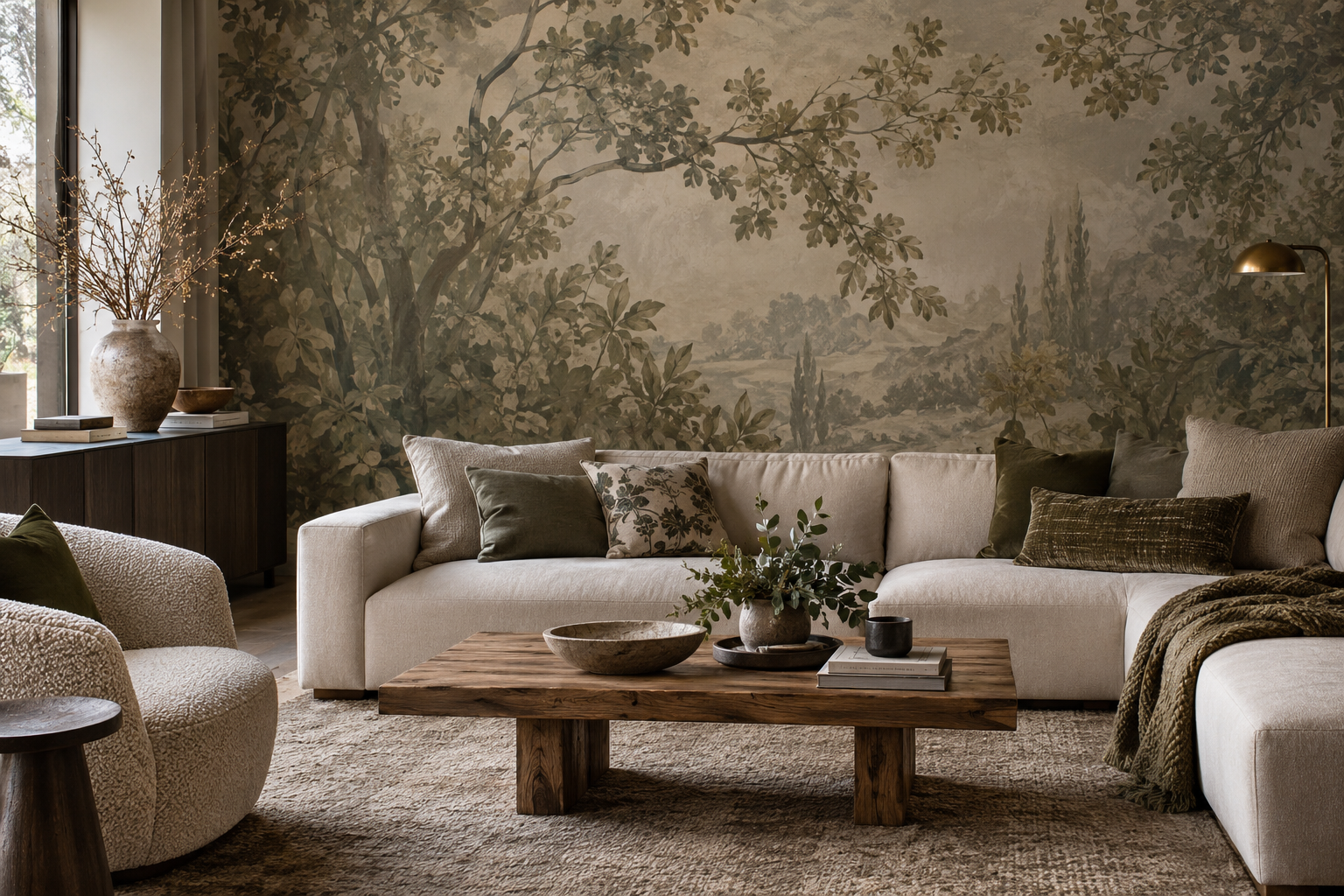
Example application: Any room with a suitable, prepared wall · installation and removal
Yes. A mural can sit comfortably with changing seasonal decor if it works as a complete room backdrop on an ordinary, undecorated day. Keep the wall, major furniture and floor as the stable layer; use textiles, branches, table objects and lighting to shift the mood. The aim is not to make the print depict all four seasons. It is to find more than one subtle route through its colours without hiding its subject or repeatedly attaching decorations to the wallpaper.
Choose a permanent image you enjoy without props
Before imagining spring flowers or winter garlands, picture the room with only its everyday furniture. Does the mural still give the wall a coherent composition? An olive woodland, a layered landscape or a broad abstract field can do that without a holiday reference. A mural dominated by snowflakes or pumpkins can also be loved year-round, but the seasonal subject will remain visible in July or April. Decide whether that permanence is part of its appeal.
The feature room offers a useful example. Its olive trees and distant stone-coloured landscape are complete above the pale sofa. The mural does not require the vase of branches, cushions or throw to explain it. That is why those smaller objects can change. If you removed them, the room would still have a clear visual structure through the wall, sofa, rug and timber furniture.
Look at the mural's quiet ground as well as its obvious motif. A print with muted foliage, warm stone and darker shadow gives you several colours to emphasise at different times. A near-monochrome design can be equally flexible because the changing accessories carry more of the colour. Flexibility comes from a stable base and room to vary the accents, not from making the mural itself visually vague.
Keep the largest furnishings steady
A seasonal refresh should not require a new sofa, rug and window treatment every few months. Those pieces occupy too much area to be treated as minor accents. Choose a base relationship among them and the mural that works throughout the year. In the pictured room, the cream upholstery creates a pause in front of the dense trees, while the dark wood has enough weight to sit with the mural's shadowed areas.
Once that base is settled, changes can be small but legible. A light linen throw and fresh stems might draw attention to the mural's pale ground and greens in spring. A deeper olive cushion and a textured blanket could bring forward its darker foliage in winter. The wall remains the same; the supporting objects select a different note within it. Avoid matching every accessory to a different leaf. Too many little echoes can make a room look assembled from a colour chart.
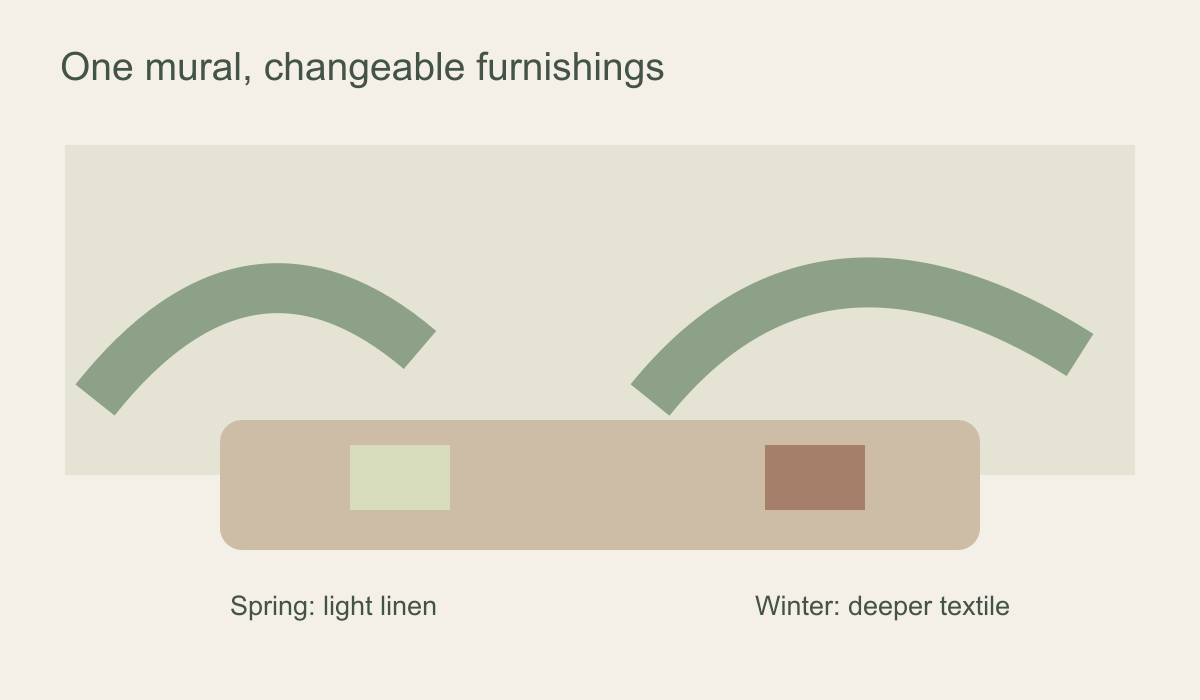 Let movable textiles alter the emphasis while the principal room scheme stays put.
Texture can do more work than colour. Smooth linen, coarse woven cushions, matte ceramics and cut branches create different sensations beside a printed image. They also make clear which surfaces are real and which are pictorial. A painterly-looking mural is still a flat print; it does not need to imitate the touch of every material in the room.
Build four edits from the same palette
Try a simple test before buying the mural. Place a full-wall crop beside a photograph of your fixed furniture, then make four small arrangements using objects you could realistically store and reuse. Limit each to a couple of colour changes and perhaps one textural change. If the plan demands replacing the rug or curtains each season, the permanent room scheme may not yet be settled.
For the olive woodland in the photograph, spring could be as simple as pale linen and airy branches. Summer might remove the heavy throw and let daylight and open floor space do the work. Autumn could use one rust-toned object and darker ceramics without turning every surface orange. Winter might bring a deep woven textile and warmer lamplight while keeping the printed landscape visible. These are possible readings of that particular room, not a prescribed calendar for every mural.
Ask whether each edit has a distinct purpose. If the only difference between four mood boards is the colour of one cushion, you may not need a formal seasonal plan at all. If every board buries the mural under objects, the decorations are competing with the fixed artwork. A useful refresh changes how the room feels while leaving its main image legible.
Let objects frame the image rather than cover it
Mark the focal area on a photograph or crop proof. A vessel on a sideboard, branches near the edge or a table arrangement can add a seasonal foreground. They need not occupy the centre of the printed scene. In the feature room, a vase at the left and low objects on the coffee table allow the opening through the trees to remain readable. A tall arrangement directly in front of that opening would change the composition much more than its small footprint suggests.
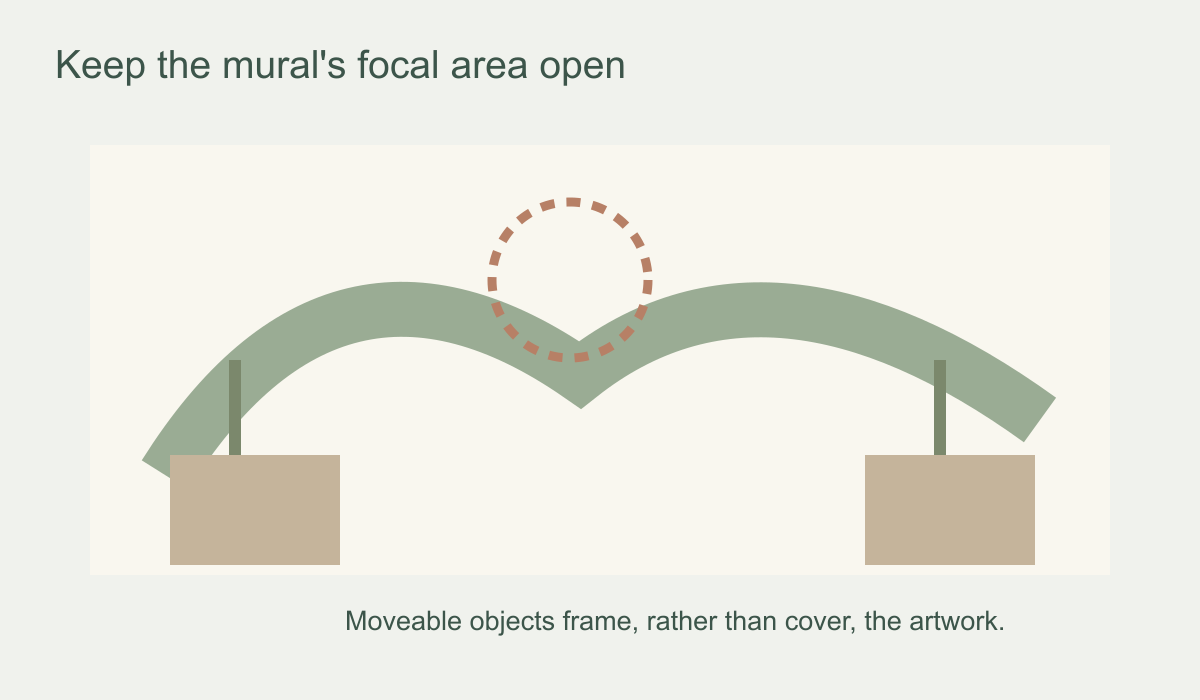 Changing objects can frame the mural without obscuring its focal zone.
Evaluate the arrangement from the doorway and the seat, not only close to the object. A branch that looks modest beside the vase may overlap an important printed tree from across the room. Move the accessory first; do not treat the mural crop as expendable once installed. If a seasonal object has to cover a weak part of the artwork every year, revisit the crop before ordering.
Expect different light, not guaranteed durability
Summer daylight and winter evenings can make the same printed colours feel different. A pale ground may seem airy near a bright window and warmer under a lamp; dark foliage may become more prominent as the room's overall light falls. Test a physical mural sample on the chosen wall with the furnishings you plan to keep. Graham & Brown's sample guidance notes that room light and surrounding furniture influence how wallcovering colours appear. That visual variation can become part of the room's seasonal character.
Do not confuse changing appearance with proof that the ink will resist prolonged sunlight. Colourfastness is a product-specific characteristic; ask the mural supplier about the exact print and conditions if the wall receives strong direct sun. Also choose lamps for reading and ordinary use, not only for a dramatic night-time photograph. Seasonal styling should not leave the room uncomfortable for the people who occupy it.
Make celebrations safe for the printed wall
Garlands, paper ornaments and strings of lights often invite temporary tape or adhesive hooks. Do not assume that “removable” means suitable for wallpaper. Command's manufacturer FAQ specifically does not recommend its adhesive products on wallpaper. Follow your wallcovering maker's guidance, and use furniture, existing approved supports or freestanding decorations where possible. Avoid repeatedly testing new attachments on the print.
Keep branches from rubbing the surface and follow any decorative light's installation and clearance instructions. Candles should not be placed near the wallcovering. If you want to change wall-hung art frequently, plan a suitable picture rail or another independent mounting solution; the wallpaper's adhesive bond is not a support for added weight.
After a celebration, photograph the room with the decorations removed. Does the mural still have its focal space and does the permanent furniture still connect to it? If so, the seasonal layer is doing its job. Store the few objects that worked and reuse their positions next year. The easiest room to refresh is one whose main image already feels right when the season is over.