Non-Woven vs Vinyl vs Peel-and-Stick Mural Wallpaper
A plain-English comparison of the three common mural wallpaper choices and the trade-offs buyers should understand.
Article focus: pricing and measurement
What to settle before pricing
Start with accurate wall measurements; the final custom mural price depends on area, material and any finishing options.
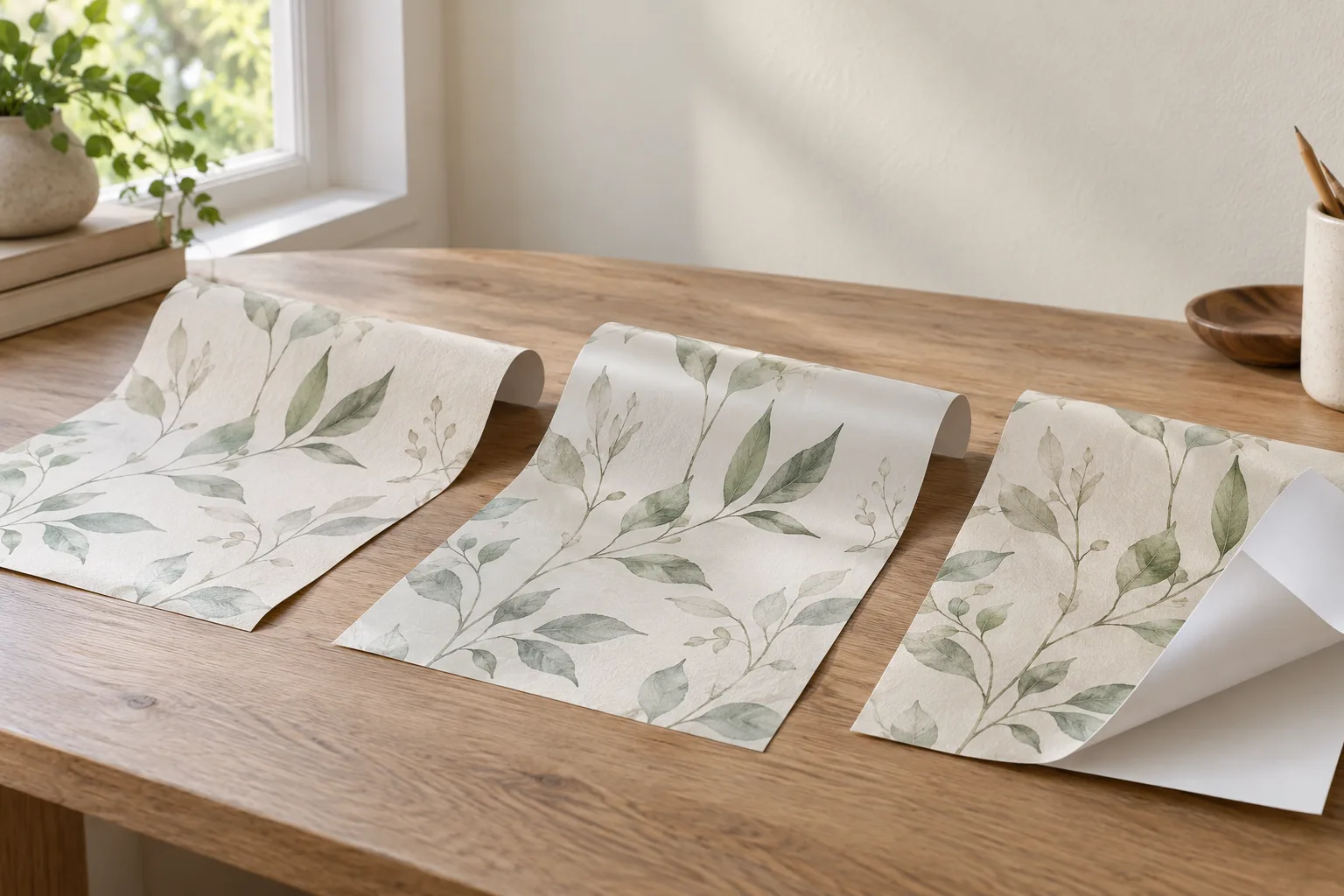
Example application: Hallway or entryway · pricing and measurement
Non-Woven, Vinyl and Peel and Stick are not three points on a single durability scale. The first two describe material constructions; Peel and Stick describes a self-adhesive application. Solowalls' material guide presents Non-Woven as paste-the-wall, while the exact Vinyl instructions should be checked for the selected order. Compare all three on the same wall and artwork: preparation, handling of full-height panels, documented cleaning, seam plan and later removal.
First compare the installation method
For Solowalls Non-Woven, the current product page specifies paste-the-wall fitting and a smooth finish. Apply the adhesive and align the numbered panels according to the instructions supplied with the order. The time available to adjust a panel depends on that adhesive and wall condition; do not promise yourself a particular working time based on another brand. A large landscape with fine horizon lines especially rewards careful first-panel alignment.
Vinyl's name does not specify its backing, adhesive or working time. The decision therefore moves to the exact option's installation sheet, surface feel, care guidance and panel planning. Do not assume every vinyl mural has the same thickness, sheen or repositioning time. Let the person fitting a tall or intricate mural assess the supplied instructions, not only the word on the menu.
Peel and Stick changes the workflow: remove the release liner gradually and smooth the panel onto a suitable wall without separate paste. This avoids mixing adhesive, but not measuring, vertical alignment or careful smoothing. A large panel can touch the wall before it is correctly positioned. Whether it may be lifted and reset depends on the particular adhesive and instructions; do not infer unlimited repositioning from the label.
Then compare what each needs from the wall
All three depend on a stable, clean and dry surface. Loose paint, dust, grease, dampness and deep texture can undermine installation. Peel-and-stick commonly requires a particularly smooth and well-cured finish so the adhesive can make even contact. Pasted coverings may tolerate slightly different surface conditions, but they are not a repair system for crumbling plaster. A bowed wall or ridge can still show through the print and interfere with seams.
New paint requires attention. The fact that it feels dry does not mean it has fully cured or will hold adhesive safely. Check the paint manufacturer’s and mural supplier’s guidance. Test a sample if the wall has an unknown coating, gloss, texture or older paint. For a rental property, testing is especially important because an adhesive might remove weak paint even if the product is marketed as removable.
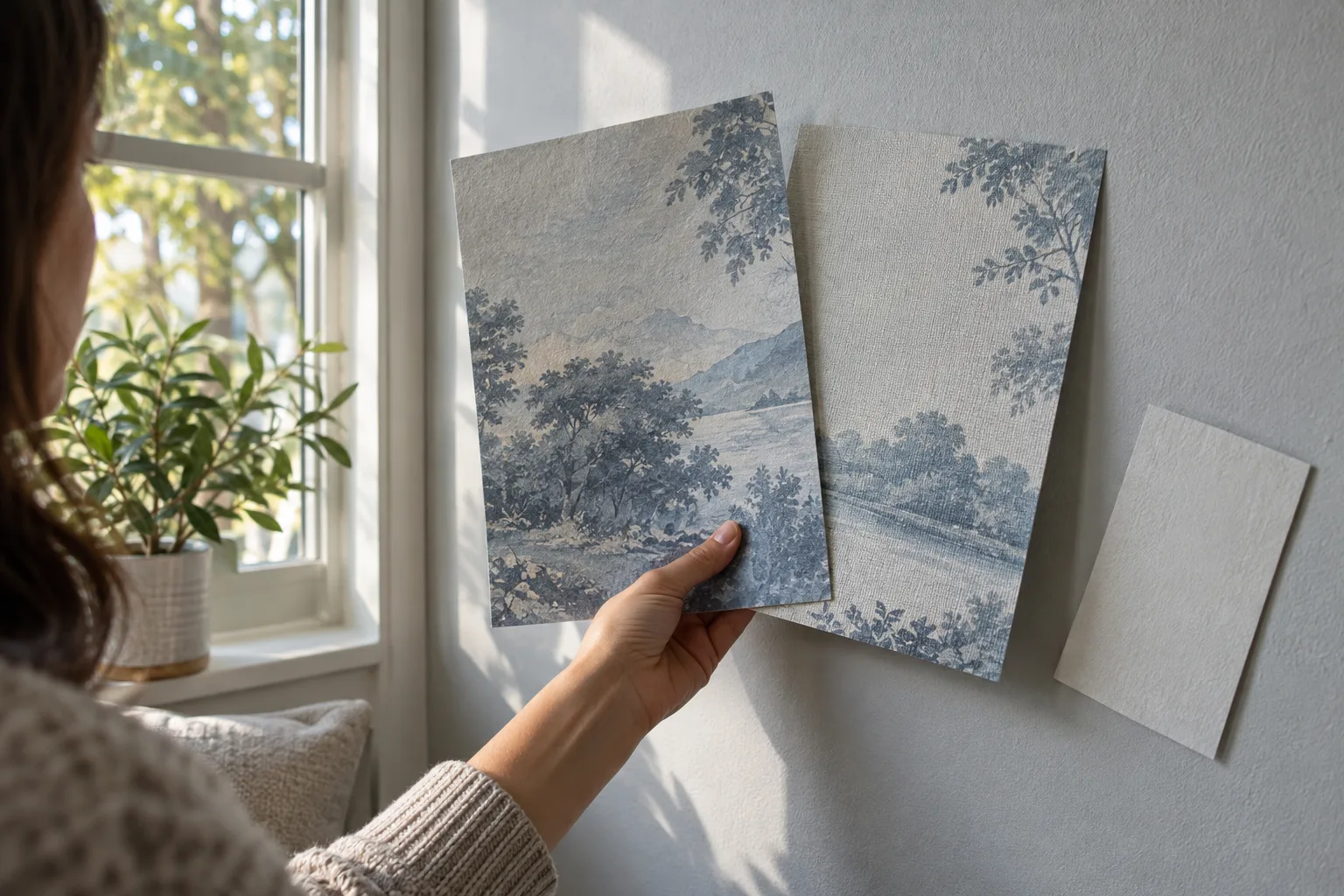
The existing wall colour can affect the appearance of some lighter designs if a material lacks sufficient opacity. Ask for a sample of the exact finish and hold it against the actual wall. This is a visual test, not just an adhesion test. A pale mural viewed against dark paint may require wall preparation or a different substrate.
Cleaning and moisture are product-specific
Vinyl is often considered when a wipeable surface is desired, but individual vinyl products have different care instructions. Some non-woven finishes can be wiped lightly; others should be kept mostly dry. A peel-and-stick mural may have a printed face that tolerates gentle cleaning, yet its adhesive may still be unsuitable for a damp wall. Do not equate wipeability with waterproofing or with approval for a shower enclosure.
For a hallway or playroom, ask what kind of marks can be removed and how. For a bathroom or kitchen, map the actual splash, steam and heat zones and obtain written advice for the exact material. The distance from a sink or hob, ventilation and cleaning frequency may decide suitability. A material name alone cannot establish performance under direct water or heat.
Compare samples in the intended light too. Surface texture and sheen can change the perceived colour and sharpness of a mural. A highly detailed engraved scene may read differently on a textured finish than on a smoother one. The artwork may be identical; the substrate changes how you experience it at close range.
What happens when you want to remove it?
Peel-and-stick is usually selected partly for its removal potential. However, removal depends on the adhesive, the length of time installed and the paint beneath it. Weak or recently painted walls can be damaged. “Removable” also does not necessarily mean “reusable”; a panel may curl, collect dust or lose tack after removal. Ask the seller for the specific removal method and test a sample on your wall.
Pasted non-woven and vinyl coverings have their own removal methods, which may involve dry stripping, soaking or other steps depending on the backing and adhesive. Do not assume every pasted mural must be scraped off or that every vinyl sheet peels away cleanly. If future removal matters, make it part of the buying decision and read the product instructions before installation. Retain those instructions for whoever eventually redecorates.
A renter should also consider the tenancy agreement. A material can be technically removable yet still conflict with a lease or pose a deposit risk on fragile paint. A homeowner may accept a more permanent installation for a long-term feature wall. Neither preference is inherently better; they answer different requirements.
Make the final comparison on the same wall
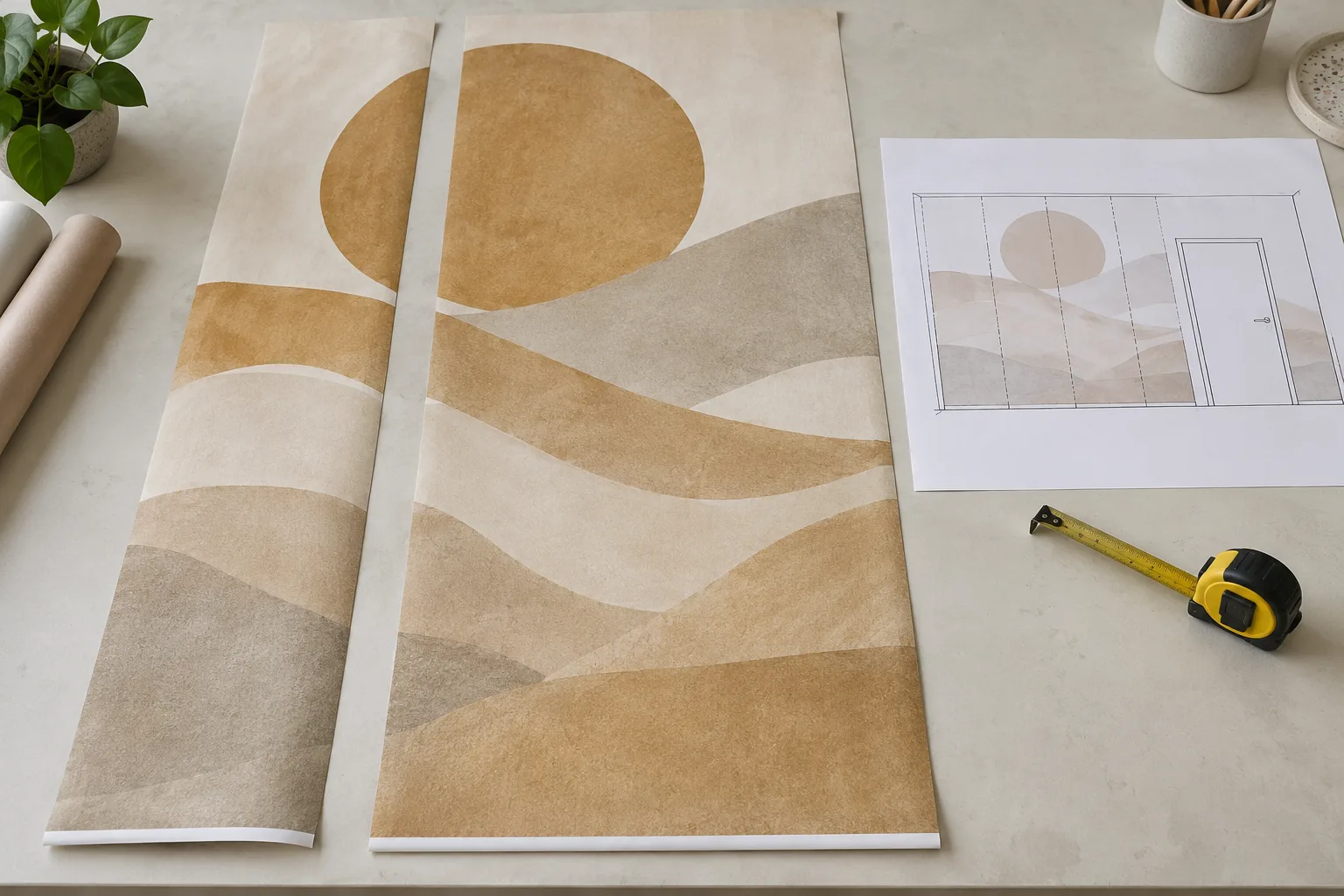
Keep the artwork and a 310 cm print width fixed while changing only the material option. Solowalls currently lists 60 cm panels for Non-Woven and Peel and Stick, and 50 cm panels for Vinyl. Those nominal widths suggest at least six versus seven drops respectively, but the actual panel and seam layout must be confirmed for the order. A doorway or straight geometric line can make seam placement more important than the raw drop count; narrower panels do not imply a worse print.
Now apply three gates in order. Can the prepared wall meet this option's instructions? Can you or your installer fit its panel and adhesive system? Does its documented care and removal guidance suit how the room will be used? If any answer is no or unknown, resolve that before comparing sample appearance or configured price. For a rental, test removal on the approved painted wall; for a detail crossing a doorway, request the actual seam plan. A fair comparison holds the wall and artwork constant rather than treating a material name as a performance rating.