Should You Order a Mural Wallpaper Sample?
Use samples to assess colour, texture, scale and lighting before committing to a full made-to-measure wall.
Article focus: pricing and measurement
What to settle before pricing
Start with accurate wall measurements; the final custom mural price depends on area, material and any finishing options.
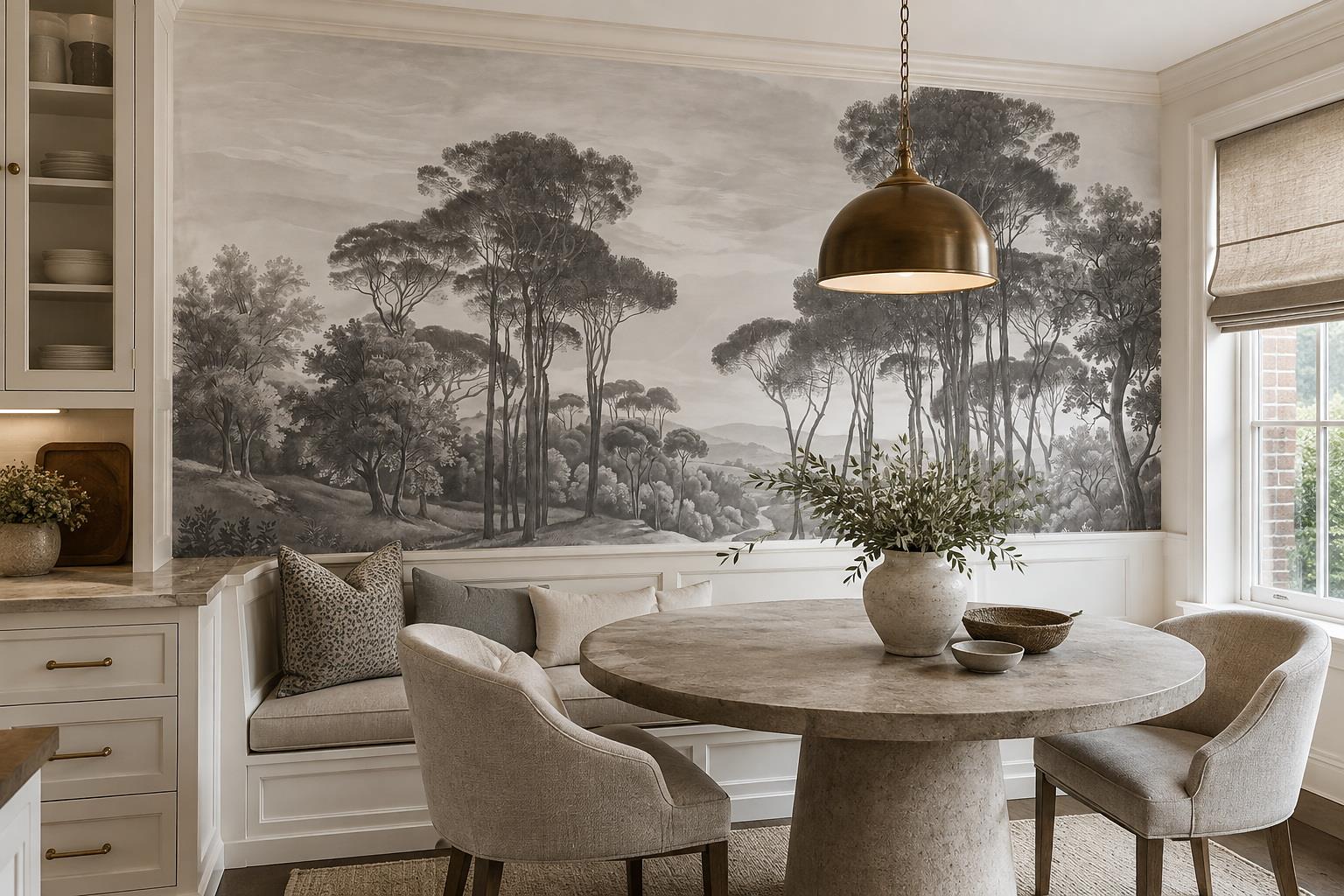
Example application: Bedroom · pricing and measurement
Should you order a mural wallpaper sample? Usually yes if you are choosing between close colours, comparing materials or committing a large wall to a print you have only seen on a screen. But the value depends on what the supplier actually sends. A small piece of the grey woodland artwork pictured here can reveal printed linework and finish; it cannot tell you where the tallest trees will sit behind a table or headboard. Treat the physical sample and the wall-size crop preview as answers to different questions.
What a sample can tell you
A physical sample lets you compare actual printed colour under your room's light, rather than relying on a screen with unknown settings. It can show whether thin lines remain clear, whether a pale area looks warm or cool, and whether a drawn texture is subtle at normal viewing distance. You can feel the surface instead of guessing from a product photograph. If you are choosing among different material options, request the specific ones under consideration; one substrate cannot stand in for all of them.
Before ordering, ask whether the sample is a crop of your chosen artwork, a scaled-down copy of the whole scene or a generic material print. Ask its physical size, whether the colours and substrate match the eventual order, and whether the artwork is printed at the proposed final scale. A design extract helps with ink and detail; a miniature helps you recognise the composition; a generic print mainly demonstrates material. The word “sample” does not distinguish these formats.
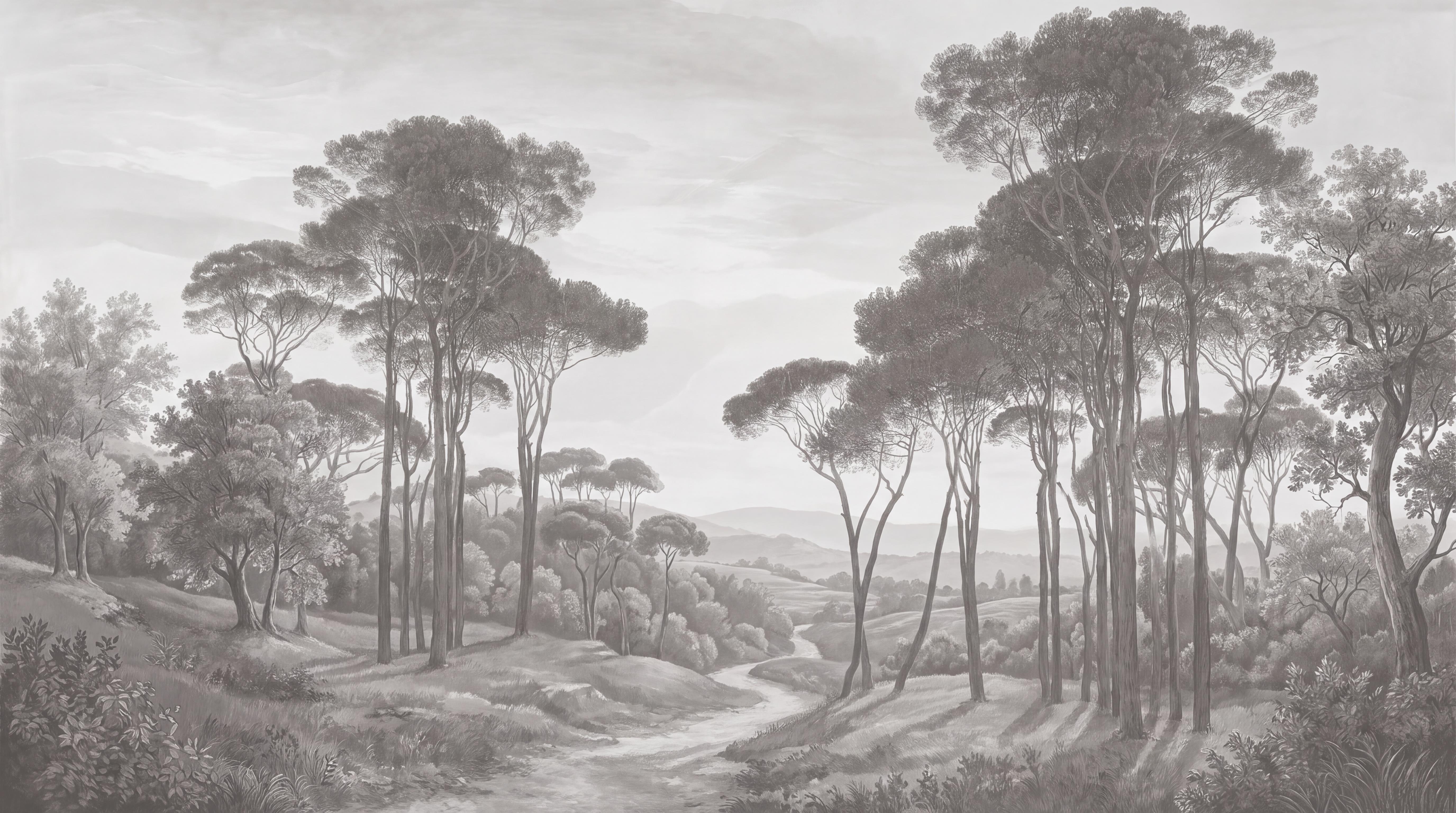
The grey woodland artwork below is a full design view, not a photograph of a physical sample. A small print of its fine branches and muted greys could reveal whether the linework is clear. It would not show how the pale path and two large tree groups balance across your wall. Use the site's dimension-based crop preview as a separate check when composition matters; ask the supplier whether a formal proof is available if your project requires one.
Test it where the mural will live
Hold the sample against the intended wall, or attach it only as the supplier recommends. Look at it in morning light, when the room is most used, and after dark with the usual lamps on. The woodland greys in the dining-room image above sit beside warm cream joinery and a stone table; in another room the same print might read cooler. Compare samples with flooring, large upholstery and cabinetry, not just a cushion you may replace next season.
Move the sample around the wall. Near a window, colour may look washed out. In a shaded corner, the same print may appear deeper. This does not necessarily mean the printer has changed colour; it means the room has different light conditions. If the wall has a textured surface or a strong existing colour, the sample can help you judge appearance, but consult the installation guidance before assuming that the surface itself is suitable.
Use the sample to inspect printed detail
Look at the darkest lines, lightest washes and transitions between colours. Are delicate leaves recognisable from normal viewing distance? Does a printed plaster effect look like a visual texture rather than a physical one? Are there visible dot patterns or softness that bother you at the distance from which the wall will be seen? A close-up inspection can be useful, but do not judge a mural exclusively from a few centimetres away. Step back to the room's normal viewpoint as well.
If you plan to enlarge or rescale the artwork, confirm whether the sample represents the proposed final print scale. A miniature of the entire scene may make branches look finer than they will on the wall, while a full-size extract shows detail but not overall balance. Ask the supplier which part of the final mural the sample represents. Label it before placing several options side by side; otherwise two pieces that show different parts of a design can be compared unfairly.
Know what a sample cannot settle
A sample cannot show whether a tree will be hidden by a bed, whether a horizon will meet a window frame or whether the most important flower will be trimmed off at a corner. Those are crop and placement questions. Nor can a small test guarantee that the whole wall has sound paint or uniform adhesion. Use the crop preview at your measured wall dimensions, compare it with a separate sketch of openings and furniture, and follow any recommended wall test for the chosen material.
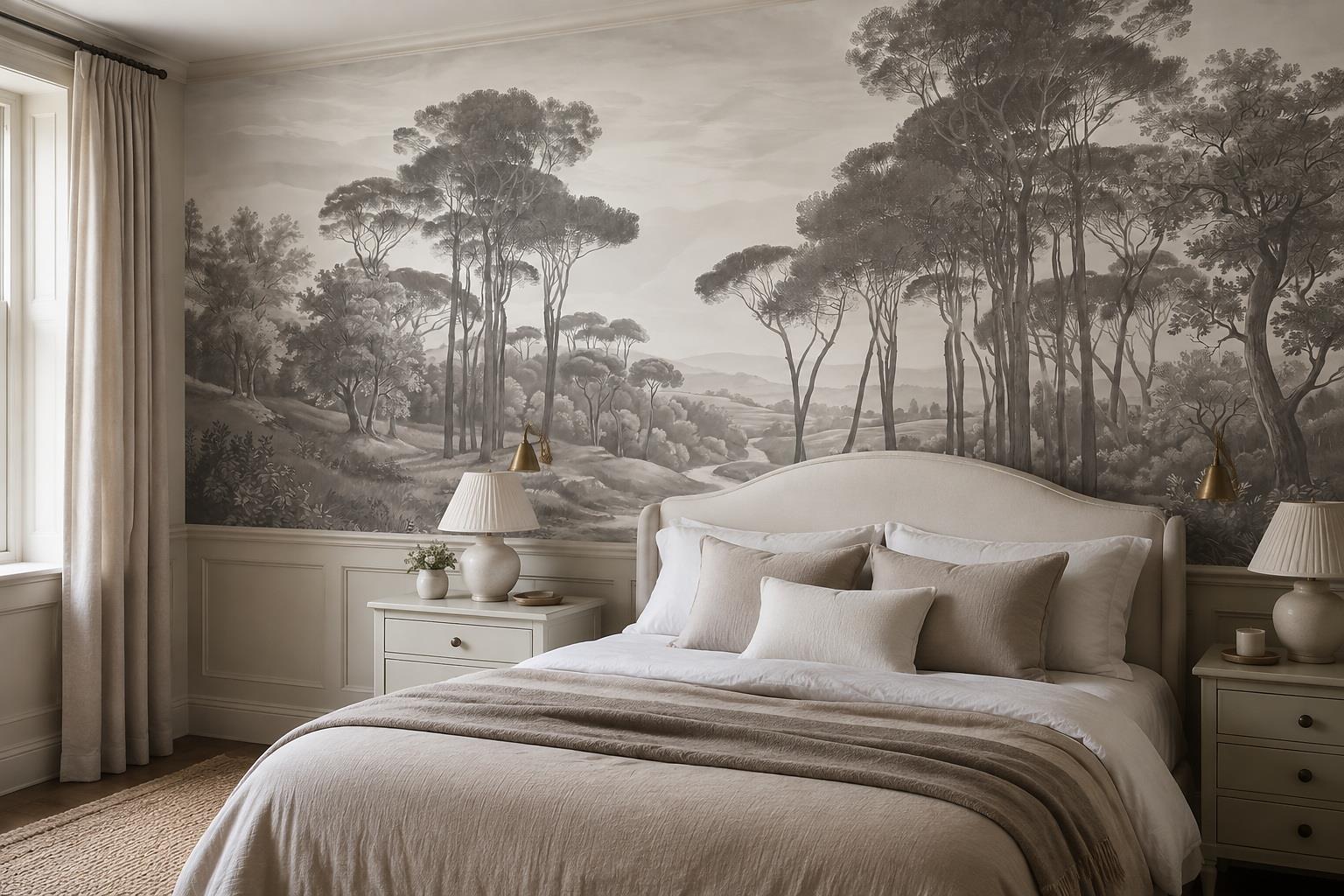
In the bedroom view below, the headboard covers the lower part of the woodland image. The trees still read above it, but you could not learn that from a small material square. Conversely, this room photograph cannot tell you exactly how the ink or substrate will appear under your own lamps. The two types of evidence complement one another.
When a sample is especially useful
Order one when you are deciding between close colour alternatives, matching expensive existing upholstery, or choosing among several materials with different finishes. It is also valuable when the mural contains very pale tones, subtle linework or printed texture that screens may exaggerate or conceal. A project with strict design approval or several decision-makers benefits from a shared physical reference: everyone can view the same piece in the same room rather than comparing different displays.
If you are replacing one mural with another, compare the new sample against the cleaned, prepared wall after the old finish is removed. Old wallpaper and adhesive can alter how you perceive colour, and the next print may require different preparation. If the project is time-sensitive, allow time for samples in the schedule rather than placing the main order and asking for proof afterwards.
When to pause before buying samples
If you have not chosen a design direction or measured the wall, a pile of small swatches may not help. First decide whether the room needs a quiet background or a prominent scene, and narrow the choices with full design views and room mock-ups. If you already know the exact material and colour from a previous order, a new sample may add less information, though you should still confirm whether the supplier's current print and finish are the same. Ask about sample cost and delivery time before assuming that ordering several is worthwhile.
How to compare several samples fairly
Label each sample with the design, material and scale it represents. Put them on the same wall at the same height and look at them in the same light. Do not hold one beside a window and another in a shaded corner, then conclude that one ink is brighter. Compare the main colours with the wall paint and fabric in the intended room, and view the samples from seated and standing positions.
Choose a short list rather than collecting dozens of unrelated designs. Too many small pieces can obscure the larger question of what the wall should do for the room. Once a sample passes the material and colour test, move to the full-wall crop and furniture overlay. That is where you decide whether to order the mural itself.
Ask for the evidence your decision still lacks
If the grey woodland's fine branches are the uncertainty, request a print-scale extract on the material you intend to buy; a generic substrate swatch cannot answer that question. If the path or taller trees might land behind a headboard, the missing evidence is a wall-size crop with the furniture drawn over it. If placement around an opening must be exact, ask whether a dimensioned proof is available. The physical sample, crop and wall-surface check answer different questions. Order the one you need next rather than collecting more small swatches of an already settled colour.