Is Peel-and-Stick Mural Wallpaper Suitable for Renters?
A renter-focused guide covering permission, sample testing, wall condition, removal planning and deposit risk.
Article focus: pricing and measurement
Budgeting this wall with confidence
Start with accurate wall measurements; the final custom mural price depends on area, material and any finishing options.
Example application: Bathroom or powder room · pricing and measurement
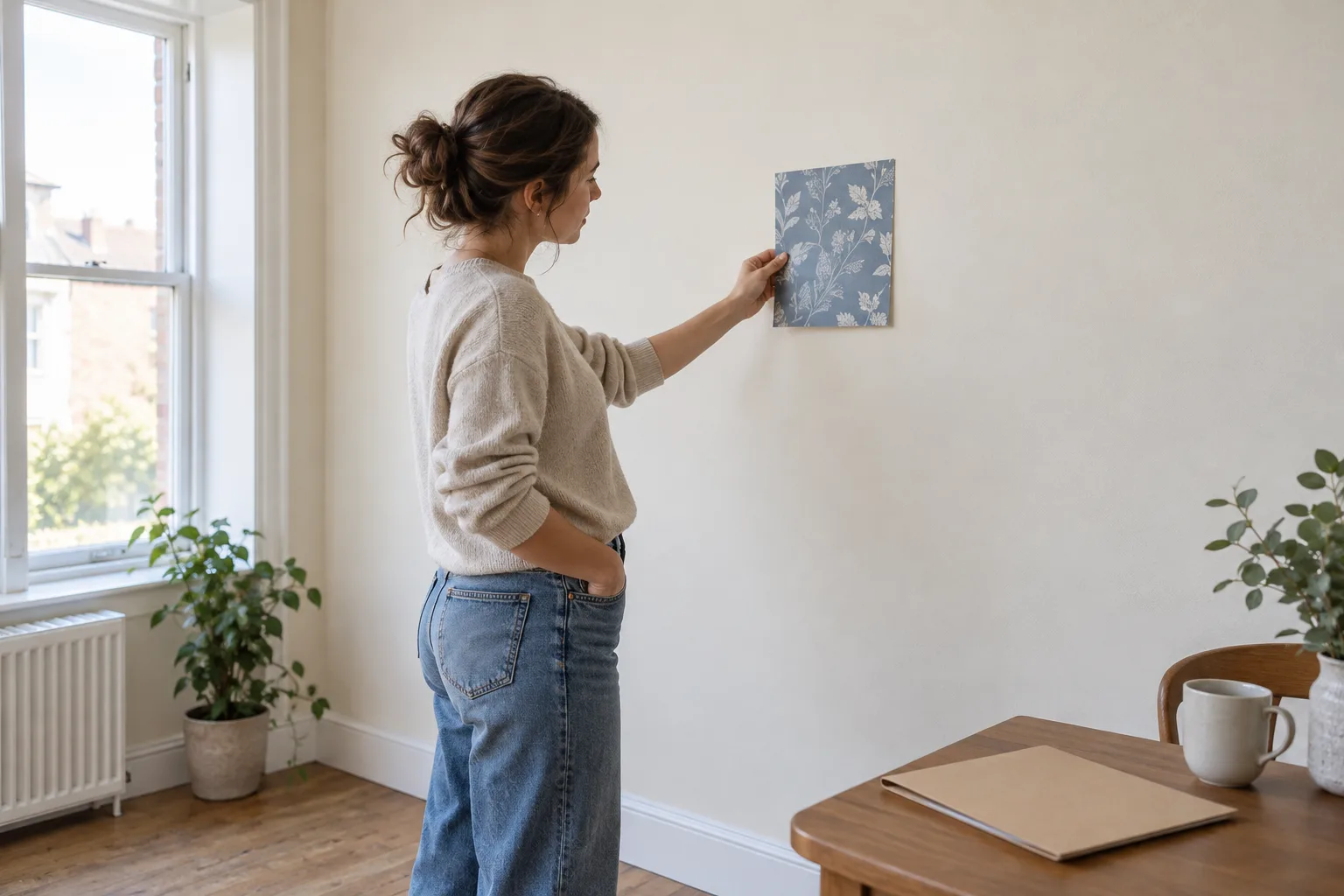
Peel and Stick removes the separate paste step, but a renter still needs to know how its adhesive behaves on the paint in this particular home. Permission to cover the wall is the first gate; an adhesion test and a separate removal check are the next two. A sample that stays up may still lift weak paint when taken down, while a sample that releases cleanly may have failed to grip well enough for a full-height mural. Check both outcomes before ordering artwork sized for one address.
Get permission for the test as well as the mural
Check the agreement's decorating and alteration terms and ask for written approval where required. Name the exact wall and self-adhesive product, and ask whether a small trial patch is allowed before the full installation. A trial can itself mark weak paint, so permission for a finished mural should not be assumed to cover testing automatically. Keep the answer and the required move-out condition with the product instructions. The general rental guide covers the broader tenancy and restoration questions.
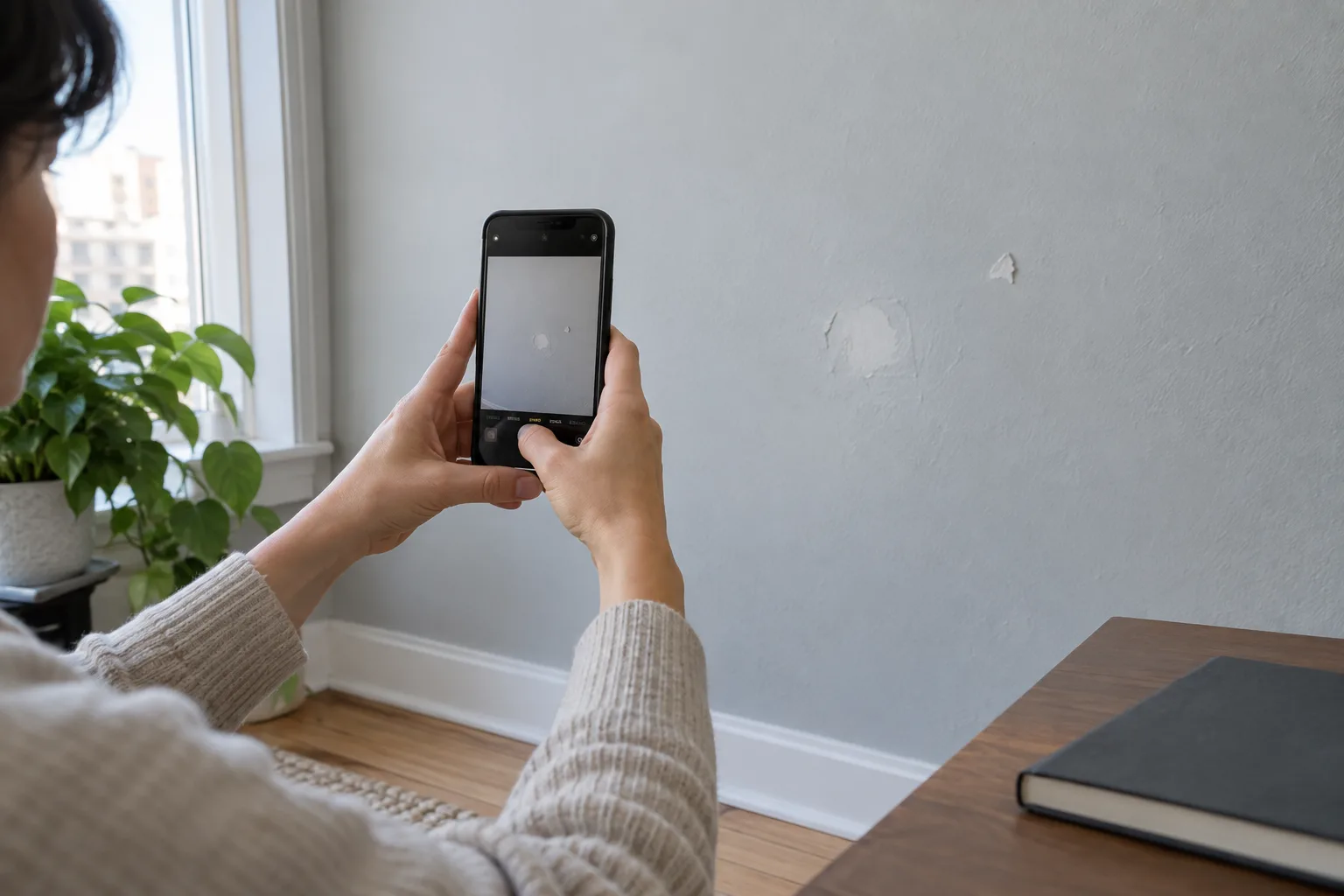
Before touching the paint, photograph the whole wall and close-ups of repaired areas, edges and existing sheen changes. Compare the record with the check-in inventory if one exists. This gives the adhesive trial a starting point: if a patch looks different after removal, you can tell whether it was already present. The image below illustrates documentation, not a real tenancy or a test result for the selected product.
Assess the actual wall you have been given
A smooth, sound, fully cured painted wall is a better candidate than chalky paint, heavy texture or damp plaster. Gently inspect whether paint is peeling at corners or around sockets. Check for repairs that may have been painted quickly between tenancies. If the surface has a weak layer, the mural adhesive can be stronger than the bond holding that paint to the wall. The adhesive may release perfectly from the panel yet take paint with it.
Ask when the wall was last painted if that information is available. Fresh paint can feel dry long before it reaches the condition required for a self-adhesive covering. Follow both paint and mural guidance on curing time. Do not apply a large mural on the day you move in simply because the wall looks ready. Temperature and humidity can also affect adhesion; a steamy bathroom or wall near a heater may not meet the product’s conditions.
Mark where the wall changes condition before choosing sample locations. The painted field, a filled socket chase and a corner repainted between tenancies may be three different adhesive surfaces. If permission allows more than one trial, place pieces where they represent those differences instead of using only the least visible and smoothest corner. Do not test over a damp or already flaking area; address that defect with the property manager first.
Interpret the sample as two separate tests
First, follow the chosen material's instructions to apply a small piece to the approved, prepared wall. Leave it for the supplier's recommended period, then check whether edges stay flat and the print lies acceptably over the paint. Test a representative repaired patch as well as a sound-looking area if permission allows. A self-adhesive sheet that releases from a painted ridge after a short trial is not rescued by printing a larger sheet.
Second, remove the test piece using the maker's method and inspect both its back and the exposed wall. Paint on the adhesive, a tacky patch, a changed sheen and an unchanged surface are four different observations. Photograph the result in the same light as the pre-test record. If paint lifts, stop and ask how the coating should be repaired; if the adhesive leaves residue, obtain product-specific advice before using a solvent. A clean short test reduces uncertainty but cannot promise an identical result after a long tenancy.
Check the installation and removal instructions separately. “Repositionable” during fitting describes a short working period; it is not a promise that a used panel can be moved to the next flat. A custom mural is cut for this wall's dimensions and crop. If moving soon is likely, compare the one-address cost with a framed or freestanding display, including any fixing or floor-space rules that apply to the alternative.
Keep a small project record
Follow the product’s wall preparation and application directions. Clean away dust and grease, allow the wall to dry and keep the panel sequence clear. Avoid improvising with extra adhesive, tape or sealant to fix lifting edges unless the manufacturer permits it; such additions can make eventual removal more difficult. Do not paint over the mural or glue down its corners as a quick repair in a rental without considering the restoration obligation.
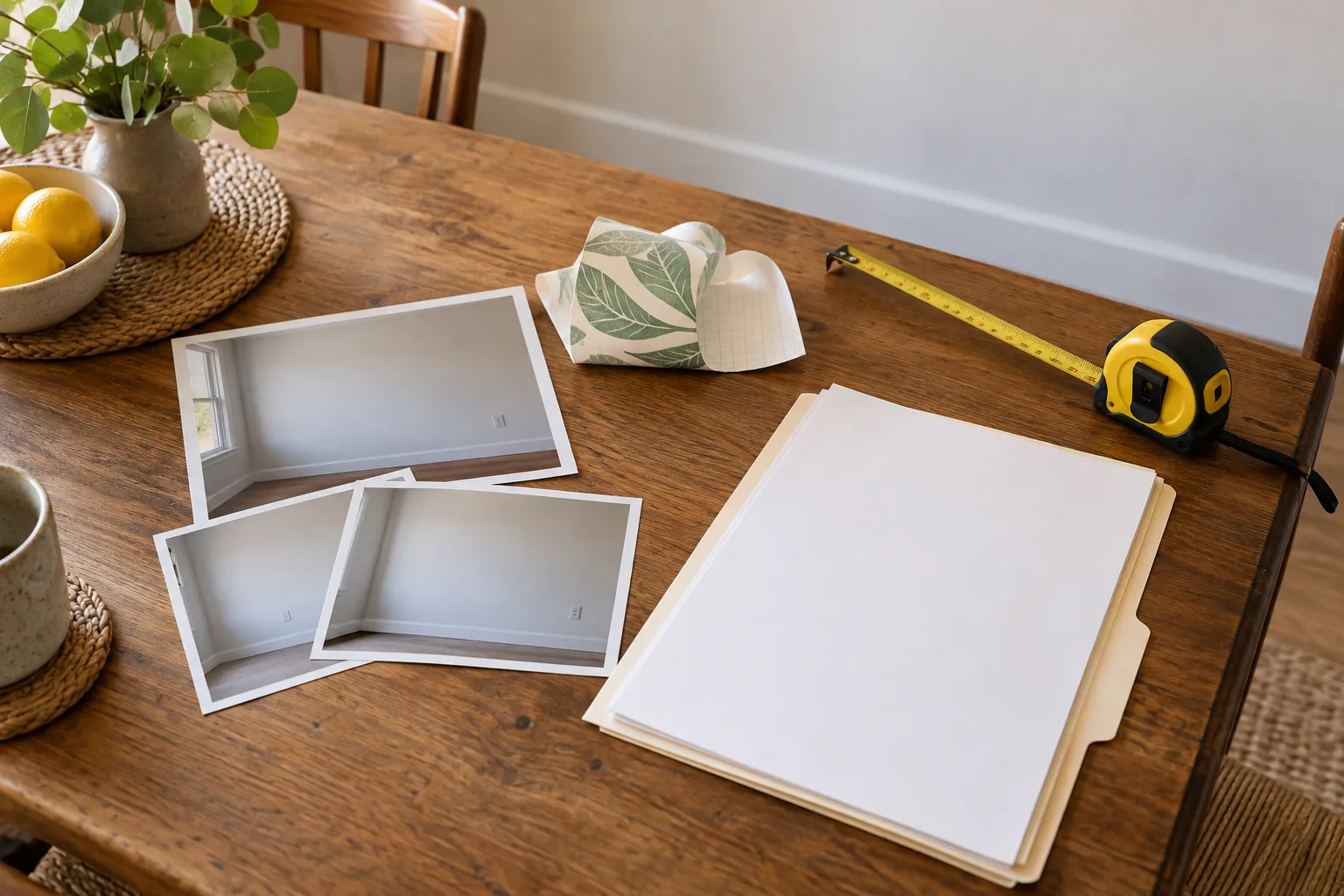
Keep the written permission, before photographs, sample-test photographs, order details, material name, instructions and any backing liners the supplier says to retain. Photograph the finished installation from the same angles. Make a calendar note well before moving out to inspect the wall and allow unhurried removal. Camden Council's renter guidance recommends dated photographs and a checkout record where deposit condition might be disputed; check what evidence is useful under your own local tenancy arrangements.
When the tenancy ends, use the removal method specified for that exact product. Work slowly and stop if the paint begins to lift. Do not apply heat, water or solvent unless the instructions allow it. If removal reveals a problem, photograph it and seek product-specific advice before escalating to scraping or aggressive cleaning. You may need to arrange repair or repainting under the lease terms.
When to pause or choose another approach
Pause if the permission describes “temporary decoration” without saying whether a full-wall covering is allowed, if the paint is recent or unstable, or if the test raises questions about adhesion or removal. Resolve those points before ordering a made-to-measure print. If the landlord declines, the wall shows damp or flaking paint, or the tenancy is too short to justify a print cut for that address, choose a framed image or freestanding artwork instead. Check any fixing or floor-space requirements for that alternative against the same tenancy rules.