Can I Request Changes to a Custom Mural Wallpaper Proof?
Learn how to review a custom mural proof, request useful changes, and give clear feedback without losing the design direction.
Article focus: pricing and measurement
The cost and measurement decision
Start with accurate wall measurements; the final custom mural price depends on area, material and any finishing options.
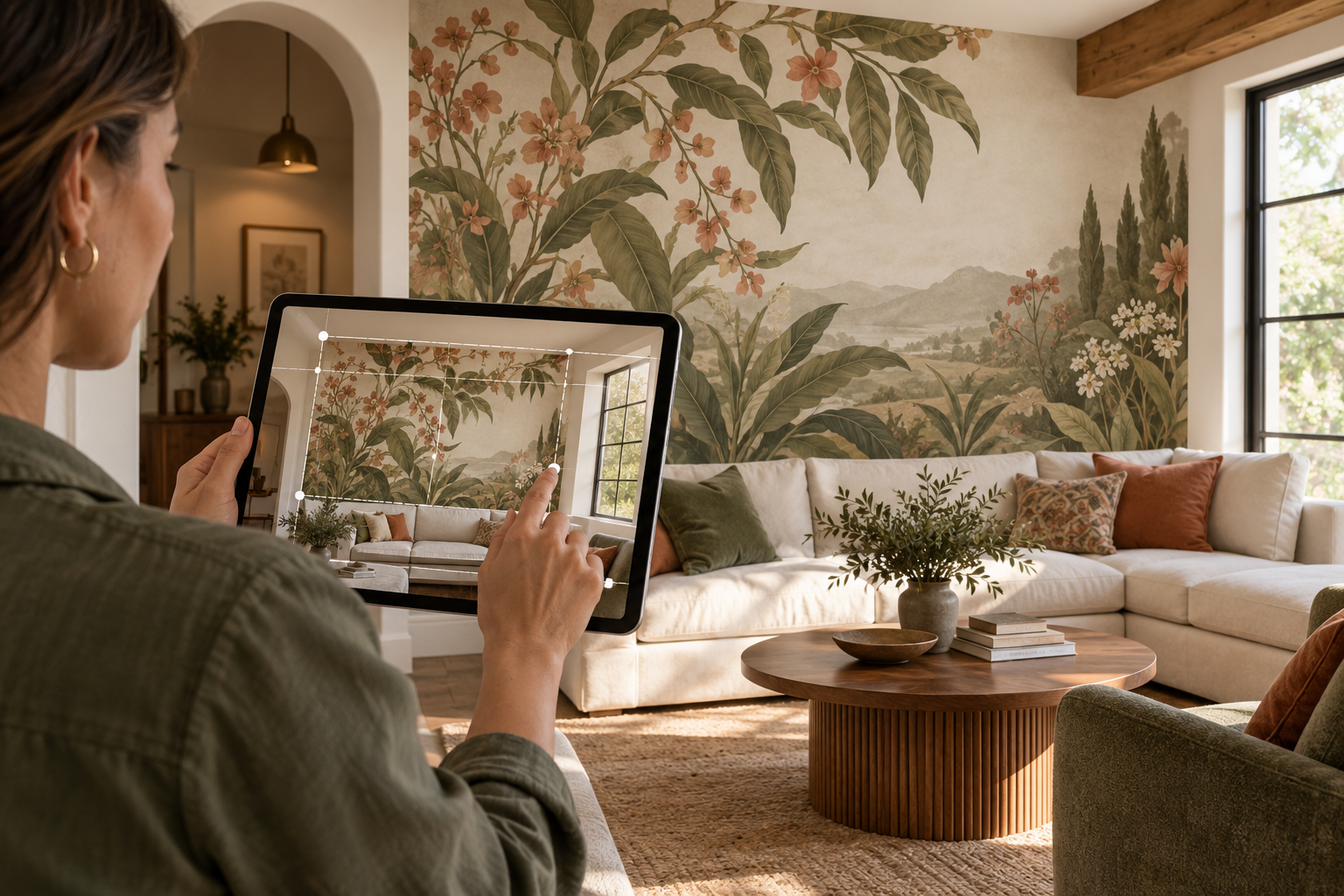
Example application: Any room with a suitable, prepared wall · pricing and measurement
You can request a change only if your order includes a separate proof or the supplier agrees to review one before production. An online crop preview alone is not a promise of designer-led revisions. First confirm which changes are available, whether a fee or revision limit applies, and when printing begins. Moving a crop away from a doorway is different from recolouring or redrawing the artwork. Tie one clear set of comments to the current version and review the revised file before approving it.
What can reasonably change at proof stage?
Depending on the service and the source artwork, a proof may allow changes to crop, positioning or scale. Colour edits and background extension are separate requests that may require more work or may not be available. For example, you might ask to move a mountain peak away from a door, raise a floral arrangement above the back of a sofa or reduce a motif that feels overwhelming at wall scale. These are meaningful adjustments because they affect how the design meets your actual wall.
Some requests are more than a revision. Replacing the entire source image, redrawing a complex subject, creating a new illustrated scene or changing the design after printing has begun may require a new quote and schedule. A low-resolution original cannot necessarily be made sharp by asking for a better proof. Likewise, moving an object into a part of the image that contains no usable background may require reconstruction rather than a simple crop. Ask what is feasible before making an approval conditional on a result the source file cannot support.
Where a proof is supplied, treat it primarily as a layout check. Confirm whether it shows the entered print rectangle, the intended finished-wall boundary, trim allowance or panel positions; not every proof includes all four. It cannot replace a physical material sample or guarantee a screen-to-print colour match. Keep layout feedback separate from questions about substrate, sheen and texture so each issue receives the right kind of evidence.
Review the proof in the order that matters
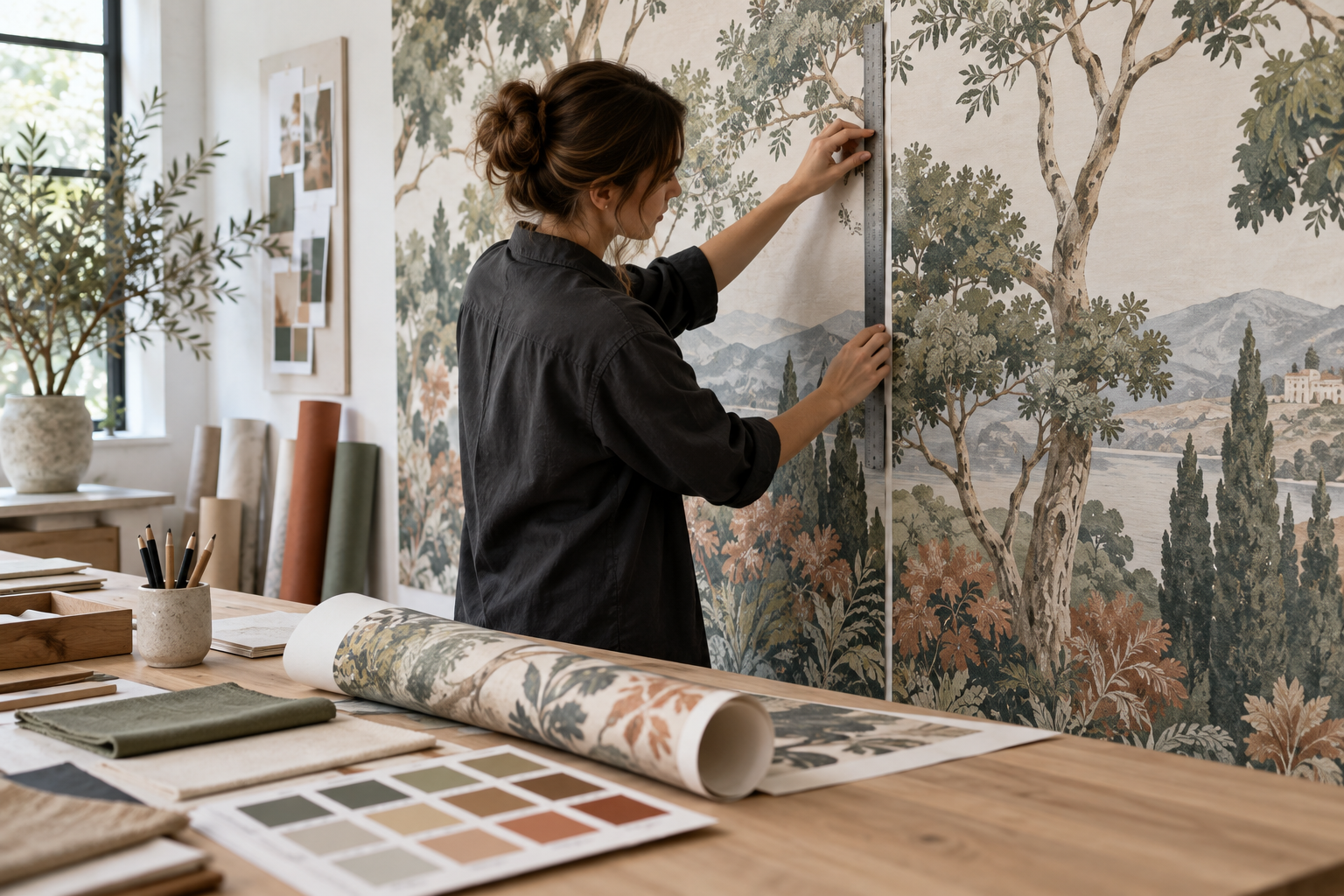
First compare its stated width and height with your order. Check the units and whether the drawing includes extra print for trimming. A beautiful layout at the wrong dimensions is still the wrong proof. Next look at the complete crop: has any important subject disappeared, and is there enough unimportant image near the edges to absorb minor trimming? Mark windows, doors, slopes, sockets and furniture on a separate copy if they are not shown in the proof itself.
Then judge the focal point from the normal viewing position. A motif that looks centred on a bare wall may feel off-centre after a wardrobe occupies one side. A horizon can cut through the middle of a window; a face can fall exactly behind a lamp. If the mural will be printed in panels, ask where seams are likely to fall when a precise line or face is close to a boundary. The goal is not to eliminate every seam, but to understand the layout you will install.
Finally examine fine detail at realistic size. Zooming far beyond the intended print resolution can make acceptable artwork look rough, while a tiny thumbnail can hide a genuinely soft source image. Ask the supplier which view represents expected print detail and whether they can show a representative crop. If your artwork is a personal photograph, provide the original file. Re-exporting a screenshot under a new filename does not restore missing detail.
Write feedback the designer can act on
Reference a specific version, for example “Proof 2 for the 320 by 245 cm wall.” Number your comments and keep each one about a single change. “Move the flower cluster approximately 15 cm left so it clears the door opening” is clearer than “make the left side nicer”. If you want the motif larger, say what must remain visible at the edges. A scale change and a position change can have opposite effects on the crop, so state which matters more if both cannot be achieved.
Use a marked-up screenshot if words would be ambiguous, but keep the unmarked proof as a reference. Circle the subject, draw an arrow and identify whether the measurement refers to the finished visible wall or the printed sheet. If you are comparing colours, describe the direction—less yellow, softer blue, deeper contrast—rather than asking the designer to “match my screen”. Share a photograph or a physical colour reference when possible, understanding that lighting and display settings limit precision.
Collect all decision-makers’ comments before you reply. One person asking for a closer crop while another requests more background produces revisions that cancel each other out. Agree on the key priority: the visible subject above a headboard, the continuity around a window or the quiet space behind shelves. Send one consolidated response and ask for a revised proof that reflects every agreed change. This saves time and reduces the risk of approving an outdated version by mistake.
Know when to approve and when to pause
Read the seller’s revision terms before ordering. Some services include an initial proof and a limited number of changes; others offer a crop preview in an online tool but no separate designer-led proof. Ask when production starts, whether silence counts as approval and whether a revised proof is issued after changes. Do not assume that a chat message saying “looks good” can later be withdrawn once a made-to-measure order has entered printing.
When the revised proof arrives, compare it with your actual requests rather than reviewing it as if it were new artwork. Check that the dimensions are unchanged unless you asked for them to change; a new crop should not silently alter the wall size. Inspect the areas near edges and openings again, because moving the focal point can create a new cutoff elsewhere. If a change remains unresolved, reply before approving. Save the final proof and confirmation alongside the order record.
It is reasonable to pause if the proof contains an unexplained dimension, an essential subject is cut off, or the designer says the source file is unsuitable at the requested scale. It is also reasonable to proceed with a small aesthetic uncertainty if you understand the limits of the preview and have chosen the material independently. What matters is informed approval, not endless revisions in search of a screen image that can never predict every lighting condition.
A sample revision message
“Thank you for Proof 2 for the 320 by 245 cm wall. Please keep the total print size and trim allowance unchanged. Move the central tree roughly 20 cm right within the finished visible area so its trunk is clear of the left-side doorway. Keep the hill line at its present height. Please send the revised full-wall crop for approval before printing.” This message identifies the version, protects the measurements, requests one specific change and states what must not move.
When the revised proof arrives, put it beside the earlier version and check the requested tree movement first. Then inspect the far edge: shifting the subject right may cut another branch that was previously safe. Confirm that dimensions, units, orientation and trim margin remain unchanged. If the supplier says the requested move is impossible, ask for two feasible crops with their trade-offs explained rather than sending another vague instruction. Approve one named version with its exact size and retain the supplier's acknowledgement and production timing. A request to revise Proof 2 cannot serve as approval of an unseen Proof 3.