Will Removable Mural Wallpaper Damage Your Wall or Paint?
A realistic guide to paint damage risks from removable mural wallpaper, including wall tests, fresh paint, weak surfaces, and removal technique.
Article focus: pricing and measurement
What to settle before pricing
Start with accurate wall measurements; the final custom mural price depends on area, material and any finishing options.
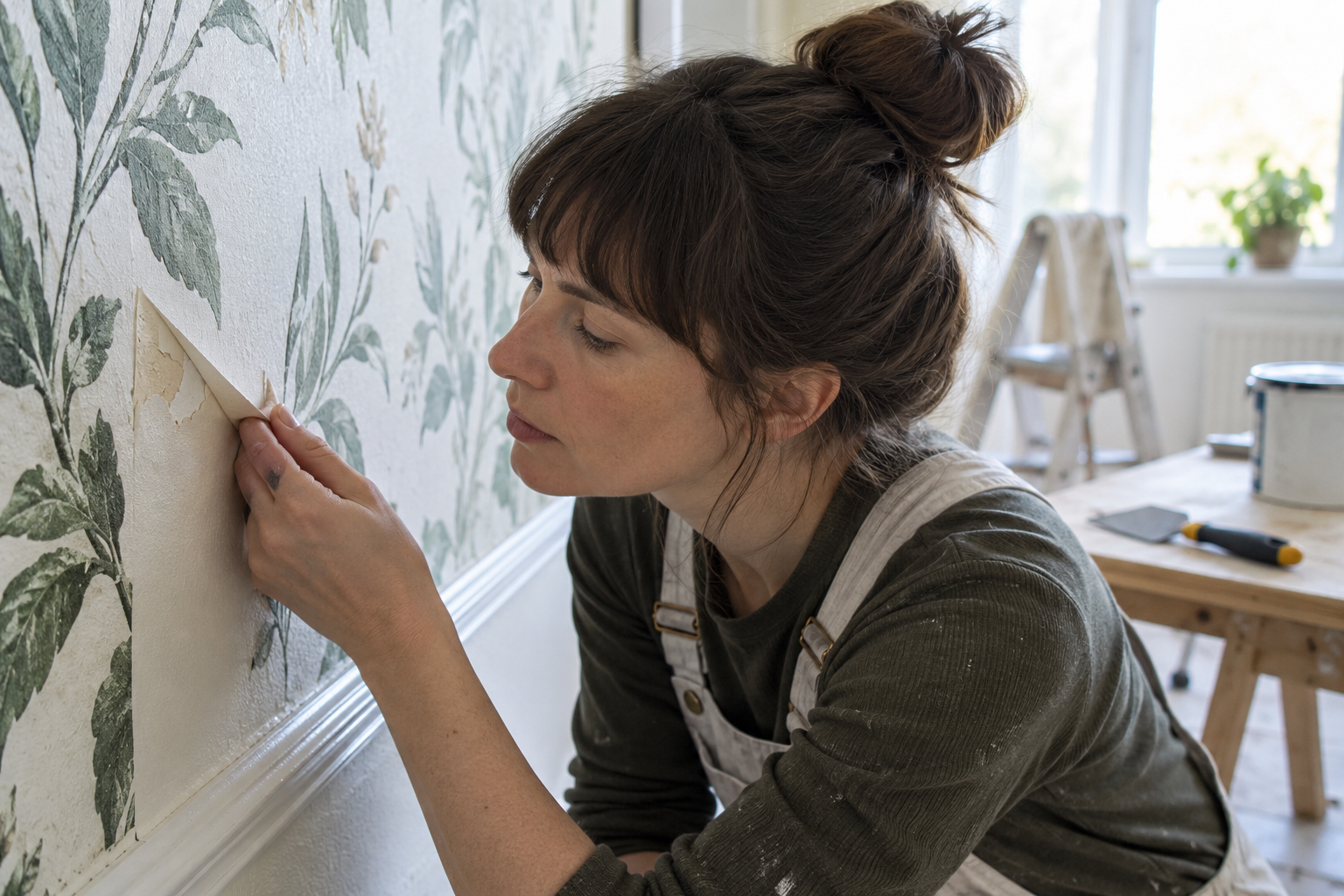
Example application: Any room with a suitable, prepared wall · pricing and measurement
Yes, a removable mural can damage paint, but a visible patch after removal is not always paint damage. The sheet may lift a weak coating, leave adhesive residue or reveal a colour difference between covered and uncovered wall. Each outcome has a different remedy. Photograph the bare wall and test the exact material before installation so that a later mark can be compared with the starting condition instead of guessed at.
Separate three different kinds of damage
Paint lift is the most obvious: flakes or a continuous skin of paint come away with the adhesive. Surface marking is subtler. The mural may leave a sheen difference, a slightly darker rectangle, or areas that look cleaner than the uncovered wall. Residue is a third outcome: the sheet releases, but tacky adhesive remains. Each requires a different response, so a blanket “damage-free” claim is not a useful test result.
Do not treat every visible outline as proof that the adhesive pulled paint away. Compare the covered area with an uncovered section under the same light. If the coating is physically missing, that is a repair problem. If the paint is intact but the uncovered portion has faded or accumulated more dirt over time, a contrasting rectangle may remain even after a clean release. If the surface feels tacky, investigate residue before choosing any cleaner. This simple distinction prevents an unnecessary scraper or solvent from turning a cosmetic difference into actual damage.
An existing defect may become visible only during removal. A patched joint, old paste or poorly primed area can fail when a new covering is pulled away. The adhesive is the immediate trigger, while the vulnerable layer explains where the failure occurred. A dated photograph and notes about repairs help diagnose the cause, but they do not prove that a future removal will be harmless.
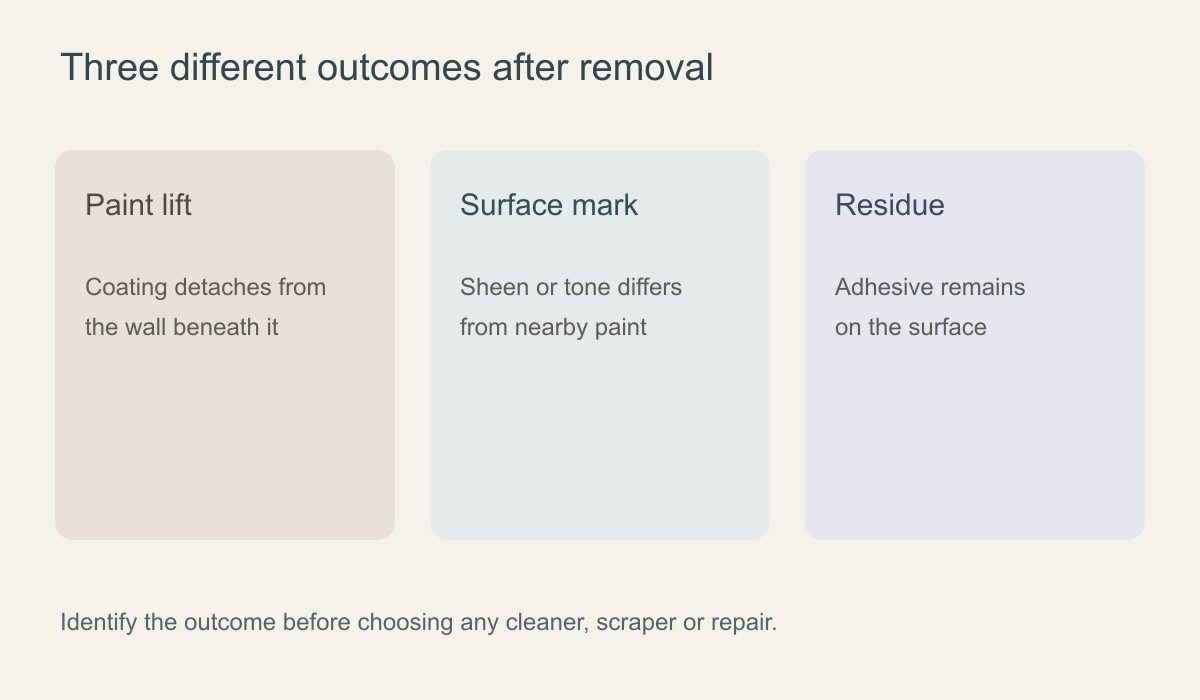 Identify the failure before choosing a remedy; not every mark is stripped paint.
Why paint can lift even when the wallpaper peels cleanly
Paint adheres to whatever lies below it. If that layer is dusty plaster, uncured filler, old adhesive or another weak coat of paint, the bond may be weaker than the mural adhesive. Pulling on the wallpaper transfers force through the paint film and can detach the weak layer. This is especially likely where a wall was spot-repaired without consistent preparation or where paint was already flaking at corners.
Fresh paint poses another uncertainty. Feeling dry is not the same as meeting the paint maker's cure requirements for adhesive contact. Cure time varies with formulation, thickness, temperature and humidity. Do not rely on a universal number of days quoted without reference to the actual paint. Ask the paint and mural suppliers for their requirements and postpone installation if either has not been met.
The Wallcoverings Association's wall-preparation guidance emphasises a clean, dry and sound surface and describes checks for weak painted walls. It also notes that glossy paint, contamination and uneven repairs need appropriate treatment. The objective is not to make the mural adhere at any cost; it is to create a stable surface that can withstand installation and eventual removal.
Warning signs you can see before ordering
Look along the wall under side light. Bubbling, peeling edges, chalky dust on your hand, water stains, patches of different sheen and filler ridges all merit investigation. A damp stain is not merely cosmetic. If the source of moisture is active, fix it first; covering it with a mural can hide the symptom while the wall continues to deteriorate.
Ask whether the wall has been repainted recently, and whether older wallpaper was fully removed. Several unrelated paint layers can behave differently across the same feature wall. An apparently uniform white wall might contain a repaired socket chase, an old picture-hanging patch and a newer coat near the window. Treat a test on one corner as useful evidence, not proof about every area.
Test the actual finish on the actual wall
Use a sample of the exact mural material if one is available. Follow the product's application directions on a discreet section of the proposed wall. If the seller specifies a waiting period for testing, respect it. Then remove the sample by the stated method and inspect the wall for flakes, sheen change and residue in daylight and oblique light.
Write down the wall's paint and repair history if known, where the sample went, how long it remained and what happened during removal. If the proposed mural crosses an old painted area and a newer filler patch, test those surfaces separately with permission. One clean result on the soundest corner does not establish the condition of the weaker patch. A photograph taken before application and one after removal in comparable light can make the result easier to judge.
A successful short test reduces uncertainty but cannot reproduce months or years of contact. A test that lifts paint is a reason to stop, not to press a full panel onto the same coating. Identify whether the paint, primer or underlying repair failed; have the wall prepared appropriately, then test again with the intended material. A different adhesive label alone does not repair a weak substrate.
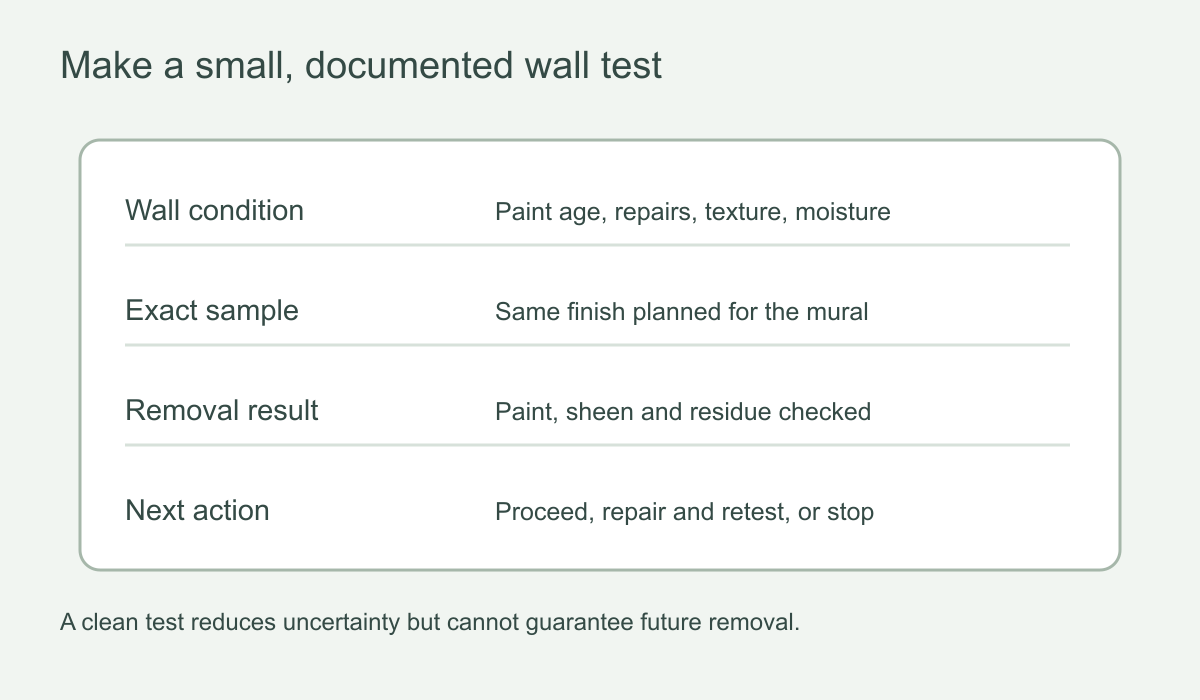 A small documented test helps turn a vague promise into evidence about this wall.
Decide what level of risk is acceptable before ordering
Separate the decision into three questions. Is the wall sound enough for the selected adhesive under the maker's instructions? Did a representative sample stay attached and then come away without taking paint or leaving an unacceptable mark? And if the wall's appearance changes after longer use, who will approve and pay for restoration? A clean short test answers only part of the second question; it cannot guarantee the future condition of a repaired or repainted wall.
Make that threshold explicit. If you own the room and would accept repainting one wall, a minor sheen change may be manageable. If a rental must be returned with its original finish intact, the same uncertainty may rule out an adhesive mural even after a promising test. Ask for the required permission and restoration terms before buying a print cut to that wall. Where paint is flaking, dampness persists or sample removal lifts a coating, repair or reassess the surface instead of relying on a different “removable” label.
Keep the evidence that informs the decision
Save the material name, wall photographs, paint or repair history, sample location and removal result together. If the mural crosses both old paint and a recent repair, record the findings separately; averaging them into one “passed” result hides the weaker area. This article helps assess risk before installation. If a mural is already coming down and the exposed layers are unclear, use the separate removal-day wall-damage guide to distinguish residue, paint lift, substrate damage and colour contrast before choosing a remedy.